
Beneficiary Designation vs Will and Who Really Gets Paid
Your beneficiary designation beats your will, and in Egelhoff v. Egelhoff (2001) the Supreme Court let an ex-wife collect benefits her ex never updated.
In This Article
Why your will may not control your biggest accounts
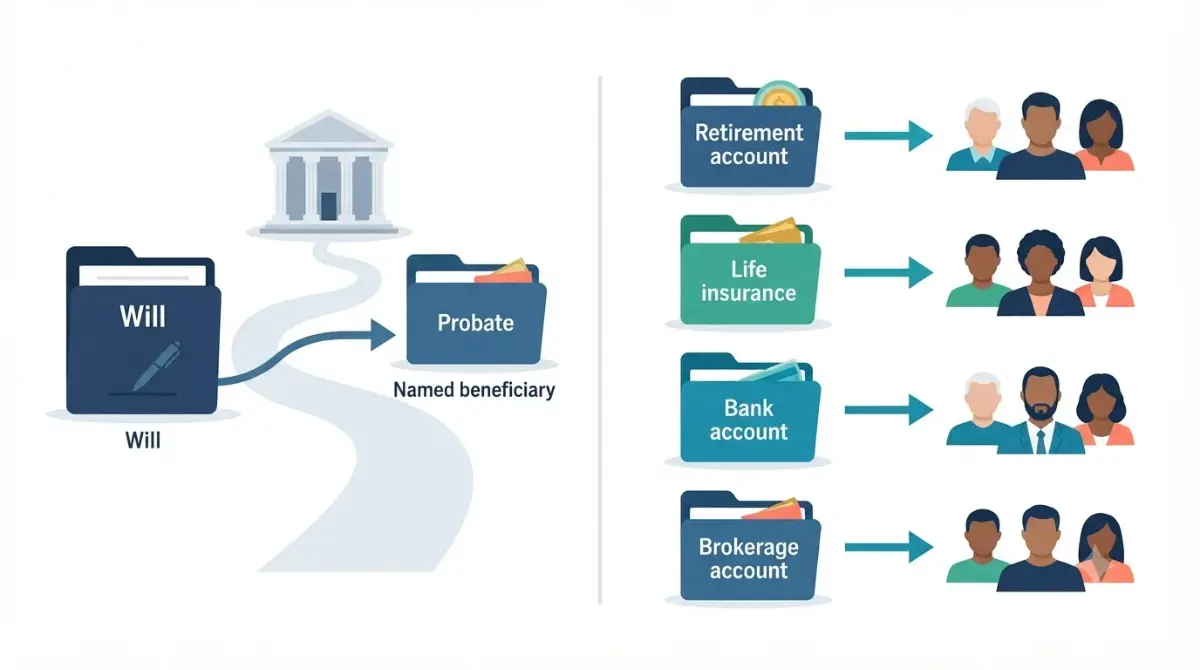
In most cases, your will does not decide who inherits your 401(k), IRA, life insurance, or payable-on-death bank account. The beneficiary designation on file with each account does, even when your will says something different.
Families are most often caught off guard in three situations: after a divorce, when a spouse has legal rights to a 401(k), and when no living beneficiary is named.
Find your situation:
- Recently divorced? Start with the section on ex-spouses.
- Married with a 401(k)? See when your spouse can block your choice.
- Just signed a will? Use the account table and worked example to see what it actually covers.
ℹ️ Financial Disclaimer: This article is for educational purposes only and is not personalized investment, tax, legal, estate-planning, insurance, lending, or debt-relief advice. Beneficiary, divorce, and inheritance rules vary by account type, plan document, and state law. Consult a qualified estate or family-law attorney, a CPA, or a fiduciary financial advisor before changing a beneficiary designation or acting on an inheritance.
How a beneficiary designation beats a will
Yes, a beneficiary designation usually overrides a will. The form is part of your contract with the bank, insurer, or retirement plan, so the asset passes straight to the named person and never enters the probate estate your will controls.
Why the account company pays the name on file
FINRA’s investor guide to advance planning notes that designations typically override instructions in a will and remain valid through major life changes. For a 401(k), the plan document sets the payout options, and beneficiaries deal with the plan administrator, not your executor.
What your will still controls
That is the heart of the beneficiary designation vs will question: each governs different property. Your will covers what’s left, meaning property in your sole name with no beneficiary or surviving joint owner. That property goes through the probate process, while beneficiary accounts are one of several assets your will doesn’t cover.
🔍 How It Works: A will speaks through a probate court. A beneficiary form speaks directly to the institution holding the money, which pays the named person once the claim is documented. The two documents never check each other.
Which accounts pass by beneficiary form, not your will
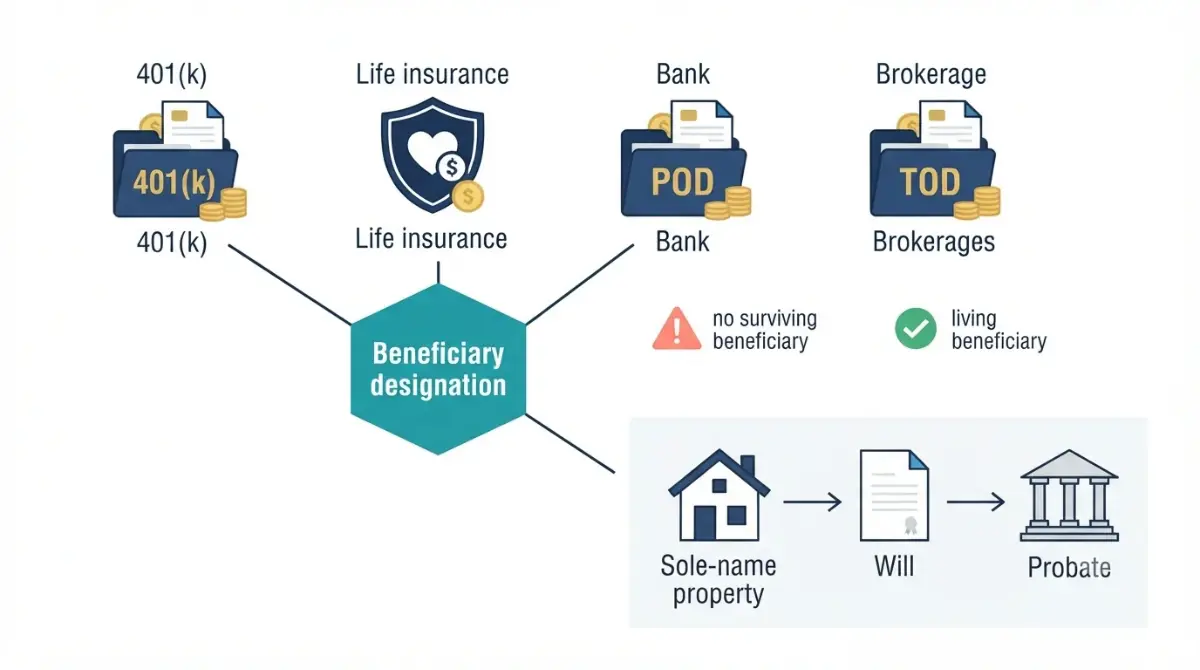
Most of a typical household’s financial accounts can carry a beneficiary designation. This table shows which document controls each one.
| Asset | What controls it | Divorce auto-revokes an ex? | Spousal consent needed? | Key Detail |
|---|---|---|---|---|
| Employer 401(k) or pension | Plan beneficiary form | No, federal law follows the form | Usually, in writing | Spouse is typically the required primary beneficiary |
| Employer group life insurance | Plan beneficiary form | No, if ERISA-governed | Per plan rules | Same federal rule as 401(k)s |
| IRA | Custodian’s form | Depends on state law | Not under ERISA | Community-property states differ |
| Individual life insurance | Insurer’s form | Depends on state law | Not under ERISA | Name a contingent beneficiary |
| Payable-on-death (POD) bank account | Bank’s POD designation | Depends on state law | Not under ERISA | FDIC coverage expands per beneficiary |
| TOD brokerage account | TOD registration | Depends on state law | Not under ERISA | Passes without probate |
| Home in your sole name, no TOD deed | Your will (probate) | Depends on state law | Varies | TOD deeds are state-specific |
Sources: IRS, FINRA, FDIC, Investor.gov; Egelhoff v. Egelhoff, 532 U.S. 141 (2001).
Retirement accounts and life insurance
Employer plans follow federal rules, covered in the next two sections. If you’re buying a policy to protect the people you name, our life insurance calculator estimates how much coverage they’d need.
Bank (POD) and brokerage (TOD) accounts
A payable-on-death account is treated as a trust account under the FDIC’s trust account coverage rules, and each beneficiary must be named in the bank’s records.
📊 Data Point: The FDIC insures trust deposits, including POD accounts, up to $250,000 per eligible beneficiary, to a maximum of $1,250,000 per owner at each bank when five or more eligible beneficiaries are named. Source: FDIC, Trust Accounts guide (2024).
For brokerage accounts, the SEC’s explanation of transfer-on-death registration covers the equivalent tool. Real estate works differently; see which states allow transfer-on-death deeds.
Does divorce remove an ex-spouse as your beneficiary?
Not reliably. On employer plans governed by ERISA, divorce does not remove an ex-spouse, and many states’ automatic-revocation laws only reach other assets.
Employer plans: federal law follows the form
In Egelhoff v. Egelhoff (2001), a Boeing employee divorced without updating his life insurance and pension forms, then died weeks later. The Supreme Court held that ERISA overrode Washington’s revocation-on-divorce law, so the benefits followed the form to his ex-wife. A court order called a QDRO can change a plan payout; see how a QDRO divides a 401(k).
Individual policies: your state may revoke it
In Sveen v. Melin (2018), the Court upheld Minnesota’s law that cancels an ex-spouse’s designation at divorce and sends proceeds to the contingent beneficiary or the estate. These laws vary by state, and you can still rename an ex deliberately.
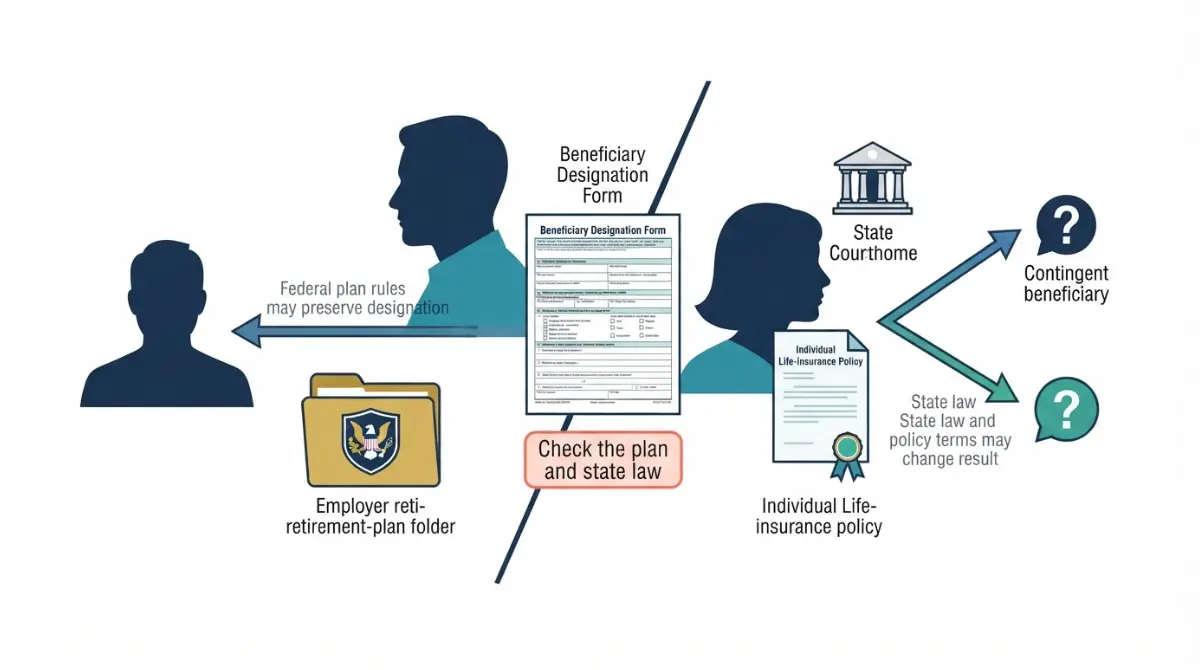
⚠️ Costly Mistake: Relying on your divorce decree alone. Plans and insurers pay from the form they hold, so a new beneficiary form must be filed with every account.
✅ Action Step: Ask a family-law or estate attorney: “Does my decree require a QDRO, does my state revoke ex-spouse designations, and when can I file new forms?”
When your spouse can block your beneficiary choice
Married 401(k) savers can’t always name whoever they want.
401(k)s and pensions: written spousal consent
According to the IRS’s guidance for newly married plan participants, most plans require written spousal consent to change beneficiaries. Under the federal consent rules, that signature is witnessed by a notary public or a plan representative.
IRAs: different rules, with a community-property catch
IRAs aren’t subject to ERISA’s consent rules. In community-property states, however, a spouse may own part of an IRA built during the marriage. For what a spouse can do after inheriting, see inherited IRA rules for spouses.
✅ Action Step: Ask an estate attorney: “Does community-property law give my spouse rights in my IRA, and does my plan require notarized consent?”
Who actually inherits: a worked example
This hypothetical shows how little a will can control. The figures are illustrative, not data.
What the will says
A remarried parent’s will says, “Everything to my three children equally.” The children are also named as contingent beneficiaries on an old life insurance policy.
Where each dollar actually goes
| Asset | Value | Named on the form | Who receives it |
|---|---|---|---|
| 401(k) | $300,000 | Current spouse | Current spouse |
| Individual life insurance | $500,000 | Ex-spouse | Children (revocation state) or ex-spouse (non-revocation state) |
| TOD brokerage | $100,000 | Child A | Child A |
| POD checking | $40,000 | Child B | Child B |
| House, sole name | $350,000 | None | Will: $116,667 per child |
The will controls only $350,000 of $1,290,000, about 27%. The largest asset’s destination depends on state law, not on anything the will says.
Beneficiary mistakes that send money to the wrong place
The last group of errors comes from gaps on the form itself.
No beneficiary, or the beneficiary died first
If no named beneficiary survives you, the account follows its default rule, often paying your estate, which means probate. Naming a contingent beneficiary prevents this.
Naming a minor or your estate
Some plans and insurers won’t pay a minor directly, which is why parents often use a trust instead. Most non-spouse heirs must empty an inherited IRA by December 31 of the tenth year after death; see the inherited IRA 10-year rule and the IRS’s rules for retirement account beneficiaries.
✅ Action Step: Ask a CPA: “Which payout rule applies to each of my beneficiaries, and should I name a trust instead of a minor?”
Frequently asked questions
1. Does a beneficiary designation override a will?
Yes, usually. The account pays the person on its beneficiary designation, and that asset never enters the probate estate your will controls.
2. Can my will change my 401(k) beneficiary?
No. A 401(k) pays whoever is named on the plan’s beneficiary form, so changes must be filed directly with the plan.
3. Does divorce automatically remove an ex-spouse as beneficiary?
Not on ERISA employer plans. Some states revoke ex-spouse designations on other assets, but filing new beneficiary forms is safer. Confirm your state’s rules with a family-law attorney.
4. Do I need spousal consent to name someone else on my 401(k)?
Usually, yes. Most plans require your spouse’s written consent to a different beneficiary, witnessed by a notary public or plan representative. An estate attorney can confirm your plan’s requirements.
5. Do IRAs require spousal consent for beneficiary changes?
Not under ERISA’s rules, but in community-property states a spouse may own part of an IRA built during marriage. Ask an estate attorney about your state.
6. What happens if my beneficiary dies before me?
Your contingent beneficiary receives the account. Without a surviving contingent, the account’s default rule applies, often paying your estate through probate.
7. What happens if I name no beneficiary at all?
The account follows its default rule, often paying your estate, which sends that money through probate instead of directly to your heirs.
8. Do beneficiary designations avoid probate?
Yes. Accounts with a living named beneficiary pass directly to that person, outside the probate process that administers a will.
9. Can a minor be named as a beneficiary?
Yes, but some plans and insurers won’t pay minors directly, so parents often name a trust or custodian instead. An estate attorney can recommend the right structure.
10. How long does a non-spouse have to empty an inherited IRA?
Most non-spouse heirs must empty an inherited IRA by December 31 of the tenth year after the owner’s death. A CPA can confirm which payout rule applies.
11. Does a POD beneficiary affect FDIC insurance coverage?
Yes. The FDIC insures POD deposits up to $250,000 per eligible beneficiary, to a maximum of $1,250,000 per owner per bank.
Your will and your forms are two separate instructions
A will covers probate property; each beneficiary form covers its own account. Check every form after any marriage, divorce, birth, or death, and work through our estate planning checklist so both documents point the same way.
Related Articles
 Estate Planning
Where a Transfer on Death Deed Works and Where It Goes Wrong
September 28, 2026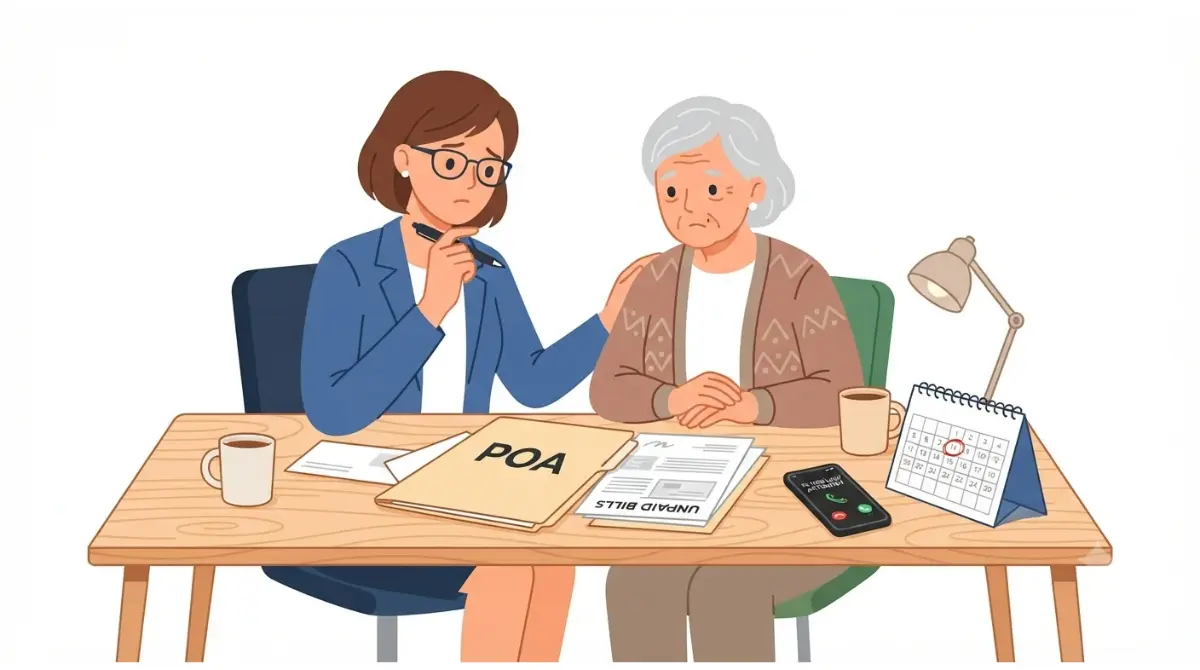 Estate Planning
First Steps When a Parent Has Dementia and No Power of Attorney
October 1, 2026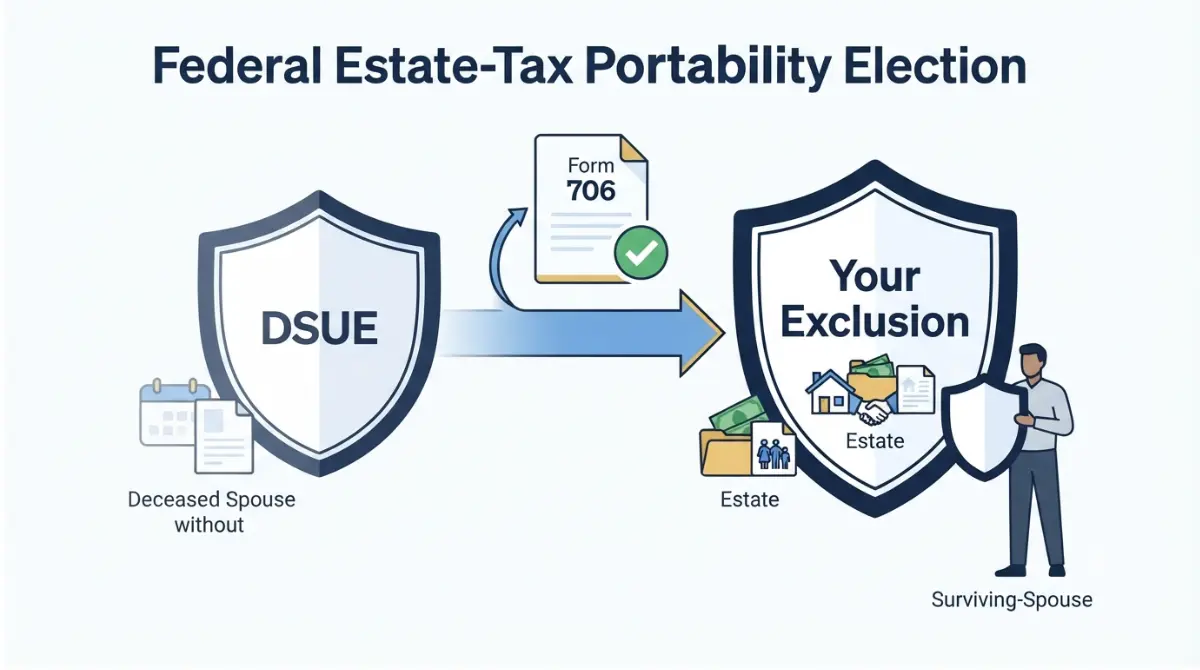 Estate Planning
The Portability Election and Your Spouse’s Overlooked Exemption
September 24, 2026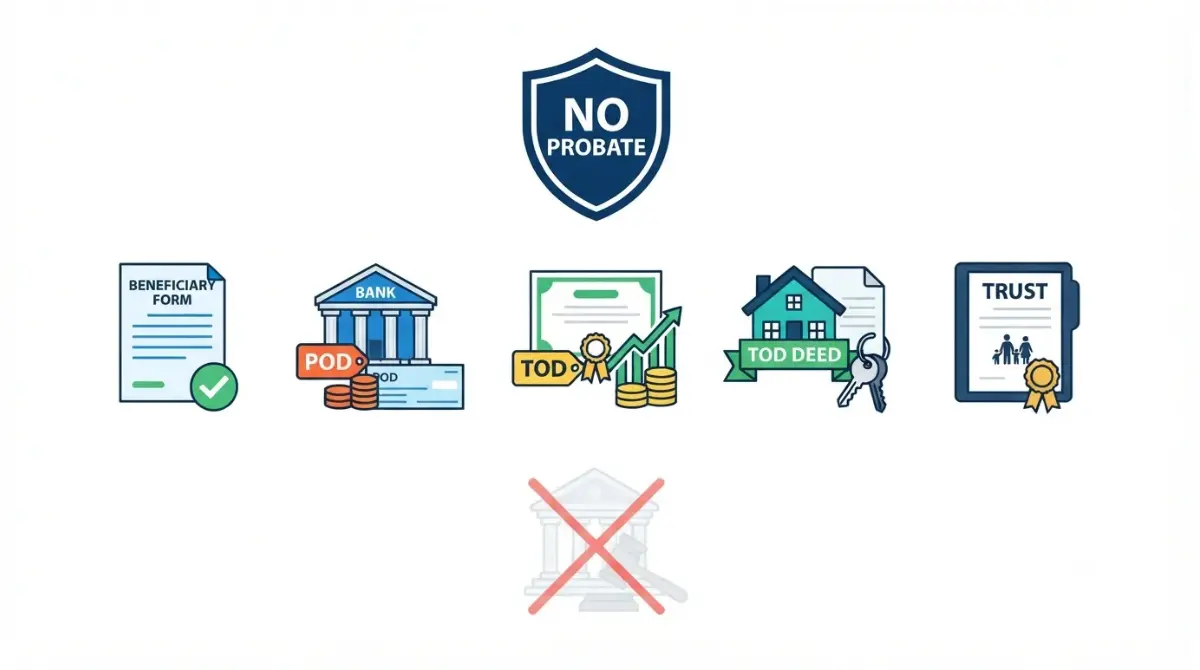 Estate Planning
How to Avoid Probate With the Right Tool for Each Asset
September 28, 2026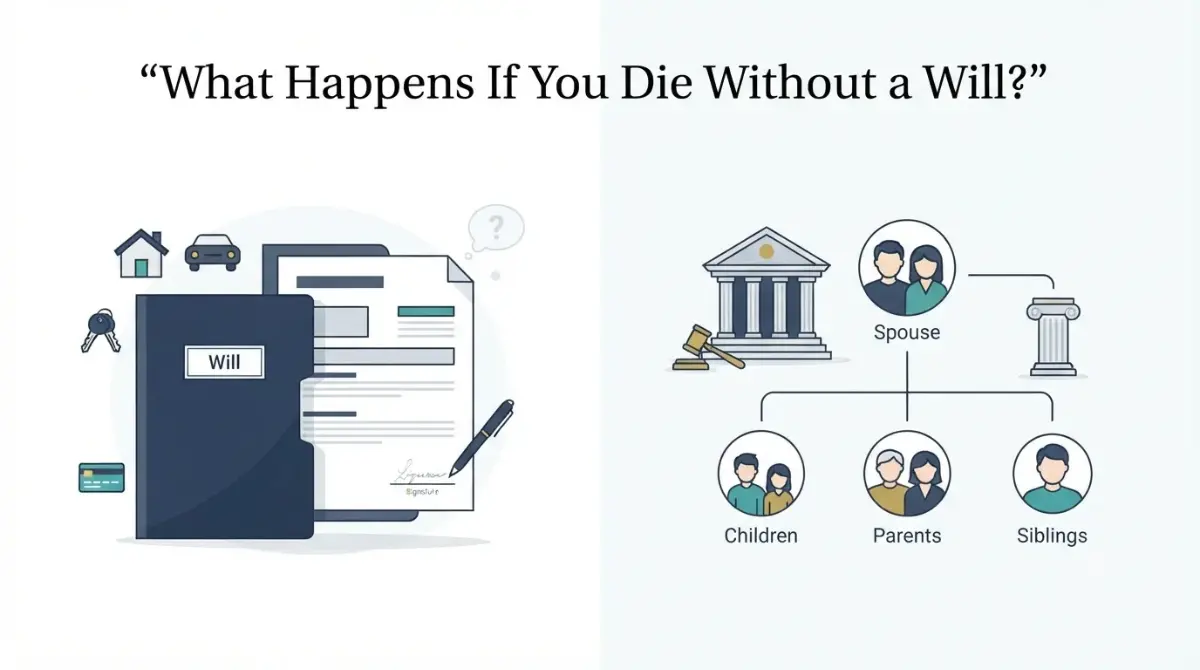 Estate Planning
A Clear Look at What Happens If You Die Without a Will
September 30, 2026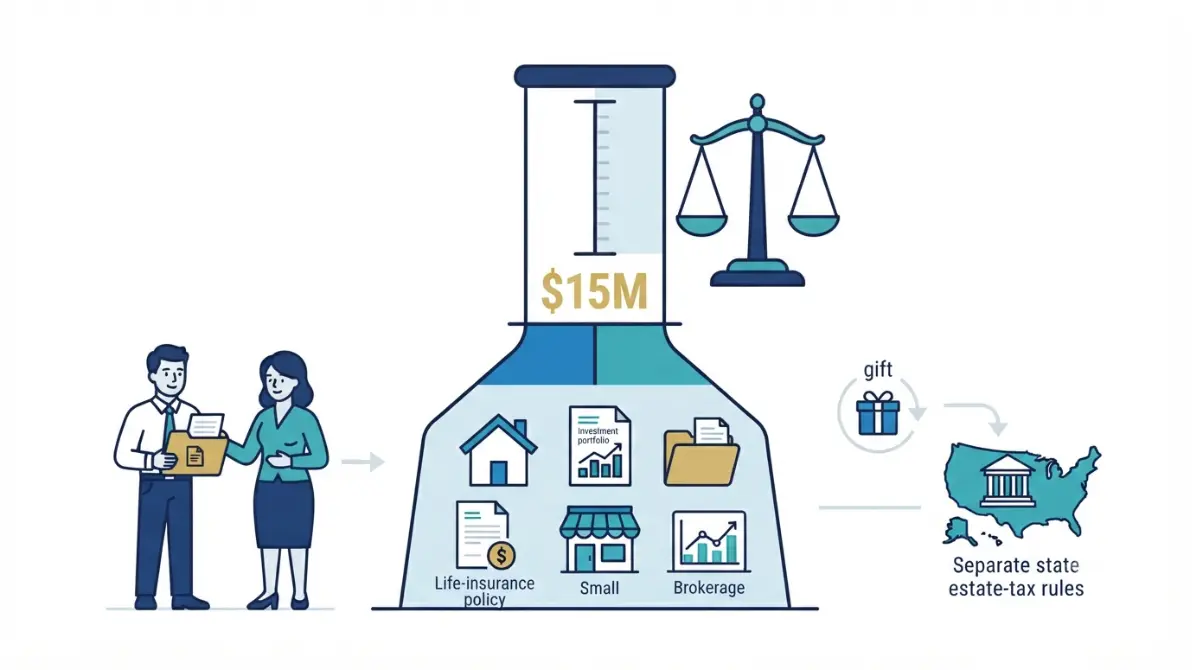 Estate Planning
A Clear Guide to the $15 Million Estate Tax Exemption
September 23, 2026 Estate Planning
Your Parent Died Without a Will? Take the Right Steps in Order
September 30, 2026 Estate Planning
What Is Probate? A Clear Guide to Steps, Timing, and Cost
September 26, 2026 Estate Planning
How a step-up in basis can cut tax on inherited stock
September 26, 2026
Informational disclaimer
The content on Finance Authority Hub is provided for general informational and educational purposes only and should not be considered personalized financial, investment, tax, legal, or professional advice. Financial decisions depend on your individual goals, income, risk tolerance, location, and regulatory situation. Before acting on any information, strategy, estimate, or calculator result, consult a qualified licensed professional who can evaluate your specific circumstances.