
A Clear Look at What Happens If You Die Without a Will
Dying without a will hands the decisions to state law. In one 2025 survey, just 24% of adults said they have a will. Here is who inherits when you don’t.
In This Article
What happens if you die without a will?
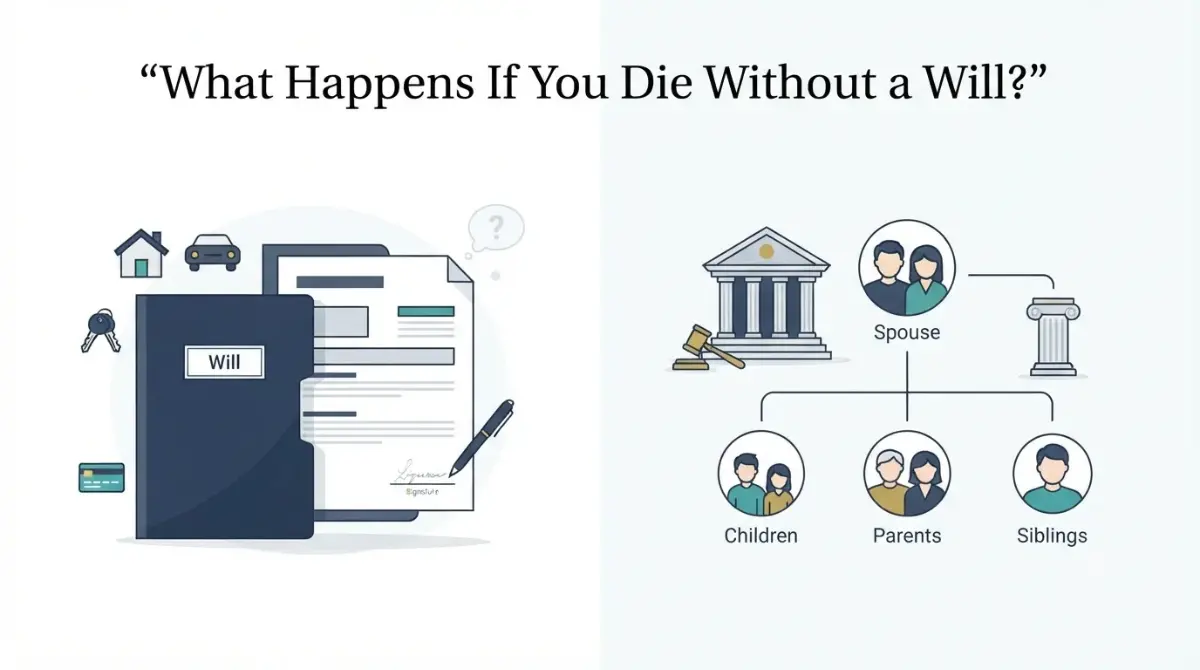
Dying without a will means your state’s intestacy law, not your wishes, decides who inherits, and a court oversees the process. The default rules follow family ties, so the outcome can surprise unmarried partners, stepchildren, and blended families.
Find your situation: married with children? See your spouse’s share. Unmarried or blended family? See who can be left out. Checking what a will covers? Start with assets that skip intestacy.
📊 Data Point: 24% of U.S. adults said they have a will in Caring.com’s 2025 online survey of 2,500+ adults, conducted with YouGov, down from 33% in 2022. Source: Caring.com, 2025 Wills and Estate Planning Study (survey results vary by method).
ℹ️ Financial Disclaimer: This article is for educational purposes only and is not personalized legal, tax, investment, lending, insurance, or debt-relief advice. Inheritance law differs by state, so consult a probate or estate-planning attorney licensed in the relevant state, and a CPA for tax questions, before acting.
What does dying intestate mean, and who decides?
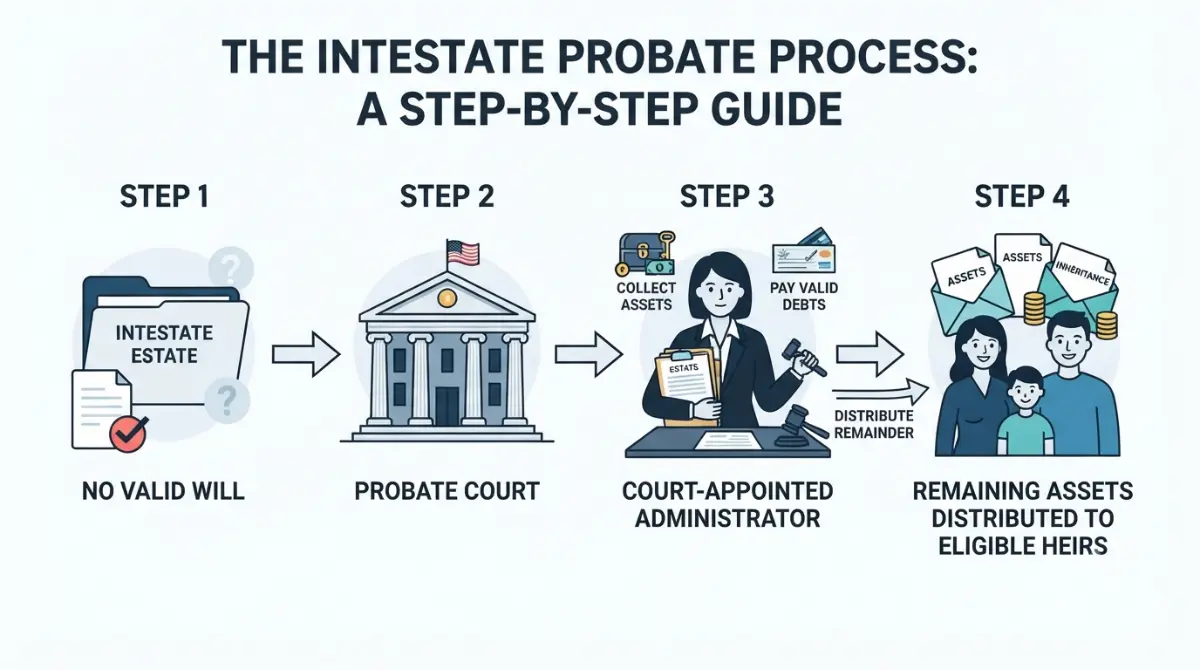
Dying intestate means dying without a valid will, so your state’s intestacy law picks the heirs and a probate court appoints someone to run the estate.
Which state’s law applies?
The law of the state where you lived generally controls most property, while real estate in another state follows that state’s law.
Who runs the estate?
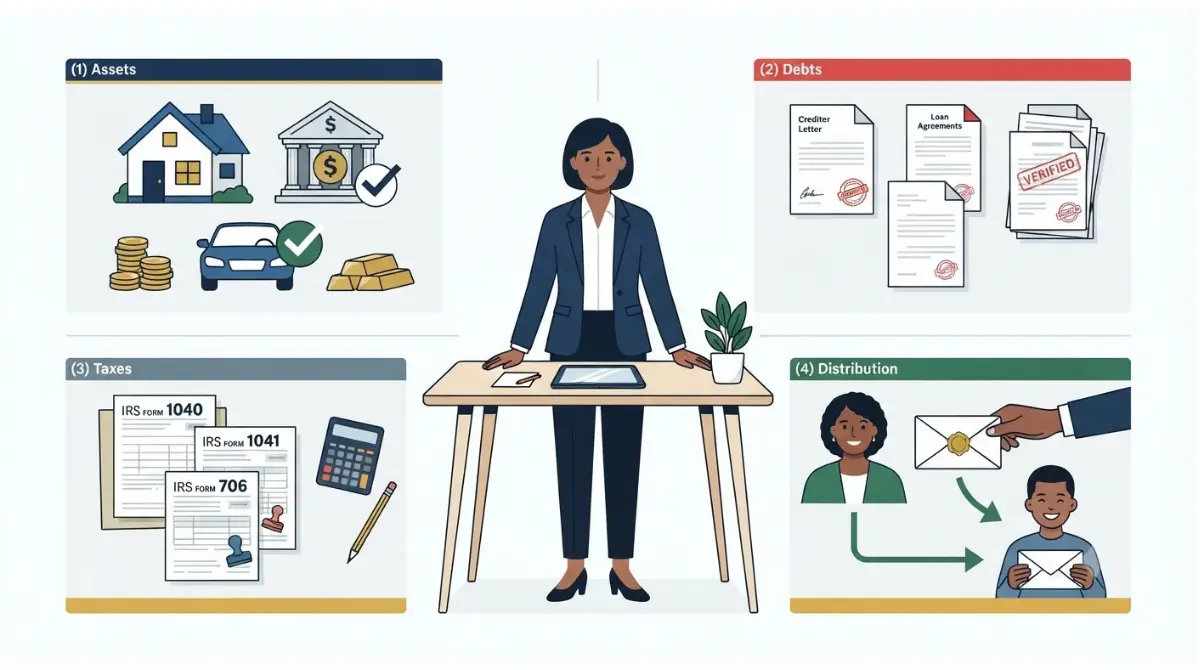
The court appoints an administrator, often an heir, who collects assets, pays valid debts, and distributes the rest. Our guide to how probate works covers each step.
Who inherits first when there’s no will?
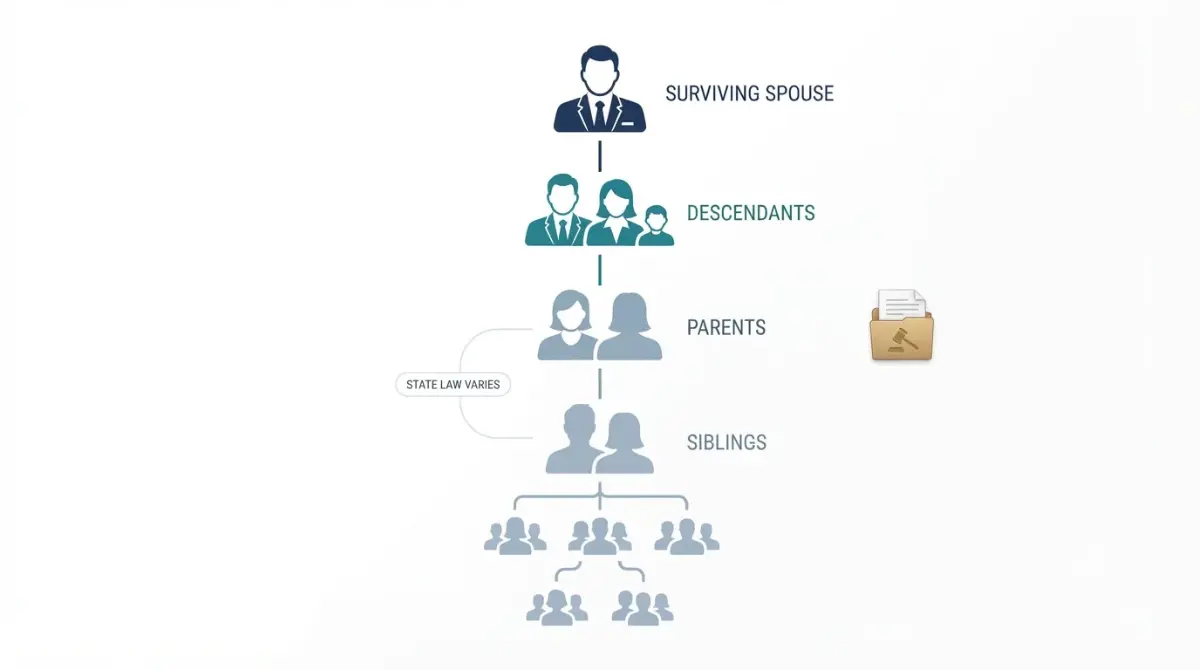
Most states follow a fixed order of next of kin, modeled on the Uniform Probate Code:
- Your surviving spouse, whose share depends on family structure (next section)
- Children and other descendants, who take the rest
- Parents, if there are no descendants
- Siblings and their descendants, if no parents survive
- Grandparents and their descendants, then more distant kin
When community property changes the answer
Nine states use community property rules, listed in IRS Publication 555. Texas intestacy law, for example, turns on whether property is community or separate.
✅ Action Step: Ask a probate attorney in your state: “Who counts as a first-class heir for my family, and how is the administrator appointed?”
How much does your spouse get without a will?
Under the Uniform Probate Code model, a spouse’s intestate share depends on who else survives. The table shows the code’s base amounts.
| Family situation | Spouse’s share | On $500,000 | Others receive |
|---|---|---|---|
| No descendants or parents, or all descendants shared with spouse | Entire estate | $500,000 | None |
| No descendants; a parent survives | First $300,000 plus ¾ of the rest | $450,000 | Parents: $50,000 |
| Shared descendants; spouse has other descendants | First $225,000 plus ½ of the rest | $362,500 | Decedent’s descendants: $137,500 |
| Some descendants not shared with spouse | First $150,000 plus ½ of the rest | $325,000 | Those descendants: $175,000 |
Source: UPC §2-102, as enacted in Colorado (C.R.S. §15-11-102), base amounts; examples computed by FinanceAuthorityHub editors; probate assets only.
Why your state’s numbers may differ
Colorado adjusts these amounts for cost of living, and other states may use different figures, so treat the table as a model, not your state’s answer.
🔍 How It Works: For the third row on a $500,000 estate: $500,000 − $225,000 = $275,000; half is $137,500; add the $225,000 lump sum for a spouse total of $362,500.
✅ Action Step: Ask a probate attorney in your state: “Which spouse-share tier fits my family, and what dollar amounts apply today?”
Which assets skip intestacy entirely?
Intestacy governs only probate assets: property in the decedent’s name alone, with no beneficiary or surviving co-owner.
Beneficiary designations and joint accounts
Accounts with a named beneficiary, including payable-on-death bank accounts, life insurance, and retirement accounts, usually pay that person directly. A joint account with right of survivorship passes to the surviving owner, while a tenants-in-common share goes to the owner’s heirs under a will or state law, according to the CFPB’s guidance on joint accounts.
Does everything go through probate?
No. Only assets with no beneficiary, survivor, or transfer mechanism do. Our pillar on assets that pass outside a will maps the rest, and beneficiary designation vs. will compares the two.
✅ Action Step: List every account, note who is named or co-owns it, and update outdated forms. Ask an estate-planning attorney: “How is each asset titled?”
Who gets nothing: partners, stepchildren, and the state
Intestacy rewards legal family ties, so people outside them often receive nothing.
Unmarried partners and stepchildren
Stepchildren, long-term partners, and friends usually get no share when there is no will. Some states let stepchildren inherit only as a last resort, before the estate goes to the state.
When no relatives can be found
If no eligible relative can be found, the estate typically escheats, meaning it passes to the state. That is a last step, not the default. A valid will closes these gaps; see how to make a will with proper witnesses.
✅ Action Step: Ask an estate-planning attorney in your state: “Can a will or beneficiary form protect my partner or stepchildren here?”
Do debts and taxes come out before heirs get paid?
Debts are generally paid from the estate itself, and an estate that runs short usually leaves them unpaid rather than passing them to family.
Are heirs responsible for the deceased’s debts?
Survivors generally owe nothing unless they co-signed, held the account jointly, or fall under another exception, according to the CFPB’s guidance on debts after death.
Is federal estate tax owed?
📊 Data Point: $15,000,000 is the federal basic exclusion amount for people who die in 2026. Source: IRS, What’s New — Estate and Gift Tax, 2026.
Estates below that generally owe no federal estate tax, though some states impose their own estate or inheritance tax at lower thresholds. See how the estate tax exemption works.
✅ Action Step: Ask a CPA or estate attorney: “Does my state impose its own estate or inheritance tax, and at what threshold?”
FAQs About Dying Without a Will
1. What happens if you die without a will?
If you die without a will, your state’s intestacy law decides who inherits, and a court appoints an administrator.
2. Who inherits without a will if there’s no spouse or children?
Without a will or spouse or children, most states pass the estate to parents, then siblings, then more distant kin.
3. Does my spouse get everything if I die without a will?
Not always. Without a will, a spouse takes everything only in some families; surviving parents or certain children can share the estate. Confirm with a probate attorney.
4. Do unmarried partners inherit without a will?
Usually not. Without a will, unmarried partners typically inherit nothing unless named as a beneficiary or joint owner. Confirm with a probate attorney.
5. Do stepchildren inherit without a will?
Usually not. Without a will, stepchildren typically inherit nothing; some states allow it only as a last resort before the state. Confirm with a probate attorney.
6. Does the state take your money if you die without a will?
Only if no eligible relative is found. Without a will and without heirs, the estate typically escheats to the state. Confirm with a probate attorney.
7. Does everything go through probate if you die without a will?
No. Even without a will, assets with a named beneficiary or right-of-survivorship co-owner usually pass outside probate.
8. Do beneficiary forms override the rules if you die without a will?
Generally yes. Without a will, an account with a named beneficiary usually pays that person directly, not through intestacy.
9. Who runs the estate if you die without a will?
If you die without a will, a court appoints an administrator, often an heir, to collect assets, pay valid debts, and distribute the rest.
10. Are debts paid before heirs when you die without a will?
Debts are generally paid from the estate itself. Without a will, an estate that can’t cover them usually leaves them unpaid. Confirm with a probate attorney.
11. Is federal estate tax owed if you die without a will?
Federal estate tax applies only above the $15,000,000 basic exclusion for 2026 deaths, with or without a will; some states tax lower. Confirm with a CPA.
Your Next Step
If someone died without a will, find out how each asset was titled and who is named on it, then consult a probate attorney in that person’s state. If you have no will, a valid one lets you choose the heirs.
Related Articles
 Estate Planning
Your Executor Duties After Someone Dies, in Plain English
October 1, 2026 Estate Planning
A Clear Signing Order for Estate Planning After Diagnosis
October 2, 2026 Estate Planning
How a Special Needs Trust Can Protect SSI and Medicaid
September 30, 2026 Estate Planning
Key Rules for the $19,000 Annual Gift Tax Exclusion and Form 709
September 24, 2026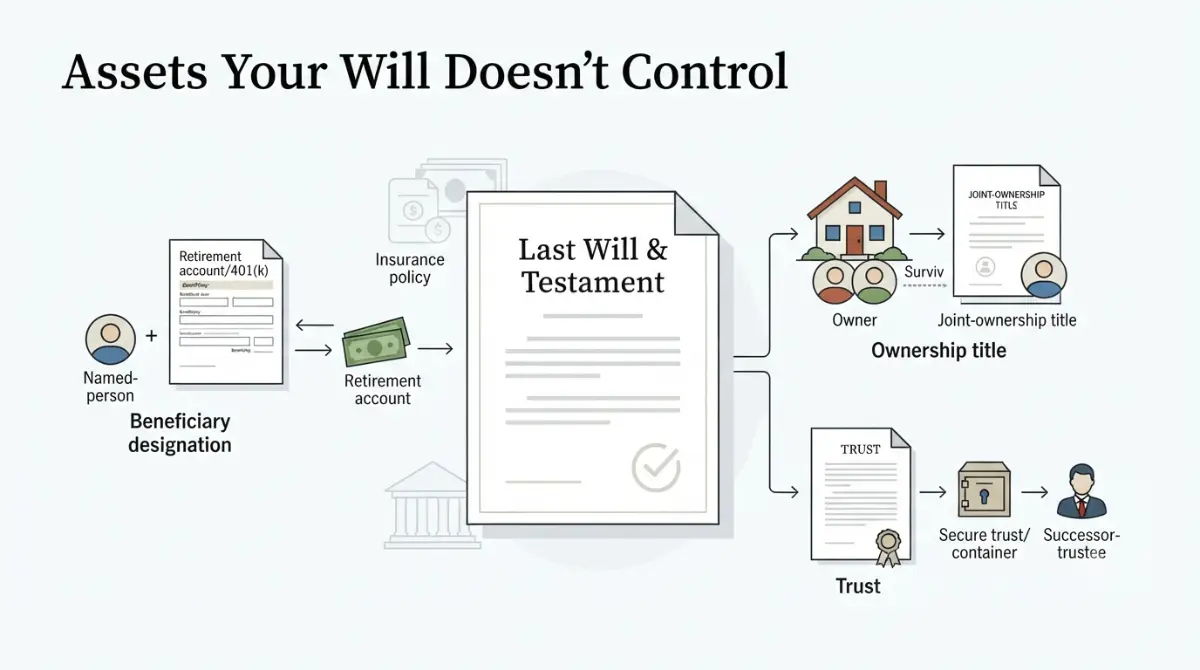 Estate Planning
Assets Not Covered by a Will and the Hidden Rules on Who Inherits
September 16, 2026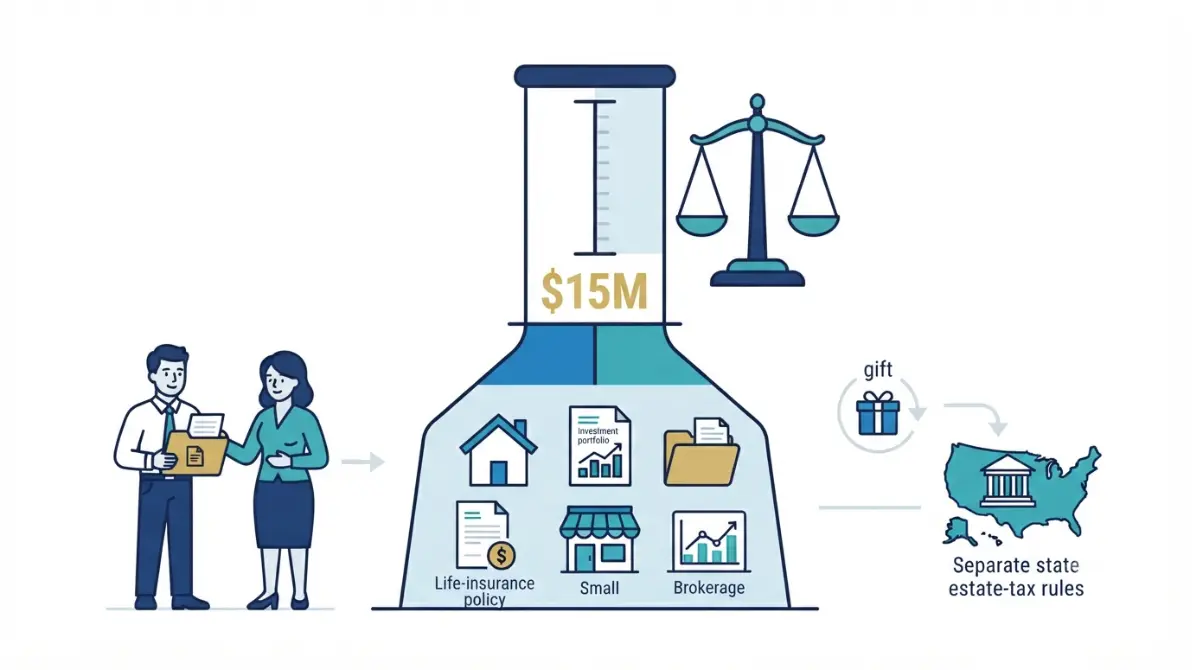 Estate Planning
A Clear Guide to the $15 Million Estate Tax Exemption
September 23, 2026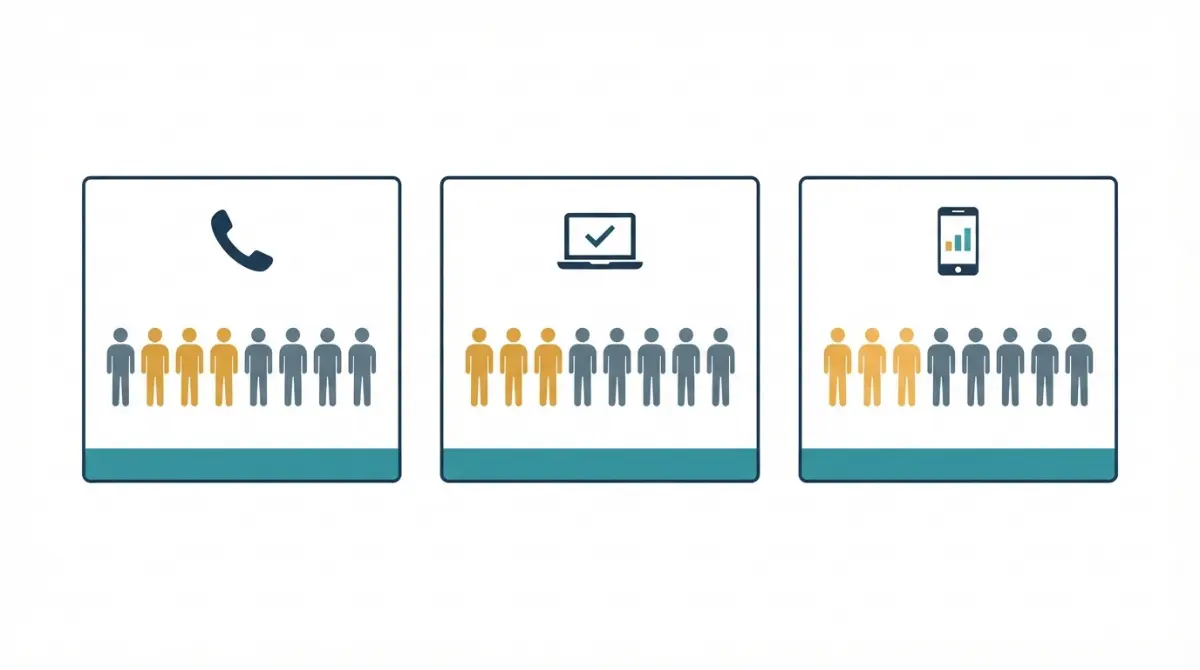 Estate Planning
The Right Way to Read the Percentage of Americans With a Will
October 5, 2026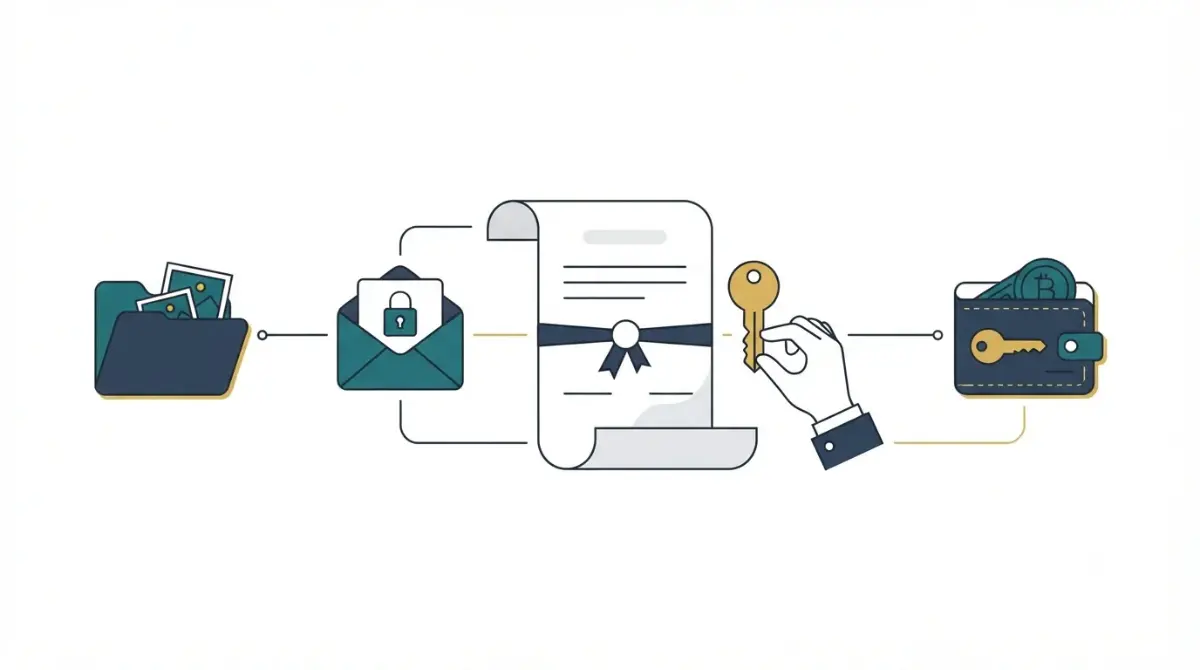 Estate Planning
Smart Digital Assets Estate Planning Steps So Family Can Get In
October 5, 2026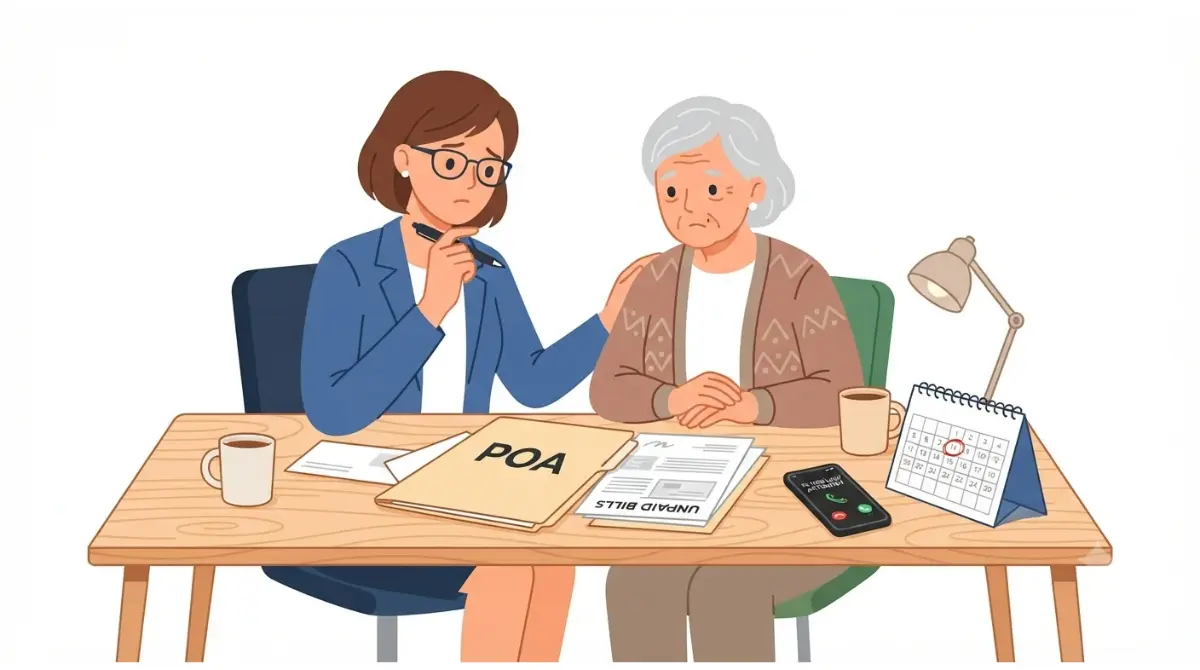 Estate Planning
First Steps When a Parent Has Dementia and No Power of Attorney
October 1, 2026
Informational disclaimer
The content on Finance Authority Hub is provided for general informational and educational purposes only and should not be considered personalized financial, investment, tax, legal, or professional advice. Financial decisions depend on your individual goals, income, risk tolerance, location, and regulatory situation. Before acting on any information, strategy, estimate, or calculator result, consult a qualified licensed professional who can evaluate your specific circumstances.