
A Clear Signing Order for Estate Planning After Diagnosis
Estate planning after diagnosis starts with a proxy and power of attorney, but a gift within the 2026 $19,000 exclusion can still be a Medicaid transfer.
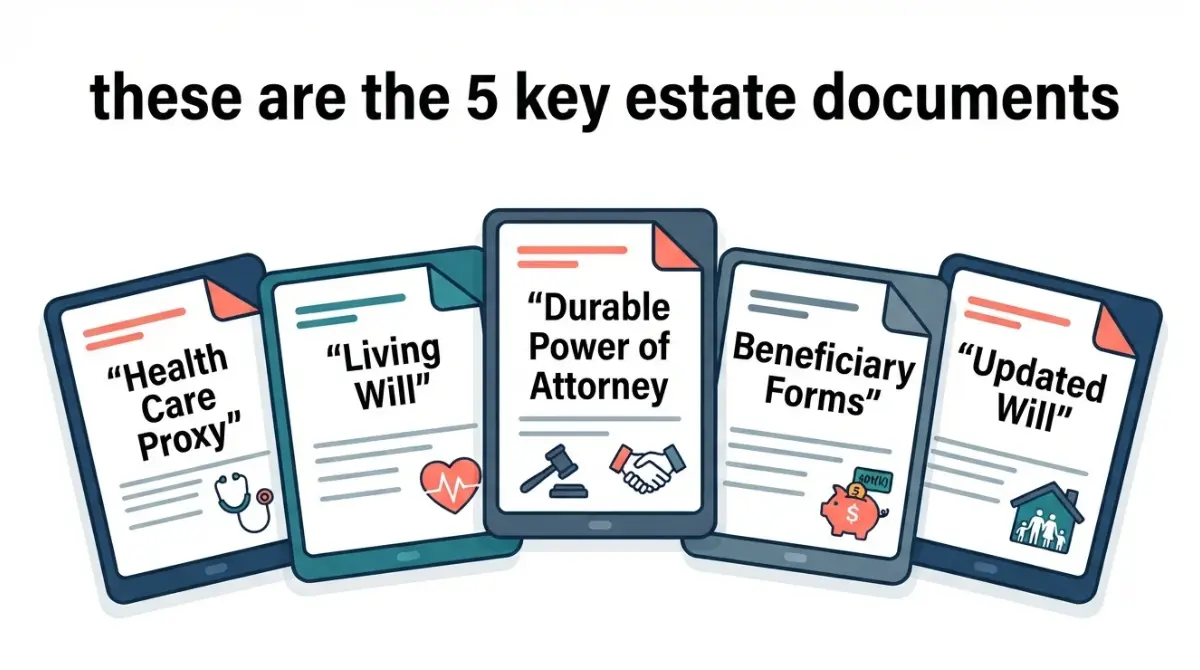
In This Article
Estate planning after diagnosis comes down to one question: who speaks and acts for you if you can’t? Sign the documents below while you can still make your own decisions.
Newly diagnosed? Start at the table. Old will? Section 4. Helping a spouse? Section 3. Considering gifts? Sections 6–7.
| Priority | Document | What it does |
|---|---|---|
| 1 | Health care proxy | Names your medical decision-maker |
| 2 | Living will | Records treatments you want or refuse |
| 3 | Durable power of attorney | Names who handles your money |
| 4 | Beneficiary forms | Direct retirement and insurance payouts |
| 5 | Updated will | Covers property in your name alone |
ℹ️ Financial Disclaimer: This article is general education about wills, trusts, powers of attorney, health care directives, gift and estate tax, and Medicaid long-term-care eligibility. It is not legal, tax, or medical advice, and rules vary by state. Before signing documents or moving assets, consult an estate planning attorney, a CPA, or an elder law attorney licensed in your state.
Health care proxy and living will: sign these first
Two documents speak for you medically, so sign them first.
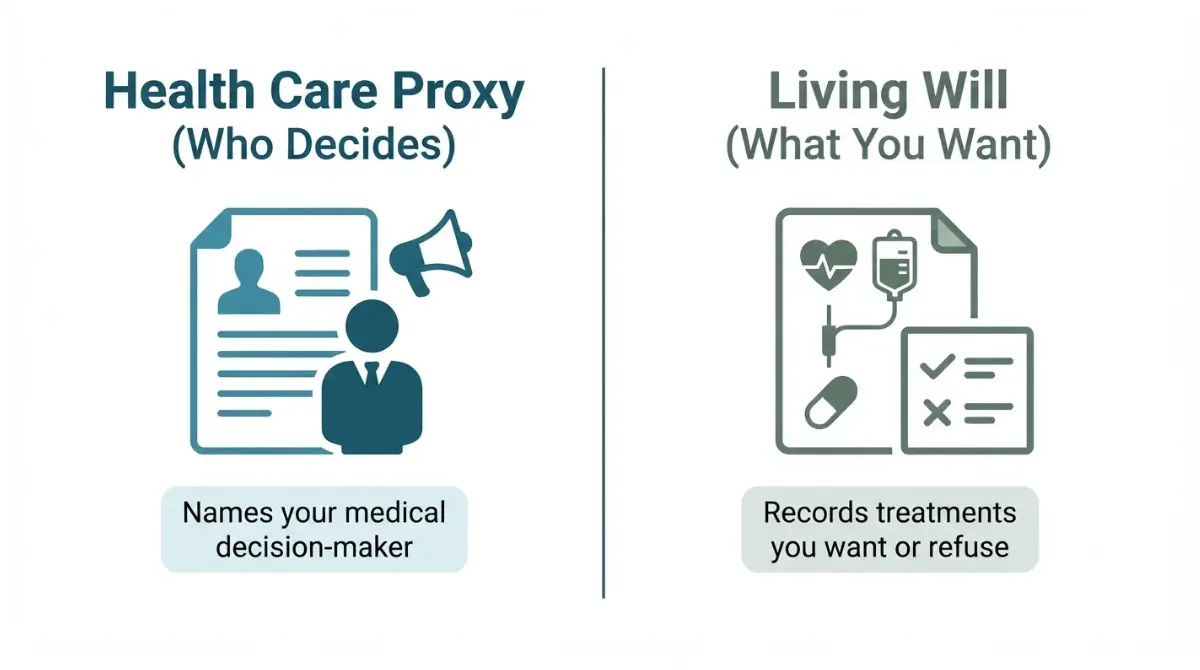
Proxy vs living will in one line each
A health care proxy names who decides for you if you can’t communicate. A living will records the treatments you want or refuse. You can sign either or both.
Choosing your proxy and a backup
In most states a proxy must be 18 or older and of sound mind. Name an alternate, and use your state’s form; some need witnesses or a notary.
Giving copies to your doctors
Give copies to your proxy and care team, as the National Institute on Aging advises. Compare the documents in living will vs health care proxy.
✅ Action Step: Ask an estate planning attorney: “Who must witness my state’s proxy form?”
Durable power of attorney: who handles your money
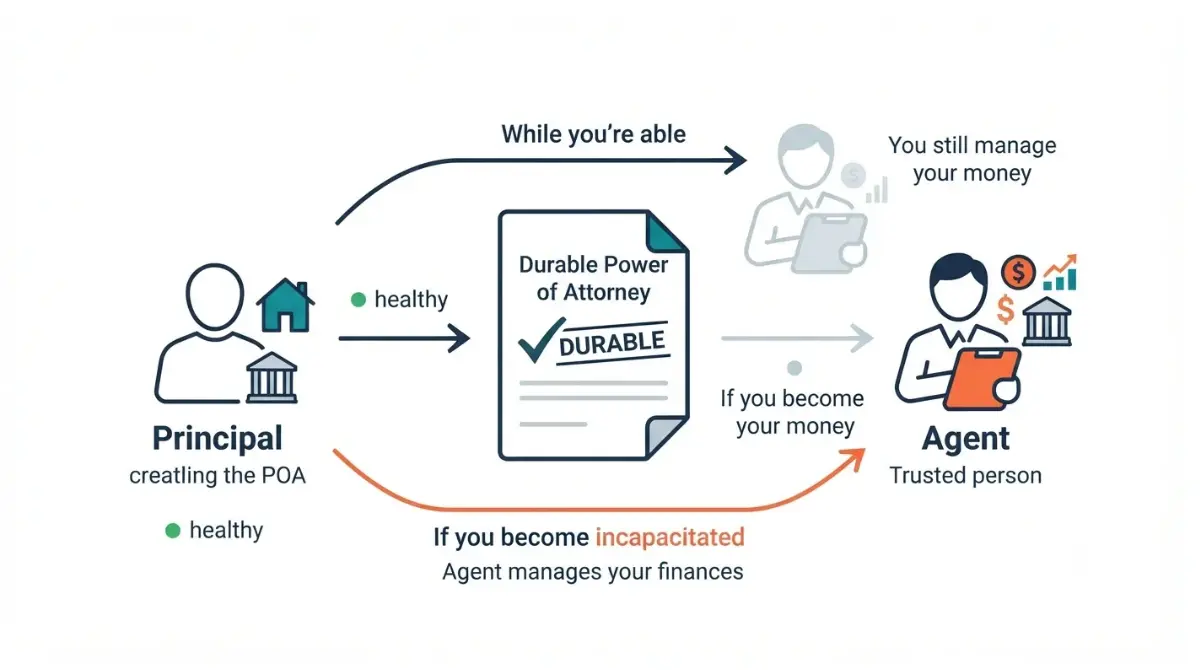
A durable power of attorney names who handles your money if you can’t.
Durable vs springing
“Durable” means it stays in effect if you become incapacitated, and you can still manage your own money while able, per the CFPB’s planning guidance. Your attorney can set whether it starts now or only later (a “springing” document).
Choosing an agent
Your agent can do only what the document grants, so pick someone you trust and name a backup. See what a durable power of attorney agent can do.
Ask your bank before you sign
The CFPB’s guide for agents notes some banks refuse a power of attorney and want their own form. Ask yours first.
✅ Action Step: Ask an estate planning attorney: “Can my agent make gifts or create a trust in my state, and should I allow it?”
Update your will and beneficiary forms together
A new will doesn’t change your beneficiary forms, and the forms usually win.
What a will controls vs what forms control
Your will covers property in your name alone. Retirement accounts, life insurance, and payable-on-death accounts go to whoever their own paperwork names. See which assets your will doesn’t control and beneficiary designation vs will.
Two checks to run this week
Ask each institution who is named on file, and add a backup beneficiary to every form. Then ask whether your will needs updating or replacing.
✅ Action Step: Ask an estate planning attorney: “Given my family, should my will be updated or replaced?”
Should you set up a revocable living trust now?
A revocable living trust can let a successor trustee manage your assets if you can’t.
What a trust does that a will doesn’t
A will takes effect at death; a trust can also cover you while you’re alive but unable to act.
Why funding matters
An empty trust does nothing: each account and deed must be retitled into it. See how to fund a living trust.
When to ask an attorney first
Blended families, minor beneficiaries, and property in more than one state are common reasons. How to choose an estate planning attorney covers what to look for.
✅ Action Step: Ask an estate planning attorney: “What would a trust close that my will and forms would not?”
Gifting before death: estate tax limits and the step-up trap
Two 2026 numbers frame gifting, and one tax rule can make a gift costly for heirs.
The two 2026 numbers
📊 Data Point: The federal estate tax generally applies only above the 2026 basic exclusion amount of $15,000,000 per person; the annual gift exclusion is $19,000 per recipient. Source: IRS, What’s New — Estate and Gift Tax, verified October 2026.
Gifts above $19,000 to one person may require a gift tax return; see the annual gift tax exclusion and Form 709.
Gift vs inherit: a worked example
🔍 How It Works: Shares bought for $50,000 are worth $200,000; the heir sells at $205,000. Inherited shares generally take the date-of-death value as basis (IRS); gifted shares generally keep the giver’s basis (IRS Publication 551).
| Path | Heir’s basis | Taxable gain |
|---|---|---|
| Inherited | $200,000 | $5,000 |
| Gifted now | $50,000 | $155,000 |
Hypothetical, computed from IRS rules; exceptions exist. Try our capital gains tax calculator or read step-up in basis for inherited stock.
What to ask a CPA
✅ Action Step: Ask a CPA: “Would gifting this asset cost my heirs more tax than leaving it?”
Medicaid look-back: why panic gifting backfires
Medicaid’s look-back period reviews gifts and other transfers you made before applying for long-term care coverage, and a gift inside it can delay that coverage.
What the 60-month look-back reviews
📊 Data Point: Federal law sets Medicaid’s look-back at 60 months before you apply for long-term care coverage. Source: CMS, Deficit Reduction Act: Transfer of Assets (dated 2008; verified October 2026).
Some states differ, so confirm yours.
What counts as a transfer
CMS’s examples include cash gifts to children and transferring home ownership; so does selling for less than fair market value.
⚠️ Costly Mistake: A gift can be tax-free and still be a Medicaid transfer: the $19,000 gift tax exclusion and the look-back are separate tests.
Why an elder law attorney comes first
✅ Action Step: Ask an elder law attorney: “If I may need long-term care, which gifts should I avoid, and which are exempt in my state?”
Common questions about estate planning after diagnosis
1. What estate documents should I sign after a serious diagnosis?
Start with a health care proxy, living will, and durable power of attorney, then update your beneficiary forms and will.
2. How soon should I sign estate planning documents after a diagnosis?
Sign this month if you can: you keep the power to change or cancel a durable power of attorney while you can make decisions.
3. What is the difference between a health care proxy and a living will?
A proxy names who makes medical decisions for you; a living will states your treatment wishes. You can sign either or both.
4. Who can be my health care proxy?
In most states your proxy must be 18 or older and of sound mind; you can also name an alternate.
5. What does a durable power of attorney mean?
A durable power of attorney stays in effect if you become incapacitated, so your agent can keep managing your money.
6. Will my bank accept my power of attorney?
Not always. Some banks refuse a power of attorney and ask for their own form, so check with yours before you sign.
7. Does a new will change my beneficiary forms?
No. Beneficiary forms are separate paperwork that generally override your will, so update each form when you update your will.
8. Do I owe federal estate tax after a diagnosis?
Federal estate tax generally applies only above the basic exclusion amount, which is $15,000,000 per person for 2026. A CPA can check your estate.
9. How much can I give each person without a gift tax return?
Gifts up to $19,000 per recipient in 2026 fall within the annual exclusion; larger gifts may require a gift tax return. Ask a CPA before gifting.
10. If I give stock now instead of leaving it, what happens to its tax basis?
A gift generally keeps your original basis, while inherited stock generally takes its value at death, which can shrink the heir’s taxable gain. A CPA can run your numbers.
11. What is the Medicaid look-back period?
Federal law sets it at 60 months before you apply for long-term care coverage; states review transfers for less than fair market value. An elder law attorney can check your state.
Your next step this week
Sign the health care proxy and durable power of attorney first, then check your beneficiary forms and will. Bring the attorney and CPA questions above to your appointments, and hold off on moving assets until you’ve asked about Medicaid and tax. Our estate planning checklist lists everything else in order.
Related Articles
 Estate Planning
The Right Way to Know When to Update Your Estate Plan
October 5, 2026 Estate Planning
Online Will vs Lawyer Decisions Made Clear for Your Family
September 21, 2026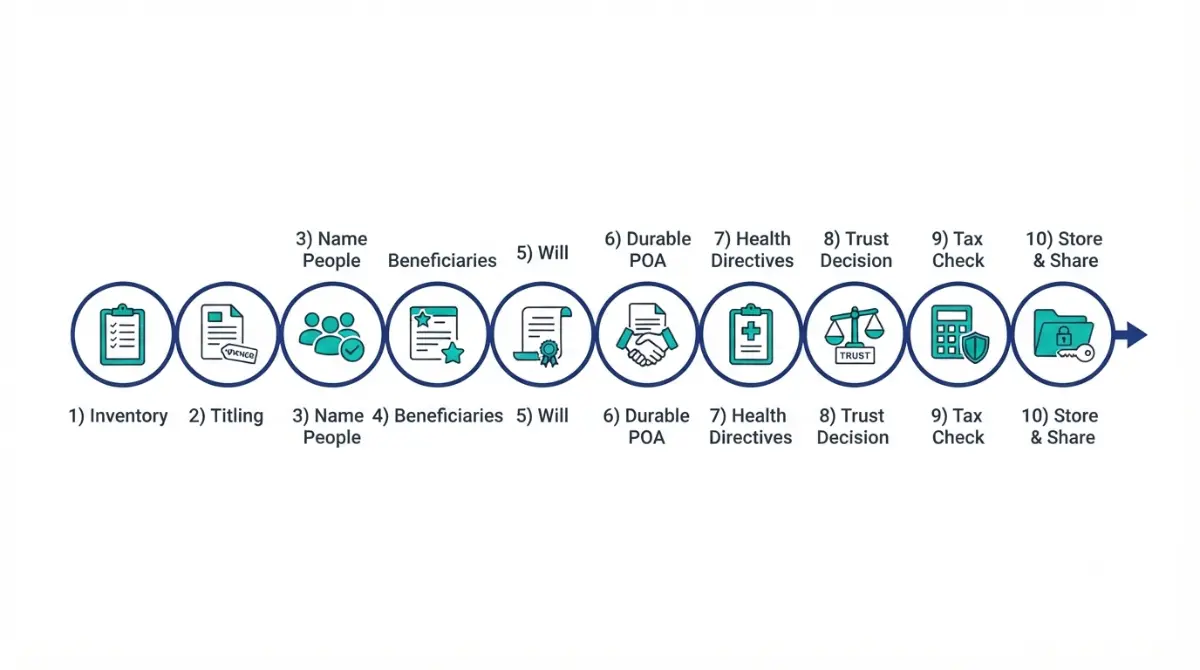 Estate Planning
The estate planning checklist, ordered so nothing gets overlooked
September 19, 2026 Estate Planning
What Your Agent Can Legally Do Under a Durable Power of Attorney
September 29, 2026 Estate Planning
How a Special Needs Trust Can Protect SSI and Medicaid
September 30, 2026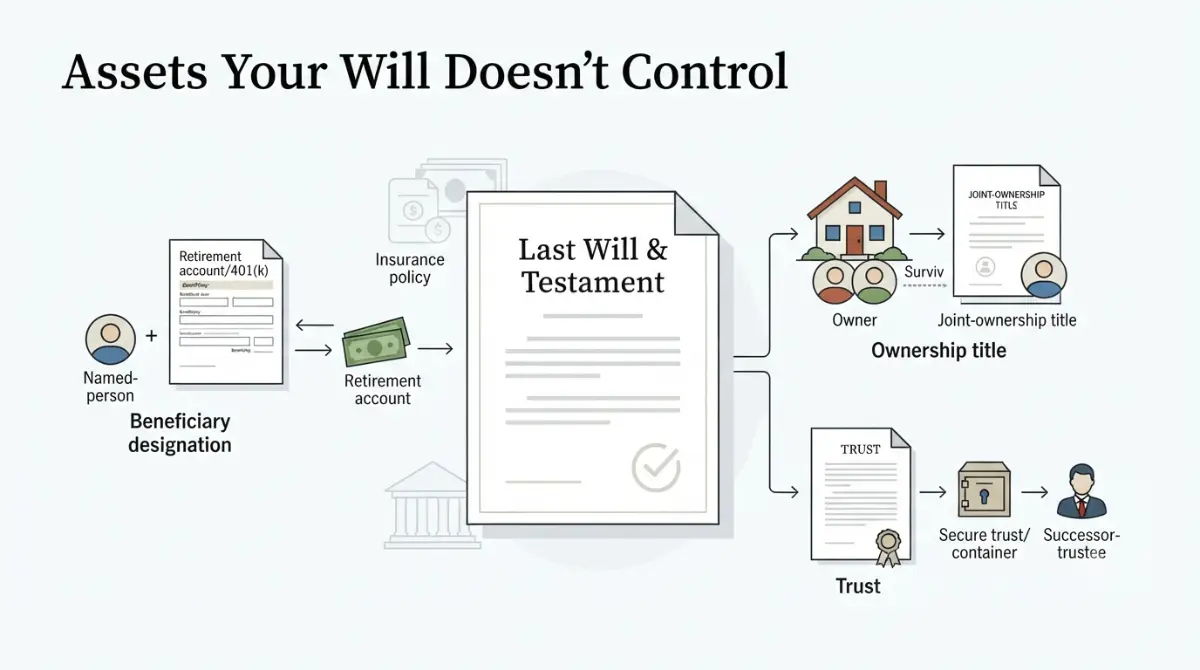 Estate Planning
Assets Not Covered by a Will and the Hidden Rules on Who Inherits
September 16, 2026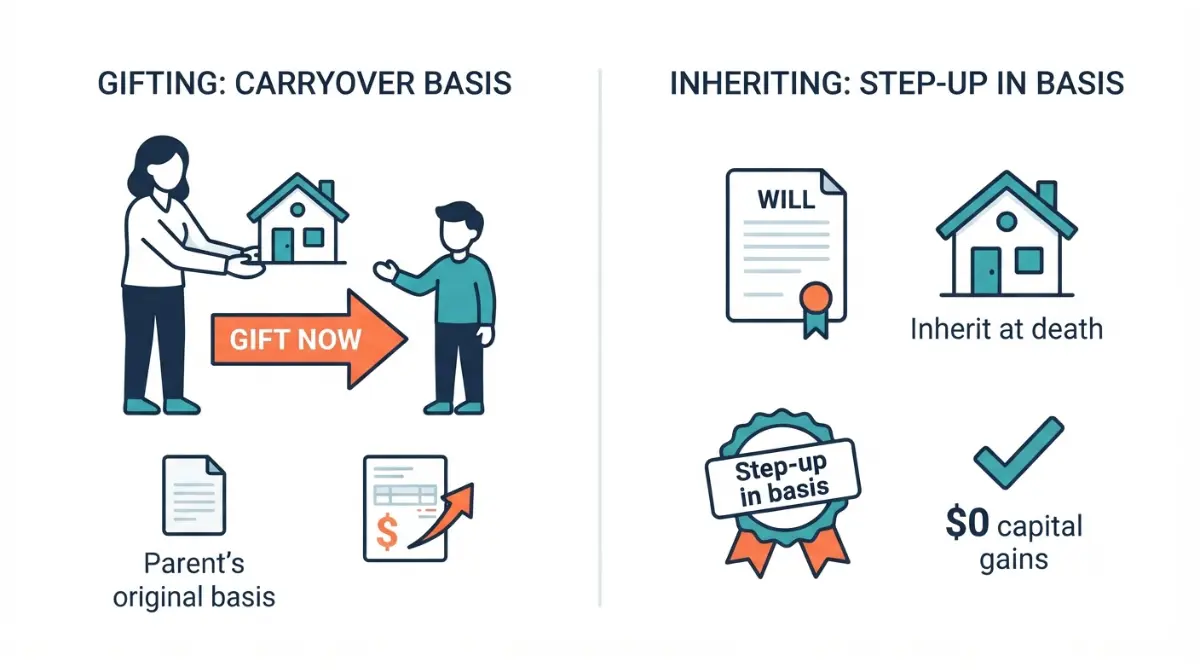 Estate Planning
Gifting a House vs Inheritance and What Your Child Will Owe
September 26, 2026 Estate Planning
How to Avoid Probate With the Right Tool for Each Asset
September 28, 2026 Estate Planning
Where a Transfer on Death Deed Works and Where It Goes Wrong
September 28, 2026
Informational disclaimer
The content on Finance Authority Hub is provided for general informational and educational purposes only and should not be considered personalized financial, investment, tax, legal, or professional advice. Financial decisions depend on your individual goals, income, risk tolerance, location, and regulatory situation. Before acting on any information, strategy, estimate, or calculator result, consult a qualified licensed professional who can evaluate your specific circumstances.