
Key Rules for the $19,000 Annual Gift Tax Exclusion and Form 709
Gift tax exclusion stayed at $19,000 for 2026. Going over usually means filing Form 709, not paying tax. Here’s the six-question check.
In This Article
How much can you gift in 2026 without paying tax?
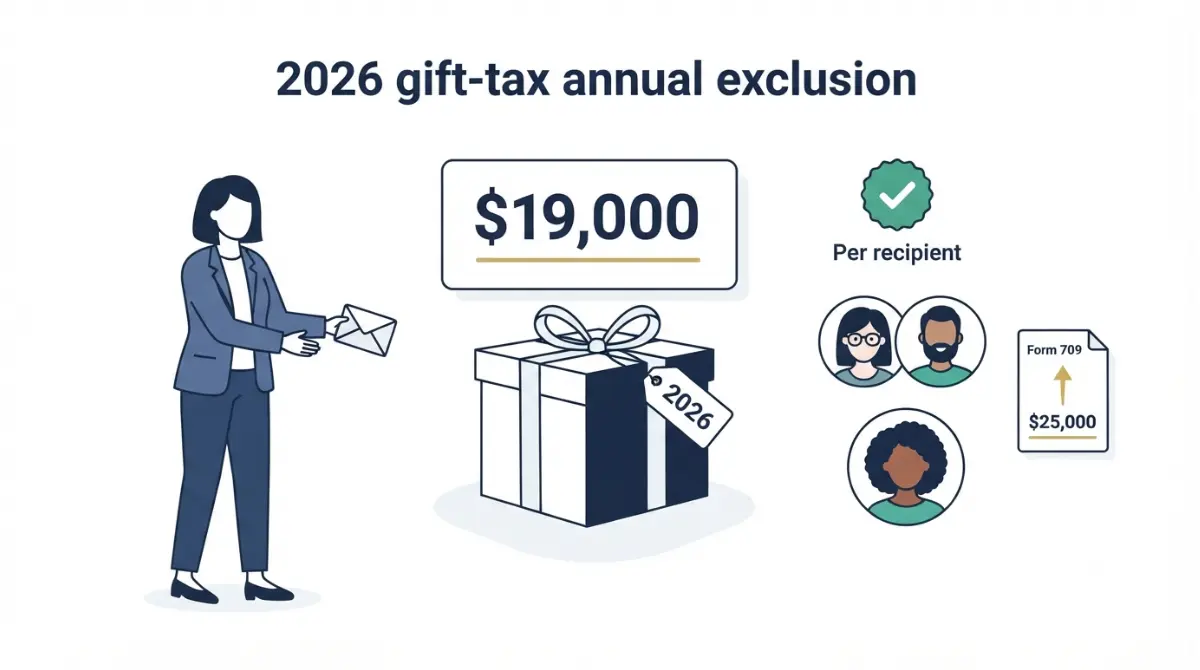
The annual gift tax exclusion is $19,000 per recipient for 2026, according to the IRS 2026 inflation adjustment announcement. You can give that much to as many people as you like, usually with no tax and no return. Going over typically means filing a form, not paying a tax.
Start with your situation:
- You gave $19,000 or less per person: confirm the gift qualifies below.
- You gave someone more: use the Form 709 check and the worked example.
- You’re married: see how couples give $38,000 per recipient.
Lifetime gifts are among the assets that pass outside a will, so these rules shape what heirs receive.
ℹ️ Financial Disclaimer: This article explains federal gift tax rules for educational purposes only. It is not personalized tax, legal, investment, lending, insurance, or debt-relief advice. Before making large gifts, gifts to trusts, or gifts of property, consult a CPA, enrolled agent, or estate planning attorney about your situation.
What counts against the $19,000 limit and what doesn’t
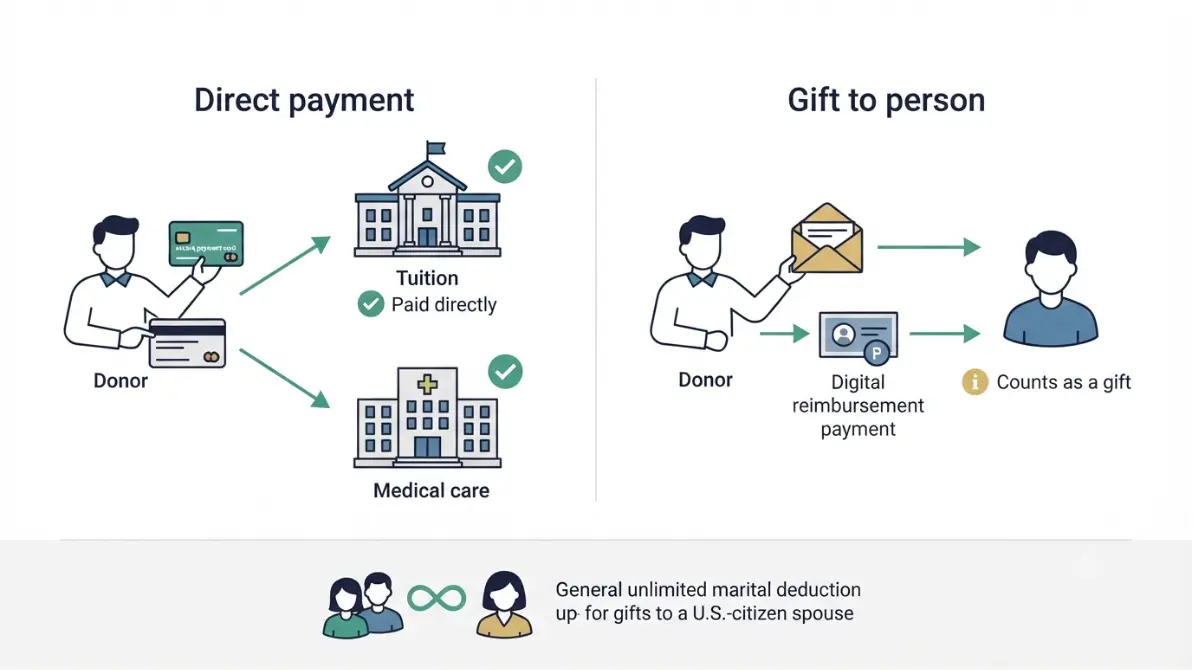
The limit applies per giver, per recipient, resets every January 1, and covers only present-interest gifts the recipient can use immediately.
Gifts that never count: tuition, medical, spouse
The IRS gift tax FAQ says these generally aren’t taxable gifts:
- Tuition paid directly to a school
- Medical care paid directly to the provider
- Gifts to a U.S.-citizen spouse
- Gifts to a political organization for its use
⚠️ Costly Mistake: Only tuition paid straight to the school qualifies. Books, housing, and money reimbursed to the student are ordinary gifts.
Does the person receiving the gift pay tax?
Generally, no. The donor owes any gift tax, though the recipient may have to pay if the donor doesn’t.
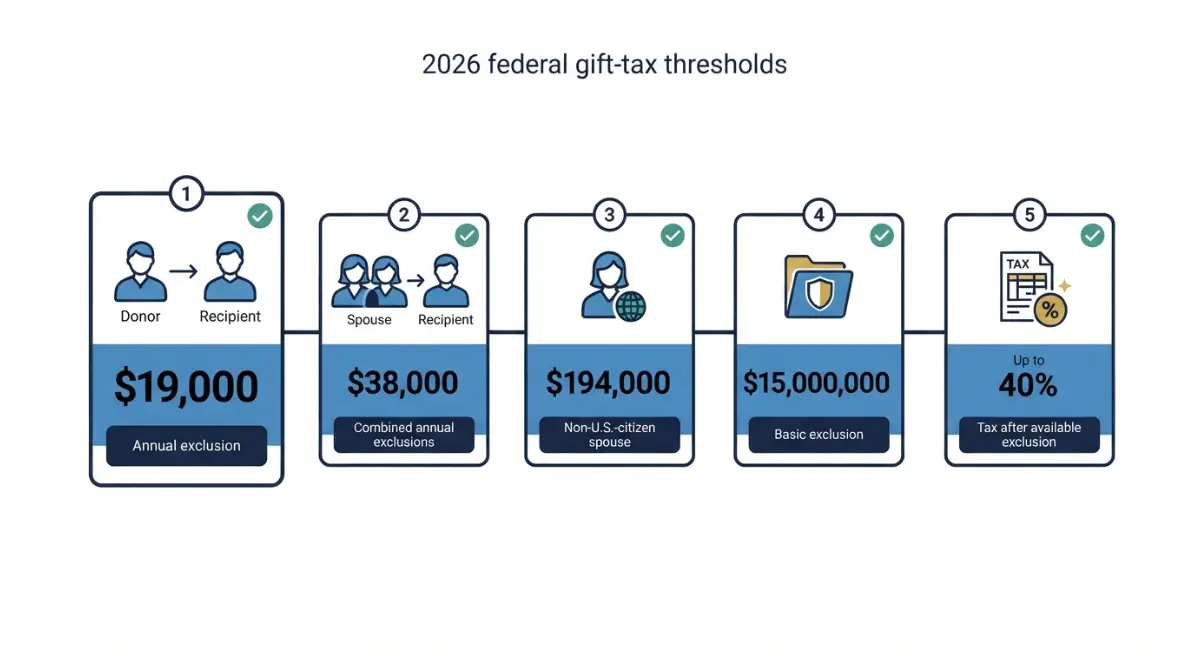
2026 gift tax limits at a glance
| Limit | 2026 amount | Key detail |
|---|---|---|
| Annual exclusion, per recipient | $19,000 | Above this, file Form 709 |
| Married couple, gift splitting | $38,000 | Requires the split election |
| Non-citizen spouse | $194,000 | Ask a CPA what counts |
| Lifetime basic exclusion | $15,000,000 | Shared by gifts and your estate |
| Top gift tax rate | 40% | Only after the lifetime amount is used |
Sources: IRS 2026 inflation adjustments; IRS estate and gift tax updates; IRS Form 709 instructions.
How married couples reach $38,000 per recipient
Gift splitting treats each spouse’s gifts to others as given half by each.
Why the limit stayed at $19,000
🔍 How It Works: The tax code inflation-adjusts a $10,000 base, then rounds down to the next lowest $1,000. For 2026, the adjustment fell short of the next step.
Do you need to file Form 709? A quick check
You must file Form 709 for 2026 if any answer is yes:
- Did you give one person, other than your spouse, over $19,000?
- Are you and your spouse splitting gifts?
- Did you make a future-interest gift of any size?
- Are you spreading a 529 deposit over five years?
- Did gifts to a non-citizen spouse exceed $194,000?
- Did you give your spouse an interest that ends later, such as a life estate?
Gift splitting always needs a return
Splitting requires Form 709 at any amount. If only one spouse gave, and no recipient got over $38,000 in present-interest gifts, only that spouse files, with the other’s signed consent.
Future-interest gifts, like many trusts, need one at any size
A future interest, which the recipient can’t use until later, gets no annual exclusion. A 529 deposit counts as a present interest. You can size one with our college savings calculator and review the 529-to-Roth IRA rollover rules.
✅ Action Step: Before funding a trust or making a 529 five-year election, ask a CPA or enrolled agent: “Does this gift qualify for the annual exclusion?”
What happens if you give more than $19,000
Going over uses part of your lifetime exclusion; it rarely creates a tax bill.
Example: a $25,000 gift to one child
Assuming no earlier taxable gifts:
- 2026 gift: $25,000
- Minus annual exclusion: $19,000
- Reportable taxable gift: $6,000
Your $15,000,000 lifetime amount drops to $14,994,000. You owe $0 now but must file by April 15, 2027.
Example: a married couple giving $38,000
With gift splitting, each spouse is treated as giving $19,000. Neither lifetime amount shrinks, but Form 709 is still required.
💡 Expert Note: Gifts and estates share one exemption. Lifetime gifts reduce what the $15 million exemption shelters at death. For how any tax that remains gets paid, see who pays estate tax.
How to file Form 709: deadline, extension and e-file
Form 709 is an annual return covering every reportable gift for the year. For 2026 gifts, it’s due April 15, 2027, or the next business day if that falls on a weekend or holiday. Spouses can’t file jointly.
Getting more time with your income tax extension
Extending your 2026 income tax return with Form 4868 also extends Form 709. Otherwise, Form 8892 grants six months.
⚠️ Costly Mistake: Neither extension delays payment. Gift tax owed needs a separate payment extension, or penalties can apply.
Yes, Form 709 can now be e-filed
The IRS instructions for Form 709 confirm Modernized e-File is available. Guides saying “paper only” are outdated.
Gift tax mistakes that cause bigger problems than the tax
Most gift tax trouble comes from paperwork and valuation, not the tax itself.
Reimbursing tuition instead of paying the school
Only payments sent straight to the school or medical provider escape the limit.
Skipping the return because no tax is due
The IRS’s time limit to question a gift’s value starts only once the gift is adequately disclosed on Form 709.
Gifts of property can raise capital gains tax questions later, which you can estimate with our capital gains tax calculator. For gifts made through a trust, see our will vs. trust guide.
✅ Action Step: Before gifting real estate or stock, ask a CPA or estate planning attorney: “How will this be valued, and what basis will the recipient receive?”
Frequently asked questions
1. How much can you gift in 2026 tax-free?
The annual gift tax exclusion lets you give $19,000 per recipient in 2026, to any number of people, tax-free. A CPA can confirm your gifts qualify.
2. What happens if I give more than $19,000?
Above $19,000, you file Form 709; the excess reduces your $15,000,000 lifetime exclusion, and tax is usually $0. An enrolled agent can prepare the return.
3. Does the recipient pay tax on a gift?
Generally no. The donor owes any gift tax, though the recipient may have to pay if the donor doesn’t. Ask a CPA before arranging otherwise.
4. Can a married couple give $38,000 to one person?
Yes. Electing gift splitting on Form 709 lets a married couple give $38,000 per recipient in 2026. A CPA can confirm who must file.
5. When is Form 709 due?
Form 709 for 2026 gifts is due April 15, 2027, or the next business day after a weekend or holiday. Your tax preparer can file an extension.
6. Can Form 709 be e-filed?
Yes. The IRS accepts Form 709 through Modernized e-File, including returns showing a balance due. Ask your preparer whether they e-file it.
7. Is paying tuition directly a gift?
Tuition paid directly to the school isn’t a taxable gift; books, housing, and reimbursements to the student are. A CPA can review large education gifts.
8. Why didn’t the gift tax exclusion rise in 2026?
The gift tax exclusion rounds inflation adjustments down to the next lowest $1,000, so it stayed at $19,000. Check the figure each year with a CPA.
9. What is the lifetime gift tax exemption?
The 2026 lifetime gift tax exemption is $15,000,000 per person, shared between taxable gifts and your estate. An estate planning attorney can map your use.
10. Is there a gift limit for a non-citizen spouse?
Yes. Gifts to a spouse who isn’t a U.S. citizen have a $194,000 annual exclusion for 2026. A CPA should review cross-border gifting.
11. Do I file Form 709 if split gifts stay under the limit?
Yes. Gift splitting requires Form 709 at any amount, though sometimes only the giving spouse files. A CPA can confirm which spouse files.
Your next step before gifting
Gifts of $19,000 or less usually need nothing. Above that, file Form 709 by April 15, 2027, and expect $0 tax unless you’ve used your full lifetime amount. Some states have their own inheritance tax rules, so fold gifting into your estate planning checklist.
Related Articles
 Estate Planning
How to set up a living trust the right way, step by step
September 18, 2026 Estate Planning
Online Will vs Lawyer Decisions Made Clear for Your Family
September 21, 2026 Estate Planning
Your Parent Died Without a Will? Take the Right Steps in Order
September 30, 2026 Estate Planning
Beneficiary Designation vs Will and Who Really Gets Paid
September 28, 2026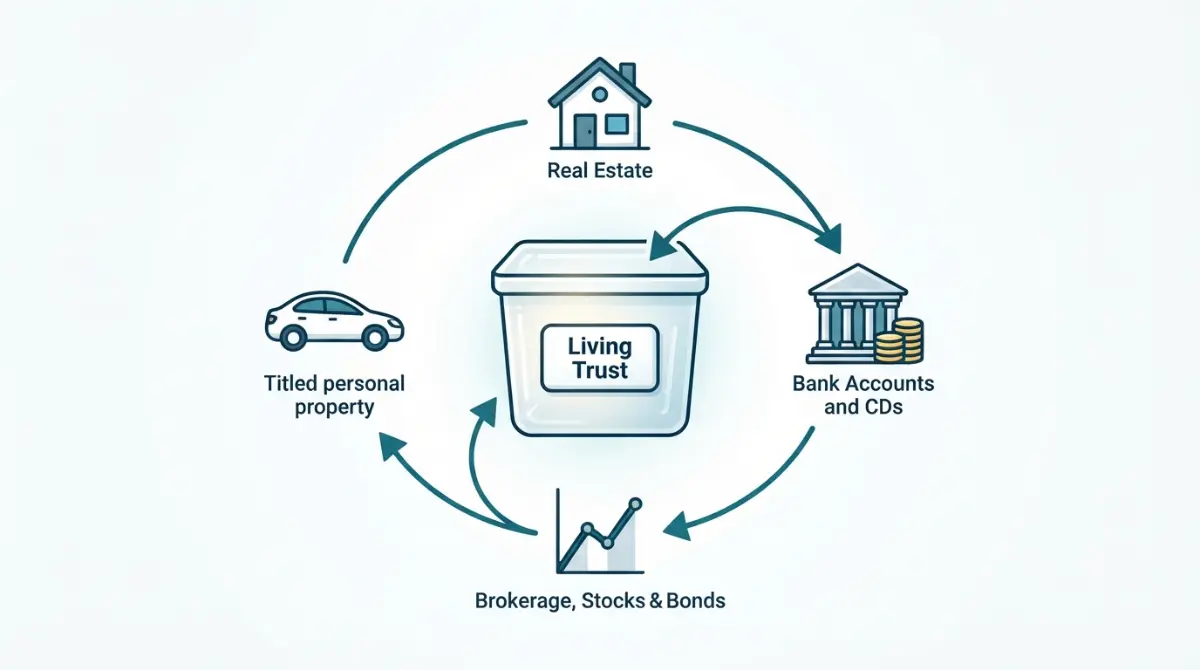 Estate Planning
The key steps to fund a living trust, asset by asset
September 19, 2026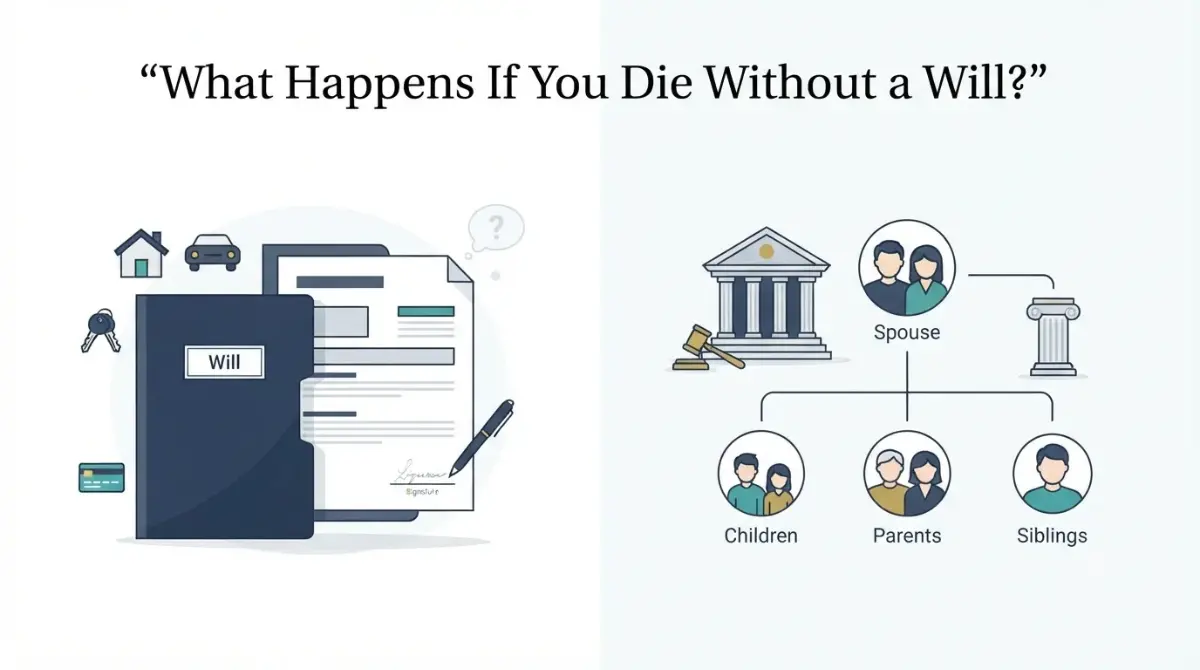 Estate Planning
A Clear Look at What Happens If You Die Without a Will
September 30, 2026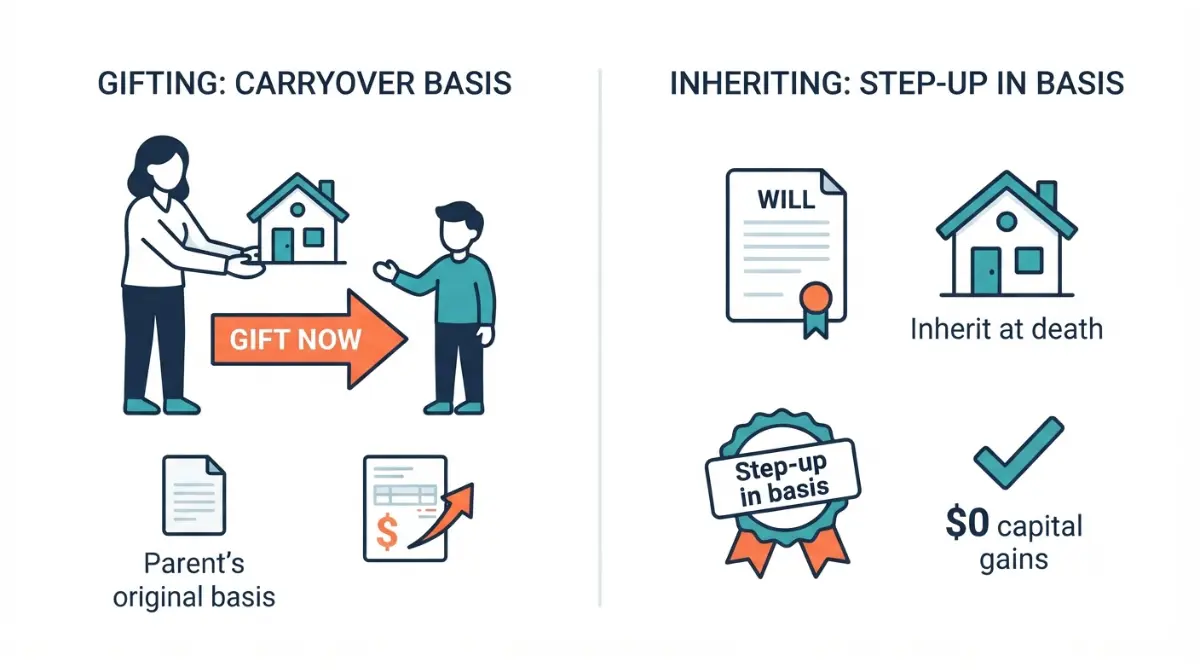 Estate Planning
Gifting a House vs Inheritance and What Your Child Will Owe
September 26, 2026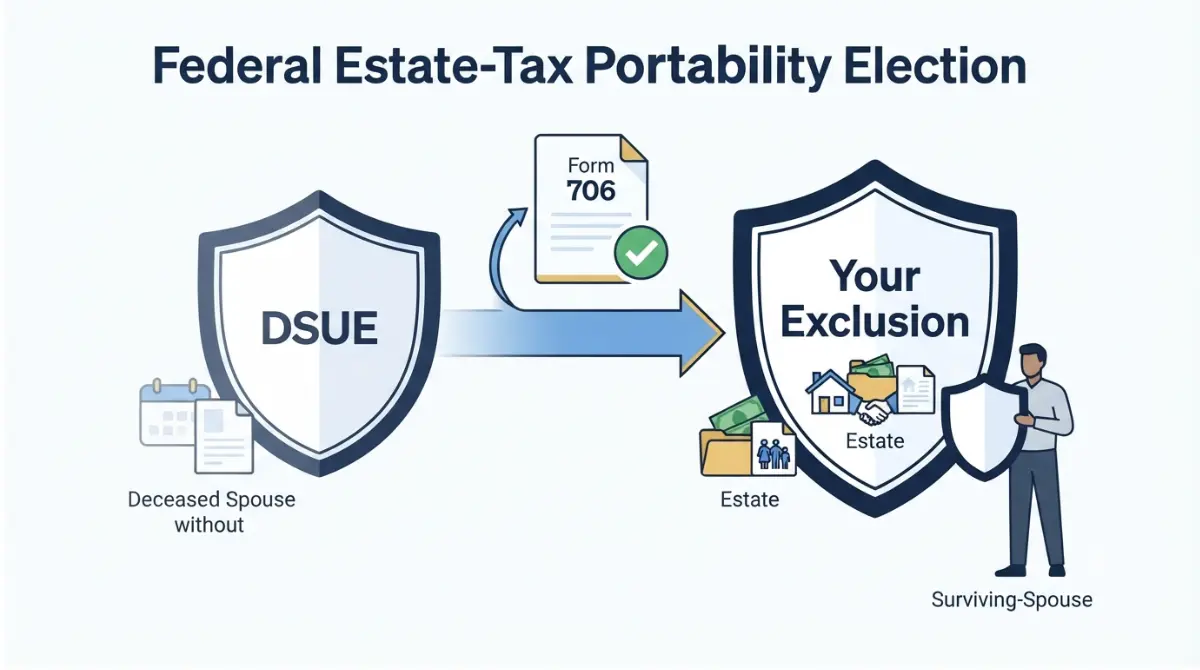 Estate Planning
The Portability Election and Your Spouse’s Overlooked Exemption
September 24, 2026 Estate Planning
How a Special Needs Trust Can Protect SSI and Medicaid
September 30, 2026
Informational disclaimer
The content on Finance Authority Hub is provided for general informational and educational purposes only and should not be considered personalized financial, investment, tax, legal, or professional advice. Financial decisions depend on your individual goals, income, risk tolerance, location, and regulatory situation. Before acting on any information, strategy, estimate, or calculator result, consult a qualified licensed professional who can evaluate your specific circumstances.