
A Clear Blended Family Estate Planning Guide for Stepkids
Blended family estate planning under the 2026 federal exclusion of $15,000,000 is mostly control, not federal tax. See what stepkids get with a plan.
In This Article
What happens to stepkids if you have no plan
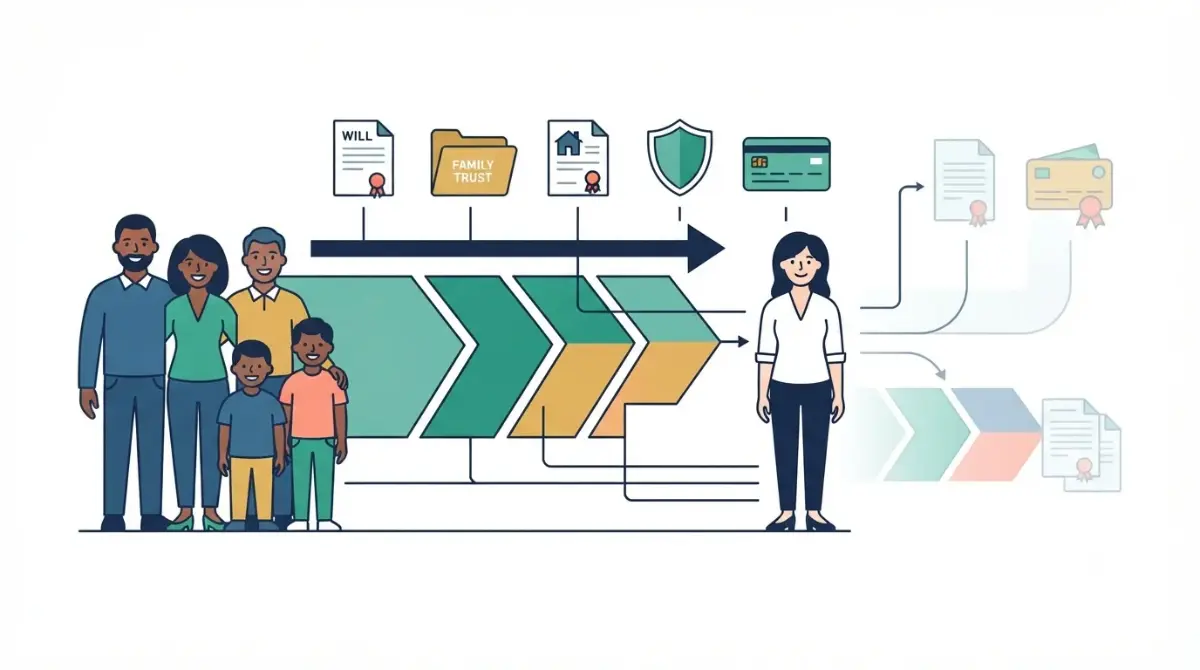
Stepchildren generally don’t inherit automatically, because state default rules favor a spouse and the decedent’s own relatives.
Who counts as a stepkid
A stepchild is your spouse’s child, not yours, unless you adopted them. Under the Uniform Probate Code model many states follow, stepchildren take only as a last resort before the estate goes to the state, and state law varies.
Find your situation
- Stepparent providing for a spouse’s kids: sections 3 and 4.
- Parent protecting your own kids from a new spouse’s control: sections 3, 4, and 7.
- Retirement-account holder: section 5.
- Adult stepchild: section 2.
ℹ️ Financial Disclaimer: This article is general education about estate planning (wills, trusts, titles, and beneficiary designations), investment and retirement-account choices, federal and state tax on estates and inherited property, life insurance beneficiary decisions, and any lending or debt-relief arrangement tied to an estate. It is not legal, tax, investment, or insurance advice, and probate and trust rules vary by state. Before changing a will, trust, title, or beneficiary form, consult an estate planning attorney licensed in your state, a CPA, or a fiduciary financial advisor.
Why a will alone won’t protect your stepkids
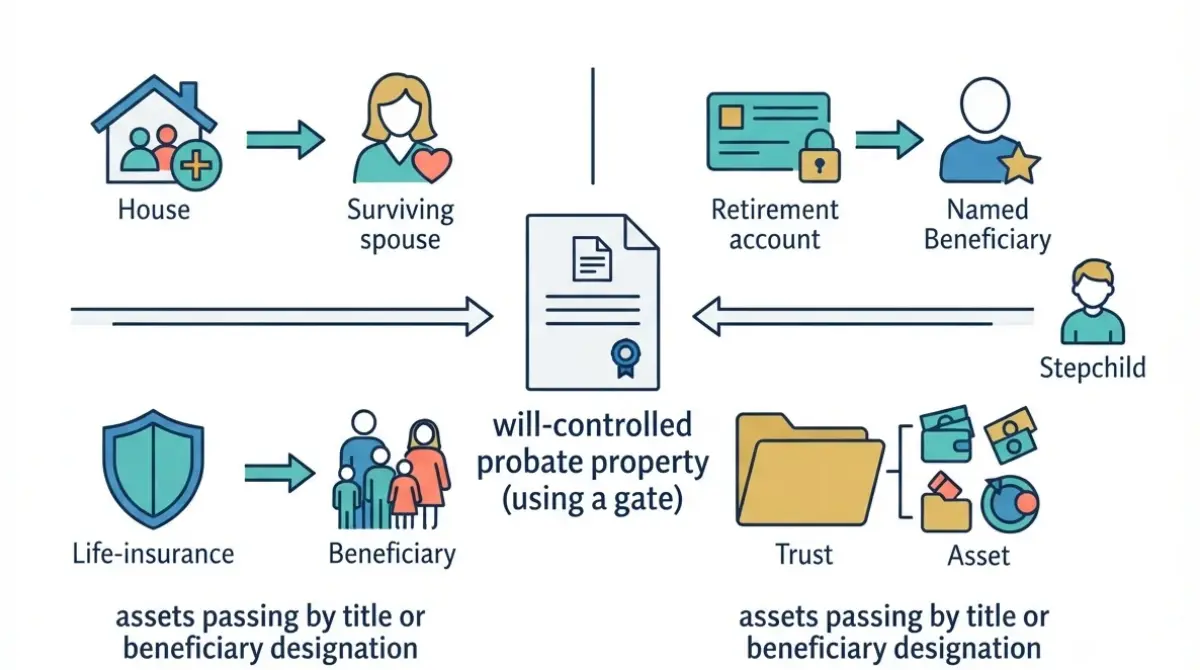
A will controls only property in your name alone, so a remarried couple’s largest assets often follow other documents.
What your will controls
Your will governs your probate estate: solely owned assets with no beneficiary or co-owner. A retirement plan generally pays only the beneficiaries named on its own forms, according to the IRS.
What overrides it for a remarried couple
A home held with survivorship rights, life insurance, and a 401(k) usually pass to the surviving or named spouse regardless of your will. If those forms name only your spouse, your stepkids are left out before the will applies. Our guide to assets not covered by a will explains each override.
A $1M estate: what stepkids get with and without a plan
One hypothetical estate shows how the same $1,000,000 can reach very different people.
The default path
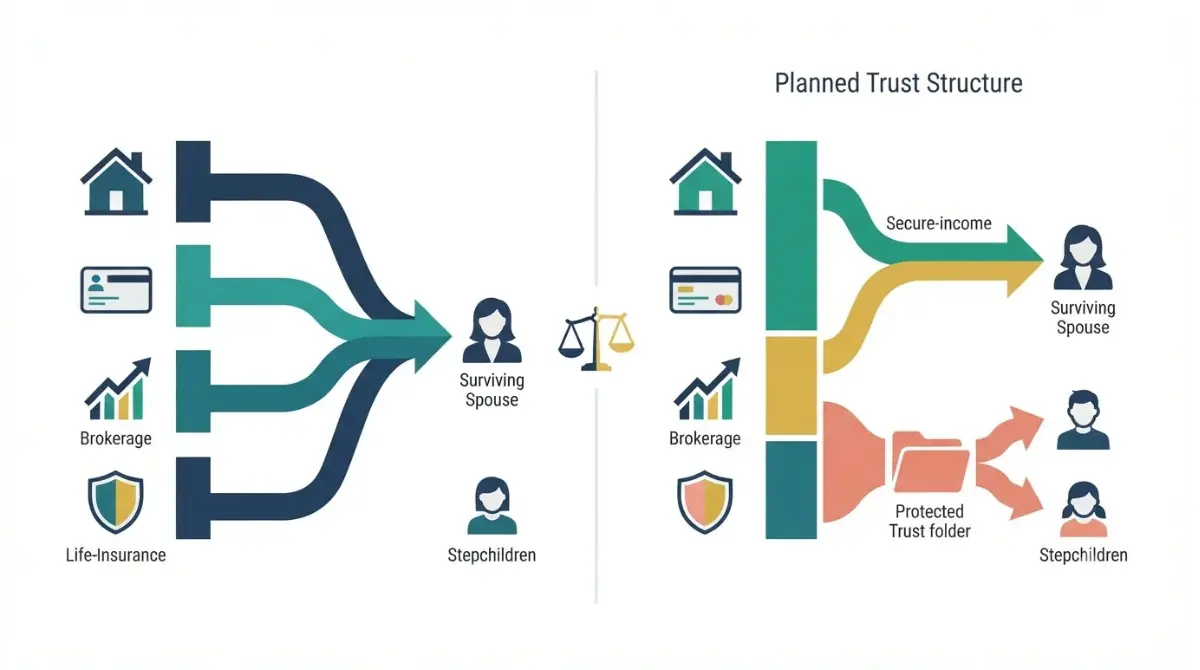
Maria, remarried to Tom, owns a $400,000 401(k), a $350,000 jointly held home, a $150,000 brokerage account, and $100,000 of life insurance, all naming only Tom. Tom’s two children (ages 17 and 24) receive $0 from Maria, and Tom can later redirect it all.
The planned path
| Asset | Planned | Key Detail |
|---|---|---|
| 401(k) + home: $750,000 | Tom outright | Security for Tom |
| Brokerage + insurance: $250,000 | Trust: income to Tom, remainder to stepkids | 25% reaches stepkids |
🔍 How It Works: $400,000 + $350,000 = $750,000 to Tom; $150,000 + $100,000 = $250,000 (25%) to the trust. Illustrative, not a recommendation; ignores growth, debts, taxes.
📊 Data Point: The federal basic exclusion amount is $15,000,000 for 2026, so this estate owes no federal estate tax (state taxes vary), and the trust’s job is control, not tax savings. Source: IRS, estate and gift tax update, verified October 2026.
Trust options that protect stepkids and a spouse
A QTIP trust pays all income to a surviving spouse for life, then passes the remainder to people the first spouse named, such as stepchildren.
QTIP and bypass trusts, defined
Under the IRS Form 706 instructions, the spouse must receive all income at least annually, no one can redirect the property during the spouse’s life, and the executor must elect QTIP status. A bypass trust instead holds the first spouse’s exemption amount for the children.
Revocable living trust
A revocable trust keeps control with you and directs assets at death; see will vs. revocable living trust.
When portability helps, and when it doesn’t
Portability lets a surviving spouse add a deceased spouse’s unused exemption, but needs a timely Form 706 per the IRS estate tax FAQ and doesn’t directly help stepchildren.
| Option | Spouse | Stepkids | Best For |
|---|---|---|---|
| Outright | Full control | No guarantee | Simple plans |
| Trust, remainder to stepkids | Lifetime income | Protected | Guarding stepkids |
| Split at death | Smaller share | Immediate share | Larger estates |
✅ Action Step: Ask an estate planning attorney: “Which structure fits our state’s law and assets?”
Retirement accounts and stepkids: consent and the 10-year rule
In most employer plans, you can name a stepchild on your 401(k) only with your spouse’s written consent.
Naming a stepchild on a 401(k)
The IRS rules on spousal retirement benefits describe plans paying the full balance to a surviving spouse unless the spouse consents otherwise. A plan representative or notary must witness that consent. IRA rules differ.
Inherited IRA payout: minor vs. adult stepchildren
Adult stepchildren generally must empty an inherited IRA within 10 years under the IRS beneficiary rules for inherited accounts. A minor stepchild counts as the owner’s child under Treasury’s final regulations, takes payouts until age 21, then faces the 10-year rule; see the inherited IRA 10-year rule.
✅ Action Step: Ask a CPA or estate planning attorney: “What payout rules apply if I name my stepchild on my IRA?”
How to build a blended family estate plan, step by step
A workable blended family plan follows six steps, in this order.
Before you meet an attorney
- List every asset and what controls it: will, beneficiary form, title, or trust.
- Decide your split between spouse security and stepkid protection.
- Talk with your spouse and, where appropriate, the kids.
What to bring and ask
- Update beneficiary forms, including spousal consent where required, and notify plan administrators after you marry.
- Have an attorney draft the will and any trust; see choosing an estate planning attorney.
- Name a trustee and fund the trust; a trust controls only what it owns, per funding the trust.
✅ Action Step: Ask an estate planning attorney: “Which documents does our situation need, and what should each say about my stepchildren?”
Mistakes that quietly disinherit stepkids
Several common errors can undo a careful plan without anyone intending it.
Paperwork mistakes
- Mirror wills: each spouse leaves everything to the other, so the survivor can rewrite theirs.
- Stale forms: a beneficiary form never updated after remarriage still controls.
Both are fixable with a new form or document.
Control and conflict mistakes
💡 Expert Note: When a trust pays a spouse income and the remainder goes to children, the trustee faces opposing interests, so practitioners often favor a neutral third-party trustee.
Common questions about blended family estate planning
1. Do stepchildren inherit automatically in blended family estate planning?
Generally no. Default state rules favor spouses and blood relatives; under the Uniform Probate Code model, stepchildren take only as a last resort. An estate planning attorney can confirm your state’s rule.
2. How do I leave money to stepchildren?
Name them in a will, trust, or beneficiary form; in a blended family, a trust can also protect their remainder after a spouse dies.
3. Can my spouse disinherit my kids after I die?
If assets pass outright to a spouse, yes; the spouse controls them afterward, so blended family estate planning often uses trusts. An estate planning attorney can advise on your state’s rules.
4. What is a QTIP trust?
It pays all income to a surviving spouse for life, then the remainder goes to beneficiaries the first spouse named, per IRS Form 706 instructions. A CPA or estate planning attorney can say whether it fits your estate.
5. Does a will override a beneficiary designation?
No. Retirement plans generally pay the named beneficiary, so blended family beneficiary forms must match your will. Your plan administrator can confirm who is currently named.
6. Can I name a stepchild on my 401(k)?
In many employer plans, only with your spouse’s written consent, witnessed by a notary or plan representative, which blended family accounts need. Ask your plan administrator for the consent form.
7. Do stepchildren face the 10-year rule on an inherited IRA?
Adult stepchildren generally must empty it within 10 years; a minor stepchild takes payouts until age 21, then the 10-year rule applies. A CPA can calculate required withdrawals.
8. Do I need a trust for a blended family?
Consider one when your spouse’s and stepchildren’s interests conflict, such as a spouse needing income while the remainder should reach stepchildren. An estate planning attorney can advise on your state’s rules.
9. What is the 2026 federal estate tax exemption?
The basic exclusion amount is $15,000,000 per person for 2026, so blended family estates below it generally owe no federal estate tax. A CPA can estimate whether your estate is affected.
10. Does portability help my stepchildren?
Not directly. Portability only lets a surviving spouse add a deceased spouse’s unused exemption, and requires a timely Form 706. A CPA or estate planning attorney can advise on Form 706 timing.
11. Do I update beneficiaries after I remarry?
Yes. Tell your plan administrator promptly after marrying, and update forms so blended family beneficiary designations match your plan.
Your next step
Your will is only one document in a blended family plan; beneficiary forms, titles, and trusts often decide who gets what. Run a beneficiary audit this week, then bring the questions from sections 3 to 6 to your first attorney meeting. A written plan lets your spouse and your stepkids both know where they stand.
Related Articles
 Estate Planning
Key Rules for the $19,000 Annual Gift Tax Exclusion and Form 709
September 24, 2026 Estate Planning
Naming a Guardian for Minor Children in Your Will, Step by Step
October 2, 2026 Estate Planning
Online Will vs Lawyer Decisions Made Clear for Your Family
September 21, 2026 Estate Planning
A Clear Guide to the $15 Million Estate Tax Exemption
September 23, 2026 Estate Planning
Gifting a House vs Inheritance and What Your Child Will Owe
September 26, 2026 Estate Planning
Who Pays Estate Tax, and How Rarely Estates Actually Owe It
September 23, 2026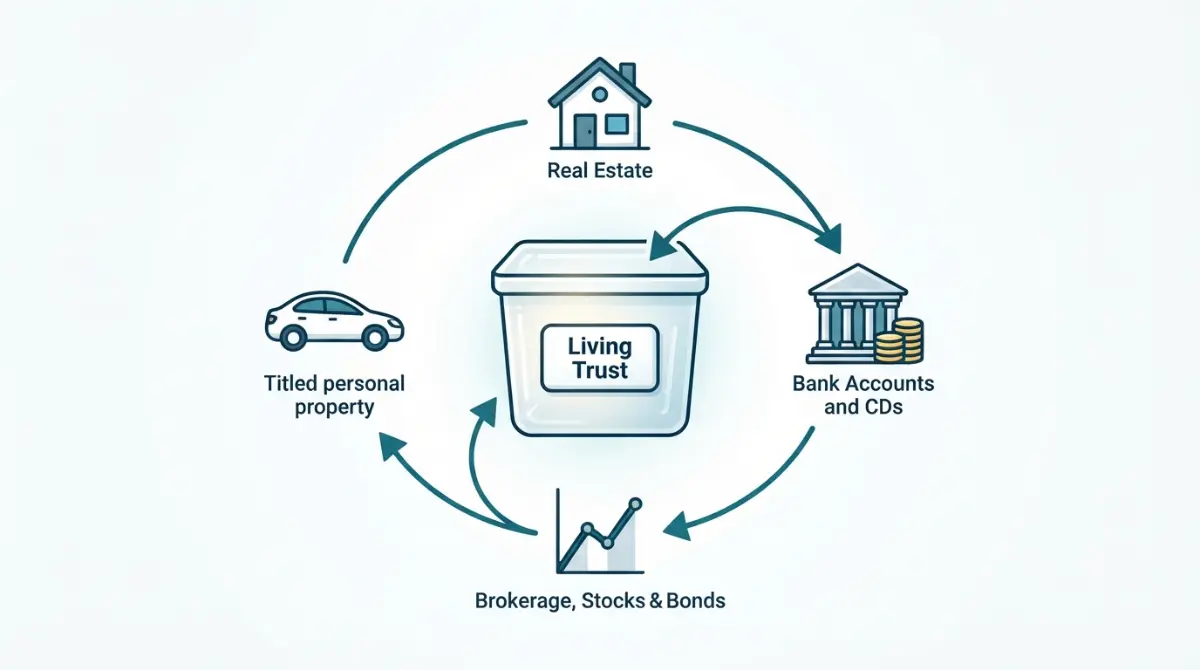 Estate Planning
The key steps to fund a living trust, asset by asset
September 19, 2026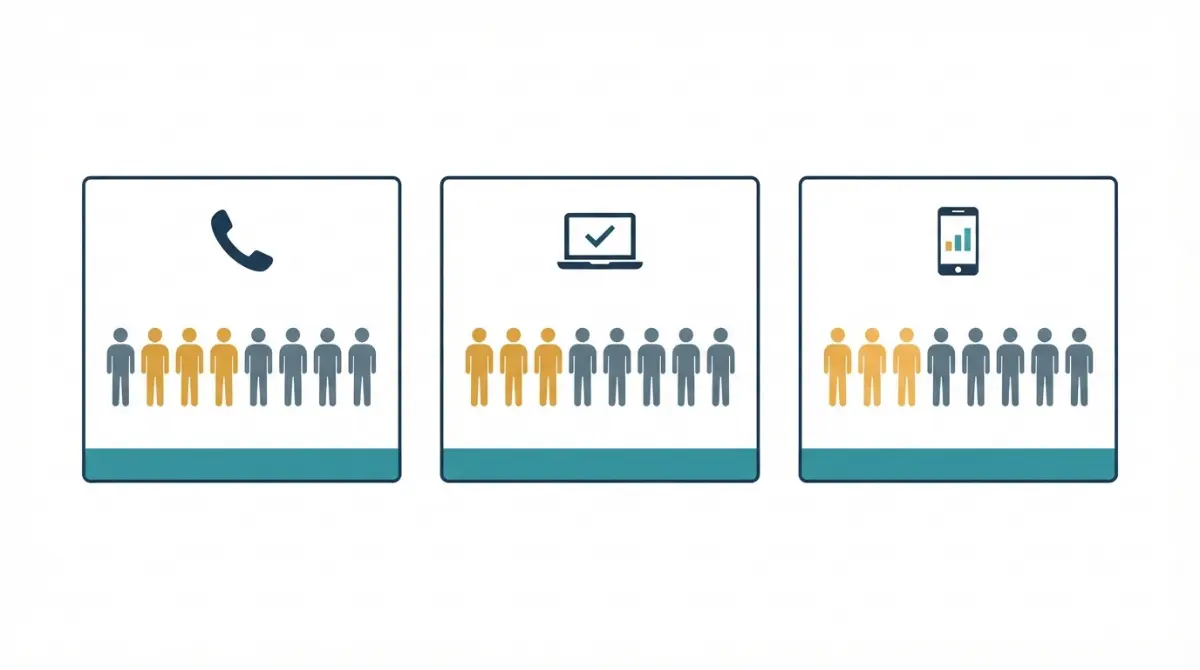 Estate Planning
The Right Way to Read the Percentage of Americans With a Will
October 5, 2026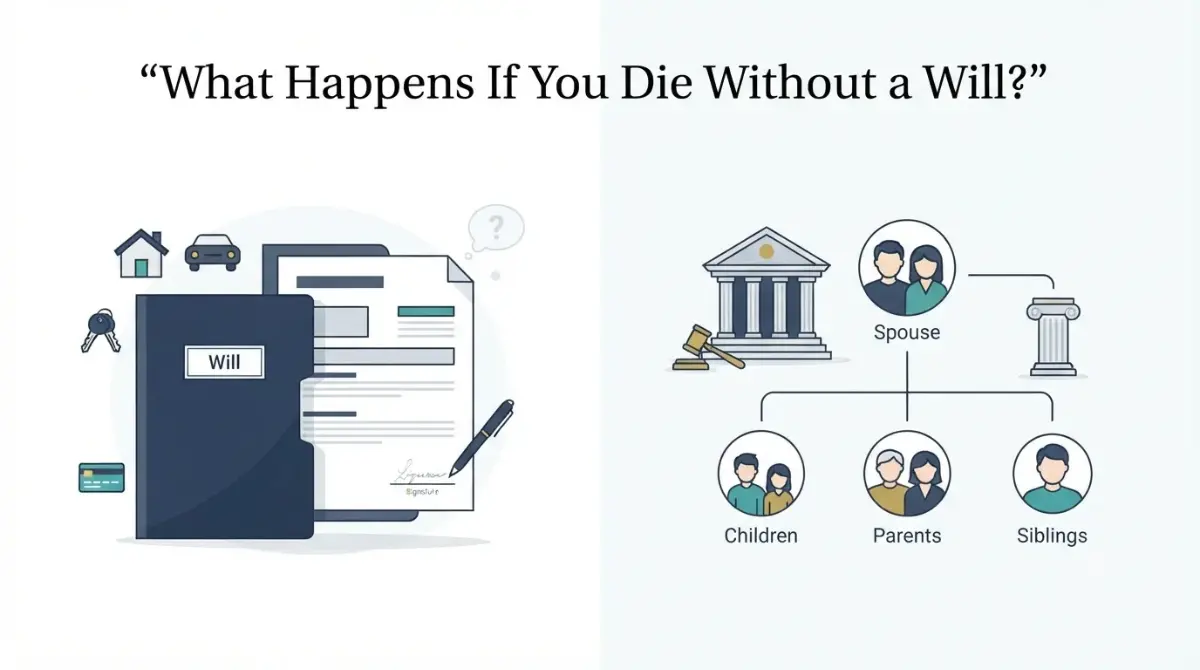 Estate Planning
A Clear Look at What Happens If You Die Without a Will
September 30, 2026
Informational disclaimer
The content on Finance Authority Hub is provided for general informational and educational purposes only and should not be considered personalized financial, investment, tax, legal, or professional advice. Financial decisions depend on your individual goals, income, risk tolerance, location, and regulatory situation. Before acting on any information, strategy, estimate, or calculator result, consult a qualified licensed professional who can evaluate your specific circumstances.