
The estate planning checklist, ordered so nothing gets overlooked
An estate planning checklist fails when it’s unordered: beneficiary forms on a 401(k) or life policy outrank your will, whatever the will says.
In This Article
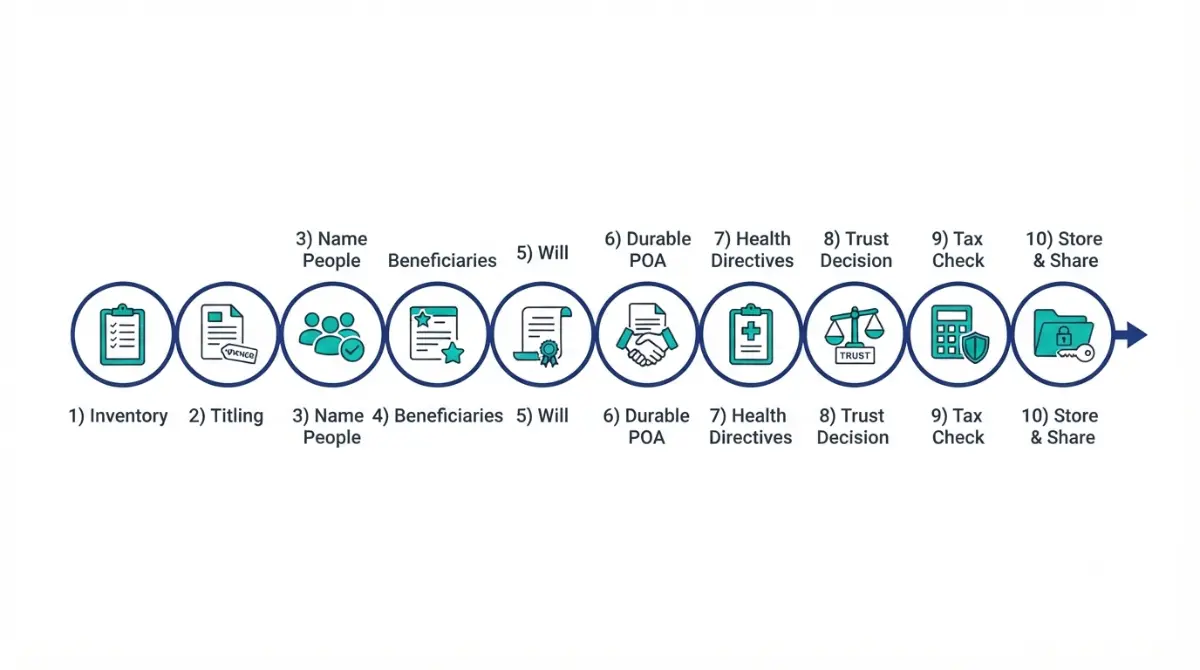
The 10 steps, in the order that works
Most estate planning checklists hand you a pile of documents with no sequence, which is how people finish one and still leave their largest asset going to the wrong person.
If you have minor children, steps 3 and 5 are the urgent ones. If a parent or spouse is declining, start at 6 and 7. If you own property in two states, step 8 is where your money is. If you have ten minutes today, do step 4 — it costs nothing.
An estate planning checklist works in this order:
- List every account, property and debt.
- Record how each asset is titled.
- Choose your executor, agents and guardian.
- Check and update every beneficiary designation.
- Write the will.
- Sign a durable power of attorney.
- Add health directives and a HIPAA release.
- Decide whether you need a trust.
- Check federal and state tax exposure.
- Store it, share access, set review triggers.
📊 Data Point: 32% of U.S. adults say they have created a will, and 31% have a living will or advance health care directive — Source: Pew Research Center, survey of 8,750 U.S. adults fielded September 2–8, 2025.
ℹ️ Financial Disclaimer: This article is educational and is not personalized investment, tax, lending, credit, insurance or legal advice. Estate law is set by each state, and the rules governing wills, powers of attorney, trusts and inheritance differ substantially between them. Before acting, consult a state-licensed estate planning attorney, a CPA for tax questions, and a fiduciary advisor for decisions involving your investments or retirement accounts.
Steps 1–3: what you own, how it’s titled, who you’ll name
Everything later on this list depends on one input most people never build: a complete asset inventory with each item’s ownership type beside it.
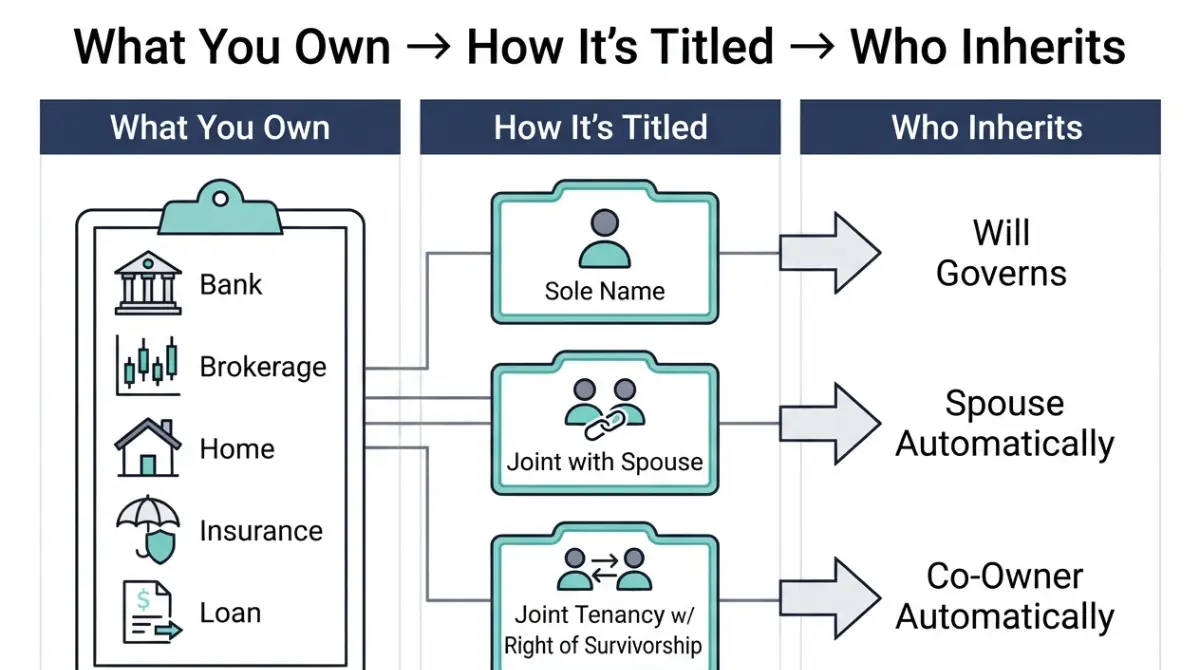
Step 1: list every account, property and debt
Write down every bank account, retirement plan, brokerage account, insurance policy, property and outstanding loan in one place.
Step 2: record how each one is titled
Sole name, joint with a spouse, or joint tenancy with right of survivorship are three different outcomes, and FINRA’s guidance on how account registration determines who inherits a brokerage account explains why the registration, not your intention, controls the transfer.
Step 3: choose your executor, agents and guardian
Pick the executor for your estate, the agent for your finances, the agent for your health decisions, and a guardian for any minor children — before anyone drafts anything.
The Step Order Dependency Table
| Step | Do it after | Key detail: what breaks if you skip ahead |
|---|---|---|
| 1. Inventory assets | Nothing | Every later step guesses at what you own |
| 2. Record titling | Step 1 | You can’t tell which assets your will governs |
| 3. Name your people | Step 2 | A court picks instead of you |
| 4. Fix beneficiary forms | Step 3 | The will loses on your biggest accounts |
| 5. Write the will | Step 4 | It contradicts forms that outrank it |
| 6. Durable power of attorney | Step 3 | Nobody can act while you’re alive |
| 7. Health directives | Step 6 | Medical and money authority split apart |
| 8. Trust decision | Steps 1–2 | You pay for a trust you didn’t need |
| 9. Tax exposure check | Step 8 | State rules surface after the plan is set |
| 10. Storage and review | All | A valid document nobody can find |
Steps 4–5: fix beneficiary forms before you write the will
Yes — a beneficiary designation on a retirement account, life insurance policy or transfer-on-death brokerage account controls who receives that asset, regardless of what your will says.
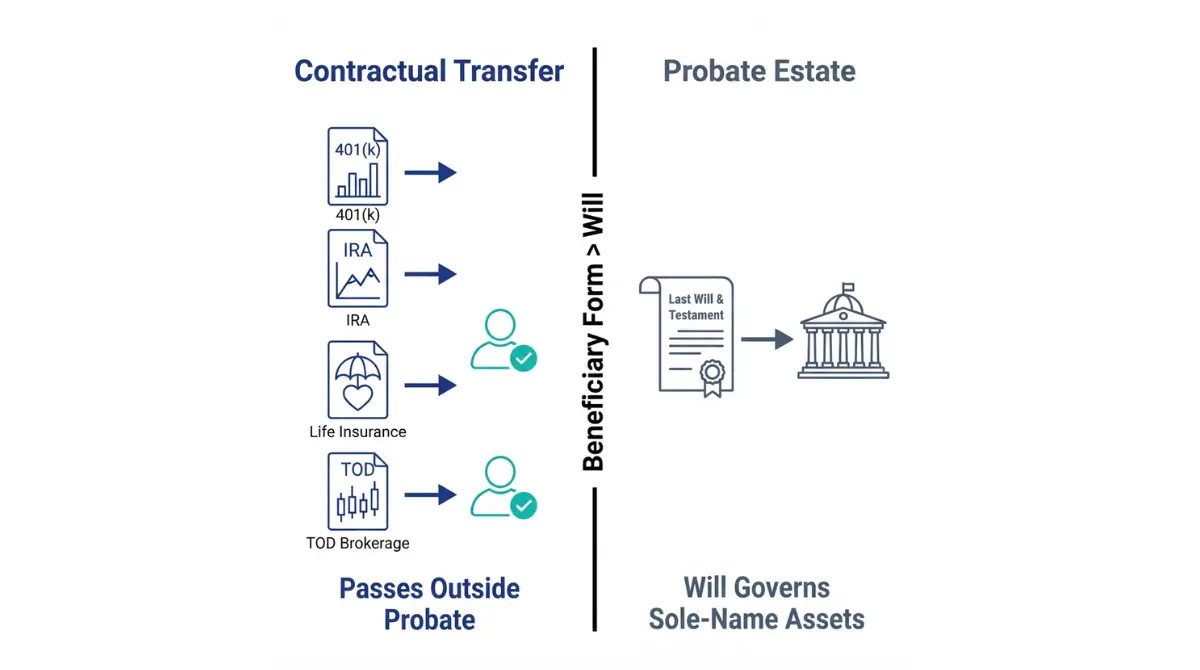
| Asset type | What actually controls it | Key detail |
|---|---|---|
| 401(k), IRA, life insurance | The beneficiary form on file | Your will cannot override it |
| TOD or POD accounts | The registration you signed | Passes outside probate entirely |
| Home held with survivorship | The deed | Goes to the co-owner automatically |
| Anything in your sole name | Your will | This is what a will actually governs |
🔍 How It Works: These are contractual and registration-based transfers, meaning the institution pays whoever is named in its own records. The SEC’s Office of Investor Education confirms that transfer on death registration for securities passes them directly to the named person without probate. The will never enters the process, so it cannot correct a stale form.
An unchanged 401(k) naming an ex-spouse defeats a newer will naming your current spouse. Inheritance also carries a timeline: most non-spouse beneficiaries must empty an inherited retirement account by December 31 of the tenth year after death, and the 10-year rule for inherited IRAs can require withdrawals in the earlier years too.
Once the forms are correct, write the will for everything left — which is the sole-name column above, plus the assets that pass outside your will that you may have misjudged.
✅ Action Step: Log into every retirement, brokerage, bank and insurance account this week and read the named primary and contingent beneficiaries on screen. Do not rely on memory of the onboarding paperwork you signed.
Steps 6–7: the documents that work while you’re alive
A will does nothing until you die, and the likelier scenario is a stretch where you are alive and unable to sign.
Step 6: durable power of attorney
A durable power of attorney lets someone you name handle money and property if illness or injury leaves you unable to.
Step 7: health directives and a HIPAA release
These name a medical decision-maker, record your treatment wishes, and let providers share information with the person deciding.
💡 Expert Note: The Consumer Financial Protection Bureau frames an agent under a power of attorney as a fiduciary with four duties — act in the person’s best interest, manage their money carefully, keep it separate, and keep records. Its free guides for agents under a power of attorney are worth handing to whoever you name. Banks sometimes reject valid forms, so confirm acceptance with your institution while you can still sign a new one.
Steps 8–9: do you need a trust, and does any tax apply?
📊 Data Point: The federal basic exclusion amount is $15,000,000 per individual for deaths occurring in 2026, up from $13,990,000 in 2025 — Source: IRS basic exclusion amount for 2026, reflecting Public Law 119-21.
Step 8: when a revocable living trust earns its cost
A revocable living trust reliably pays for itself in four situations: real property in more than one state, a blended family, a beneficiary who is a minor or has a disability, and a genuine need for privacy.
A trust you never fund does nothing, because assets never retitled into the trust still go through probate. The fuller comparison of whether a revocable living trust is worth it covers the cost side.
Step 9: the federal number, and the state number that matters more
That $15,000,000 figure is irrelevant to nearly everyone reading this. Several states impose their own estate or inheritance tax at far lower thresholds, and that is the live question.
🔍 How It Works: A married couple reaches $30,000,000 through portability — the surviving spouse claims the deceased spouse’s unused exclusion. It is not automatic: Form 706 must be filed at the first death even when no tax is owed. Separately, the FDIC insures payable-on-death and trust deposits at $250,000 per eligible beneficiary, capped at $1,250,000 per owner at one bank since April 1, 2024.
✅ Action Step: Ask a state-licensed estate planning attorney two specific questions: does my state impose its own estate or inheritance tax, and at what threshold; and if I create a trust, exactly which assets must be retitled, and who does the retitling?
Step 10: store it, share access, and set a review date
A perfect will nobody can find is worth nothing.
Where the documents live, and who can get them
Your executor needs to know the location and be able to open it — a container they cannot legally access is the same as no document.
Digital accounts and drafting routes
Keep a list of online accounts your executor will need. Online platforms handle simple estates, but they are not sufficient for blended families, business interests, special-needs beneficiaries or multi-state property. Either route still has to satisfy your state’s witness and notarization rules that make a will valid.
Where estate planning checklists go wrong
Five sequencing failures account for most broken plans.
- Drafting the will before reading the beneficiary forms.
- Creating a trust and never funding it.
- Naming an agent but never giving them the document.
- Storing everything where the executor cannot get it.
- Treating the plan as finished rather than trigger-reviewed.
⚠️ Costly Mistake: Assuming your family will sort it out. Without a will, state intestacy law sets the shares, and the split between a current spouse and children from an earlier marriage is frequently not what people assume. We won’t publish state-specific percentages here because they differ by state, and a wrong number would cost you real money.
Review triggers: marriage, divorce, a birth, a death among the people you named, buying or selling property, moving states, or a significant change in assets.
Estate planning checklist: common questions
1. What is on an estate planning checklist?
An estate planning checklist covers an asset inventory, titling review, named people, beneficiary forms, a will, powers of attorney, health directives, and storage.
2. What order should you do estate planning in?
Three phases: inventory what you own, fix the documents controlling assets now, then draft the documents controlling them later.
3. Does a will override a beneficiary designation?
No. The beneficiary designation controls that account regardless of your will. Confirm with a fiduciary advisor before restructuring any retirement account.
4. What happens if you die without a will?
Your state’s intestacy law decides who inherits, in shares set by statute rather than by anything you intended.
5. Do I need a trust or just a will?
A trust reliably earns its cost with multi-state property, blended families, or minor and special-needs beneficiaries. Consult a state-licensed estate attorney.
6. What is a durable power of attorney?
A document naming someone to handle your money and property if illness or injury leaves you unable to act.
7. What is the difference between a living will and a will?
A living will records medical wishes while you’re alive; a will distributes sole-name property after death.
8. Who should you name as executor?
Someone organized, reachable, willing, and able to work with institutions — capability matters far more than family seniority.
9. How much is the federal estate tax exemption in 2026?
$15,000,000 per individual, or $30,000,000 per married couple using portability. Confirm state-level exposure with a CPA.
10. How often should you update your estate plan?
Update by trigger, not calendar: marriage, divorce, births, deaths among named people, property changes, or moving states.
11. Can you write your own will?
Yes, if it meets your state’s witnessing and notarization rules. Complex estates should involve a state-licensed estate attorney.
Start with the step that’s free
Open one retirement account right now and read the beneficiary line. If it names someone who is no longer the right person, you have just found the most consequential document in your estate plan — and fixing it costs nothing.
Related Articles
 Estate Planning
The Right Way to Know When to Update Your Estate Plan
October 5, 2026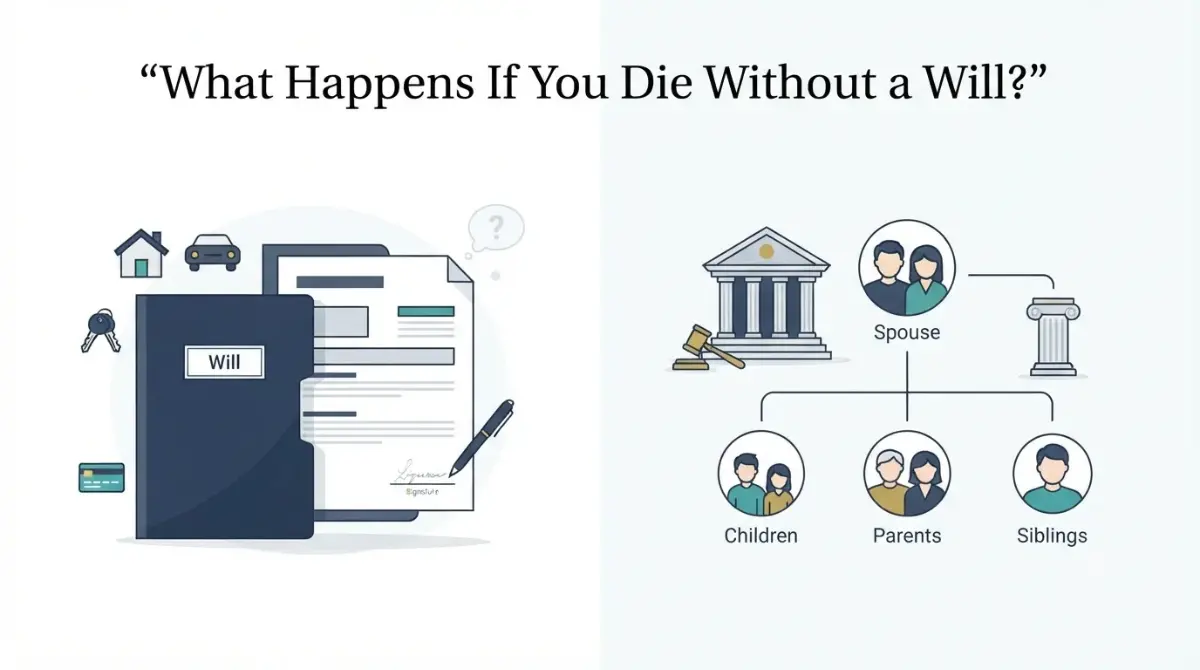 Estate Planning
A Clear Look at What Happens If You Die Without a Will
September 30, 2026 Estate Planning
 for Unmarried Couples and the Overlooked Gaps
October 2, 2026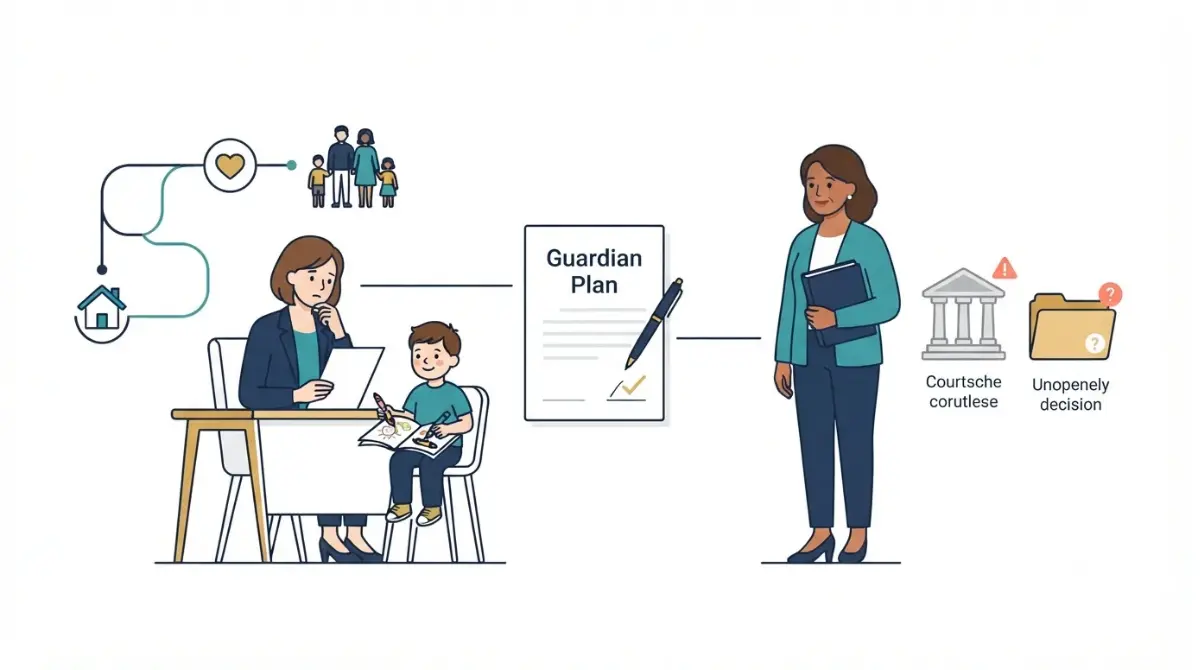 Estate Planning
Naming a Guardian for Minor Children in Your Will, Step by Step
October 2, 2026 Estate Planning
Smart Digital Assets Estate Planning Steps So Family Can Get In
October 5, 2026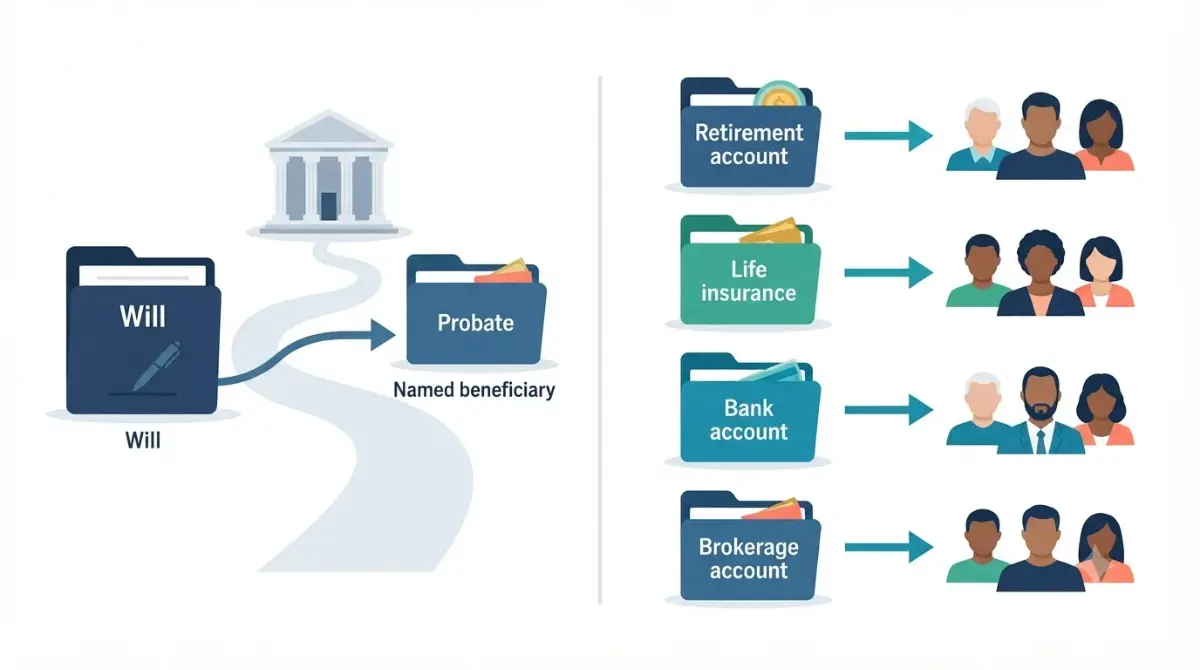 Estate Planning
Beneficiary Designation vs Will and Who Really Gets Paid
September 28, 2026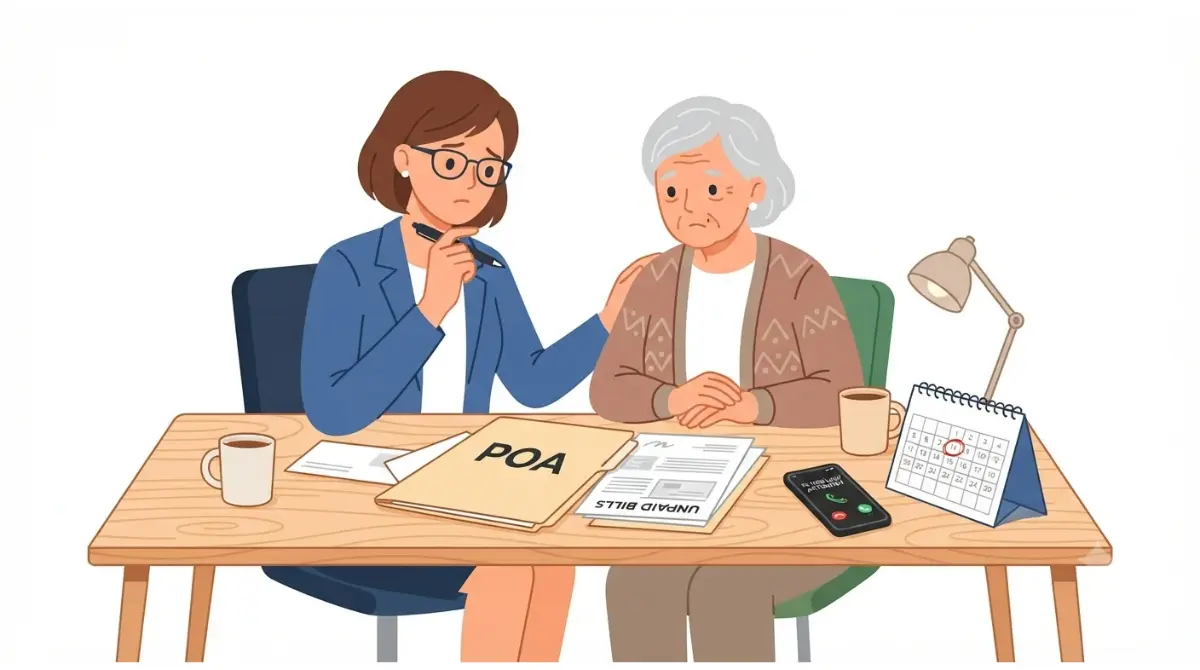 Estate Planning
First Steps When a Parent Has Dementia and No Power of Attorney
October 1, 2026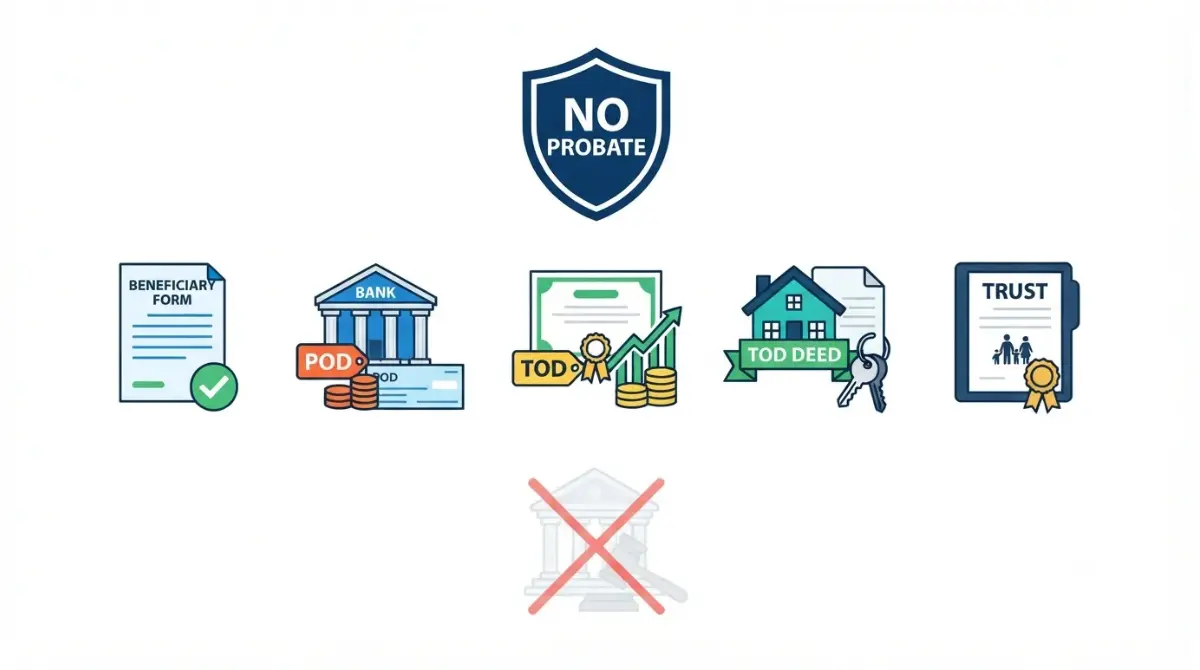 Estate Planning
How to Avoid Probate With the Right Tool for Each Asset
September 28, 2026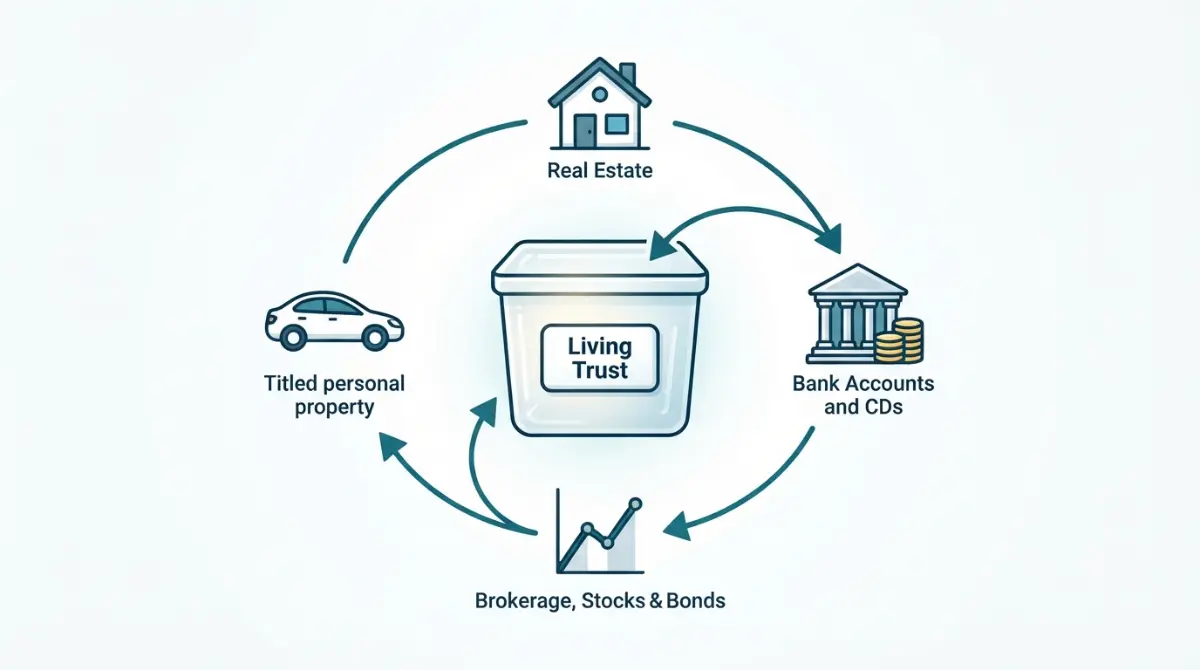 Estate Planning
The key steps to fund a living trust, asset by asset
September 19, 2026
Informational disclaimer
The content on Finance Authority Hub is provided for general informational and educational purposes only and should not be considered personalized financial, investment, tax, legal, or professional advice. Financial decisions depend on your individual goals, income, risk tolerance, location, and regulatory situation. Before acting on any information, strategy, estimate, or calculator result, consult a qualified licensed professional who can evaluate your specific circumstances.