
First Steps When a Parent Has Dementia and No Power of Attorney
A parent with dementia and no power of attorney isn’t out of options: capacity at signing, not the diagnosis, decides your first move.
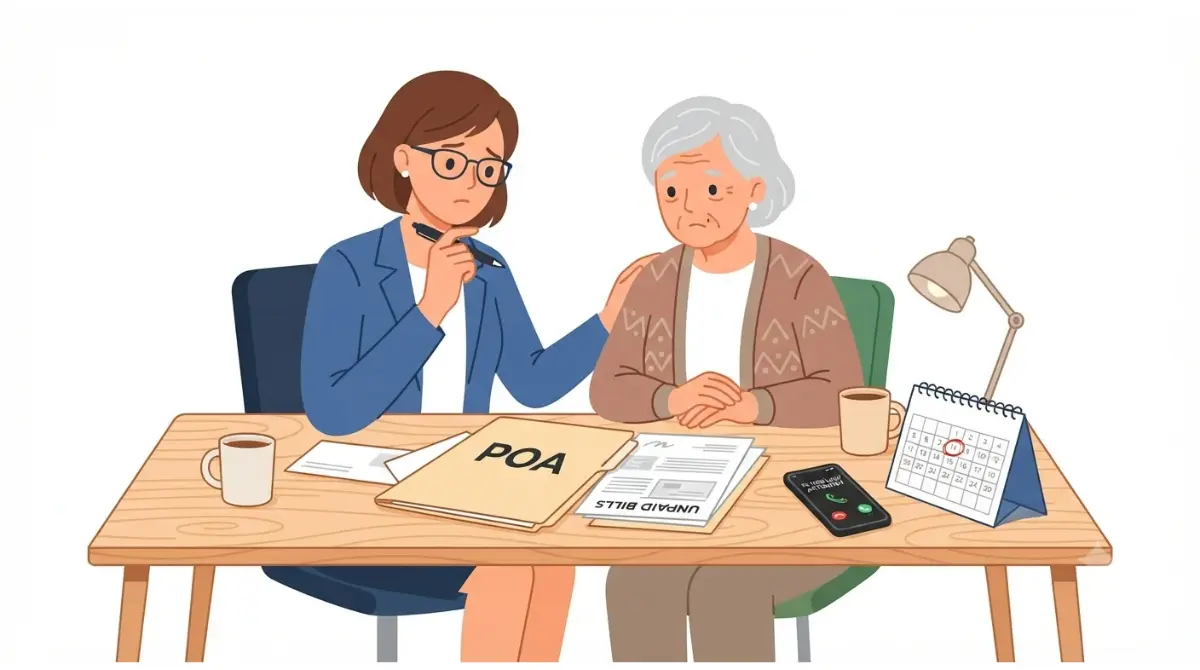
In This Article
Parent has dementia and no power of attorney: where to start
Your options depend less on the diagnosis than on whether your parent can still understand what they would be signing.
Start with one question
A power of attorney lets someone manage money when a parent can’t. If your parent can still sign, read the first section below. If not, skip to the guardianship section and the options table.
📊 Data Point: An estimated 7.4 million Americans age 65 and older live with Alzheimer’s dementia in 2026. — Source: Alzheimer’s Association, 2026 Alzheimer’s Disease Facts and Figures
If money is at risk today
Unpaid bills or suspicious withdrawals can’t wait; jump to “What you can do now.”
ℹ️ Financial Disclaimer: This article is general education about legal capacity, powers of attorney, guardianship, tax filing, government benefits, Medicaid and brokerage accounts. It is not legal, tax, investment, insurance or personalized financial advice, and state law varies. Before acting, consult an elder-law attorney licensed in your parent’s state, a CPA or enrolled agent for tax questions, and the paying agency for benefits.
Can a parent with dementia still sign a power of attorney?
Yes, if they have legal capacity when they sign. Under Alzheimer’s Association guidance, a person with dementia keeps the right to make their own decisions while they have legal capacity, and NIA says financial directives must be created while that capacity remains.
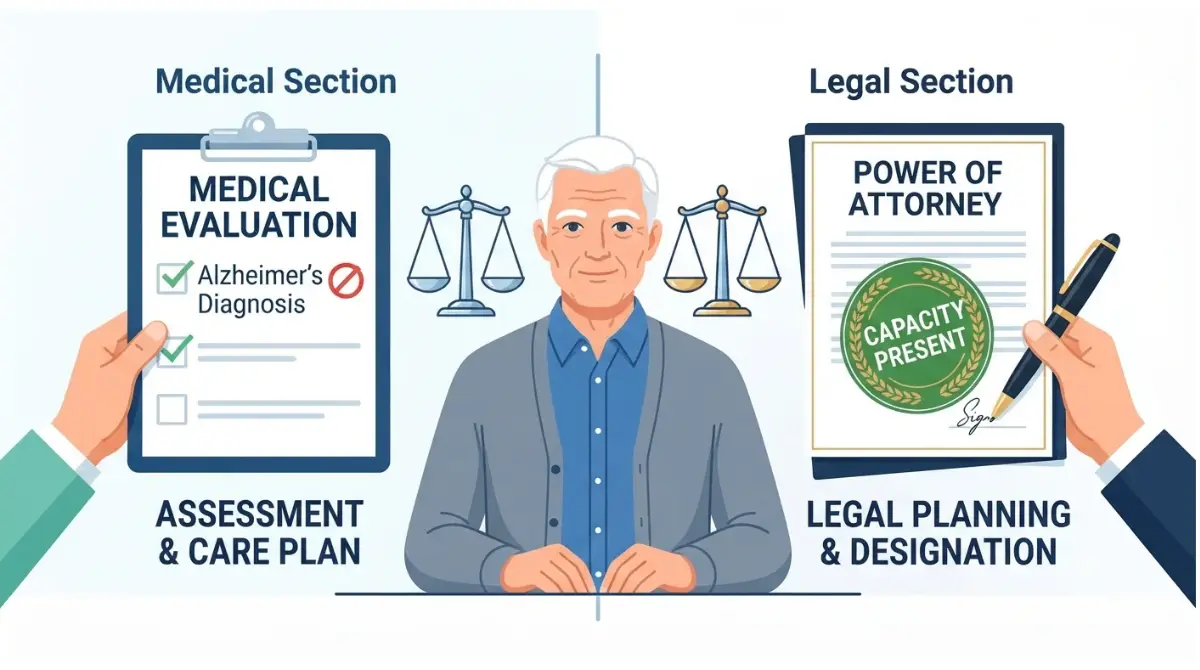
A diagnosis is not the same as legal capacity
State law sets the capacity standard, so an elder-law attorney can assess whether your parent meets it at signing. A durable power of attorney stays valid after incapacity; see what a durable power of attorney agent can do and CFPB’s guide to choosing a financial caregiver.
Signs the window may have closed
If your parent can no longer understand what the document does, a court becomes the route: CFPB says it can name a guardian or conservator when someone can’t manage money and has no power of attorney.
If your parent can’t sign: how guardianship works
When capacity is gone and no power of attorney exists, a court decides who acts.

Guardian vs conservator: what each controls
A guardian of property manages money for someone a court finds can’t manage it alone; many states call this role a conservator or guardian of estate. A guardian of the person makes health care and personal decisions.
The court process in plain steps
Steps vary by state, but a hearing decides, and state laws generally treat guardianship as a last resort that follows less restrictive options.
What a guardian owes afterward
A court-appointed guardian is a fiduciary who must act in the person’s best interest, manage money carefully, keep it separate and keep records, as CFPB’s guides for financial caregivers explain.
✅ Action Step: Ask an elder-law attorney in your parent’s county: “Is conservatorship of finances enough, and is a limited or emergency order available?”
Your 4 options when a parent has dementia and no POA
Four routes exist, depending on what your parent can still do and what needs managing.
How to read the table
| Your situation | Route | Court? | Key limit |
|---|---|---|---|
| Parent can still sign | Durable financial and health care power of attorney | No | Signed while capacity remains |
| Benefit income is the problem | Social Security representative payee or VA fiduciary | No | Covers only that agency’s benefits |
| Authority may already exist | Existing power of attorney, trust, or supported decision-making | No | A trustee manages only trust assets |
| Parent can’t sign; broader control needed | Guardianship or conservatorship | Yes | Scope set by the court order |
Source: CFPB, Managing Someone Else’s Money guides.
Check for authority that already exists
Trusts, joint ownership and beneficiary designations work outside a will, so assets that pass outside a will may already name someone. A revocable living trust names a trustee to manage its assets; see how a living trust is set up.
Social Security, VA benefits and taxes: separate rules
A power of attorney does not give you authority over your parent’s Social Security checks; the agency must appoint a representative payee, according to CFPB guidance.
Representative payees and VA fiduciaries
The same applies to a court-appointed guardian of property, who needs a separate appointment from the paying agency, and to VA benefits, which use a VA fiduciary. See CFPB’s guide for court-appointed guardians.
Filing your parent’s taxes: IRS Form 56
🔍 How It Works: After a court appoints a guardian or conservator, the IRS treats that fiduciary as the taxpayer, who must file returns and pay taxes due; Form 56 gives the IRS notice. Form 2848 only names an agent. See the IRS Form 56 instructions.
✅ Action Step: Ask a CPA or enrolled agent: “Which of my parent’s returns are unfiled, and what proof of authority will the IRS need?”
What you can do now, before you have legal authority
Interim steps can protect your parent’s money without overstepping.
Build the paper trail
List accounts, benefit letters, insurance policies, deeds and debts; CFPB’s guardian guide starts with knowing what the person owns and owes. A budget calculator can map monthly income against bills.
Brokerage accounts and the trusted contact
Under FINRA Rule 4512, brokerage firms ask account holders to name a trusted contact, and a firm may reach out to that person if it suspects dementia. FINRA describes the contact as a resource for the firm, not as someone with authority over the account. See FINRA’s FAQ on senior-investor protections.
✅ Action Step: Ask an elder-law attorney: “Is an emergency or temporary order available in our state if money is at immediate risk?”
Costly mistakes to avoid before you have legal authority
Three well-meant shortcuts cause the most damage.
Transferring assets: the Medicaid look-back
⚠️ Costly Mistake: Moving your parent’s money or property into your name can trigger a Medicaid penalty. Federal law sets a 60-month look-back, and below-market transfers within it can delay long-term-care eligibility; state rules vary.
✅ Action Step: Ask an elder-law attorney with Medicaid planning experience: “Which transfers in the last five years could affect eligibility in our state?”
Pressing for a signature when capacity is in doubt
If capacity is in doubt, let an elder-law attorney assess it before anyone signs anything.
Frequently asked questions about a parent with dementia and no POA
1. Can a parent with dementia sign a power of attorney?
Yes, if they have legal capacity when they sign; a diagnosis alone doesn’t decide it, and an attorney can assess capacity.
2. What if my parent has dementia and no power of attorney?
A court can name a guardian or conservator to manage their money when they can’t and have no power of attorney.
3. What’s the difference between a guardian and a conservator?
A conservator or guardian of property manages money; a guardian of the person makes health and personal decisions. Terms vary by state.
4. Is guardianship the only option when a parent has no power of attorney?
No. State laws generally treat guardianship as a last resort and require less restrictive options, such as supported decision-making, to be considered first.
5. How much does guardianship cost for a parent with dementia?
No reliable national figure exists. Cost depends on state, court and attorney fees, and whether anyone contests; ask your county court clerk.
6. Can I manage my parent’s Social Security without a power of attorney?
Only if Social Security appoints you representative payee. A power of attorney or guardianship doesn’t cover those benefit checks.
7. Who files taxes for a parent with dementia?
A court-appointed guardian or conservator notifies the IRS with Form 56, then files returns for them. Ask a CPA which returns are unfiled.
8. Can my parent’s brokerage talk to me?
A firm may contact the trusted contact your parent named if it suspects dementia; otherwise, ask the firm what it requires.
9. Should I move my parent’s money into my name?
No. Keep funds separate, and transfers below fair market value within Medicaid’s 60-month look-back can delay long-term-care eligibility. Ask an elder-law attorney first.
10. How long does guardianship take for a parent with dementia?
No reliable national timeline exists; it varies by state and by whether anyone contests, so ask an attorney about emergency options.
11. When should I see an elder-law attorney about a parent with dementia?
As soon as you notice decline, so someone can assess whether your parent can still sign a power of attorney.
Your next step this week
Start with one call: ask an elder-law attorney whether your parent can still sign. If they can, sooner is better. If not, find your row in the table and don’t move assets before the attorney weighs in. For help finding one, see how to choose an estate planning attorney.
Related Articles
 Estate Planning
The Right Way to Read the Percentage of Americans With a Will
October 5, 2026 Estate Planning
 for Unmarried Couples and the Overlooked Gaps
October 2, 2026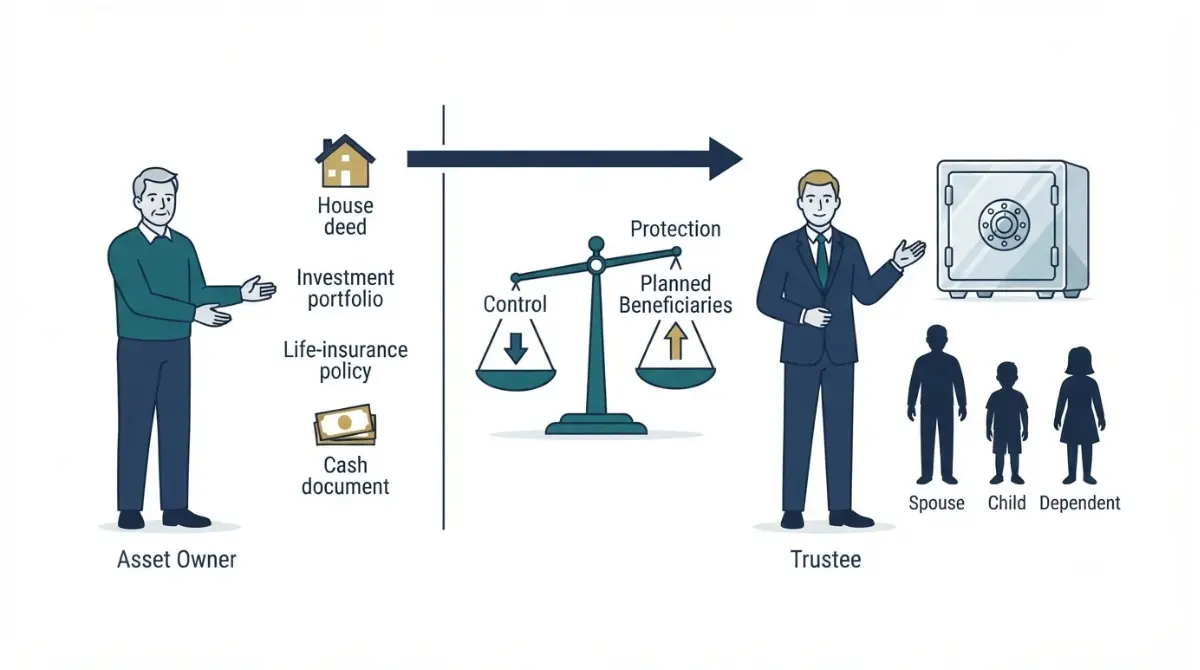 Estate Planning
When an Irrevocable Trust Is the Right Trade for Your Family
September 29, 2026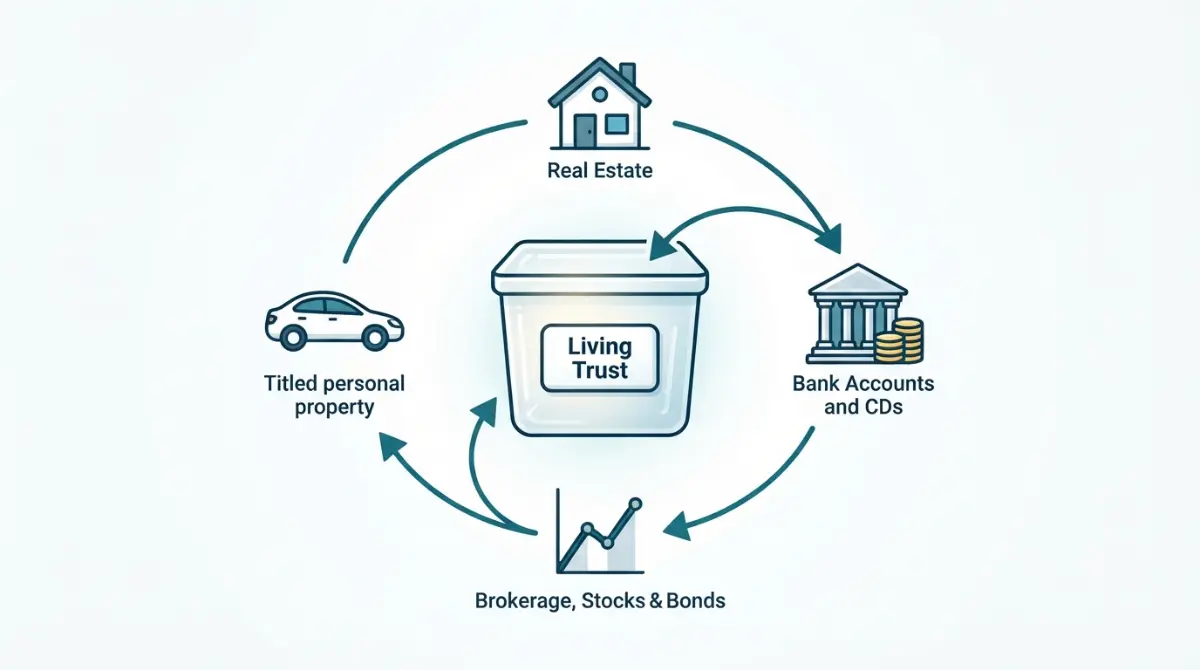 Estate Planning
The key steps to fund a living trust, asset by asset
September 19, 2026 Estate Planning
How a Special Needs Trust Can Protect SSI and Medicaid
September 30, 2026 Estate Planning
The Portability Election and Your Spouse’s Overlooked Exemption
September 24, 2026 Estate Planning
Smart Digital Assets Estate Planning Steps So Family Can Get In
October 5, 2026 Estate Planning
How a step-up in basis can cut tax on inherited stock
September 26, 2026 Estate Planning
Online Will vs Lawyer Decisions Made Clear for Your Family
September 21, 2026
Informational disclaimer
The content on Finance Authority Hub is provided for general informational and educational purposes only and should not be considered personalized financial, investment, tax, legal, or professional advice. Financial decisions depend on your individual goals, income, risk tolerance, location, and regulatory situation. Before acting on any information, strategy, estimate, or calculator result, consult a qualified licensed professional who can evaluate your specific circumstances.