
When an Irrevocable Trust Is the Right Trade for Your Family
An irrevocable trust trades control for protection, but a non-grantor trust hits the 37% bracket above $16,000 in 2026. Here’s when the trade is worth it.
In This Article
An irrevocable trust asks you to do something that feels wrong: give assets away for good. Once it’s signed and funded, you generally can’t take them back or rewrite the terms on your own.
In return, it can offer tax, care-planning, and family protections a revocable trust can’t. Start with the goal that fits you:
- Worried about estate tax? Read the revocable-versus-irrevocable comparison, then the 2026 tax rules.
- Planning for a parent’s long-term care? Go to when giving up control makes sense.
- Raising a child with a disability? That same section covers special needs planning.
ℹ️ Financial Disclaimer: This article is for educational purposes only and is not personalized tax, legal, investment, insurance, or Medicaid-planning advice. Trust, tax, and benefits rules vary by state and by the exact wording of each trust document. Before creating or funding a trust, consult a qualified estate-planning or elder-law attorney and a CPA.
What an irrevocable trust is and what you give up
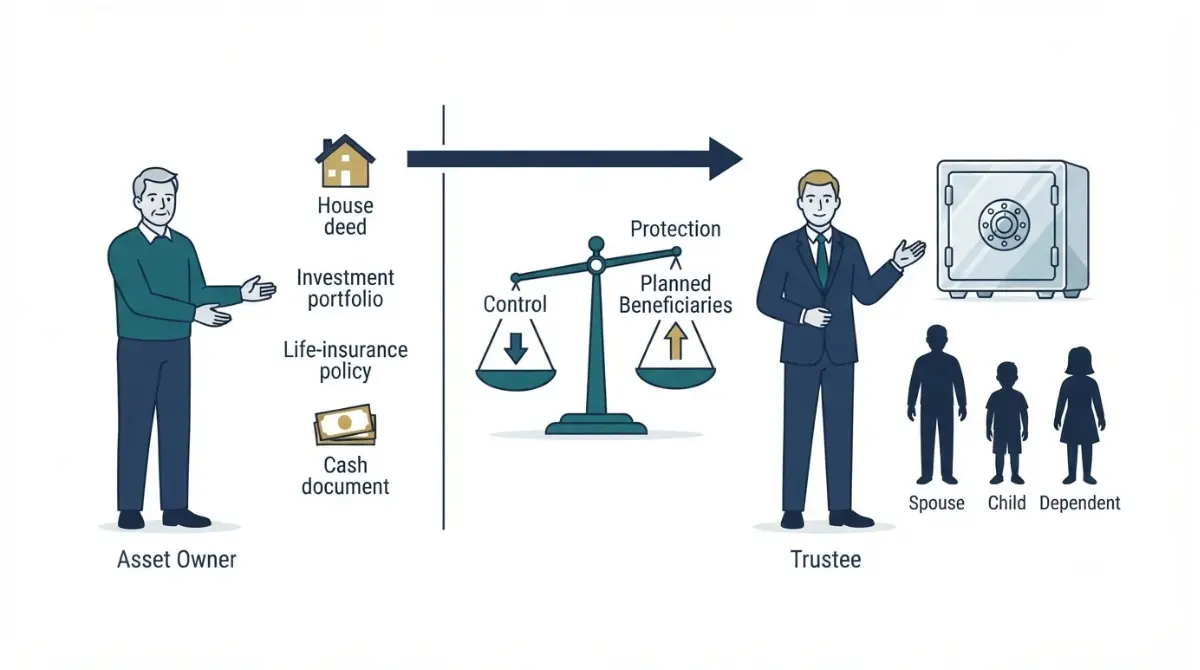
An irrevocable trust is a legal arrangement in which you permanently transfer assets to a trustee, who manages them for your beneficiaries under terms you generally can’t change or cancel. You trade control for protection.
Who’s who: grantor, trustee, beneficiary
The grantor creates and funds the trust. The trustee manages the assets under the trust document, and the beneficiaries receive income or principal.

🔍 How It Works: A trust controls only what it legally owns. You retitle assets, such as a home deed or a brokerage account, into the trust’s name, and the trust becomes the owner.
Does it avoid probate?
Yes, for assets properly titled in the trust. Like other assets that pass outside your will, they follow the trust document rather than a probate court. Drafting one usually costs more than a basic will, as our breakdown of what estate planning costs shows.
Irrevocable vs revocable trust: which fits your goal

Both trusts avoid probate for funded assets; the real difference is who keeps control. With a revocable living trust, you can change or cancel it at any time, as our will vs. trust comparison explains.
Why a revocable trust doesn’t cut estate tax
Because you keep control, revocable-trust assets still count in your taxable estate. An irrevocable trust can move assets out of it, typically through a completed gift.
Under $15 million? Estate tax probably isn’t your reason
📊 Data Point: The 2026 federal estate and gift basic exclusion amount is $15,000,000 per person, or $30 million for a married couple, with a top rate of 40% on amounts above it. Source: IRS estate and gift tax updates, 2026.
Most families sit well below that line, so their reasons are usually care planning, family protection, or life insurance. Some states tax estates at much lower thresholds; our guide to the federal estate tax exemption shows how the federal limit works. Ask an estate-planning attorney: “At my net worth and in my state, is estate tax even in play for me?”
When giving up control makes sense
It usually makes sense when one of these goals matters more to you than keeping control:
| Goal | What you give up | What you gain | Key Detail |
|---|---|---|---|
| Shrink a taxable estate | Access to gifted assets | Future growth outside your estate | Matters mainly above the $15M exclusion |
| Long-term care planning | Use of the assets | Possible Medicaid protection over time | 60-month look-back applies |
| Child with a disability | Direct ownership by the child | Funds managed on the child’s behalf | Drafting determines benefit effects |
| Life insurance (ILIT) | Ownership of the policy | Proceeds kept out of your estate | Premium gifts can use the $19,000 annual exclusion |
Sources: IRS (2026 exclusion amounts); Deficit Reduction Act of 2005 (look-back period).
Planning for long-term care costs
Under the Deficit Reduction Act of 2005, Medicaid reviews asset transfers made in the 60 months before a long-term care application, including transfers into a trust. California and New York apply different look-back rules.
⚠️ Costly Mistake: Funding a trust inside that 60-month window can trigger a penalty period during which Medicaid won’t pay for care. Ask an elder-law attorney: “How does my state count a transfer into this trust, and when does my clock start?”
A child with a disability
A special needs trust holds money for a disabled child without the child owning it outright. How it’s drafted decides how it interacts with public benefits.
Life insurance and an ILIT
An irrevocable life insurance trust owns your policy, so the proceeds generally stay outside your taxable estate. Size coverage first with our life insurance calculator, then see how the annual gift tax exclusion can cover premium gifts.
How an irrevocable trust is taxed in 2026
The tax bill depends on one question: is it a grantor trust or a non-grantor trust?
Grantor trust: you pay at your own rates
If the trust is structured as a grantor trust under IRC §§ 671–679, you report its income on your own Form 1040 at individual rates. The trust’s compressed brackets don’t apply.
Non-grantor trust: 37% above $16,000
A non-grantor trust pays its own tax on income it keeps, and its brackets are squeezed into a tiny range.
| 2026 trust taxable income | Federal rate |
|---|---|
| Up to $3,300 | 10% |
| $3,300 – $11,700 | 24% |
| $11,700 – $16,000 | 35% |
| Over $16,000 | 37% |
Source: IRS Revenue Procedure 2025-32, 2026 inflation adjustments.
🔍 How It Works: A non-grantor trust that keeps $20,000 of ordinary taxable income owes $330 + $2,016 + $1,505 + $1,480 = $5,331 in 2026 federal income tax. This example is illustrative and covers ordinary income only. Distributing income generally shifts that tax to beneficiaries at their own rates.
Does the trust file its own return?
A non-grantor trust generally files Form 1041 if it has any taxable income or at least $600 of gross income, per the IRS instructions for Form 1041. A grantor trust’s income usually goes on the grantor’s own return instead.
✅ Action Step: Ask a CPA: “Should this be a grantor or non-grantor trust, and who will pay its income tax each year?”
The step-up in basis trade-off your heirs inherit
Keeping assets out of your estate can cost your heirs a tax break later.
What Rev. Rul. 2023-2 changed
Inherited assets normally receive a step-up in basis to their value at death. Under IRS Revenue Ruling 2023-2, assets gifted to an irrevocable grantor trust and kept out of your estate don’t get that step-up.
A $200,000 home worth $1 million
🔍 How It Works: Say you bought a home for $200,000 and it’s worth $1 million at your death (illustrative figures). If the home were in your estate, your heirs’ basis would step up to $1 million. Inside this kind of trust, their basis stays $200,000, leaving $800,000 of gain that can be taxed if they sell.
Test scenarios with our capital gains tax calculator, and compare how the step-up works for inherited stock. Ask a CPA: “Is avoiding estate tax worth losing the step-up on these specific assets?”
Mistakes to avoid before you sign
Most trust problems start with assumptions made on signing day.
Can an irrevocable trust be changed later?
Sometimes. Depending on state law and the trust’s wording, changes may be possible through a court, by decanting into a new trust, or through a trust protector, but none of these is guaranteed.
Forgetting to fund it
An unfunded trust protects nothing, so follow through on retitling assets into the trust. Also review accounts that pass by beneficiary designation instead of your will, since those forms control where that money goes.
✅ Action Step: Ask your attorney: “Does this draft include a trust protector or decanting power, and which of my assets still need retitling?” Our guide to choosing an estate planning attorney lists more questions to bring.
Irrevocable trust FAQs
1. Can an irrevocable trust be changed?
Sometimes, through a court, decanting, or a trust protector, depending on state law and the trust’s wording. None is guaranteed. Confirm options with an estate-planning attorney.
2. Who pays taxes on an irrevocable trust?
The grantor pays for a grantor trust. A non-grantor irrevocable trust pays on retained income, reaching 37% above $16,000 in 2026. Confirm the structure with a CPA.
3. Does an irrevocable trust get a step-up in basis?
Not when assets were gifted to an irrevocable grantor trust and kept out of your estate, under IRS Revenue Ruling 2023-2. Confirm with a CPA.
4. Does an irrevocable trust protect assets from nursing home costs?
It can, but Medicaid reviews transfers into an irrevocable trust made within 60 months before applying, and states apply this differently. Ask an elder-law attorney.
5. What’s the difference between a revocable and irrevocable trust?
A revocable trust can be changed and still counts in your estate. An irrevocable trust generally can’t be changed but can remove assets.
6. Can the grantor be the trustee of an irrevocable trust?
Sometimes, but serving as trustee can weaken the tax or protection goals an irrevocable trust exists to achieve. Ask an estate-planning attorney.
7. Does an irrevocable trust avoid probate?
Yes, for assets properly retitled into the irrevocable trust. Those assets follow the trust document instead of passing through probate court.
8. Do I need an irrevocable trust if my estate is under $15 million?
Not for federal estate tax alone, given the 2026 $15 million exclusion. Care planning or family needs may still justify an irrevocable trust. Ask an estate-planning attorney.
9. What is an ILIT?
An irrevocable life insurance trust owns your life insurance policy, so its proceeds generally stay outside your taxable estate. Review the setup with an estate-planning attorney.
10. Does an irrevocable trust file its own tax return?
A non-grantor irrevocable trust generally files Form 1041 if it has any taxable income or at least $600 of gross income. Confirm with a CPA.
11. Is funding an irrevocable trust subject to gift tax?
Usually it’s a gift. Amounts above the $19,000 annual exclusion use part of your $15 million lifetime exclusion in 2026. Confirm with a CPA.
The bottom line
An irrevocable trust is worth giving up control when a specific goal outweighs flexibility: care planning, a child with a disability, life insurance, or a large estate. Bring that goal, your asset list, and the questions above to an estate-planning attorney before you sign.
Related Articles
 Estate Planning
What Is Probate? A Clear Guide to Steps, Timing, and Cost
September 26, 2026 Estate Planning
First Steps When a Parent Has Dementia and No Power of Attorney
October 1, 2026 Estate Planning
A Clear Look at What Happens If You Die Without a Will
September 30, 2026 Estate Planning
A Clear Guide to the $15 Million Estate Tax Exemption
September 23, 2026 Estate Planning
How to Choose an Estate Planning Attorney You Can Verify
September 22, 2026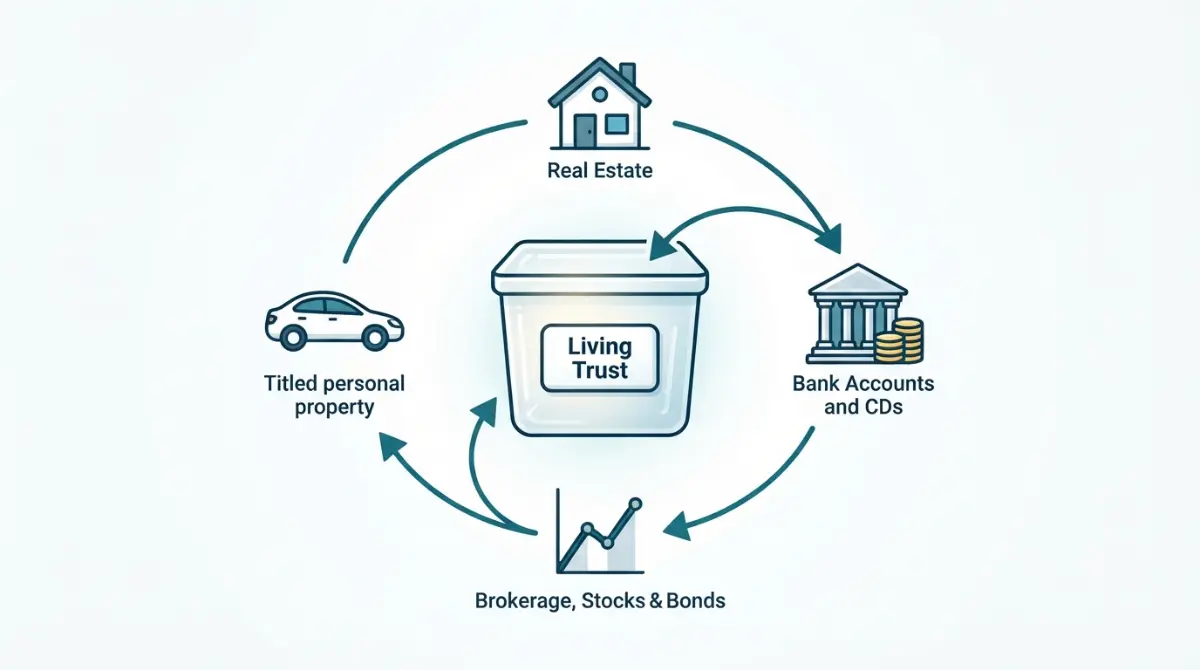 Estate Planning
The key steps to fund a living trust, asset by asset
September 19, 2026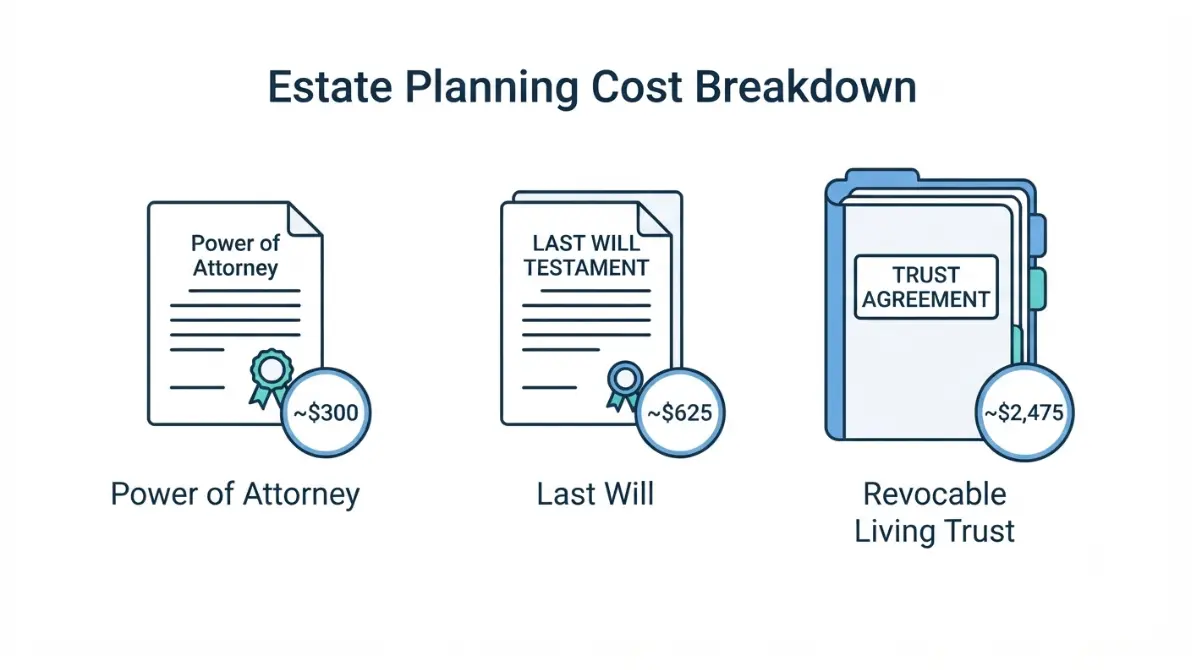 Estate Planning
A Clear Look at Estate Planning Costs for a Will, Trust, and POA
September 21, 2026 Estate Planning
How to Avoid Probate With the Right Tool for Each Asset
September 28, 2026 Estate Planning
Smart Digital Assets Estate Planning Steps So Family Can Get In
October 5, 2026
Informational disclaimer
The content on Finance Authority Hub is provided for general informational and educational purposes only and should not be considered personalized financial, investment, tax, legal, or professional advice. Financial decisions depend on your individual goals, income, risk tolerance, location, and regulatory situation. Before acting on any information, strategy, estimate, or calculator result, consult a qualified licensed professional who can evaluate your specific circumstances.