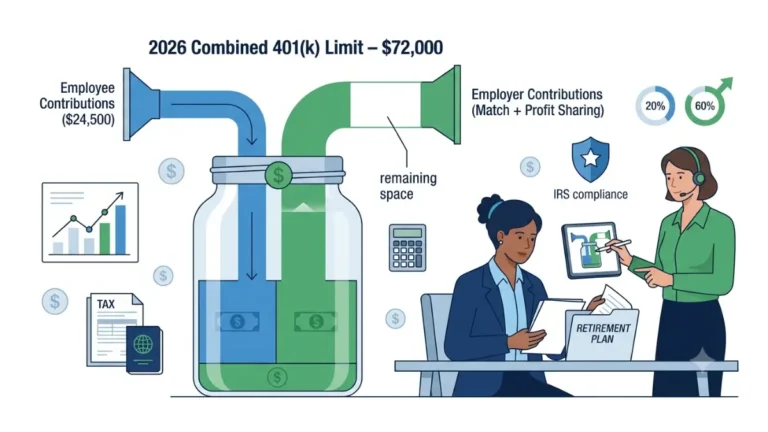
Dividing Your 401(k) in Divorce With a QDRO
A 401(k) divorce split needs a QDRO—and the receiving spouse avoids the 10% early-withdrawal penalty, even under age 59½.
In This Article
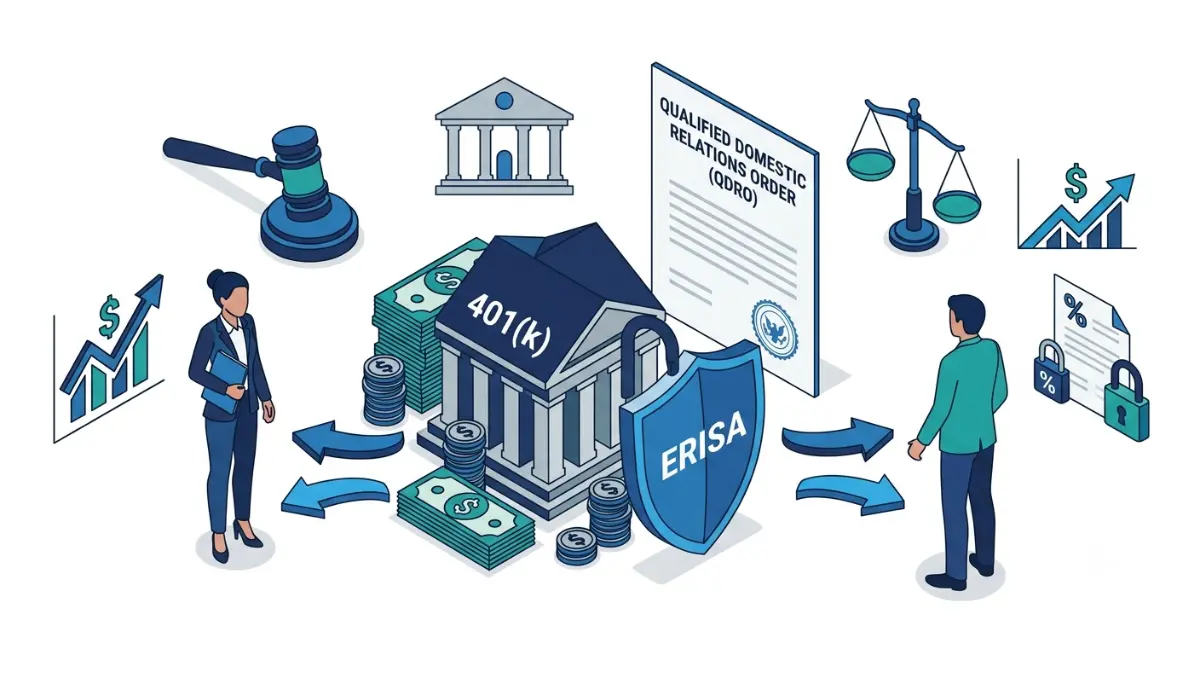
Splitting a 401(k) in a divorce is not like splitting a bank account. Federal law bars a retirement plan from paying part of your account to anyone else — even a soon-to-be ex-spouse — without a specific court order called a qualified domestic relations order (QDRO).
Where you sit changes what to read first. If you are the plan participant (the account is in your name), Sections 2 and 3 explain what a QDRO does to it. If you are the alternate payee (you are receiving a share), Sections 4 and 6 cover the taxes and the cash-versus-rollover decision that hit you hardest. If your retirement money is in an IRA rather than a 401(k), Section 3 explains why your path is different.
This guide covers what a QDRO is, how the process works, and the mistakes that make people lose money they are owed.
ℹ️ Financial Disclaimer: This article is general educational information, not legal, tax, or financial advice. Dividing retirement accounts in divorce carries tax, legal, and long-term consequences that depend on your specific plan, your state’s marital-property rules, and your income. Consult a family-law attorney, a CPA or tax attorney, and a Certified Divorce Financial Analyst before acting on anything here.
What a QDRO is (and why your 401(k) is frozen without one)
A qualified domestic relations order is a court order that directs a retirement plan to pay part of a participant’s benefits to a spouse, former spouse, child, or other dependent. Federal retirement law — the Employee Retirement Income Security Act, or ERISA — generally forbids assigning your retirement benefits to anyone else. A QDRO is the narrow exception Congress created in the Retirement Equity Act of 1984 so a plan can divide an account in divorce.
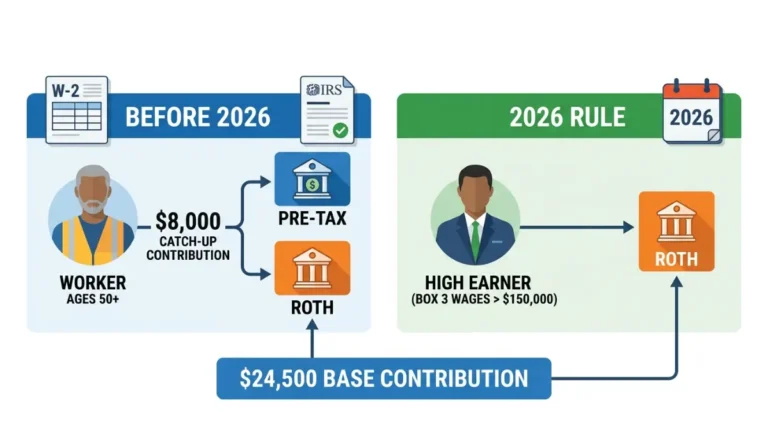
That legal protection is exactly why a special order is needed, and it helps to understand how a 401(k) works and what you can contribute before you try to divide one.
What “qualified” means — and who decides
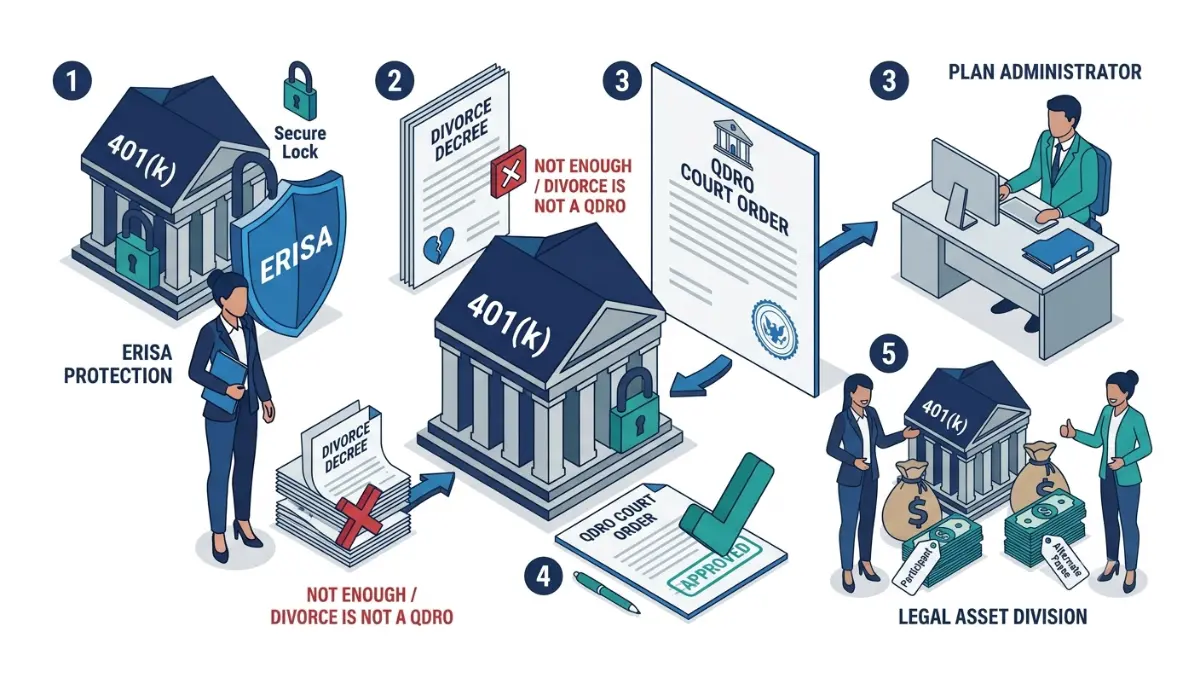
The order starts as a plain domestic relations order issued under your state’s divorce law. It becomes “qualified” only when the plan administrator — not the judge — confirms it meets the plan’s rules and federal requirements. The U.S. Department of Labor, which oversees these rules, is explicit that the plan administrator makes that call.
Do you always need a QDRO?
For an employer plan like a 401(k), 403(b), or pension, yes. Without a qualified order in the plan’s hands, the plan will not pay your ex-spouse anything, whatever the divorce decree says.
💡 Expert Note: A common and costly assumption is that the divorce decree alone divides the account. It does not. The decree can order the split, but only the plan administrator, acting on a qualified order, can move the money.
401(k) needs a QDRO — an IRA does not
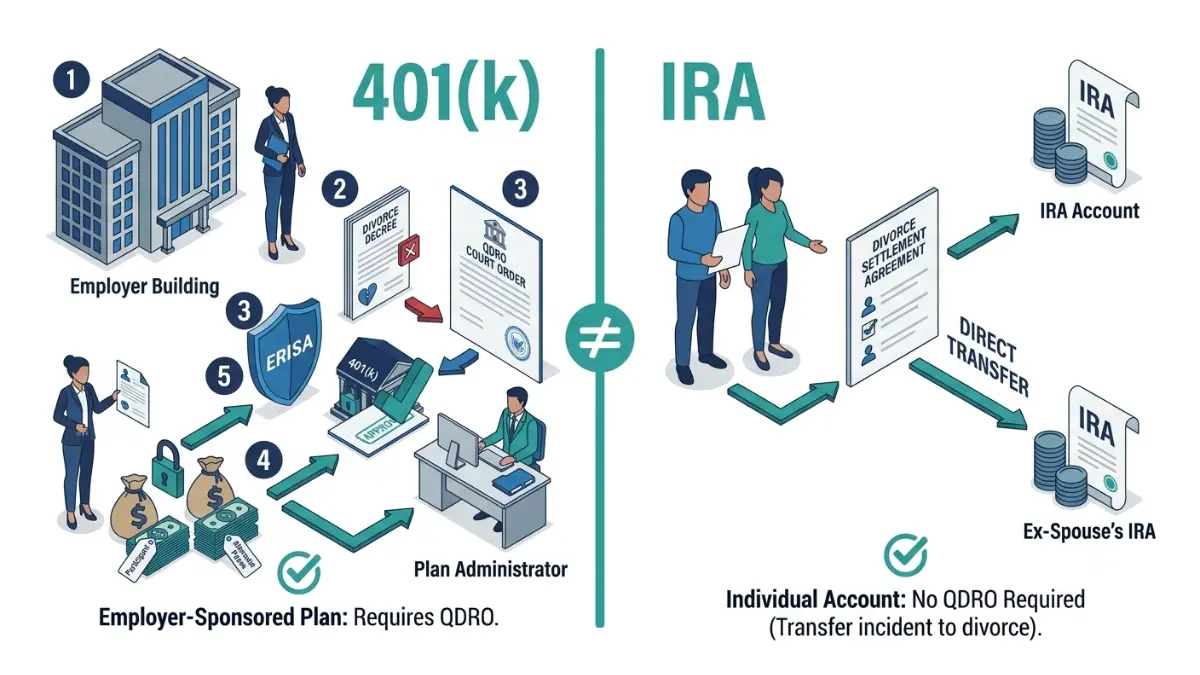
A QDRO applies to employer-sponsored plans governed by ERISA — a 401(k), 403(b), or traditional pension. It does not apply to an IRA. An IRA is divided instead by a transfer incident to divorce, which needs no court-qualified order at all.
This distinction trips up more people than any other, and it matters when you are sorting out a 401(k) versus an IRA in a settlement.
How an IRA is split instead
For an IRA, the divorce decree or settlement agreement instructs the custodian to move part of the balance to the other spouse’s IRA. Done as a direct transfer, no tax is due at the split.
Which accounts actually need a QDRO
Sort your retirement accounts into two buckets before drafting anything:
| Account type | How it’s divided | Key detail |
|---|---|---|
| 401(k), 403(b), pension | Requires a QDRO | Plan administrator must qualify the order |
| Traditional or Roth IRA | Transfer incident to divorce | No QDRO; handled by the custodian |
Source: U.S. Department of Labor (EBSA) and IRS early-distribution guidance.
One caution: a transfer incident to divorce is not tax-free forever. Withdraw from that IRA before age 59½ and the usual early-withdrawal rules apply — a trap covered in Section 6.
Taxes and the 10% penalty on a QDRO 401(k) split
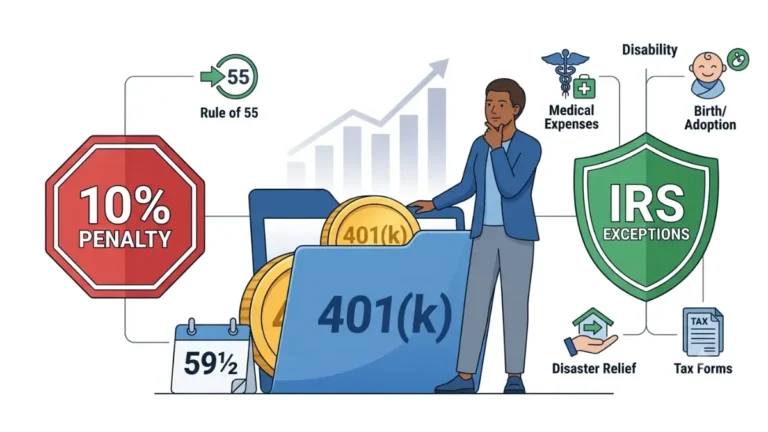
Here is the good news for the receiving spouse: a QDRO distribution from a 401(k) is exempt from the 10% early-withdrawal penalty, even if you are under age 59½. Ordinary income tax still applies when the money is actually paid to you.
Does the 10% early-withdrawal penalty apply?
No. The IRS lists a specific exception for money paid to an alternate payee under a QDRO. Normally, tapping a 401(k) before 59½ triggers the usual 10% early-withdrawal penalty on top of income tax, and the QDRO carve-out is one of a limited set — you can see the full list of penalty exceptions for how it fits.
📊 Data Point: Distributions to an alternate payee under a QDRO are exempt from the 10% additional tax under Internal Revenue Code §72(t)(2)(C) — a carve-out that applies to employer plans but not to IRAs. Source: IRS, Exceptions to tax on early distributions (reviewed December 2025).
When is the money actually taxed?
Dividing the account is not itself taxable. Tax applies only when funds leave the plan as a distribution to you, counted as ordinary income for that year. The plan reports it on Form 1099-R, and you claim the penalty exception on Form 5329.
🔍 How It Works: Picture two separate steps. Step one — the QDRO moves your share into an account you control: no tax, no penalty. Step two — you take money out: income tax applies, but the QDRO waives the 10% penalty. Because the hit depends on your bracket, estimate the income tax you’d owe before deciding how much to take.
✅ Action Step: Before any cash distribution, ask a CPA or tax attorney one question: “Given my other income this year, what marginal rate will this be taxed at, and how much should I set aside beyond what the plan withholds?”
How to get a QDRO, step by step
Getting a QDRO is a sequence, and the order matters. Rushing to a signed order without checking the plan’s rules first is how orders get rejected and costs climb.
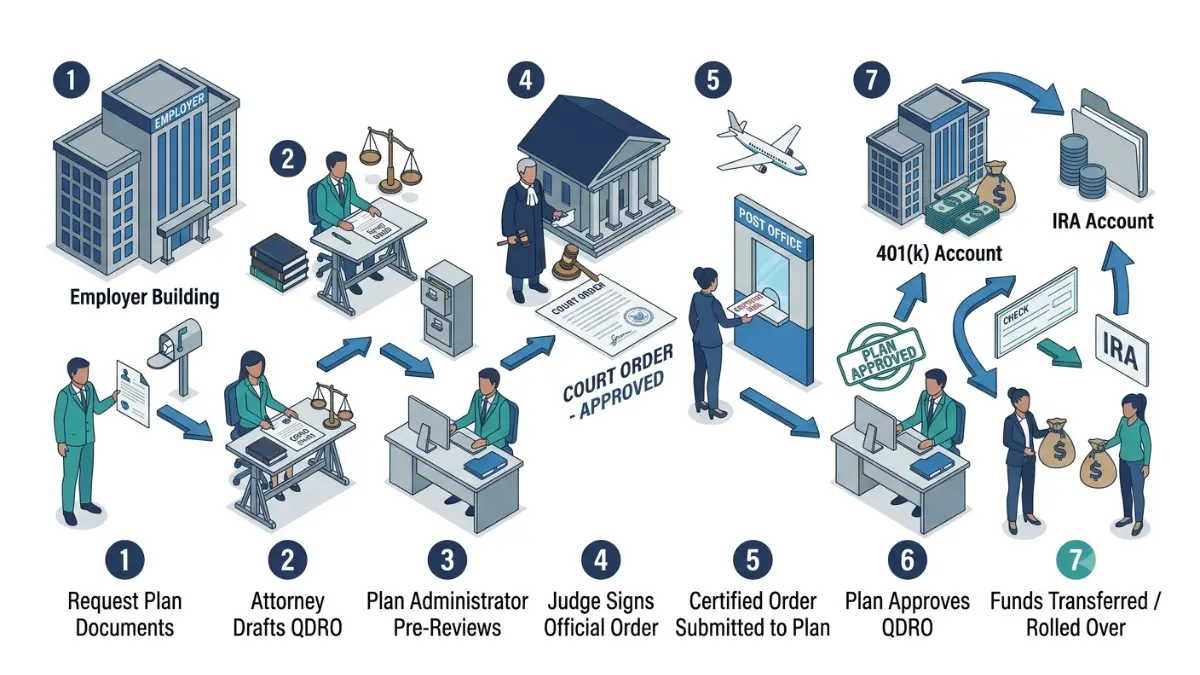
The QDRO process, step by step
- Request the plan’s documents from the participant’s employer — the summary plan description and the plan’s written QDRO procedures.
- Have a QDRO-competent attorney draft the domestic relations order in language that matches that specific plan.
- Ask the plan administrator to pre-approve the draft, if the plan offers it, before it goes to the judge.
- Get the judge to sign the order.
- Send a certified copy to the plan administrator, who reviews it and, if it qualifies, notifies both parties.
- Take a distribution or roll the share into your own retirement account.
✅ Action Step: Before your attorney drafts anything, request the plan’s written QDRO procedures and ask: “Do you offer pre-approval of a draft order?” Pre-approval catches errors before a judge signs — the cheapest insurance in this whole process.
How long it takes — and what it costs
There is no fixed timeline; the Department of Labor’s QDRO guide notes the plan drives much of it. In practice it often takes a few months and can run longer depending on the plan, court backlogs, and how cooperative both sides are. Drafting fees commonly run a few hundred dollars to around $1,000 when handled during the divorce by a specialist, and many plans charge a separate processing fee often in the $500–$1,200-plus range. These are private-market figures that vary widely by state and plan, so treat them as a range, not a quote.
Cash now or roll it over? The alternate payee’s choice
Once your share is set aside, one decision shapes both your taxes and your retirement: take cash, roll it over, or leave it. Each carries a different cost.
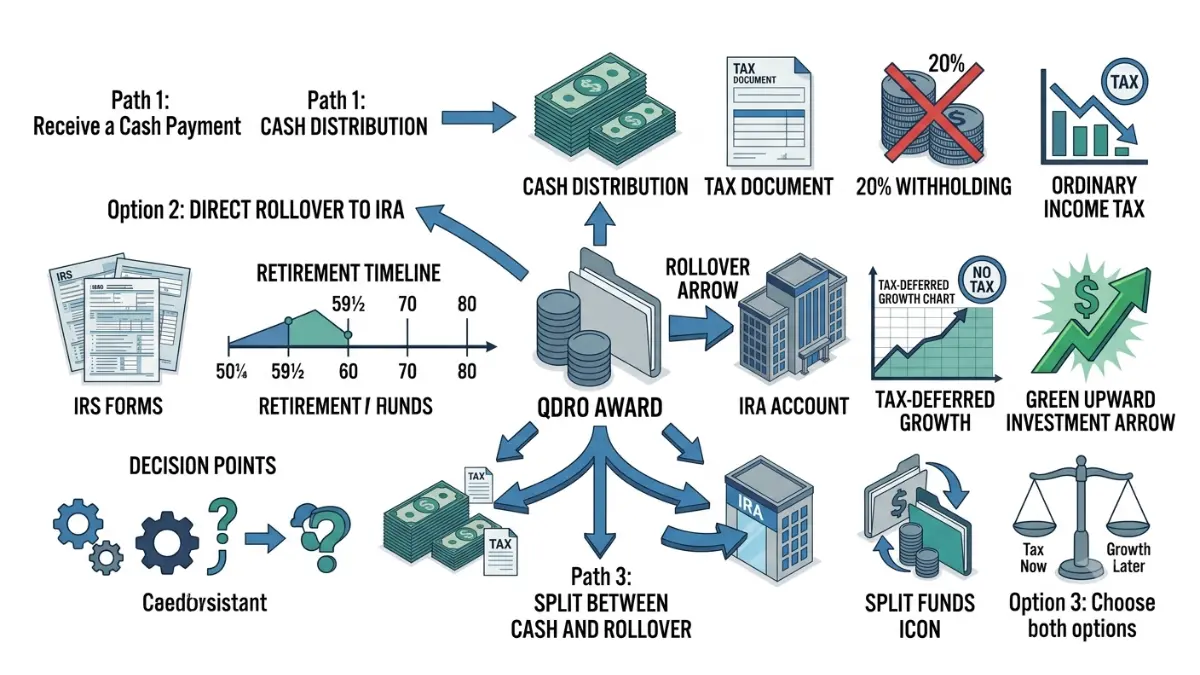
Your three options
- Take cash from the plan: penalty-free thanks to the QDRO, but taxed as ordinary income, with 20% withheld up front.
- Direct rollover into your own IRA or plan: no tax now, no withholding, and the money keeps growing tax-deferred. You can roll your share into your own IRA, and it helps to know where to open a rollover IRA first.
- Split it: take part as cash for immediate needs and roll the rest.
Worked example: a $60,000 share
Say you are awarded $60,000 from your ex-spouse’s 401(k):
| Your choice | Cash in hand now | Tax now | Key detail |
|---|---|---|---|
| Cash distribution | ~$48,000 (after 20% withheld) | Ordinary income; no 10% penalty | The $12,000 withheld is a prepayment, not the final tax |
| Direct rollover to your IRA | $0 | $0 now | Full $60,000 keeps growing tax-deferred |
Source: IRS rules on the QDRO penalty exception and mandatory rollover withholding.
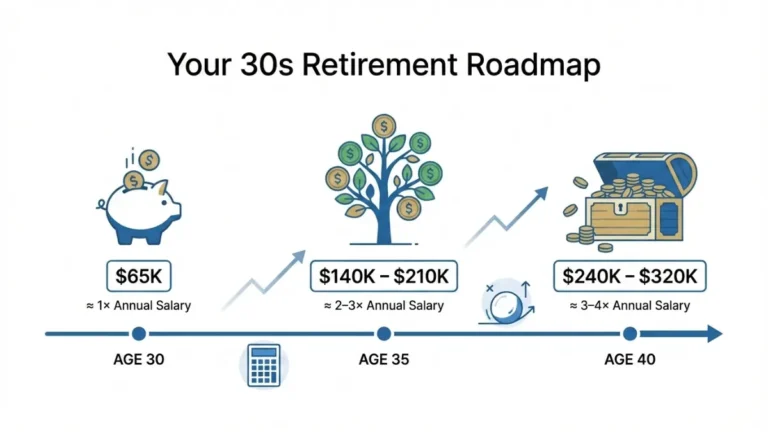
🔍 How It Works: Cash paid to you is an “eligible rollover distribution,” so the plan must withhold 20% for federal tax even if you plan to roll it over later; a direct trustee-to-trustee rollover avoids that withholding entirely. To weigh the long game, estimate what your share could grow to and project it across your retirement timeline.
⚠️ Costly Mistake: The penalty waiver applies only to money taken directly from the 401(k). Roll your share into an IRA first, then withdraw before 59½, and the 10% penalty comes back — the QDRO exception does not follow the money. If you need cash, take it from the plan before rolling the rest over.
✅ Action Step: Ask a Certified Divorce Financial Analyst or CPA one question before you sign: “How much should I take as cash now versus roll over, given my income this year and my cash needs?”
QDRO mistakes that cost people their share
The errors that hurt most are not complicated — they are about timing and precision. A little urgency here protects money you are legally owed.
Waiting too long to file
The biggest mistake is treating the QDRO as an afterthought once the divorce is final. If the participant retires and starts drawing benefits, remarries, or dies before the order is qualified, the alternate payee can lose part or all of the share. Both the Pension Rights Center and the Department of Labor warn that a delayed order is where people quietly lose benefits they were awarded.
⚠️ Costly Mistake: A decree saying you get half of a 401(k) does not protect you on its own. If the participant dies before the plan qualifies your QDRO, there may be nothing left to divide. File the order as early as possible — ideally before the divorce is finalized.
Vague language and forgotten survivor benefits
A generic instruction like “the spouse receives 50%” is often not enough. The order has to match the plan’s rules and spell out the share, the valuation date, and how gains or losses between the agreement and the transfer are handled. Overlooking survivor benefits is another frequent and expensive omission.
Frequently asked questions
1. What is a QDRO in a divorce?
A qualified domestic relations order is a court order that directs an employer retirement plan to pay part of a participant’s benefits to a spouse, former spouse, child, or dependent. It becomes valid only when the plan administrator confirms it meets the plan’s rules and federal law. It is the legal key that lets a 401(k) be divided.
2. Do I need a QDRO to divide a 401(k)?
Yes. Federal law bars an employer plan from paying your ex-spouse a share without a qualified order, no matter what the divorce decree says. A 401(k), 403(b), or pension all require one. Because the language must match the specific plan, have a QDRO-competent attorney draft it.
3. Does dividing an IRA require a QDRO?
No. An IRA is divided by a transfer incident to divorce, handled by the account custodian under the terms of your divorce decree — no court-qualified order needed. Done as a direct transfer, no tax is due at the split. Confirm each account’s rules with your attorney, since IRAs and 401(k)s follow different paths.
4. Is a QDRO 401(k) distribution taxed?
Dividing the account is not itself taxable. Tax applies only when money is actually distributed to the alternate payee, counted as ordinary income for that year and reported on Form 1099-R. A direct rollover into your own retirement account defers that tax. Confirm the tax impact with a CPA before taking any distribution.
5. Does the 10% early-withdrawal penalty apply to a QDRO?
No. Distributions paid to an alternate payee under a QDRO are exempt from the 10% early-withdrawal penalty under IRC §72(t)(2)(C), even if you are under age 59½. Ordinary income tax still applies. This exception covers employer plans like a 401(k), not IRAs, so consult a tax professional before you act.
6. How much is withheld if I take my share as cash?
A cash distribution paid to you from the 401(k) carries mandatory federal withholding of 20%, because it is an eligible rollover distribution. That 20% is a prepayment toward your tax bill, not necessarily the final amount owed. A direct rollover avoids the withholding entirely. A CPA can tell you whether 20% covers your actual liability.
7. Can I roll my QDRO share into my own IRA?
Yes. A direct, trustee-to-trustee rollover moves your share into your own IRA or plan with no tax now and no 20% withholding, and it keeps growing tax-deferred. This is the most common choice when you do not need immediate cash. A financial professional can help you decide how much to roll over versus keep as cash.
8. If I roll it over, can I still avoid the penalty later?
No. The QDRO penalty waiver applies to money taken directly from the 401(k), not to a later withdrawal from an IRA you rolled it into. Withdraw from that IRA before age 59½ and the 10% penalty applies again. If you expect to need cash, take it from the plan first, then consult a professional.
9. How much does a QDRO cost?
Drafting typically runs a few hundred dollars to around $1,000 when handled during the divorce by a specialist, and many plans charge a separate processing fee often in the $500–$1,200-plus range. These are private-market figures that vary widely by state and plan. Getting the order right during the divorce usually costs less than fixing it later.
10. How long does a QDRO take?
There is no fixed timeline. It often takes a few months and can run longer, depending on the plan’s process, court backlogs, and how cooperative both parties are. Dividing a pension can take longer than a 401(k) because of the actuarial work involved. Starting early keeps delays from costing you.
11. What happens if I wait too long to file a QDRO?
Waiting is the costliest mistake. If the participant retires and starts drawing benefits, remarries, or dies before the plan qualifies your order, you can lose part or all of the share you were awarded. A divorce decree alone does not protect you. File the order as early as possible, and have an attorney confirm the language.
The bottom line
Dividing a 401(k) in divorce comes down to a few durable facts. You need a QDRO to split an employer plan; an IRA uses a simpler transfer. The 10% penalty is waived for the receiving spouse, but income tax still applies, and taking cash means 20% is withheld up front.
If you do not need the money now, rolling it over keeps it working — see how leaving it invested compounds over time. Your next step is to get the plan’s QDRO procedures and bring them to a QDRO-competent attorney and a CPA or Certified Divorce Financial Analyst before you sign. Download our checklist, “Questions to ask before you sign your divorce settlement about your 401(k),” to walk in prepared.
Informational disclaimer
The content on Finance Authority Hub is provided for general informational and educational purposes only and should not be considered personalized financial, investment, tax, legal, or professional advice. Financial decisions depend on your individual goals, income, risk tolerance, location, and regulatory situation. Before acting on any information, strategy, estimate, or calculator result, consult a qualified licensed professional who can evaluate your specific circumstances.