
How a Special Needs Trust Can Protect SSI and Medicaid
Special needs trust spending rules changed: food stopped counting against SSI on September 30, 2024; cash and shelter still can.
In This Article
Why an inheritance can put SSI and Medicaid at risk
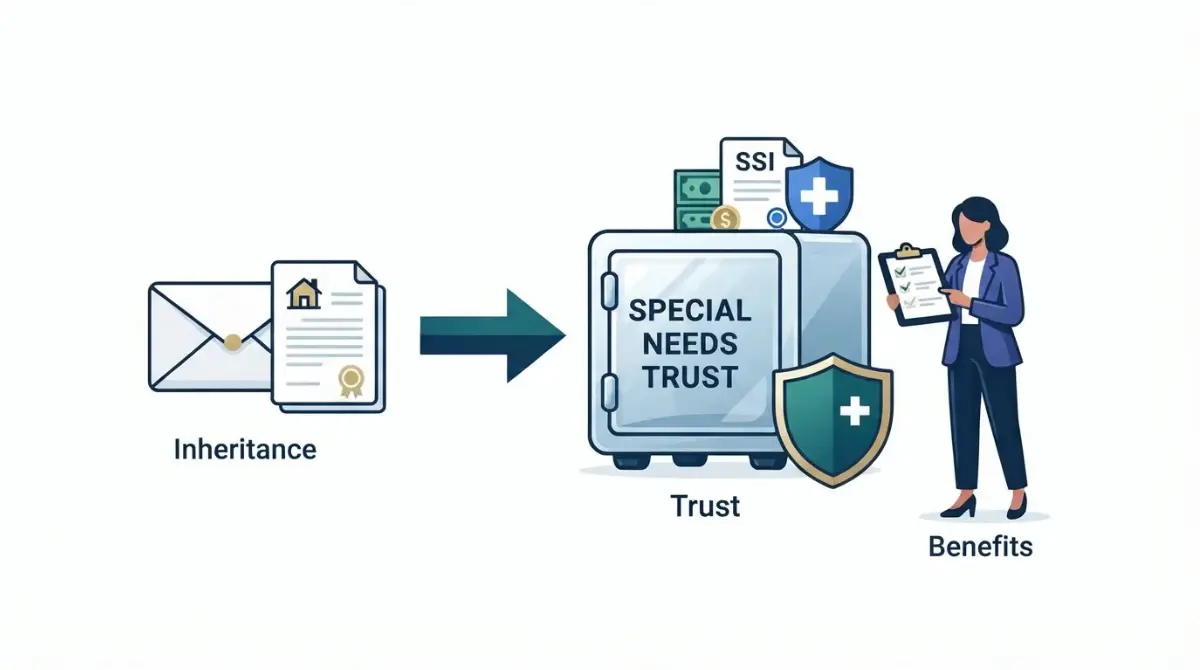
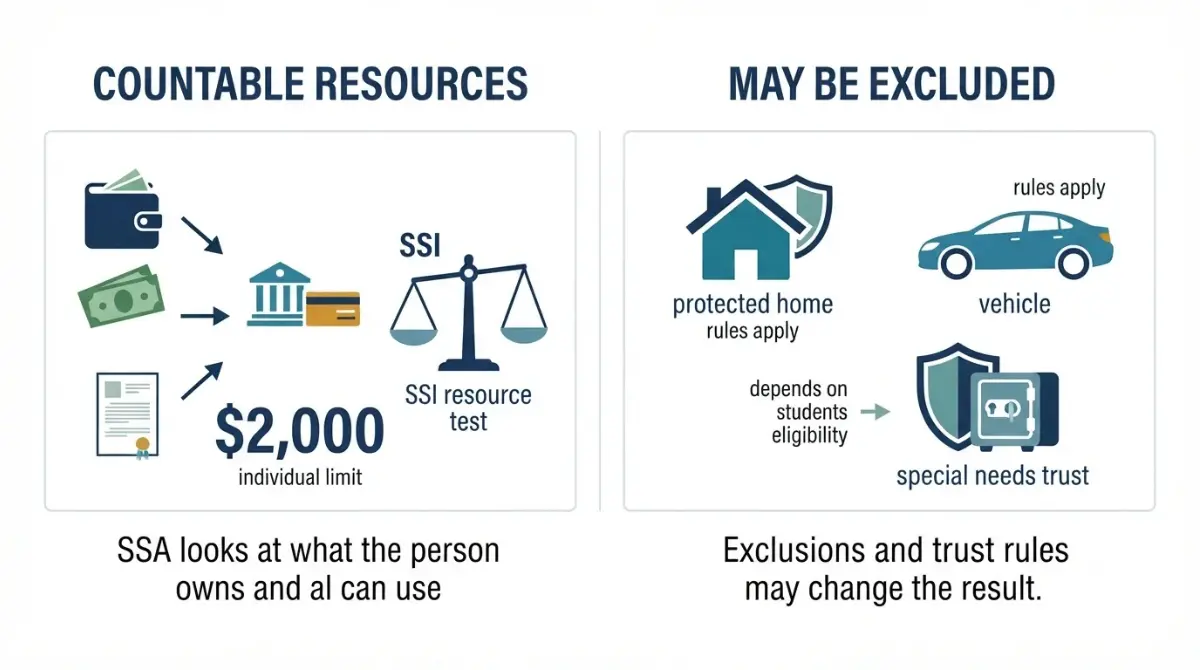
Money that lands in a benefits recipient’s name can end SSI eligibility, because the resource limit for an individual is only $2,000. A special needs trust holds the money separately so it isn’t counted as the beneficiary’s own, when properly structured and administered. Trusts and beneficiary forms often decide who receives money regardless of a will, so see assets that pass outside your will.
If you’re planning for a child or relative
Money you give goes into a third-party trust; compare the types below.
If you already received money
Inheritance or settlement money is the beneficiary’s own, so first-party or pooled trusts apply; see what to do with a large settlement.
ℹ️ Financial Disclaimer: This article is general education about trusts, Social Security and Medicaid benefit rules, federal income tax, and investing trust assets. It isn’t legal, tax, investment, or personalized advice, and rules change. Before acting, consult a special needs attorney for trust and benefits questions and a CPA for trust taxes.
How SSI and Medicaid count what you own
SSI is need-based, so what a person owns can end it.
The $2,000 SSI resource limit
The individual limit is $2,000 (FINRA), and SSA determines resources as of the first of each month, so timing matters.
📊 Data Point: The maximum federal SSI payment for 2026 is $994 a month for an individual, or $11,928 a year (our arithmetic: $994 × 12) — Source: Social Security Administration, 2026.
Why trust assets can be treated differently
Trust principal isn’t the beneficiary’s resource when they can’t revoke the trust or direct it toward their own support. Trust terms and state law decide that, and Medicaid rules vary by state.
First-party, third-party and pooled trusts compared
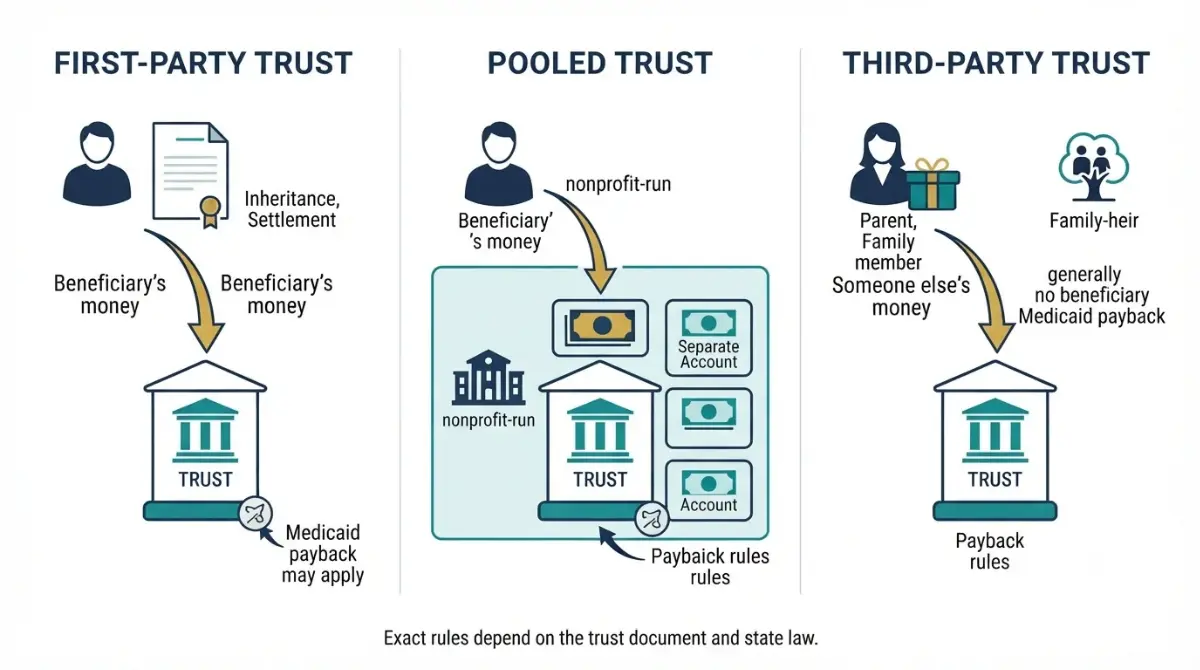
A special needs trust is first-party, pooled, or third-party, depending on whose money funds it.
Which trust fits your source of money
A beneficiary’s inheritance or structured settlement is their own money.
| Type | Funded by | At death | Key detail |
|---|---|---|---|
| First-party | Beneficiary’s money | State repaid first | Disabled, under 65 |
| Pooled | Beneficiary’s money, nonprofit-run | State repaid from funds not kept | No age limit |
| Third-party | Others’ money | No payback rule | Beneficiary can’t revoke or direct it |
Source: SSA POMS SI 01120.203 and SI 01120.200.
Who can set one up, and at what age
Since December 13, 2016, the beneficiary, a parent, grandparent, guardian, or court can establish a first-party trust. Parents can create third-party trusts through a will or trust, often irrevocable.
What happens at death
First-party trusts repay the state Medicaid agency before funeral costs or heirs; pooled trusts do too, except funds they retain.
✅ Action Step: Ask a special needs attorney: “Does my trust meet SSA’s exception, including payback language, and my state’s Medicaid rules?”
What a special needs trust can pay for without cutting SSI
A special needs trust can generally pay providers, and since 2024 food, without cutting SSI; cash and shelter payments reduce it.
Cash vs shelter vs food
| Payment | SSA treatment | Key detail |
|---|---|---|
| Cash or debit card | Income; SSI falls about $1 per $1 | Gift cards count as cash |
| Shelter (rent, mortgage) | Income; up to $351.33 lower SSI | Repairs, accessibility work aren’t income |
| Food | Not counted since Sept. 30, 2024 | Older guides may list it |
Sources: SSA POMS SI 01120.200; SSA’s 2024 food rule announcement.
🔍 How It Works: SSA counts shelter help as income only up to a presumed maximum value, so the reduction is capped, not equal to the full rent.
Paying providers directly
Payments to providers for therapy, tuition, transportation, and phone bills are generally not income. Sketch a monthly spending plan with our budget calculator.
✅ Action Step: Ask a special needs attorney: “Which planned payments count as cash or shelter, and can providers be paid directly?”
Special needs trust vs ABLE account: which do you need?
An ABLE account and a special needs trust both protect benefits but work differently.
ABLE limits for 2026
📊 Data Point: For 2026, ABLE contributions are capped at $20,000 a year, disability must begin before age 46, and the first $100,000 is exempt from SSI’s $2,000 limit — Source: FINRA, 2026.
| Feature | ABLE account | Special needs trust |
|---|---|---|
| 2026 annual contributions | $20,000 | No annual cap in SSA trust rules |
| SSI treatment | First $100,000 exempt; Medicaid continues above it | Principal excluded if SSA tests are met |
When families use both
SSA excludes money a trust moves into the beneficiary’s ABLE account from income.
✅ Action Step: Ask a special needs attorney or your state ABLE plan: “How would an ABLE account and a trust work together here?”
How special needs trust income is taxed
A non-grantor trust that keeps its income pays tax at compressed trust rates.
Trust tax brackets for 2026
📊 Data Point: For 2026, estates and trusts reach the 37% bracket above $16,000 of taxable income; unmarried individuals reach it above $640,600 — Source: IRS, Rev. Proc. 2025-32.
The qualified disability trust exemption
A qualified disability trust can deduct $5,300 for 2026 if it is a disability trust described in section 1917(c)(2)(B)(iv) of the Social Security Act and SSA determines every beneficiary disabled.
✅ Action Step: Ask a CPA with trust experience: “Is this a grantor or non-grantor trust, and does it qualify for the disability-trust deduction?”
Special needs trust mistakes that cost benefits
SSA counts a noncompliant trust as the beneficiary’s resource.
Trust terms that fail SSA review
- Labeling a trust “payback” isn’t enough; SSA requires specific payback language.
- Courts must establish the trust; approving an already-signed trust doesn’t qualify.
- Benefits to others during life, or early termination paying others, can disqualify it.
Funding and beneficiary-form errors
Naming the disabled person, not the trust, on a beneficiary designation form can put the money in their own hands.
⚠️ Costly Mistake: A trust that fails review counts as a resource, so SSI can stop while the balance exceeds $2,000; SSA may allow 90 days to amend a previously approved trust after written notice.
✅ Action Step: Ask a special needs attorney: “Do all beneficiary forms name the trust?” See how to choose an estate planning attorney.
Special needs trust questions answered
1. What is a special needs trust?
A special needs trust is a legal arrangement where a trustee holds assets to supplement, not replace, a disabled person’s public benefits.
2. Does a special needs trust affect SSI eligibility?
A properly structured special needs trust can keep assets from counting toward SSI’s resource limit, though SSA still reviews the document. Consult a special needs attorney.
3. What is the SSI resource limit in 2026?
The SSI resource limit for an individual is $2,000; the first $100,000 in an ABLE account is exempt from it.
4. Can I put my own money in a special needs trust?
Yes. A first-party special needs trust can hold your money if you’re disabled and under 65, with state Medicaid repaid at death. Consult a special needs attorney.
5. What is the difference between first-party and third-party special needs trusts?
A first-party special needs trust uses the beneficiary’s money and requires Medicaid payback; a third-party trust uses others’ money without that requirement. Consult a special needs attorney.
6. What happens to a special needs trust when the beneficiary dies?
A first-party special needs trust repays the state Medicaid agency first, ahead of funeral costs and heirs. Consult a special needs attorney.
7. What is a pooled special needs trust?
A pooled special needs trust is nonprofit-run, with separate accounts and no age limit; transfers at 65 or older may carry penalties. Consult a special needs attorney.
8. Can a special needs trust pay rent or a mortgage?
Yes, a special needs trust can, but SSA counts shelter payments as income; SSI can fall by up to $351.33 monthly in 2026. Consult a special needs attorney.
9. Does food paid by a special needs trust reduce SSI?
Food paid by a special needs trust no longer reduces SSI since September 30, 2024, but cash to the beneficiary still counts. Consult a special needs attorney.
10. Should I choose an ABLE account or a special needs trust?
ABLE accounts allow $20,000 in 2026 contributions and exempt the first $100,000; a special needs trust has no comparable annual cap. Consult a special needs attorney.
11. Is a special needs trust taxable?
A special needs trust that keeps income reaches the 37% bracket above $16,000 in 2026; a $5,300 disability-trust deduction may apply. Consult a CPA.
Next steps before you fund a trust
Three decisions matter most: which trust type fits the money’s source, how the trustee pays for things, and whether an ABLE account belongs alongside it. Bring them to an attorney, and check what estate planning costs first.
If the beneficiary also has Medicare, see Medicare Savings Program income limits.
Related Articles
 Estate Planning
How to make a will and avoid the errors that void it
September 18, 2026 Estate Planning
Will vs Trust and How to Find the Right Fit for Your Family
September 17, 2026 Estate Planning
The Portability Election and Your Spouse’s Overlooked Exemption
September 24, 2026 Estate Planning
What Your Agent Can Legally Do Under a Durable Power of Attorney
September 29, 2026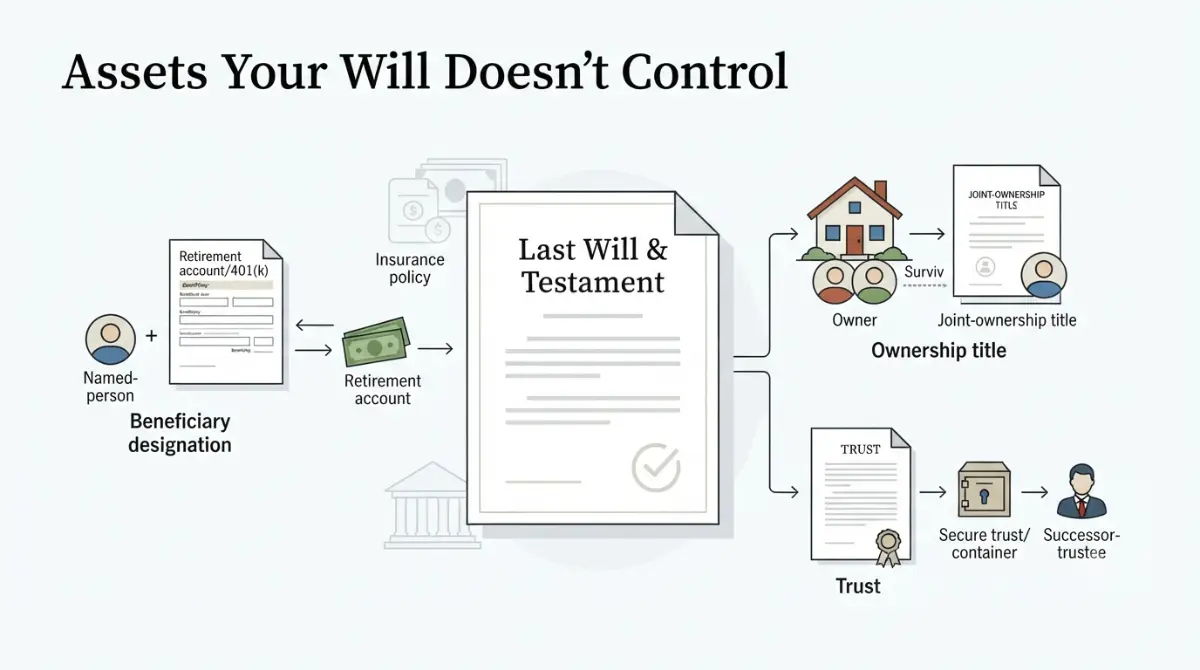 Estate Planning
Assets Not Covered by a Will and the Hidden Rules on Who Inherits
September 16, 2026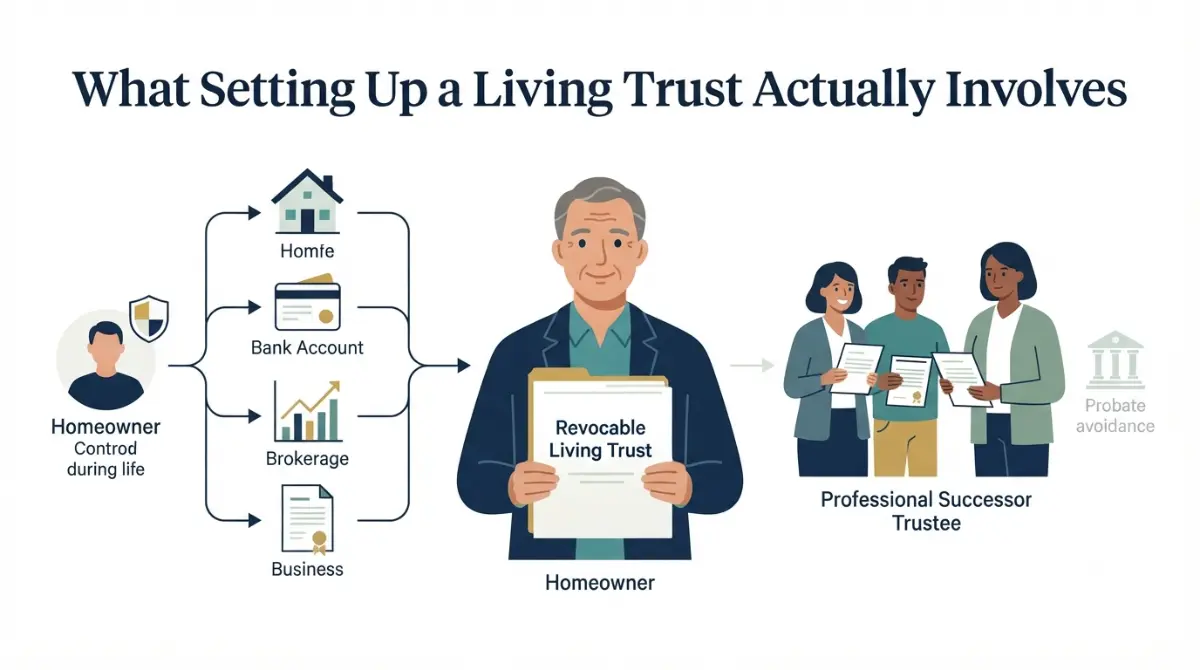 Estate Planning
How to set up a living trust the right way, step by step
September 18, 2026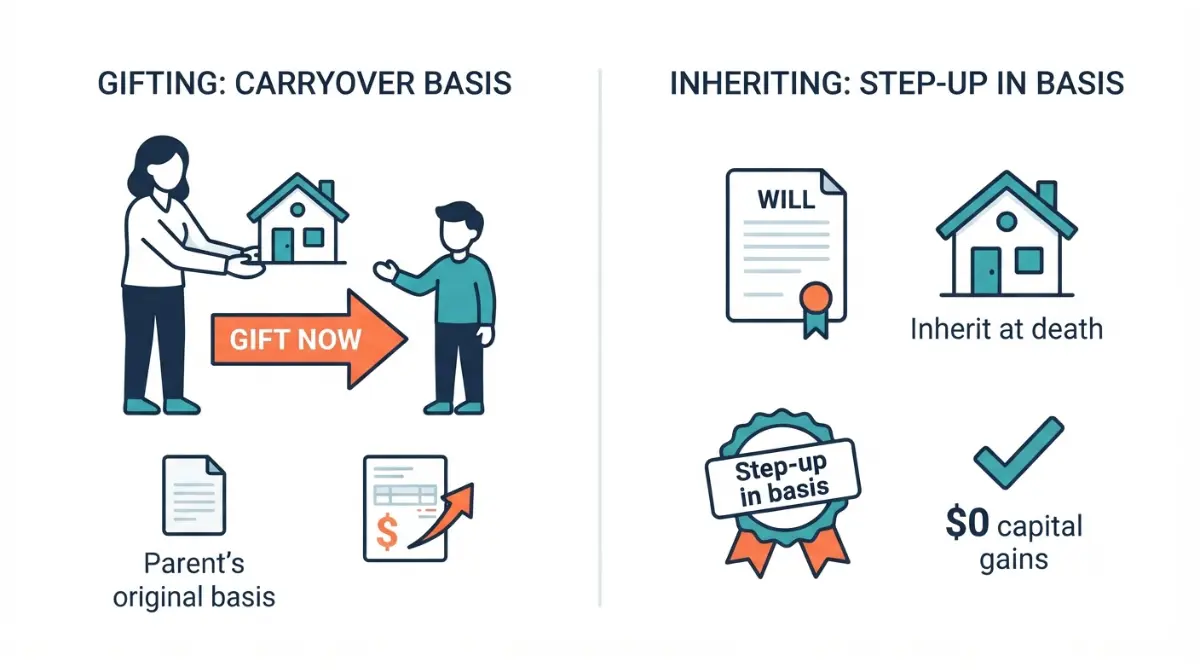 Estate Planning
Gifting a House vs Inheritance and What Your Child Will Owe
September 26, 2026 Estate Planning
The Right Way to Know When to Update Your Estate Plan
October 5, 2026 Estate Planning
First Steps When a Parent Has Dementia and No Power of Attorney
October 1, 2026
Informational disclaimer
The content on Finance Authority Hub is provided for general informational and educational purposes only and should not be considered personalized financial, investment, tax, legal, or professional advice. Financial decisions depend on your individual goals, income, risk tolerance, location, and regulatory situation. Before acting on any information, strategy, estimate, or calculator result, consult a qualified licensed professional who can evaluate your specific circumstances.