
Your Executor Duties After Someone Dies, in Plain English
Executor duties don’t make you pay the deceased’s debts from your own pocket, but a few federal-tax mistakes can. Here’s where the line sits.
In This Article
What being an executor actually involves
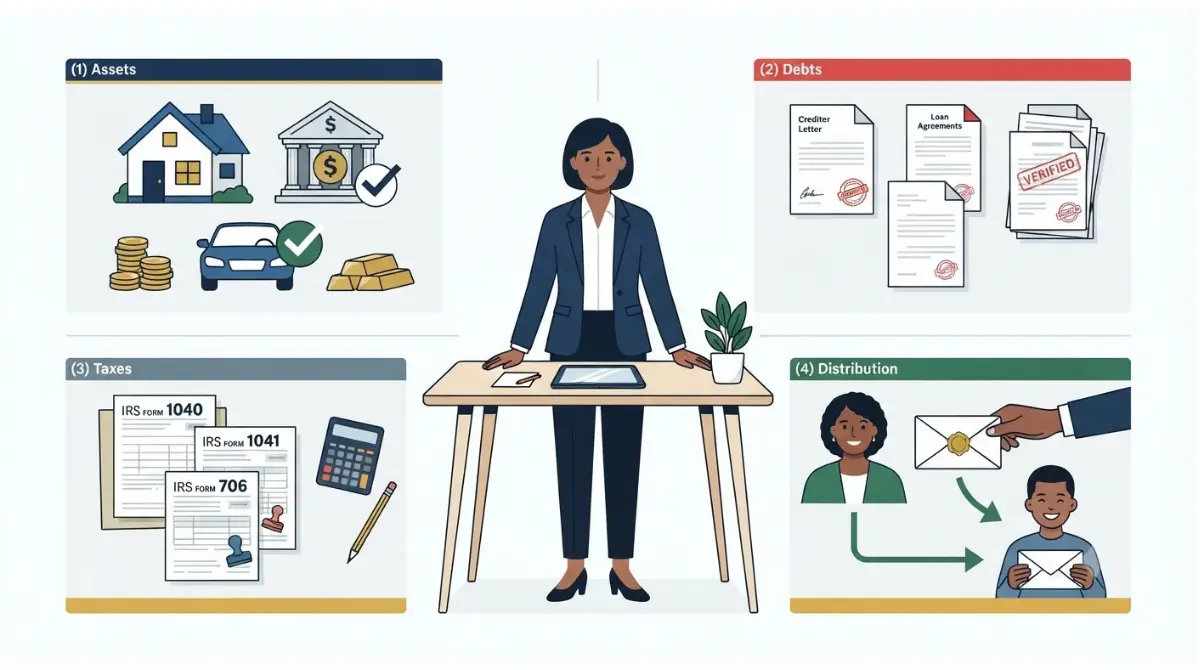
Being named executor usually arrives in the middle of grief, with a stack of paperwork and no map. The job is manageable once you know the order: confirm your authority, secure the basics, handle debts and taxes, then distribute what remains.
Find your starting point:
- No will? A court appoints an administrator who does the same job; see what happens when a parent dies without a will.
- Worried about bills? Read the debts section.
- Tax questions? See the returns table.
Assets that pass outside a will, like accounts with named beneficiaries, generally bypass the executor.
ℹ️ Financial Disclaimer: This article is general education on tax, probate, debt-collection, and deposit-insurance topics, not personalized advice. Probate rules vary by state. Consult a probate attorney or CPA before filing returns, paying creditors, or distributing assets.
What does an executor do, and who gives them authority?
An executor is the person named in a will to gather the deceased person’s property, pay valid debts and taxes, and distribute what remains. If there is no will, a court appoints an administrator, and the IRS says the two generally perform the same duties.
Where an executor’s authority comes from
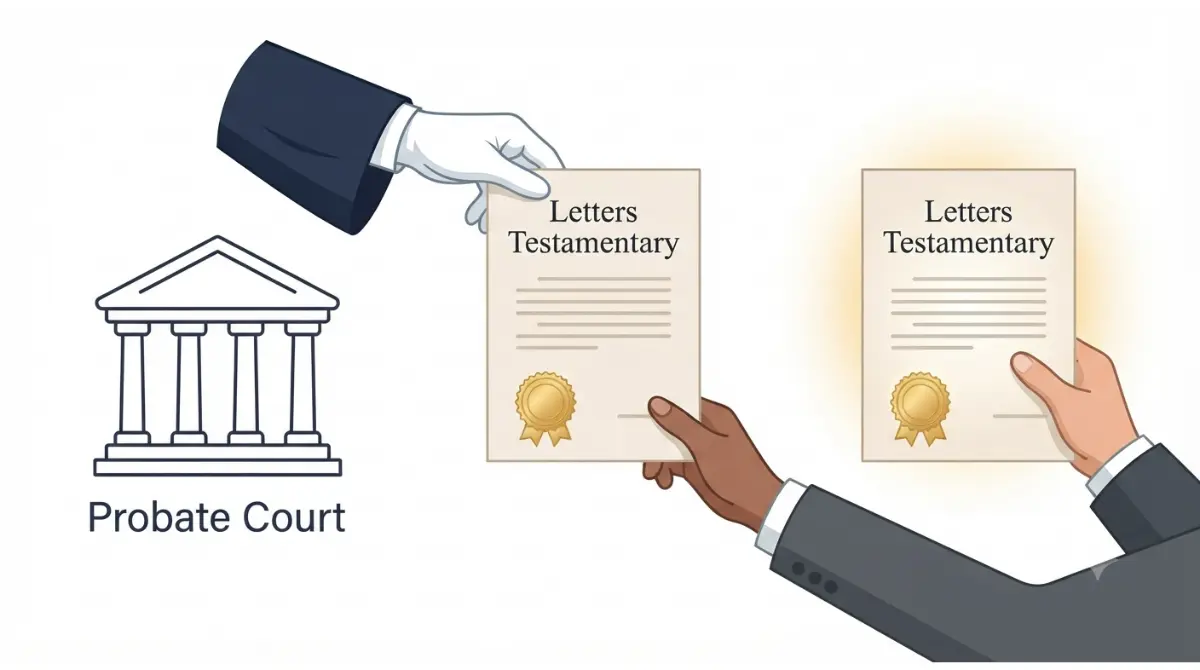
Your authority comes from the probate court, which issues letters testamentary: the document proving you can act for the estate. The court typically requires an asset inventory first and a final accounting before it orders distribution; see how probate works.
What you control and what you don’t
You administer assets without a beneficiary designation; accounts with named beneficiaries generally pass directly to them.
Executor checklist: what to do in the first few weeks
Take these steps in order.
Papers and the will
- Order several certified death certificates.
- Find the original will and file it with the probate court.
Social Security
- Give the funeral director the Social Security number; they usually report the death.
- Return anything received for the month of death or later.
A one-time $255 lump-sum payment may go to a surviving spouse or eligible child.
🔍 How It Works: Social Security pays a month behind, so after a March death, the April payment must be returned.
Bank accounts
- Get an EIN for the estate and open an estate account.
The FDIC insures a deceased owner’s accounts as if the owner were alive for six months.
Are you personally responsible for the deceased’s debts?
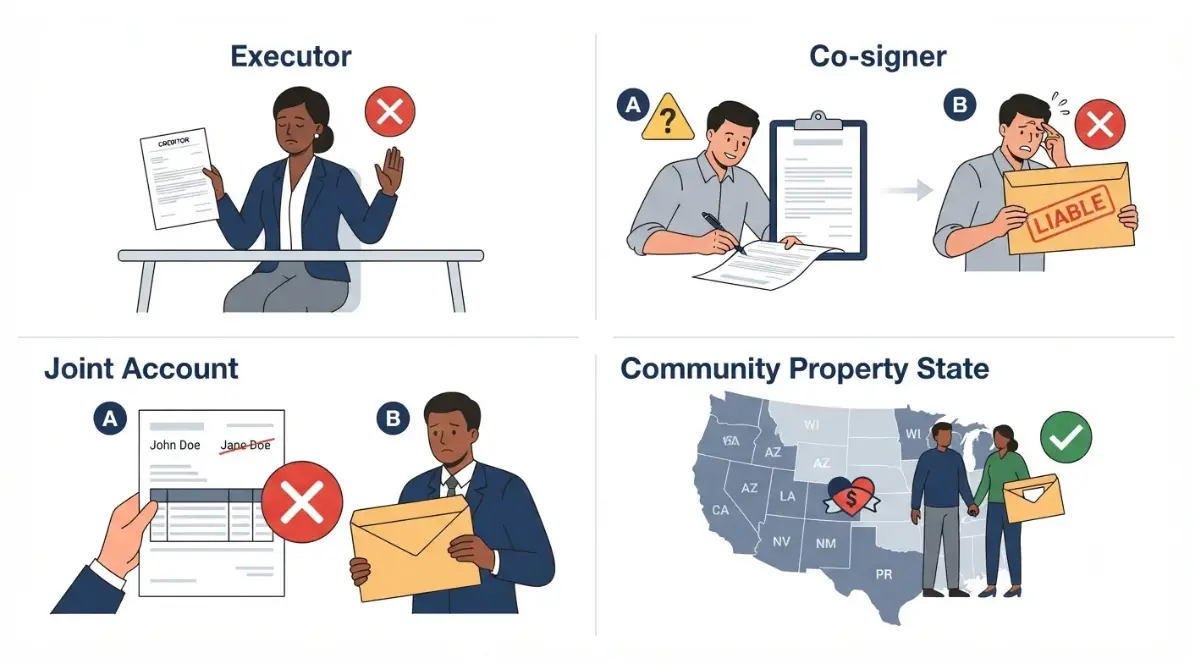
Generally, no. Debts are paid from the estate, and if it can’t cover them, they usually go unpaid. Serving as executor doesn’t make you pay from your own money unless the debt is also yours.
Who owes what
| Situation | May owe? | Key Detail |
|---|---|---|
| Executor role alone | No | Unless the debt is also yours |
| Co-signer | Yes | Responsible for the debt |
| Joint account owner | Possibly | May share responsibility |
| Spouse | Depends | Where state law requires it |
Source: CFPB guidance on debts after death
What debt collectors can say
Collectors may contact you as executor, but they can’t state or imply you owe from your own money.
✅ Action Step: Ask a probate attorney: “Is this estate solvent, and which creditor claims are valid?” before paying any bill.
Which tax returns does an executor have to file?
Up to three returns can apply, plus Form 56, which tells the IRS you’re acting for the estate.
Returns at a glance
| Return | Trigger | Key Detail |
|---|---|---|
| Final Form 1040 | The person met normal filing requirements | Appointed representative signs |
| Form 1041 | Estate gross income of $600 or more | Separate return for the estate’s income |
| Form 706 | Estate above $15,000,000 (2026 deaths) or portability election | Due nine months after death; six-month extension |
Sources: IRS Topic 356; IRS Form 1041 Instructions
Form 706 and the 2026 threshold
📊 Data Point: The 2026 basic exclusion amount is $15,000,000. — Source: IRS Instructions for Form 706 (Rev. July 2026)
✅ Action Step: Ask a CPA or estate attorney: “Is this estate near the federal threshold, and should we file Form 706 for portability?”
How executors end up personally liable
An executor usually isn’t liable for the deceased’s debts, but some mistakes change that.
Paying other creditors before federal taxes
If an estate can’t cover its debts, debts owed to the United States come first. The representative of an insolvent estate can be personally responsible for tax owed if they had notice of it or failed to use due care before distributing.
Requesting discharge with Form 5495
After the returns are filed, you can request discharge from personal liability for income, gift, and estate taxes using Form 5495. If the IRS hasn’t notified you of tax due within nine months of your request, you’re discharged. See IRS Publication 559.
✅ Action Step: Before distributing, ask a probate attorney or CPA: “Is this estate solvent, and which tax debts come first?”
When to bring in a probate attorney or CPA
Some situations justify paying for professional help.
Signs you need a probate attorney
The estate may not cover its debts, or a creditor’s claim looks wrong. A local attorney can explain your state’s timeline.
Signs you need a CPA
The estate nears the $15,000,000 threshold, or you’re unsure which returns apply.
If there’s a living trust
A revocable living trust must get a new taxpayer ID after the owner dies, which adds its own tax steps. See how wills and trusts differ.
✅ Action Step: Ask a probate attorney what your state requires of you, and a CPA what the estate’s tax picture looks like.
Executor duties FAQ
1. What do executor duties include?
Executor duties include gathering assets, paying valid debts and taxes, and distributing what remains to beneficiaries under court oversight.
2. What should an executor do first?
First, order certified death certificates, locate the will, and give the funeral director the Social Security number so the death is reported.
3. Is an executor responsible for the deceased’s debts?
Generally no. An executor pays valid debts from estate assets, not personal funds, unless the debt is also theirs, such as a co-signed loan. A probate attorney can verify each claim.
4. Does an executor have to file taxes?
An executor files the final Form 1040 when required and Form 1041 if the estate’s gross income is $600 or more. A CPA can confirm which returns apply.
5. When is Form 706 due?
Form 706 is due nine months after death with a six-month extension available, and is required above $15,000,000 for 2026 deaths. A CPA or estate attorney can advise on portability.
6. Can an executor be personally liable?
Yes. An executor of an insolvent estate can be liable for unpaid tax if they had notice or failed to use due care before distributing. A probate attorney or CPA should review before distributing.
7. Who reports a death to Social Security?
The funeral director usually reports the death to Social Security if you provide the deceased’s Social Security number.
8. Must an executor return the month-of-death Social Security payment?
Yes. An executor must return any Social Security payment received for the month of death or later.
9. Are a deceased person’s bank accounts still FDIC-insured?
Yes. The FDIC insures a deceased owner’s accounts as if the owner were alive for six months, giving the executor time to review coverage.
10. Do I need a lawyer to be an executor?
Not always, but get a probate attorney if the estate may be insolvent or a creditor’s claim looks wrong.
11. How long does settling an estate take?
Your state’s probate court and the estate’s complexity set the timeline; the federal Form 706 deadline, when required, is nine months after death.
Your next step as executor
Start with the two actions that unlock everything else: confirm your authority with the probate court, and make sure the death has been reported. Then decide which tax returns apply and check with a CPA or probate attorney before paying creditors or distributing anything.
Related Articles
 Estate Planning
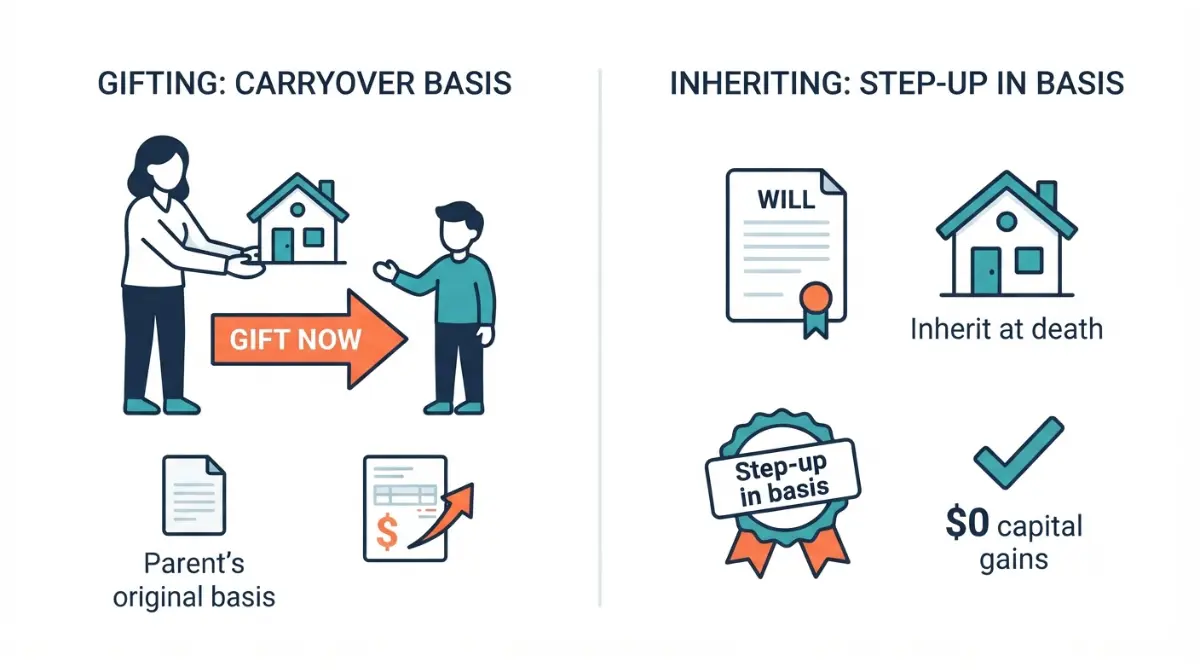
Gifting a House vs Inheritance and What Your Child Will Owe
September 26, 2026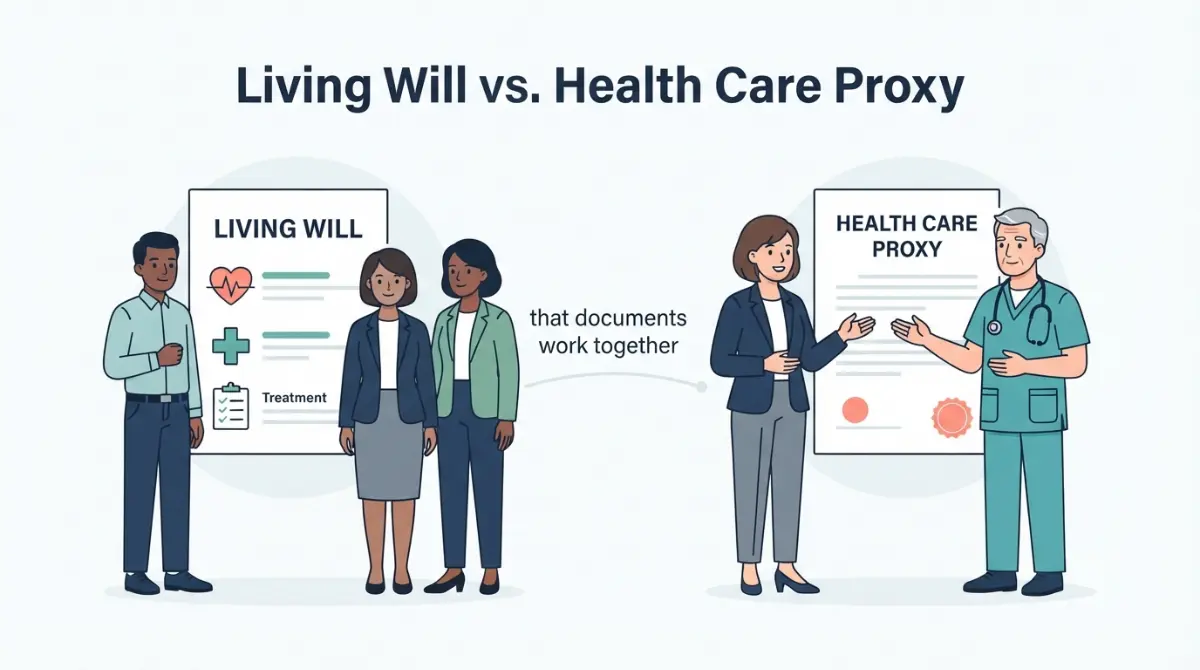 Estate Planning
Living Will vs Health Care Proxy and Who Speaks for You
September 29, 2026 Estate Planning
 for Unmarried Couples and the Overlooked Gaps
October 2, 2026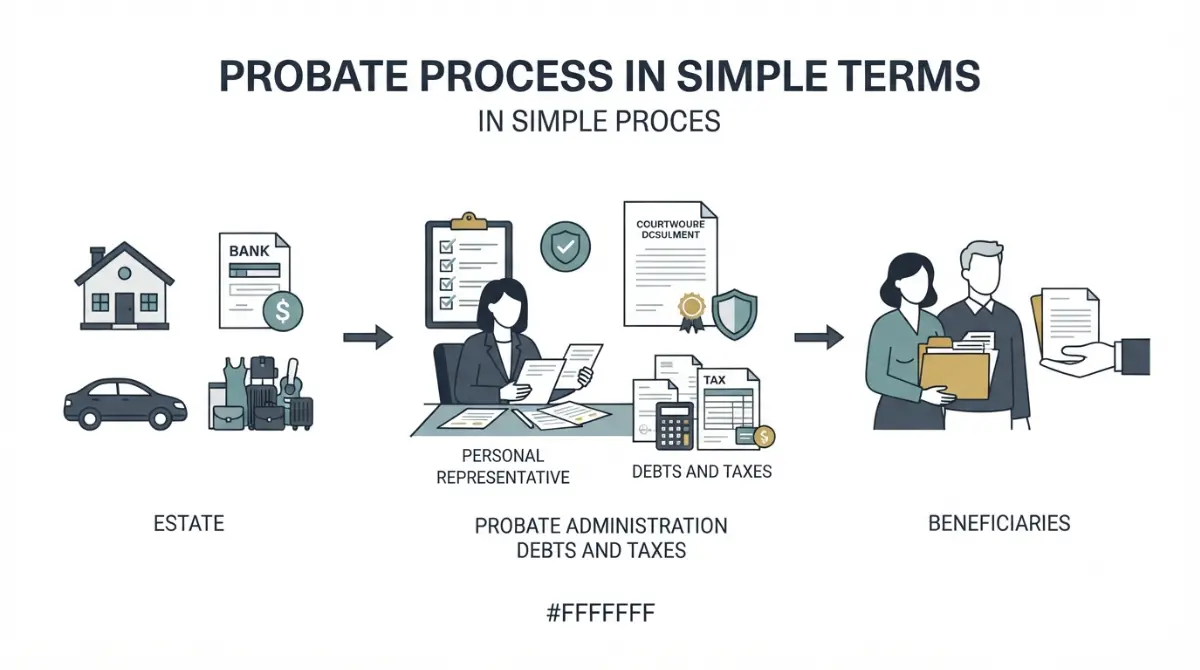 Estate Planning
What Is Probate? A Clear Guide to Steps, Timing, and Cost
September 26, 2026 Estate Planning
What Your Agent Can Legally Do Under a Durable Power of Attorney
September 29, 2026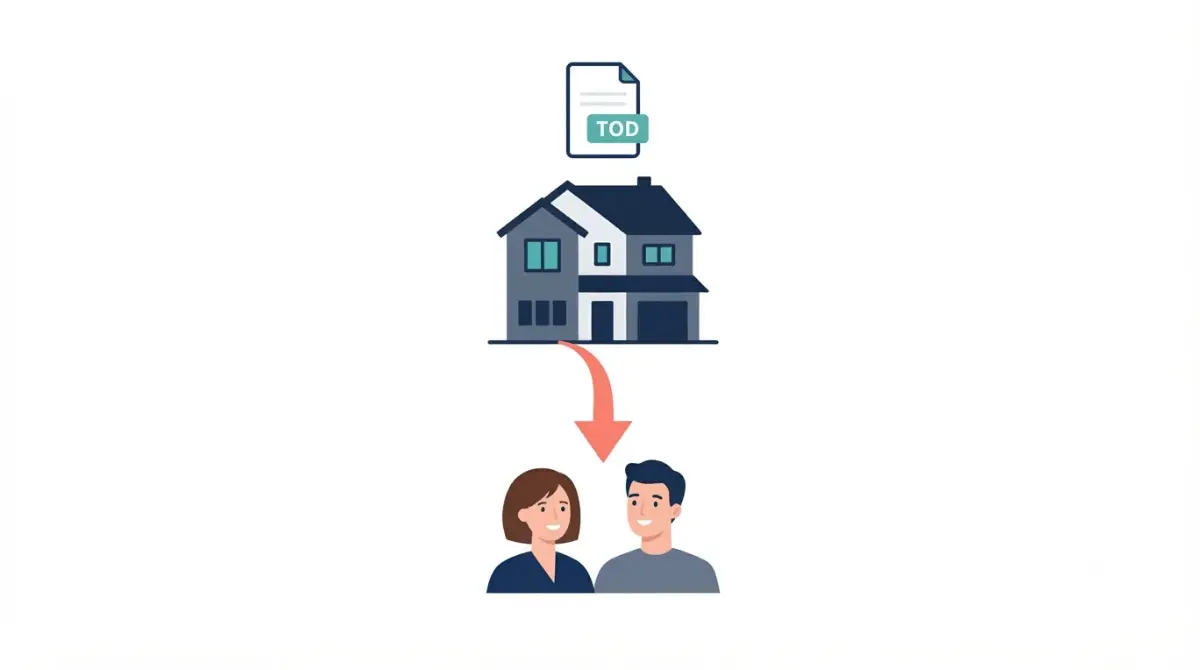 Estate Planning
Where a Transfer on Death Deed Works and Where It Goes Wrong
September 28, 2026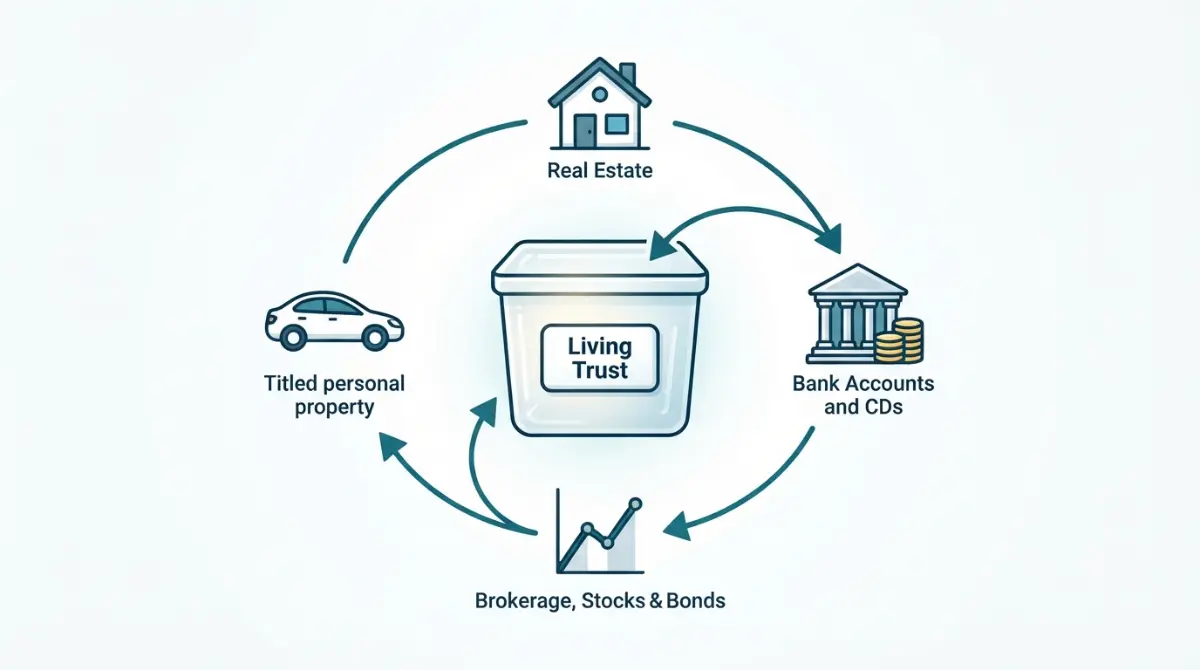 Estate Planning
The key steps to fund a living trust, asset by asset
September 19, 2026 Estate Planning
First Steps When a Parent Has Dementia and No Power of Attorney
October 1, 2026 Estate Planning
Smart Digital Assets Estate Planning Steps So Family Can Get In
October 5, 2026
Informational disclaimer
The content on Finance Authority Hub is provided for general informational and educational purposes only and should not be considered personalized financial, investment, tax, legal, or professional advice. Financial decisions depend on your individual goals, income, risk tolerance, location, and regulatory situation. Before acting on any information, strategy, estimate, or calculator result, consult a qualified licensed professional who can evaluate your specific circumstances.