
The Right Way to Read the Percentage of Americans With a Will
Americans with a will: Gallup’s 2021 phone poll found 46%, Caring.com’s 2025 study 24%. Here’s what explains the difference.
In This Article
What percentage of Americans have a will?
The short answer: about 1 in 4 to nearly 1 in 2
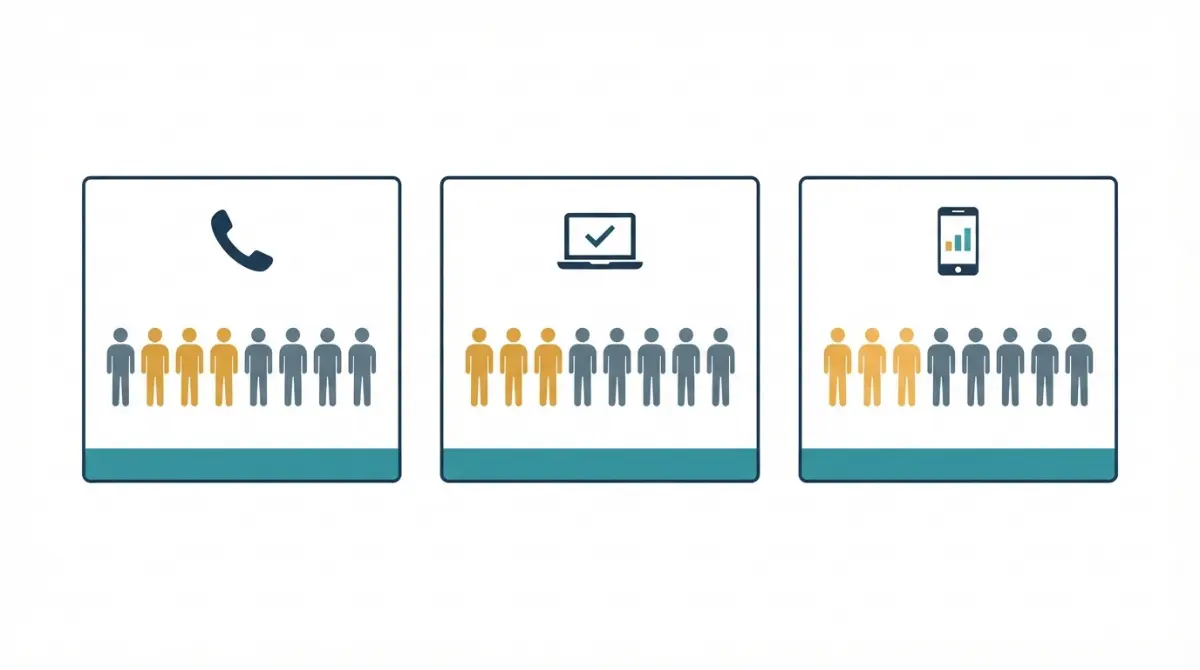
The percentage of Americans with a will ranges from 24% to 46%, depending on the survey. Gallup’s telephone poll found 46% in 2021, Caring.com’s online study found 24% in 2025, and Trust & Will found 26% in 2026. Every one of them means most adults have no will.
Parent, renter, or unmarried? See Sections 4–6. Citing a number? See Section 2. Ready to act? Skip to the end.
“No will” is not “no estate documents”
🔍 How It Works: The share without a will is 100% minus the share with one: 54% (Gallup), 76% (Caring.com), 74% (Trust & Will), calculated by our editors. Trust & Will’s separate 56% means no estate documents of five types, not no will.
ℹ️ Financial Disclaimer: This article is for educational purposes only and is not personalized legal, tax, investment, lending, insurance, or debt-relief advice. Wills, intestacy, and probate rules vary by state, so consult an estate-planning attorney licensed in your state, a CPA for tax questions, or a fiduciary advisor before acting.
Will ownership by survey: Gallup, Caring.com, Trust & Will
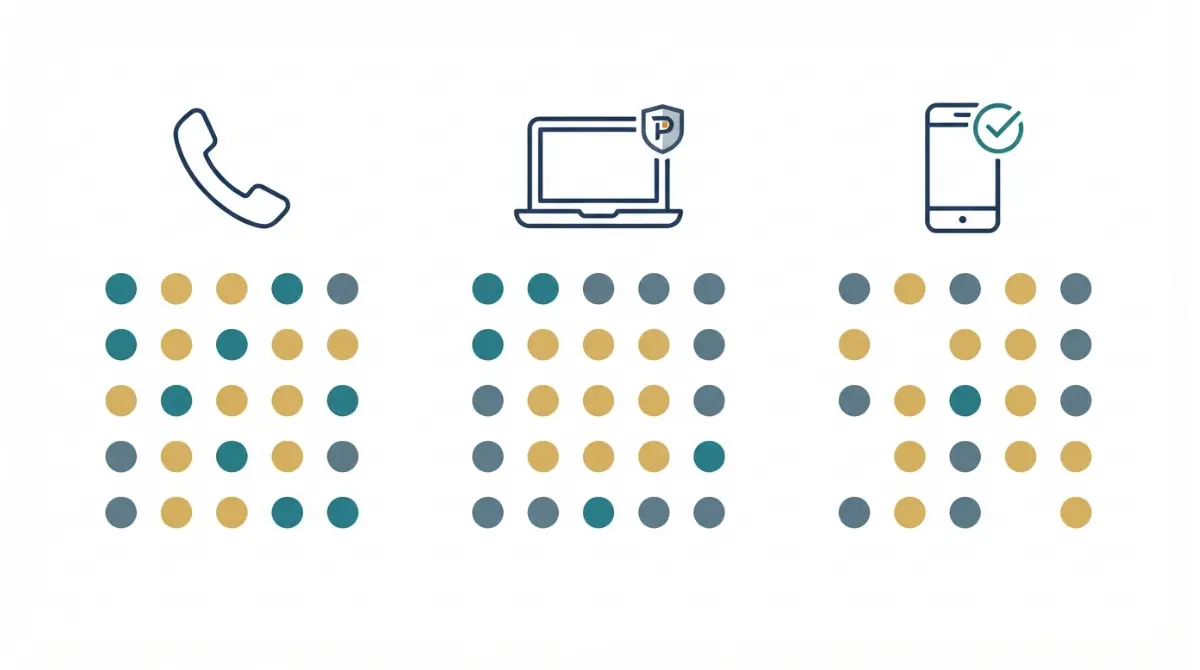
Three major surveys give three different answers, and the table shows why they aren’t directly comparable.
| Survey | Method | Share with a will | Key Detail |
|---|---|---|---|
| Gallup, May 2021 | Phone, 1,016 adults, ±4 points | 46% | Independent pollster |
| Caring.com, 2025 | YouGov poll, 2,500+ adults | 24% | Senior-care referral site |
| Trust & Will, 2026 | Online opt-in (Talker Research), 5,000 adults | 26% | Online will provider |
Source: Gallup (2021); Caring.com’s 2025 wills study; Trust & Will’s 2026 estate planning report.
Gallup (2021): 46%
Earlier Gallup readings back to 1990 ranged from 44% to 51%.
Caring.com (2025): 24%
Caring.com reports will ownership falling from 33% in 2022 to 24% in 2025.
Trust & Will (2026): 26%
Trust & Will reports will ownership falling from 31% in 2025 to 26%.
Why surveys disagree on how many Americans have a will
Four factors likely explain much of the gap between 46% and 24%: survey method, question wording, who sponsored it, and when it was fielded.
Phone poll vs online panel
Gallup phoned a random sample of 1,016 adults, at least 70% by cell phone. Trust & Will’s survey was opt-in online; Caring.com polled through YouGov.
Who paid for the survey and how it was worded
Trust & Will sells wills and Caring.com runs a senior-living referral service, so both have a stake in the topic. Gallup’s question asked about a will describing how you want your money and estate handled.
Is the number really falling?
Trust & Will calls its survey directional, and its 2025 and 2026 samples and questions differed. Two newer surveys show declines; Gallup’s readings stayed between 44% and 51% through 2021.
Who has a will: age, income, and homeownership
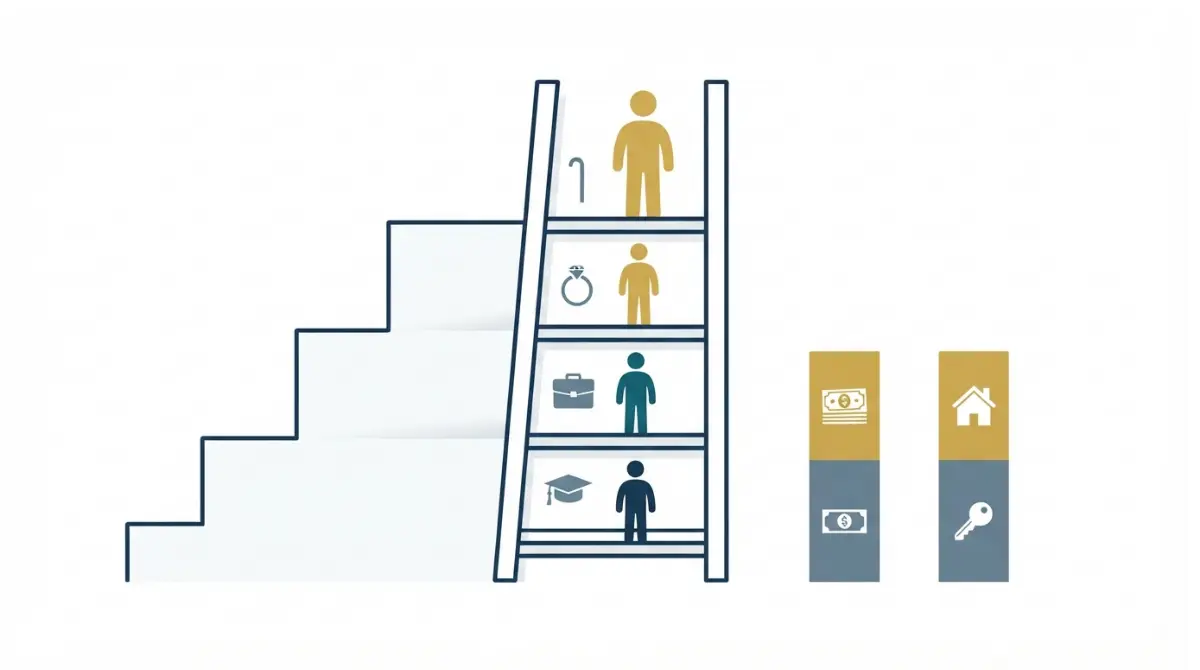
Adults 65 and older are the most likely to have a will, at 76%, and adults 18 to 29 the least, at 20% (Gallup, 2021).
By age and income (Gallup, 2021)
| Gallup group | Has a will |
|---|---|
| Age 65+ | 76% |
| Age 50–64 | 53% |
| Age 30–49 | 36% |
| Age 18–29 | 20% |
| Income $100,000 or more | 61% |
| Income under $40,000 | 30% |
Source: Gallup, May 2021.
By homeownership and relationship status (Trust & Will, 2026)
Among Trust & Will’s respondents, 40% of homeowners have a will versus 16% of renters, and 37% of married adults versus 16% of single or casually dating adults. Gen X is the least protected generation: 62% have no estate documents.
Don’t compare figures across surveys: their samples and questions differ.
Top reasons people haven’t made a will
Among adults without a will or trust, the most common reason is believing they don’t own enough to need one. Trust & Will’s 2026 survey ranks the reasons:
- Not enough assets: 27%
- Haven’t gotten around to it: 23%
- Don’t know where to start: 17%
- Too expensive: 15%
“I don’t have enough assets”
Caring.com found parents of children under 18 are the largest group without wills or other estate documents, and a will can name a guardian for minor children.
“I haven’t gotten around to it”
Caring.com found 43% of adults without a will simply haven’t gotten around to it.
“I don’t know where to start”
✅ Action Step: Ask an estate-planning attorney licensed in your state: “What does my state require for a valid will and for naming a guardian?”
What happens if you die without a will?
If you die without a will, your state’s intestacy law, not your wishes, generally decides who inherits.
Intestacy: your state decides
Which relatives inherit, and in what shares, varies by state; who inherits when there is no will shows the typical order.
Unmarried partners and parents of minor children
Trust & Will found 68% of adults in serious or engaged relationships and 50% of parents have no estate documents. Under default rules, unmarried partners and stepchildren often receive nothing.
If you’ve moved states
About 1 in 10 adults no longer live where they made their estate plan, Caring.com found, and inheritance law varies by state.
✅ Action Step: Ask an estate-planning attorney in your state: “Who would inherit under my state’s default rules, and would my partner or stepchildren be included?”
A will isn’t a plan: what the surveys miss
A will isn’t the same as being covered: wills go stale and many assets bypass them.
Outdated wills
Caring.com found nearly 1 in 4 adults with a will haven’t updated it since making it, and Trust & Will found 14% of will and trust holders never have.
Assets a will doesn’t reach
Beneficiary forms, joint ownership, and trusts can override a will; our guide to assets that pass outside your will shows eight common types.
⚠️ Costly Mistake: Signing a new will doesn’t change beneficiary forms, which can still decide who gets an account.
✅ Action Step: Ask an estate-planning attorney: “Does my current will still match my family, assets, and state?”
Common questions about Americans and wills
1. What percentage of Americans have a will?
Between 24% and 46%, depending on the survey: Gallup found 46% in 2021, Caring.com 24% in 2025, and Trust & Will 26% in 2026.
2. How many Americans don’t have a will?
Most adults, by every survey: 54% by Gallup’s 2021 poll, 76% by Caring.com’s 2025 study, and 74% by Trust & Will’s 2026 report.
3. Why don’t most Americans have a will?
Among adults without a will or trust, Trust & Will found 27% say they lack enough assets and 23% haven’t gotten around to it.
4. Why do surveys give different percentages?
Gallup used a random-digit-dial phone poll in 2021; Trust & Will used an opt-in online survey in 2026; methods, wording, and years differ.
5. Which age group is most likely to have a will?
Adults 65 and older, at 76% in Gallup’s 2021 poll, versus 20% of adults under 30 who have a will.
6. Are homeowners more likely to have a will than renters?
Yes in Trust & Will’s 2026 survey: 40% of homeowners have a will versus 16% of renters.
7. Is the percentage of Americans with a will falling?
Two newer surveys say yes: Caring.com reports 33% in 2022 to 24% in 2025, Trust & Will 31% in 2025 to 26% in 2026.
8. Do you need to be wealthy to need a will?
No. Caring.com found parents of children under 18 are the largest group without estate documents, and a will can name a guardian. Ask an estate-planning attorney about your state’s rules.
9. Do parents have wills?
Many don’t: Trust & Will found 50% of parents have no estate documents, and Caring.com found parents of minors are the largest uncovered group.
10. What happens if you die without a will?
Your state’s intestacy law generally decides who inherits, which can exclude unmarried partners and stepchildren. Ask an estate-planning attorney in your state how default rules would apply to you.
11. Does having a will mean my family is fully covered?
Not necessarily: wills can go out of date, and beneficiary forms, joint ownership, and trusts can override them. An estate-planning attorney can check how yours fit together.
Your next step if you’re in the majority without a will
If you’re among the majority without a will, start by listing what you own, who depends on you, and which accounts name a beneficiary. Then decide how to make it: online will vs lawyer compares both routes. A written list also gives an attorney or an online service a head start. Bring that list to an estate-planning attorney licensed in your state.
Related Articles
 Estate Planning
A Clear Guide to the $15 Million Estate Tax Exemption
September 23, 2026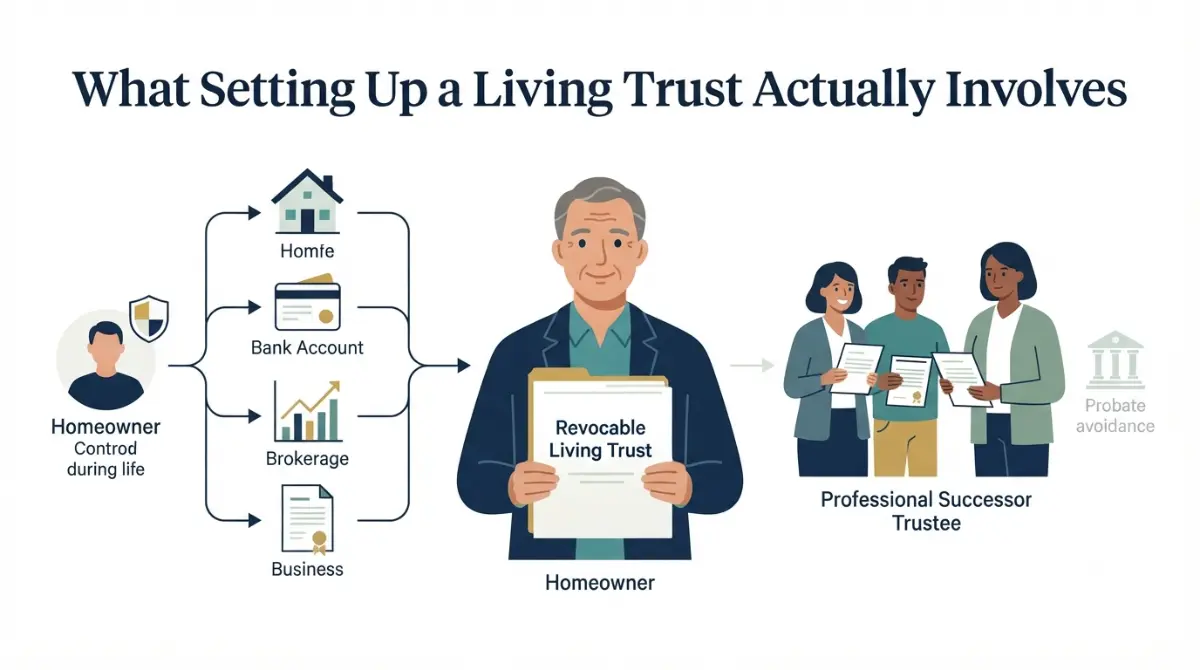 Estate Planning
How to set up a living trust the right way, step by step
September 18, 2026 Estate Planning
Your Parent Died Without a Will? Take the Right Steps in Order
September 30, 2026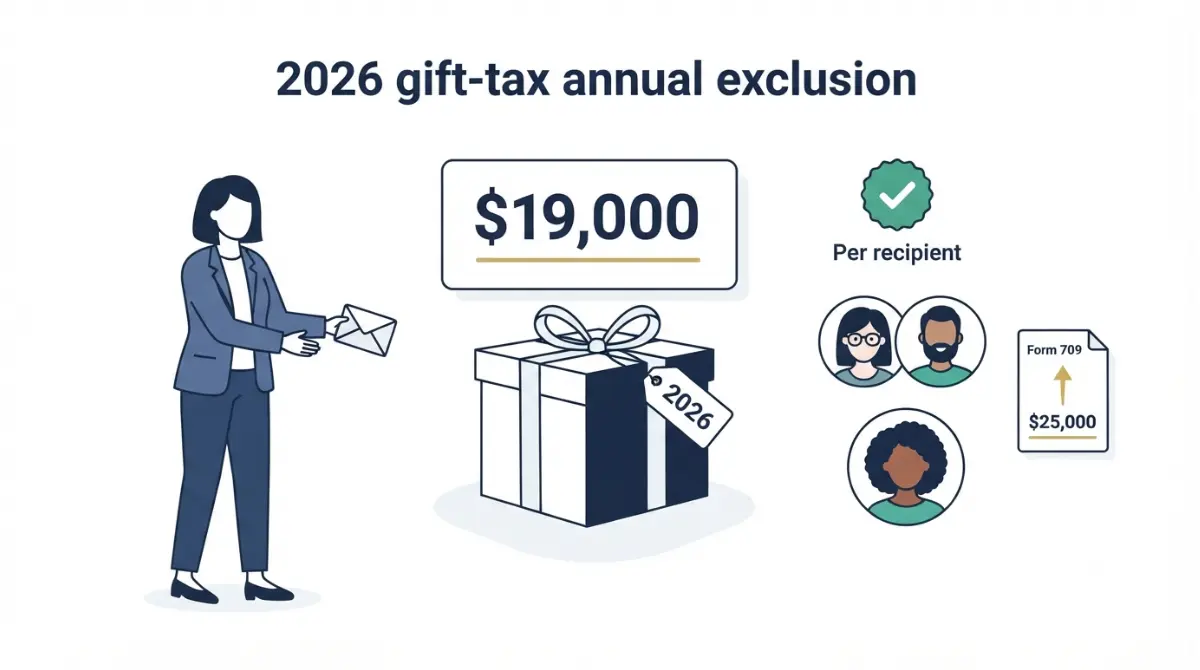 Estate Planning
Key Rules for the $19,000 Annual Gift Tax Exclusion and Form 709
September 24, 2026 Estate Planning
What Your Agent Can Legally Do Under a Durable Power of Attorney
September 29, 2026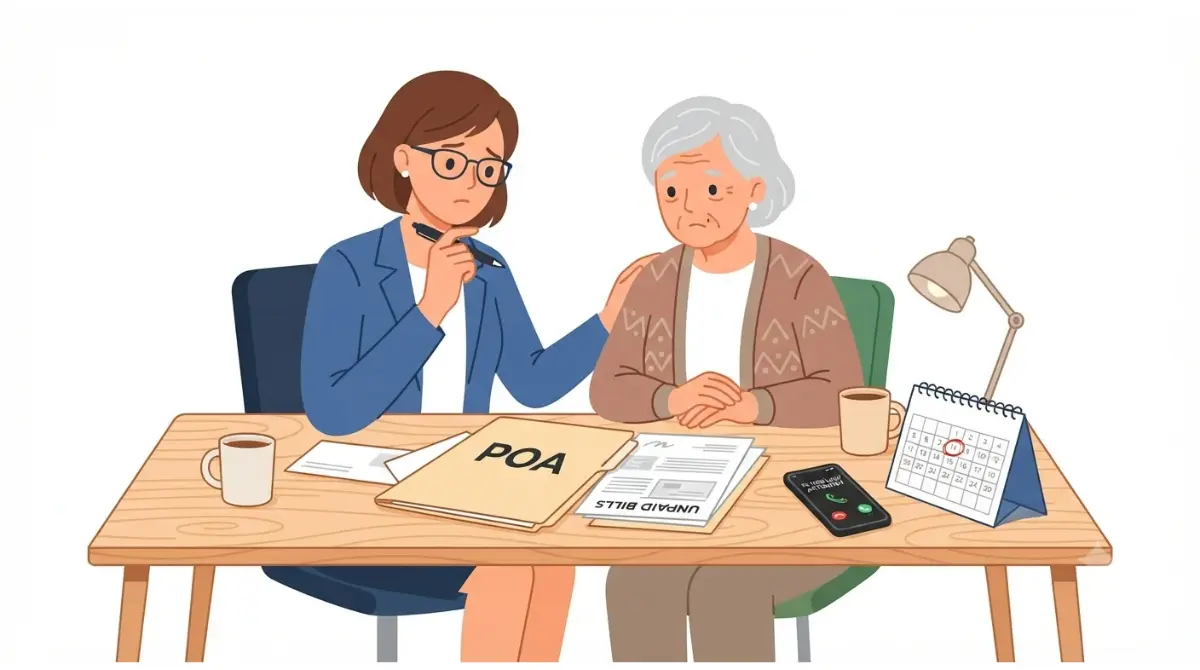 Estate Planning
First Steps When a Parent Has Dementia and No Power of Attorney
October 1, 2026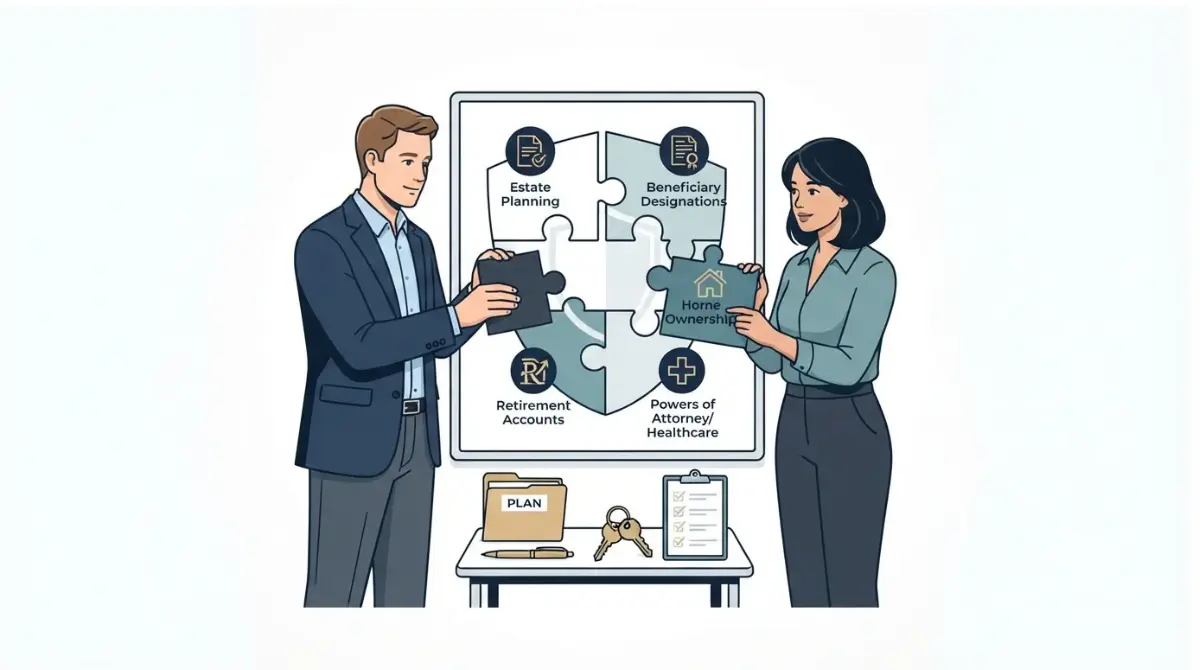 Estate Planning
 for Unmarried Couples and the Overlooked Gaps
October 2, 2026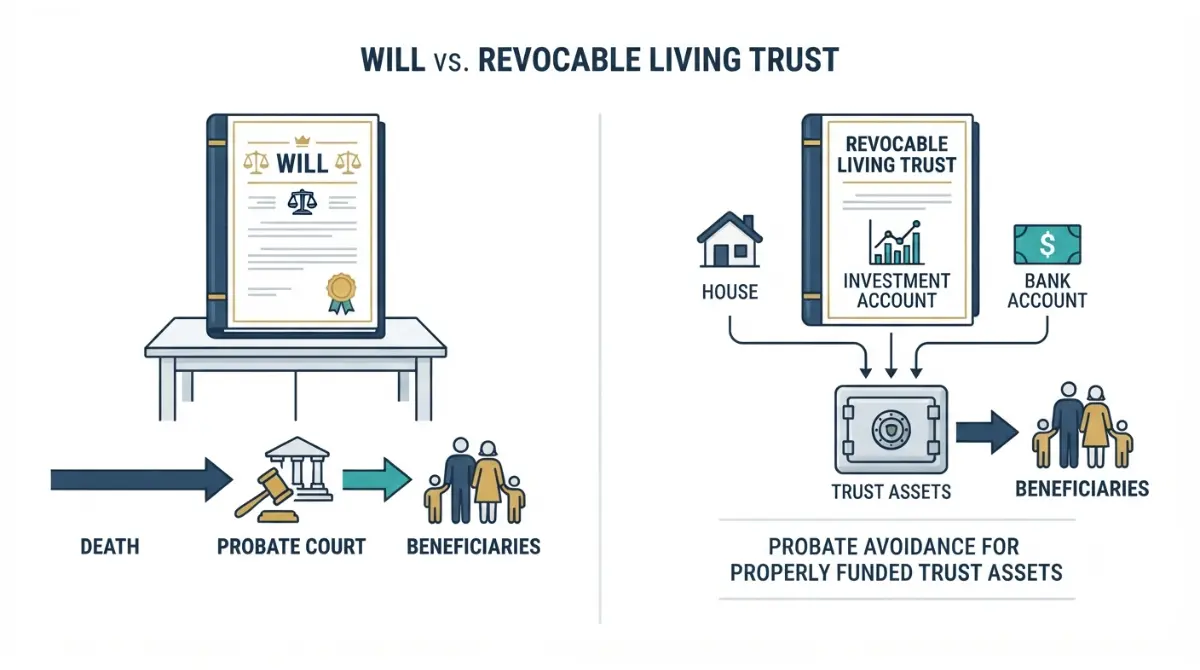 Estate Planning
Will vs Trust and How to Find the Right Fit for Your Family
September 17, 2026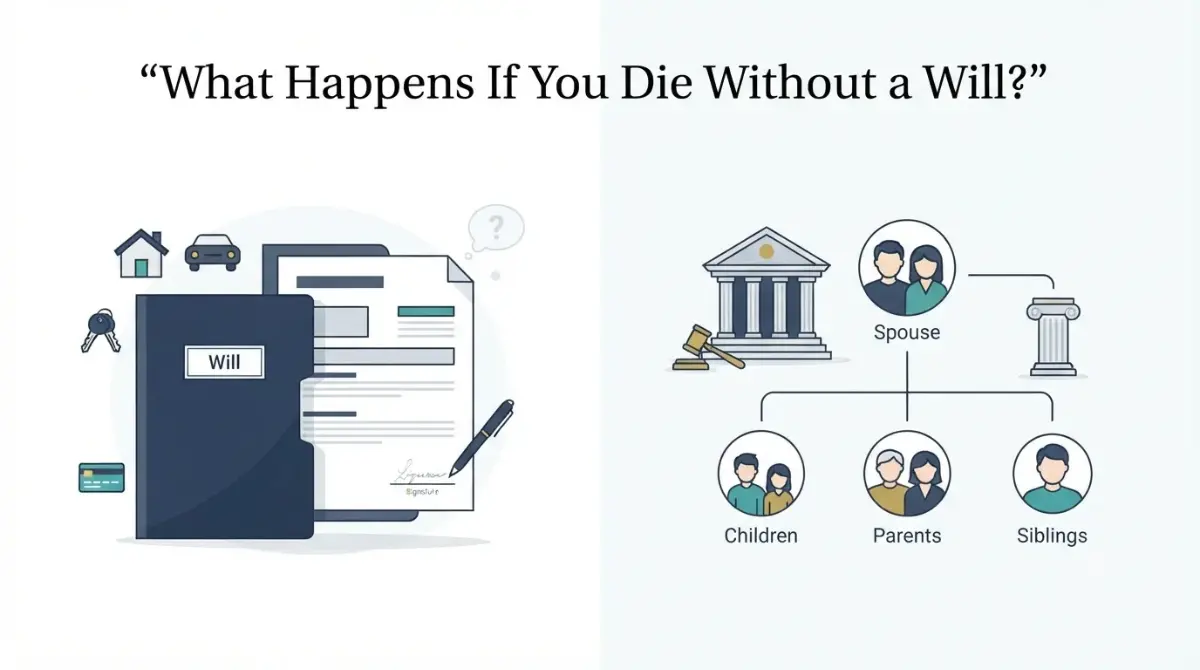 Estate Planning
A Clear Look at What Happens If You Die Without a Will
September 30, 2026
Informational disclaimer
The content on Finance Authority Hub is provided for general informational and educational purposes only and should not be considered personalized financial, investment, tax, legal, or professional advice. Financial decisions depend on your individual goals, income, risk tolerance, location, and regulatory situation. Before acting on any information, strategy, estimate, or calculator result, consult a qualified licensed professional who can evaluate your specific circumstances.