
Smart Digital Assets Estate Planning Steps So Family Can Get In
Digital assets estate planning has a catch: an executor sees a catalog of your messages, not their content, without your consent.
In This Article
What happens to your digital assets when you die?
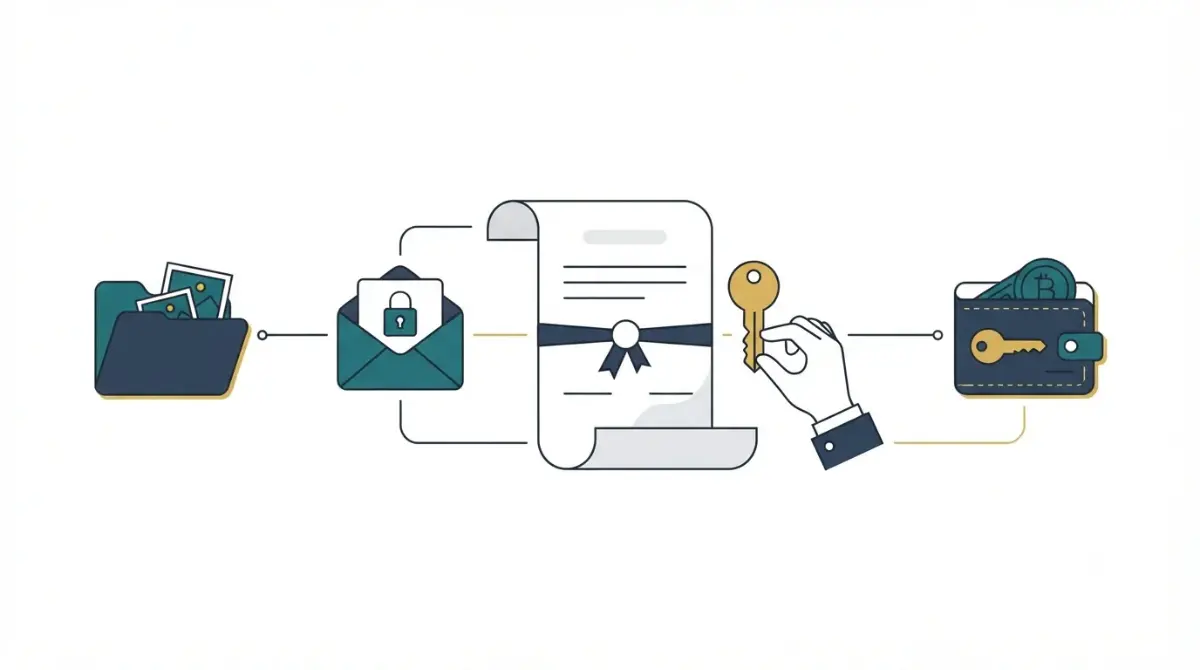
Your digital assets, meaning online accounts, cloud files, and crypto, are reached through passwords, platform rules, and keys, not just a will.
The IRS treats digital assets as property, including cryptocurrency.
They are one more example of assets a will can’t fully control: the provider’s rules and your instructions often decide who gets in.
Where do you fit? Planning ahead: access rules. Settling an estate: photos and mistakes. Holding crypto: the crypto section.
ℹ️ Financial Disclaimer: This article is educational, not personalized investment, tax, legal, lending, insurance, or debt-relief advice. Rules vary by state and situation. Before acting, consult an estate-planning attorney for legal documents, a CPA or tax attorney for taxes, and a fiduciary advisor for investments.
Who can access your accounts after you die? The 3-tier rule
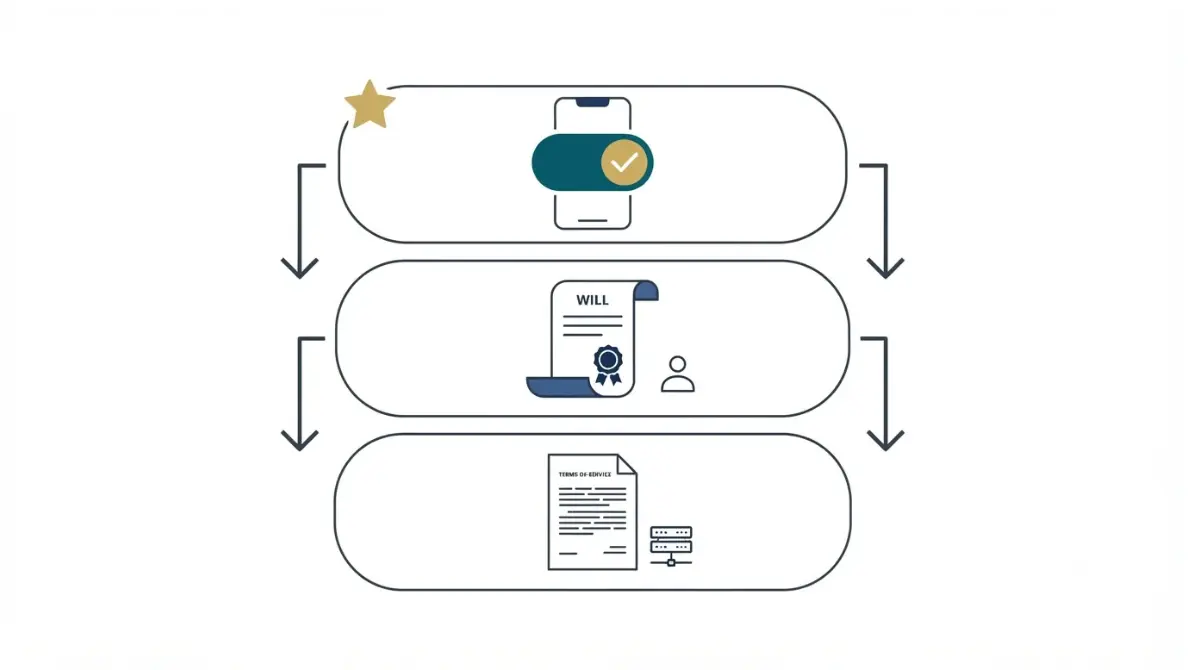
State law ranks whose instructions win when someone asks to open your accounts.
What RUFADAA does
The Revised Uniform Fiduciary Access to Digital Assets Act (RUFADAA) sets three tiers:
- Your provider’s online tool, such as a legacy contact setting
- Your will, trust, or power of attorney
- The provider’s terms of service
🔍 How It Works: By default, an executor sees a catalog (senders, dates), not message content, unless you consented.
What a digital executor does
A digital executor, the person managing your online accounts, asks each provider for access, usually with certified proof of authority from the probate process.
Why a will alone may not be enough
With no platform tool and silent documents, the provider’s terms may control. State versions vary.
✅ Action Step: Ask an estate-planning attorney which wording your state requires for email content access.
Google, Apple and Facebook: set up legacy tools now
Each major platform lets you name someone in advance, and under RUFADAA that choice generally outranks your will.
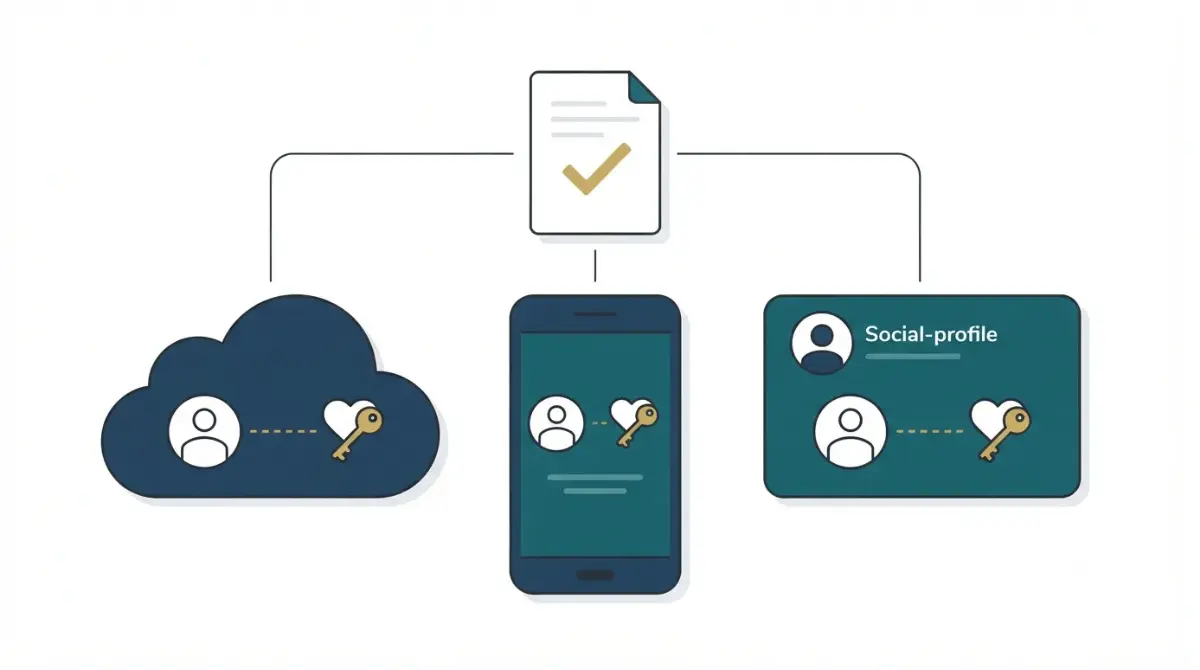
| Platform | What it does | Key detail |
|---|---|---|
| Google Inactive Account Manager | Notifies up to 10 people; can share chosen data | Inactivity window up to 18 months |
| Apple Legacy Contact | Gives access to iCloud data after death | Needs access key and death certificate |
| Facebook legacy contact | Manages a memorialized profile | Memorialization is requested after a death |
Sources: Google, Apple, and Meta help pages.
Google Inactive Account Manager
You can name up to 10 people and choose which data types to share.
Apple Legacy Contact
Your contact needs the access key you generate plus your death certificate.
Facebook legacy contact and memorialization
Facebook offers a legacy contact; friends or family can request memorialization, including for Instagram.
What happens to photos and cloud files after death?
Photos stored online follow the platform’s rules, and some of those rules include deleting inactive accounts.
Why photos can disappear
Google says personal accounts unused for two years may be deleted, including content in Google Photos. Signing in at least once every two years keeps an account active.
Owned vs. licensed content
Apple says a Legacy Contact cannot access purchased movies, music, books, or subscriptions, though iCloud Photos are included.
Back up outside one account
Photos kept only on a third-party site are not part of your Apple data, so list where each library lives.
⚠️ Costly Mistake: Leaving the only copy of family photos in one unused account, where inactivity can end in deletion.
What happens to crypto when the owner dies?
Crypto access depends entirely on private keys.
Keys, wallets and self-custody
Wallets store private keys, not coins, and per the SEC’s custody bulletin a lost key cannot be replaced.
Custodial vs. self-custody
Self-custody means only you hold the keys; with an exchange, the SEC notes access can be lost if the custodian fails.
Tax basis for heirs (worked example)
An heir’s basis in inherited property is generally its fair market value at date of death, the rule behind step-up in basis.
🔍 How It Works: Hypothetical: crypto bought for $10,000 is worth $60,000 at death. An heir selling for $62,000 reports a $2,000 gain on the new basis, not $52,000.
Heirs may need to document date-of-death value themselves for wallets held outside brokers.
✅ Action Step: Ask a CPA or tax attorney how to document date-of-death value and whether the estate needs Form 706.
How to build a digital asset inventory and access plan
A workable plan takes four steps.
List accounts, not passwords
List each account, provider, and where credentials are kept, never the credentials themselves.
Use the platform tools
Set up each tool in the table above.
Name a digital fiduciary in your documents
Name an executor or agent, and have an attorney add explicit consent for electronic communications.
Plan for crypto keys
The SEC says never share private keys or seed phrases, so plan the handoff carefully.
✅ Action Step: Ask an estate-planning attorney how to give an executor access to keys without exposing them today.
Digital Asset Access Matrix:
| Asset | Default access | Set up now |
|---|---|---|
| Catalog only, no content | Name a platform contact; add written consent | |
| Photos and files | Varies by provider | Name a contact; back up elsewhere |
| Self-custody crypto | None without the keys | Record where keys are kept |
Sources: ULC, platform help pages, SEC.
Mistakes that lock families out of digital assets
Four avoidable mistakes can lock families out.
Assuming an executor can read email
Without your consent, an executor generally gets only a catalog of messages.
Losing the Apple access key
Apple needs both the access key and a death certificate; keep a printed copy with your estate documents.
Unrecorded crypto keys
A lost private key cannot be replaced, so record where keys are kept.
“My estate is too small to matter”
Lockouts are not an estate-size problem; the federal estate tax exemption is a separate question.
📊 Data Point: Federal estate tax return filing threshold for 2026 deaths: $15,000,000. Source: IRS, estate tax FAQs (page updated July 2026).
Digital assets estate planning: your questions answered
1. What happens to digital assets when you die?
Digital asset access depends on platform tools, then your documents, then the provider’s terms of service; without a plan, accounts can stay locked.
2. Can my executor access my email after I die?
An executor can generally get a catalog of your messages, but reading email content usually requires your prior consent. Ask an estate-planning attorney which wording your state requires.
3. What is a digital executor?
A digital executor is the person you name to manage online accounts; providers typically still ask for certified proof of their authority.
4. What is Google’s Inactive Account Manager?
Google’s Inactive Account Manager lets you name up to 10 people to be notified or receive chosen data after up to 18 months of inactivity.
5. What is Apple’s Legacy Contact?
Apple’s Legacy Contact is someone who can request your iCloud data after death using an access key and a death certificate.
6. What happens to my Facebook account when I die?
You can name a Facebook legacy contact, and friends or family can request memorialization; Instagram accounts can also be memorialized by request.
7. What happens to my photos and cloud files after death?
Google may delete personal accounts inactive for two years, while Apple’s Legacy Contact can access iCloud Photos but not purchased movies or music.
8. What happens to crypto when the owner dies?
A lost private key cannot be replaced, so crypto in a self-custody wallet can stay permanently inaccessible unless the keys’ location is recorded.
9. Do heirs pay tax on inherited crypto?
Inherited crypto generally takes a basis equal to its fair market value at death, which can shrink the taxable gain on a later sale. Ask a CPA or tax attorney how to document that value.
10. Is digital property subject to estate tax?
Digital assets are property, so their value can count toward the estate; the federal return filing threshold is $15,000,000 for 2026 deaths. Ask an estate-planning attorney or CPA whether state estate taxes also apply.
11. How do I make a digital estate plan?
List your accounts and where credentials are kept, set platform tools, and have an attorney add explicit digital-asset and email-consent language to your documents.
Start this week with the platform tools, which outrank your will for each account. Then record your accounts and where credentials are kept, and ask an attorney to add digital-asset language to your documents. Even one finished step leaves your family better prepared than none.
Related Articles
 Estate Planning
Naming a Guardian for Minor Children in Your Will, Step by Step
October 2, 2026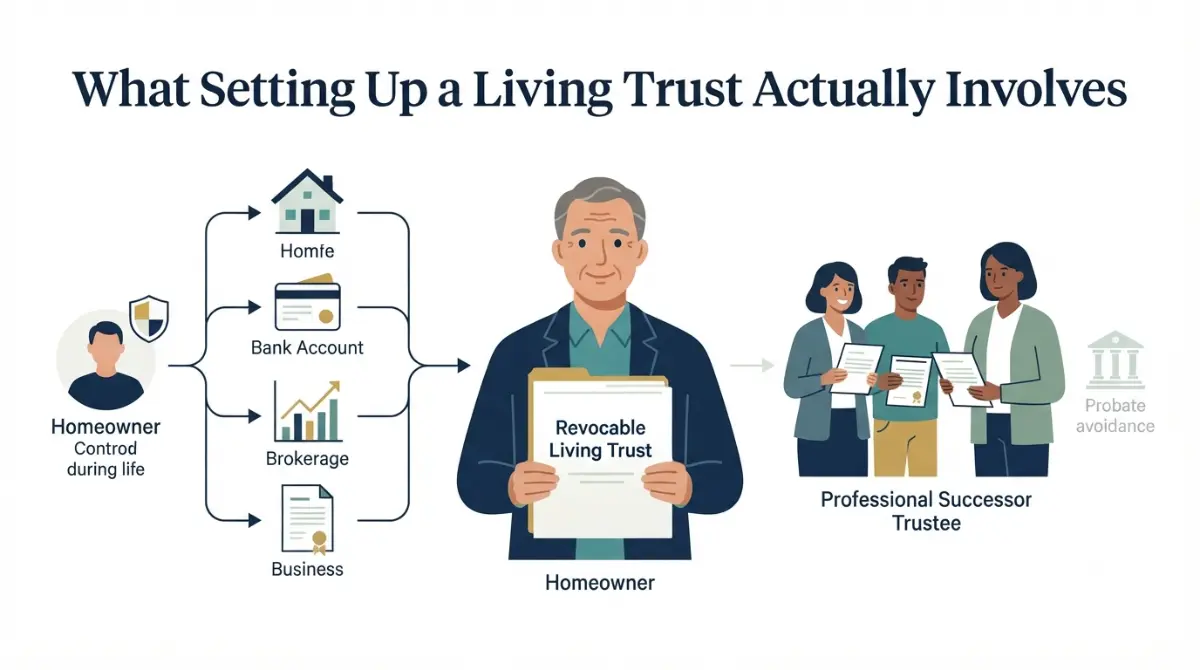 Estate Planning
How to set up a living trust the right way, step by step
September 18, 2026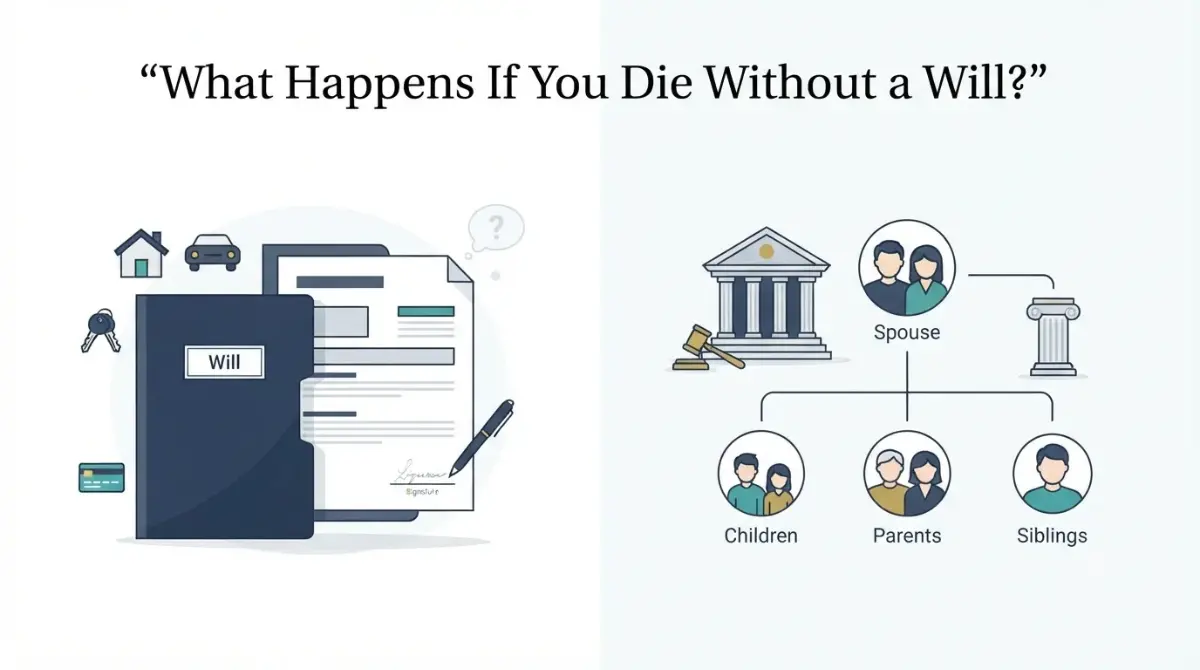 Estate Planning
A Clear Look at What Happens If You Die Without a Will
September 30, 2026 Estate Planning
The Right Way to Read the Percentage of Americans With a Will
October 5, 2026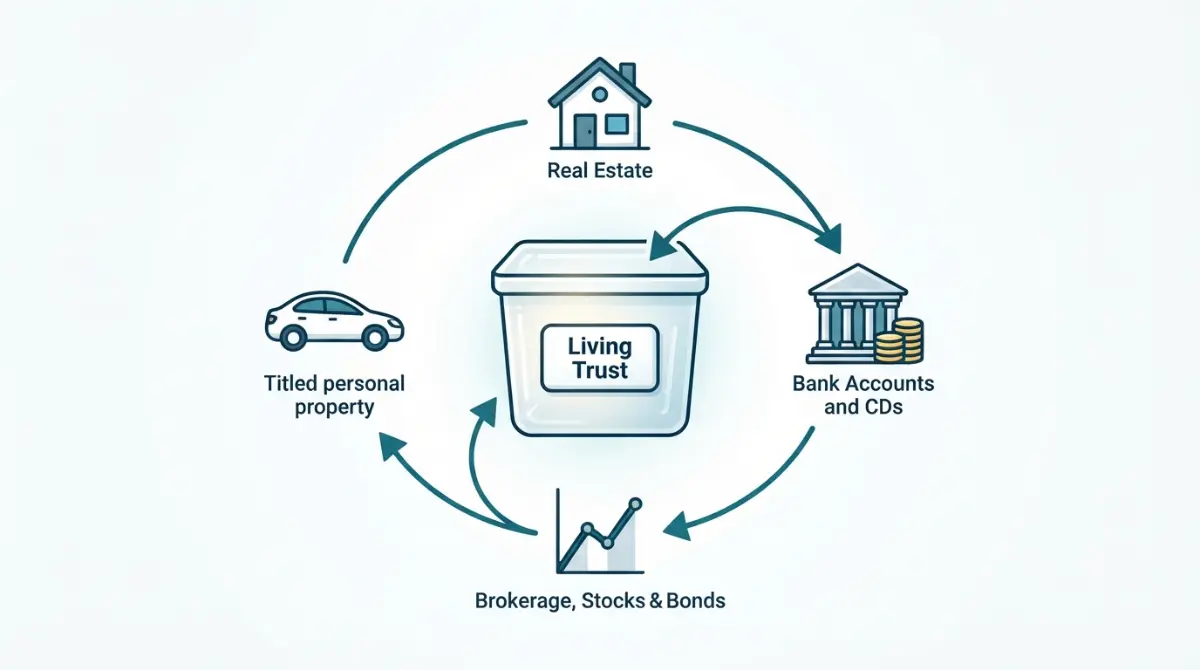 Estate Planning
The key steps to fund a living trust, asset by asset
September 19, 2026 Estate Planning
Your Parent Died Without a Will? Take the Right Steps in Order
September 30, 2026 Estate Planning
A Clear Signing Order for Estate Planning After Diagnosis
October 2, 2026 Estate Planning
Online Will vs Lawyer Decisions Made Clear for Your Family
September 21, 2026 Estate Planning
Will vs Trust and How to Find the Right Fit for Your Family
September 17, 2026
Informational disclaimer
The content on Finance Authority Hub is provided for general informational and educational purposes only and should not be considered personalized financial, investment, tax, legal, or professional advice. Financial decisions depend on your individual goals, income, risk tolerance, location, and regulatory situation. Before acting on any information, strategy, estimate, or calculator result, consult a qualified licensed professional who can evaluate your specific circumstances.