
A Clear Guide to the $15 Million Estate Tax Exemption
Estate tax exemption rules changed in 2026: $15 million per person, and only 7,195 estate returns were filed in 2024. Here’s who still has work to do.
In This Article
Does the estate tax exemption affect your family?
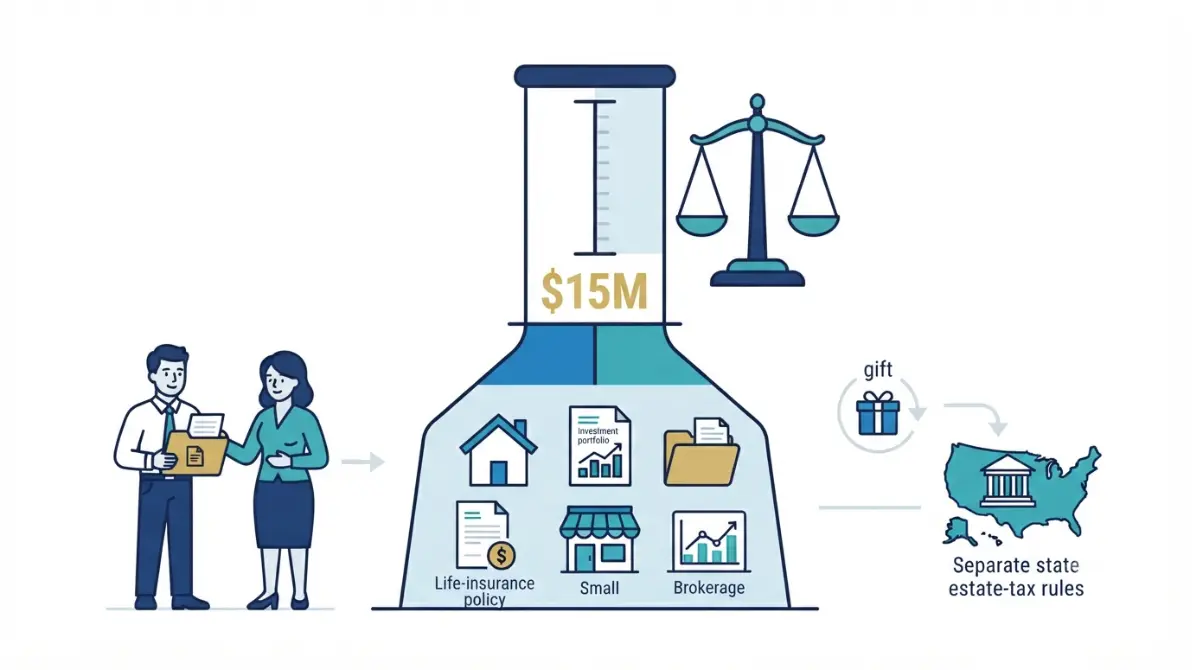
The federal estate tax exemption is $15,000,000 per person for deaths in 2026, which is why most families will never owe federal estate tax. Only 7,195 estate tax returns were filed with the IRS in all of 2024.
Two situations still deserve attention below that line: a surviving spouse, and a home state with its own estate tax.
- Settling a loved one’s estate? Go straight to the married-couple filing rules below.
- Planning your own estate? Read the calculation and gift sections, then work through an estate planning checklist.
- Unsure what counts? Many assets that pass outside a will still count toward this limit.
ℹ️ Financial Disclaimer: This article explains federal estate and gift tax rules for educational purposes only. It is not personalized tax, legal, investment, insurance, lending, or debt-relief advice. Outcomes depend on how assets are owned, prior gifts, marital status, and state law, so consult a CPA or enrolled agent, an estate planning attorney, or a fiduciary financial advisor before filing a return, making large gifts, or changing an estate plan.
What the $15 million estate tax exemption actually covers
The estate tax exemption, officially the basic exclusion amount, is $15,000,000 per person for deaths in 2026 under Public Law 119-21. The IRS confirms the figure on its estate and gift tax updates page. The exemption belongs to each person, and there is no joint estate tax return.
Gross estate vs. taxable estate
Your gross estate is everything you own or hold an interest in at death, valued at fair market value. Debts, administration expenses, and property passing outright to a spouse or a qualified charity are subtracted to reach the taxable estate.
Assets that count even outside a will
IRS guidance says the gross estate will likely include non-probate property, such as insurance, annuities, trusts, and business interests.
💡 Expert Note: A common point of confusion: a beneficiary designation keeps an asset out of probate, not out of the gross estate. That includes contracts such as annuities that pay out when the owner dies.
How estate tax is calculated above the exemption

Estate tax is figured in five steps, and only value above the exemption is effectively taxed.
Five steps from gross estate to tax owed
- Total the gross estate at fair market value.
- Subtract allowable deductions to reach the taxable estate.
- Add adjusted taxable gifts made after 1976.
- Apply the IRS unified rate schedule for Form 706 to find the tentative tax.
- Subtract the applicable credit: $5,945,800 for 2026 deaths, which is the tax on exactly $15,000,000.
Worked example: a $17 million estate
🔍 How It Works: A single person dies in 2026 with a $17,000,000 taxable estate and no taxable lifetime gifts. The tentative tax is $6,745,800. Subtracting the $5,945,800 credit leaves $800,000 owed, which is exactly 40% of the $2,000,000 above the exemption.
✅ Action Step: Ask a CPA or enrolled agent: “Did the decedent file Form 709 for any past gifts, and how do those gifts change this calculation?”
How the exemption has changed and how few estates file
The exemption amount has nearly tripled since 2017, and the statute now adjusts it for inflation.
Exemption by year, 2017–2026
| Year of death | Basic exclusion amount | Key detail |
|---|---|---|
| 2017 | $5,490,000 | Last year before the Tax Cuts and Jobs Act |
| 2018 | $11,180,000 | Tax Cuts and Jobs Act roughly doubled it |
| 2025 | $13,990,000 | Final amount under the prior law |
| 2026 | $15,000,000 | Set by Public Law 119-21 |
Source: IRS, “What’s new — Estate and gift tax,” basic exclusion amount by year of death.
For deaths after 2026, the inflation adjustment uses 2025 as its base year, and current law sets no expiration date. Congress can still change it.
How many estates file a return
📊 Data Point: Estate tax returns filed fell from 9,024 in 2023 to 7,195 in 2024. Source: IRS estate tax filing statistics (Statistics of Income, Publication 5332, rev. July 2026). These are returns filed, not estates that owed tax.
How married couples can shelter up to $30 million
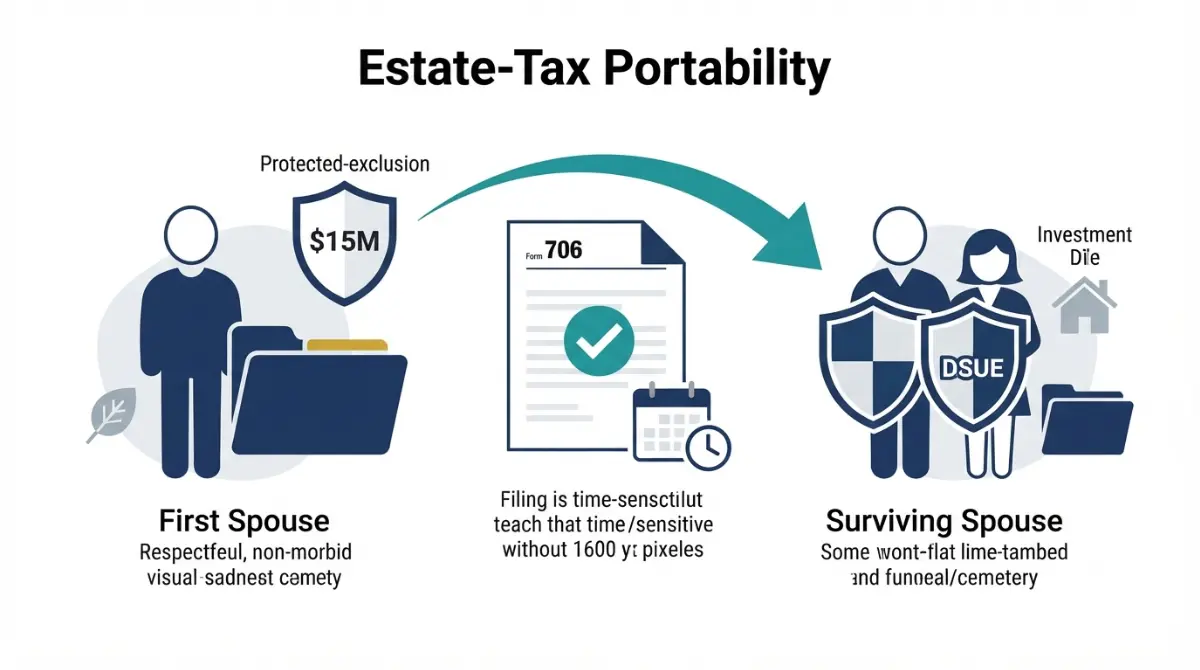
A married couple can shelter up to $30 million combined, and the simplest route is a portability election on the first spouse’s Form 706.
Portability: the DSUE election on Form 706
The deceased spousal unused exclusion (DSUE) passes to the survivor only through a timely Form 706. The return must be filed for this purpose even when no tax is owed. It is due nine months after death, and Form 4768 adds an automatic six-month extension.
Missed the deadline? The five-year relief route
If the estate was under the filing threshold, Rev. Proc. 2022-32 allows a late election up to the fifth anniversary of death, as the IRS estate tax FAQ explains. Estates over the threshold get no such relief.
⚠️ Costly Mistake: Skipping Form 706 because “no tax is due” can forfeit the first spouse’s entire unused exemption. The surviving spouse may need that exemption later if assets grow.
✅ Action Step: Ask an estate planning attorney or CPA: “Should we file Form 706 only to elect portability, using simplified valuation?”
Surviving spouses also have separate inherited IRA choices to make.
How lifetime gifts use up your estate tax exemption
Gift tax and estate tax share one lifetime exemption, so taxable gifts made during life reduce what remains at death.
The $19,000 annual exclusion vs. the lifetime exemption
Gifts up to the annual exclusion, which is $19,000 per recipient in 2026, are not taxable gifts. Neither is tuition or medical expenses you pay for someone, or gifts to your spouse. Gifts to a spouse who isn’t a U.S. citizen are an exception, excluded only up to $194,000 for 2026.
When a gift triggers Form 709
If you give one person more than $19,000 in a year, you generally must file Form 709 by April 15 of the following year. Filing usually means reporting rather than paying, because the excess draws down your lifetime exemption. The IRS gift tax FAQ lists the exceptions.
✅ Action Step: Ask a CPA: “How much of my lifetime exemption have my past Form 709 filings used?” Large gifts often move through trusts, so compare a will versus a trust first.
Estate tax mistakes families make even under $15 million
Most estate tax errors happen in estates that owe nothing at all.
Skipping Form 706 when a spouse survives
Without a timely return, the first spouse’s unused exemption is lost, unless the five-year relief route applies.
Assuming your state follows the federal limit
Some states levy their own estate or inheritance tax with lower thresholds. Check your state revenue department before assuming you’re clear.
Relying on old “sunset” advice
Guidance written before July 2025 predicted a much lower 2026 exemption. That drop never took effect.
Income tax is a separate question. Inherited property usually takes a basis equal to its fair market value at death, which you can model with a capital gains tax calculator. Inherited IRAs follow different rules.
Updating your own documents? Start by comparing online will service prices.
Frequently asked questions
1. What is the estate tax exemption for 2026?
The estate tax exemption is $15,000,000 per person for deaths in 2026, set by Public Law 119-21 and confirmed by the IRS. A CPA can confirm how it applies to your estate.
2. Is the estate tax exemption per person or per couple?
The estate tax exemption is per person. A married couple shelters up to $30 million most simply through a timely portability election on Form 706. An estate planning attorney can compare portability with trust-based options.
3. What is the estate tax rate above the exemption?
Value above the $15 million estate tax exemption is taxed at 40%, so a $17 million taxable estate with no taxable gifts owes $800,000. A CPA should run your actual figures.
4. Do I need to file Form 706 if the estate is under $15 million?
Usually not, but an estate under $15 million must still file Form 706 to pass the unused estate tax exemption to a surviving spouse. Ask a CPA whether portability fits your situation.
5. When is the estate tax return due?
The estate tax return, Form 706, is due nine months after death. Form 4768 adds six months to file, but not to pay. A CPA or enrolled agent can manage both deadlines.
6. What if we missed the portability deadline?
If the estate was under the filing threshold, Rev. Proc. 2022-32 allows a late portability election until the fifth anniversary of death. An estate attorney can confirm eligibility.
7. Do lifetime gifts reduce the estate tax exemption?
Yes. Taxable gifts reduce it, but gifts within the $19,000 per-recipient annual exclusion for 2026 don’t touch your estate tax exemption. A CPA can track your cumulative gifts.
8. Does life insurance count toward the estate tax exemption?
Often, yes. IRS guidance includes insurance in the gross estate measured against the estate tax exemption, even when a beneficiary receives it outside probate. An estate attorney can review how your policy is owned.
9. Do states have their own estate tax exemption?
Some states levy their own estate or inheritance tax, with thresholds lower than the federal $15 million estate tax exemption. An estate attorney in your state can confirm local rules.
10. Will the $15 million estate tax exemption change?
Starting with deaths in 2027, the statute adjusts the $15 million estate tax exemption for inflation, and current law sets no expiration date. A CPA can explain how future changes may affect your plan.
11. Do heirs pay income tax on inherited property?
Inherited property usually takes a basis equal to its fair market value at death, so selling soon afterward produces little or no gain. A CPA can confirm this, especially for inherited retirement accounts.
Your next step with the estate tax exemption
Most estates will never reach $15 million, so the decisions that matter are practical ones. Decide whether to elect portability within nine months, check whether your state taxes estates, and find out whether past gifts used part of your exemption. Our estate planning cost guide shows what professional help typically involves.
Related Articles
 Estate Planning
Smart Digital Assets Estate Planning Steps So Family Can Get In
October 5, 2026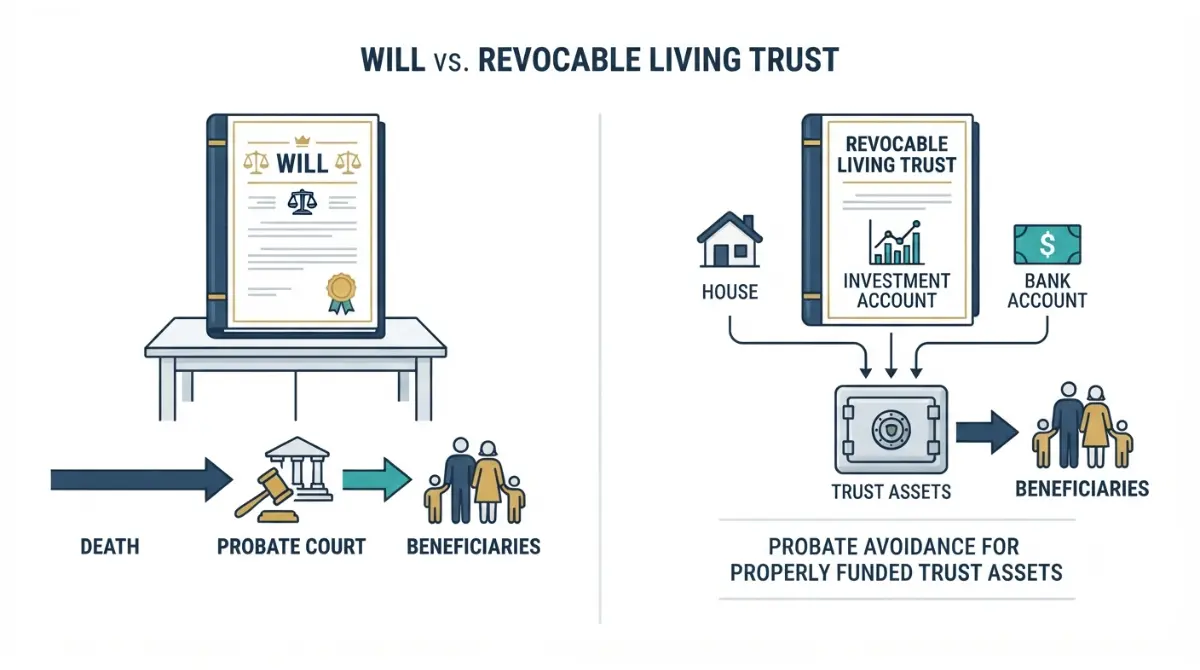 Estate Planning
Will vs Trust and How to Find the Right Fit for Your Family
September 17, 2026 Estate Planning
The Right Way to Read the Percentage of Americans With a Will
October 5, 2026 Estate Planning
 for Unmarried Couples and the Overlooked Gaps
October 2, 2026 Estate Planning
Where a Transfer on Death Deed Works and Where It Goes Wrong
September 28, 2026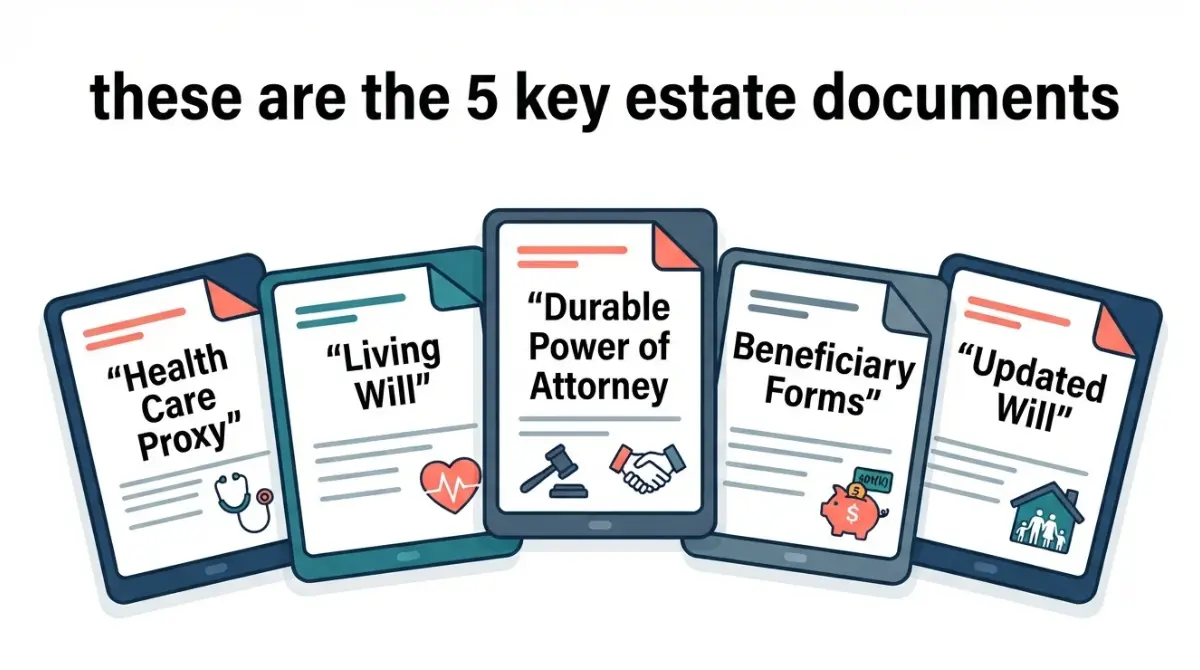 Estate Planning
A Clear Signing Order for Estate Planning After Diagnosis
October 2, 2026 Estate Planning
How to make a will and avoid the errors that void it
September 18, 2026 Estate Planning
Your Parent Died Without a Will? Take the Right Steps in Order
September 30, 2026 Estate Planning
How a Special Needs Trust Can Protect SSI and Medicaid
September 30, 2026
Informational disclaimer
The content on Finance Authority Hub is provided for general informational and educational purposes only and should not be considered personalized financial, investment, tax, legal, or professional advice. Financial decisions depend on your individual goals, income, risk tolerance, location, and regulatory situation. Before acting on any information, strategy, estimate, or calculator result, consult a qualified licensed professional who can evaluate your specific circumstances.