
Online Will vs Lawyer Decisions Made Clear for Your Family
Online will or lawyer? Either way, FINRA notes a transfer-on-death designation overrides your will. Here’s what each route gives you and what it can’t fix.

In This Article
Online will or estate attorney: the short answer
An online will can be a valid, low-cost choice for a simple estate. What you give up is legal advice, state-specific tailoring, and someone making sure you sign it correctly. An estate planning attorney costs more, and that cost pays off when your family or assets are complicated.
Find your situation:
- Single or married, one home, beneficiaries already named: start with the decision matrix below; online may be enough.
- Minor children, a blended family, or a business: see when an attorney fits.
- Already made an online will: skip to how to make it hold up.
Only about 1 in 4 Americans has a will at all, so either route beats having none.
ℹ️ Financial Disclaimer: This article is for educational purposes only and is not legal, tax, investment, or other personalized advice. Wills, trusts, estate taxes, and beneficiary designations are governed by state and federal law that varies by situation. Before acting, consult an estate planning attorney licensed in your state, and a CPA for estate-tax questions.
Is an online will legally valid?
Yes. An online will is legally valid when it’s signed and witnessed the way your state’s law requires. How the will is signed matters far more than who drafted it.
What makes any will valid
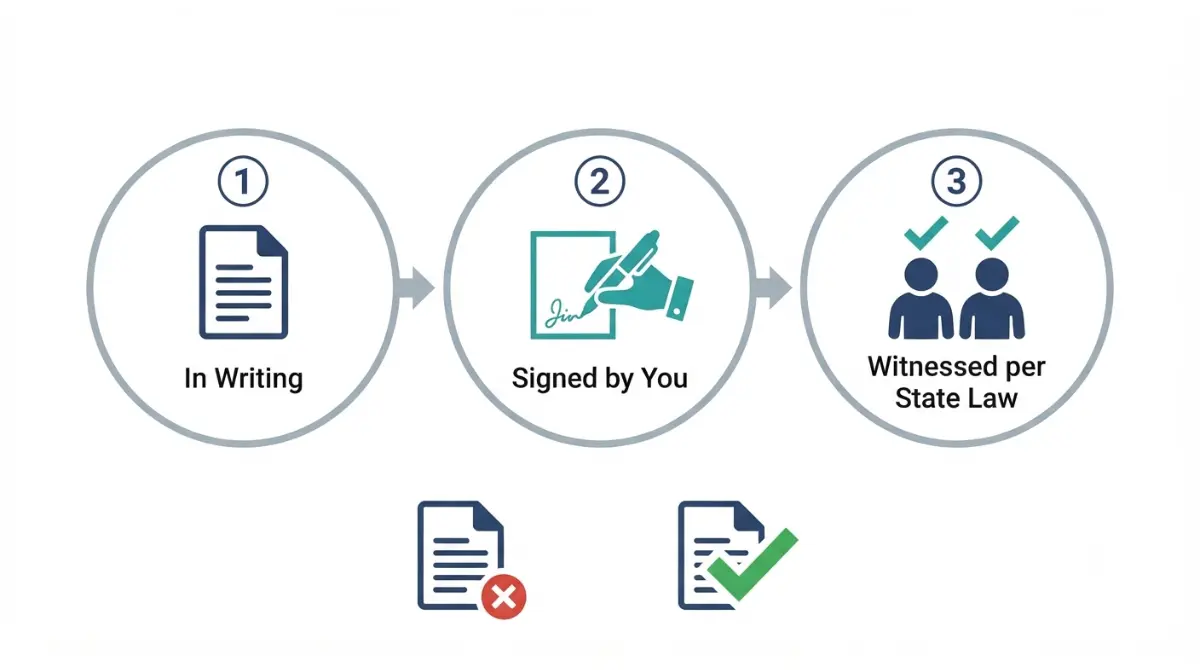
🔍 How It Works: Courts generally check three things. The will must be (1) in writing, (2) signed by you, the testator, and (3) signed by the witnesses your state requires. A professionally drafted will that skips step 3 can fail, while a $0 template that follows all three can hold up.
Printed-and-signed vs. electronic wills
Most online services produce a document you print and sign in ink. A smaller group of states allow fully electronic wills, many modeled on the Uniform Electronic Wills Act, which the Uniform Law Commission approved in 2019. If your state hasn’t adopted e-wills, sign on paper.
What the website isn’t
Online will services are not law firms. Unless you pay for attorney access, no one is advising you on your specific situation.
How much an online will costs vs. a lawyer
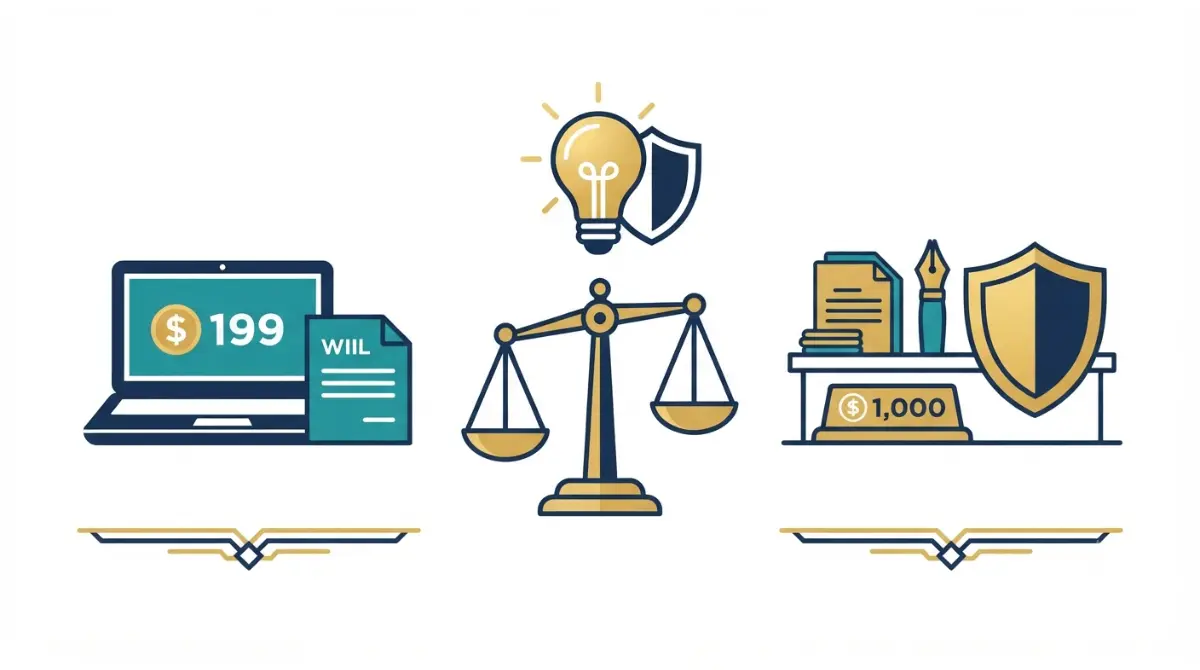
Online wills typically start at $50–$150. An attorney-drafted simple will commonly runs from about $300 to $1,000 or more.
| Option | Typical cost | Key Detail |
|---|---|---|
| Free online will | $0 | Nonprofit-funded; limited attorney access |
| Paid online will | $50–$150 starting | Attorney access usually costs extra |
| Trust & Will will plan | $199 individual / $299 couple | Optional paid membership for ongoing updates |
| Attorney simple will | ~$300 low end; ~$1,000 more common | Advice plus supervised signing |
Sources: NCOA (July 2026); Trust & Will pricing (September 2026); Nolo (July 2026). Prices change, so confirm before buying.
Attorney flat fees vs. hourly
Most estate attorneys quote a flat fee for standard documents. Ask what it covers (the will alone, or also powers of attorney and a health directive) and whether revisions cost extra. See our full breakdown of estate planning costs.
The math over time
Take a married couple: $299 online versus roughly $1,000 for a lawyer-drafted will is about a $700 gap up front. Each year you keep an optional update membership narrows that gap. Each paid attorney amendment widens it again.
What you give up with an online will
The trade-off isn’t the document itself. It’s everything a lawyer does around it.
Advice and accountability
An attorney applies the law to your facts and is professionally responsible for that advice. A template can’t ask the follow-up question you didn’t know to ask.
State-specific rules
Protections like a surviving spouse’s elective share or homestead rules vary by state. They can override what a generic template says.
Supervised signing
Attorneys usually run the signing, so the witnesses, dates, and signatures line up.
Trust funding
A trust does nothing until your assets are retitled into it. Learn how to fund a living trust before choosing one.
⚠️ Costly Mistake: Buying an online trust package and never retitling your home or accounts into it. The trust exists on paper, but those assets can still go through probate.
When an online will is enough — and when it isn’t
An online will usually fits a simple estate. An attorney fits when family, property, or tax complexity is involved.
| Your situation | Best fit |
|---|---|
| Single, modest assets, beneficiaries named | Online |
| Married, one home, everything to your spouse | Online |
| Minor children, simple assets | Online or hybrid |
| You want a lawyer to check your DIY draft | Hybrid |
| Blended family or children from a prior relationship | Attorney |
| A beneficiary with special needs | Attorney |
| A business, or property in more than one state | Attorney |
| Estate near the federal or a state estate-tax threshold | Attorney |
Online will fits
The first two rows describe a simple estate with few legal variables.
Hybrid fits
Draft the will online, then pay an attorney to review it before you sign.
Attorney fits
The federal estate tax filing threshold for 2026 is $15 million. Some states tax estates at far lower levels.
✅ Action Step: If any “Attorney” row applies to you, book a consultation with an estate attorney licensed in your state. Ask: “Does my state’s elective share, homestead, or community-property law change what a template would say for my family?”
How to make an online will hold up
Most DIY will failures happen at signing, not at drafting.
Step 1: Sign exactly as your state requires
Confirm how many witnesses you need and whether they may be beneficiaries. Then sign with everyone present in one sitting. Our guide to making a will with the right witnesses walks through the process.
Step 2: Add a self-proving affidavit if allowed
A notarized self-proving affidavit can spare your witnesses from testifying later.
Step 3: Store it and update it
Tell your executor where the original is kept. Review the will after a marriage, divorce, or birth.
⚠️ Costly Mistake: A will that isn’t signed according to state rules can be rejected. If that happens, state intestacy law decides who inherits instead of you.
What no will controls — online or attorney-drafted
Some assets pass outside any will, however well it was drafted.
Beneficiary designations and TOD accounts
💡 Expert Note: FINRA guidance is explicit: a transfer-on-death designation supersedes your will. If your will splits an account between two children but the TOD form names one, that child alone receives the account. FINRA’s guide to transferring brokerage assets at death recommends checking every designation against your estate plan.
Jointly owned property
Accounts held as joint tenants with right of survivorship pass straight to the surviving co-owner without probate. See the full list of assets a will doesn’t control.
Frequently asked questions
1. Are online wills legally binding?
Yes. An online will is legally binding when it’s signed and witnessed according to your state’s law, just like an attorney-drafted will.
2. How much does a lawyer charge for a simple will?
Nolo reports that a simple lawyer-drafted will starts around $300, with closer to $1,000 being more common. Get a written flat-fee quote.
3. Is a free online will valid?
A free online will is valid if it meets your state’s signing and witness rules. Price has no effect on validity.
4. Do online wills need to be notarized?
Usually not. Witnesses make an online will valid, but a notarized self-proving affidavit, where allowed, can simplify probate.
5. Can I sign a will electronically?
Only in states that authorize electronic wills, many modeled on the 2019 Uniform Electronic Wills Act. Elsewhere, sign on paper in ink.
6. What does an estate attorney do that an online will can’t?
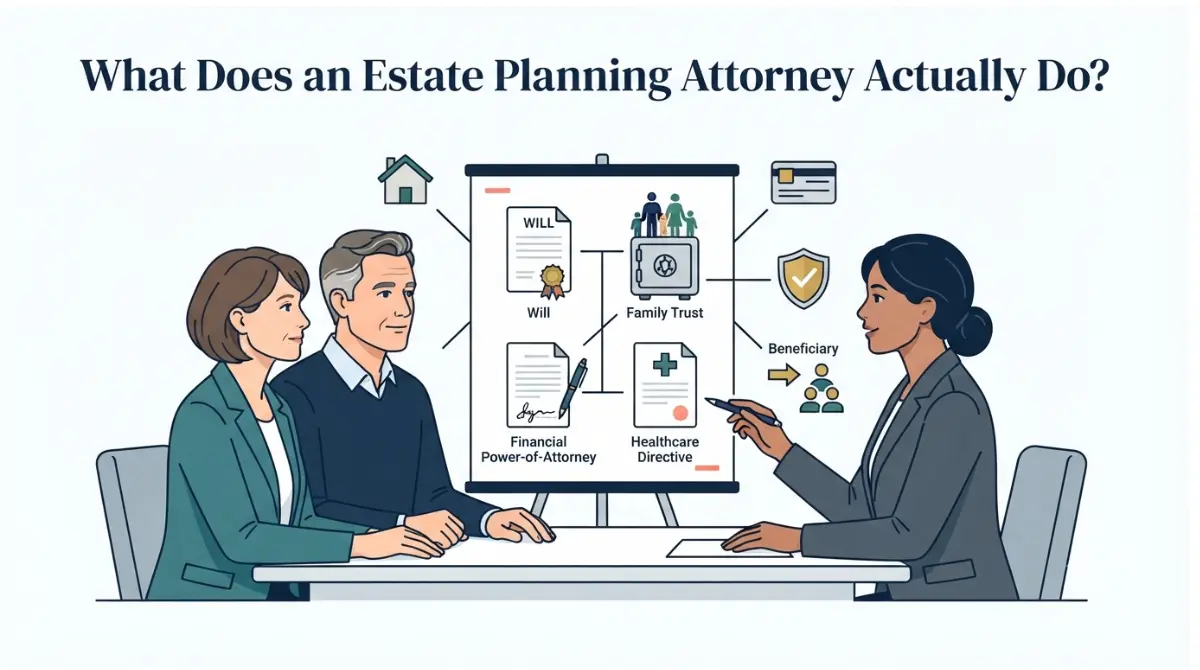
An estate attorney advises on your specific facts, applies state-specific rules, supervises the signing, and helps fund any trust.
7. Does a will override a beneficiary designation?
No. FINRA notes that a transfer-on-death designation supersedes a will, so the named beneficiary receives that account.
8. Do I need a lawyer if I have minor children?
Not always. An online will can name a guardian, but blended families or special-needs children usually warrant an attorney. An estate attorney in your state can confirm your guardian nomination meets local rules.
9. Should I get a trust instead of a will?
A trust can avoid probate but works only after assets are retitled into it. Compare both in our will vs. trust guide.
10. What happens if an online will is signed wrong?
A will that isn’t signed according to state rules can be rejected, leaving state intestacy law to decide who inherits.
11. Can a lawyer review my online will?
Yes. Many online will services sell add-on attorney access, or you can pay a local estate attorney to review your draft.
The bottom line
An online will covers a simple estate at a fraction of an attorney’s price. The more complicated your family or assets are, the more you give up by skipping the lawyer. Whichever route you choose, sign it correctly and check your beneficiary designations against it.
Related Articles
 Estate Planning
How to Choose an Estate Planning Attorney You Can Verify
September 22, 2026 Estate Planning
Smart Digital Assets Estate Planning Steps So Family Can Get In
October 5, 2026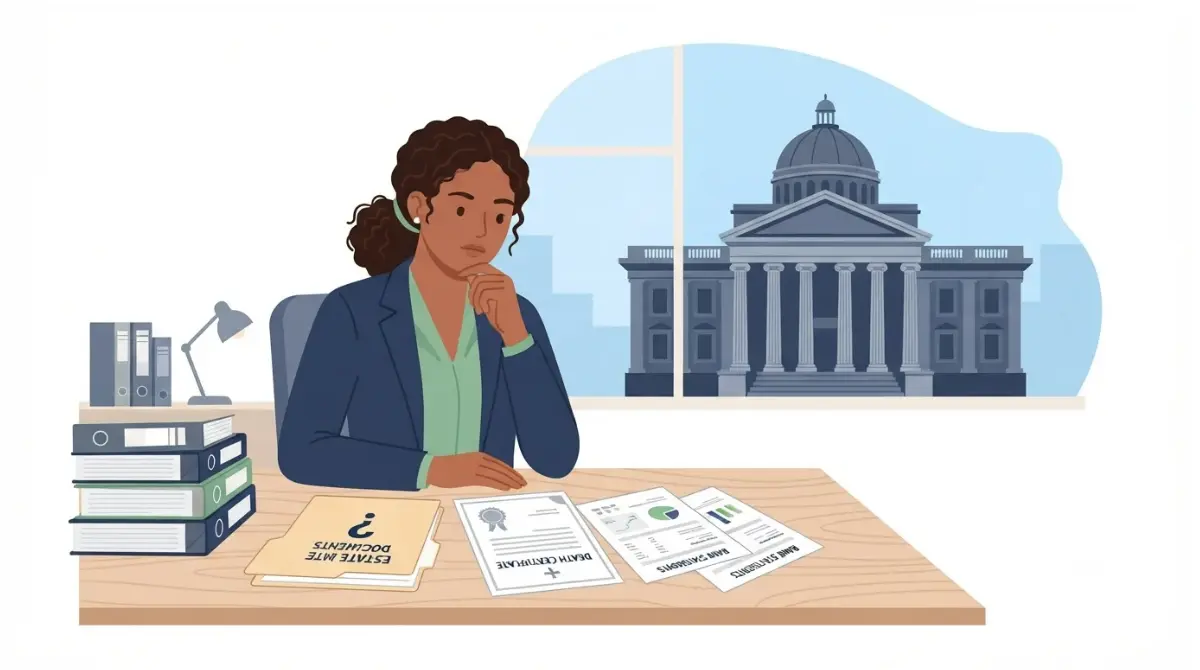 Estate Planning
Your Parent Died Without a Will? Take the Right Steps in Order
September 30, 2026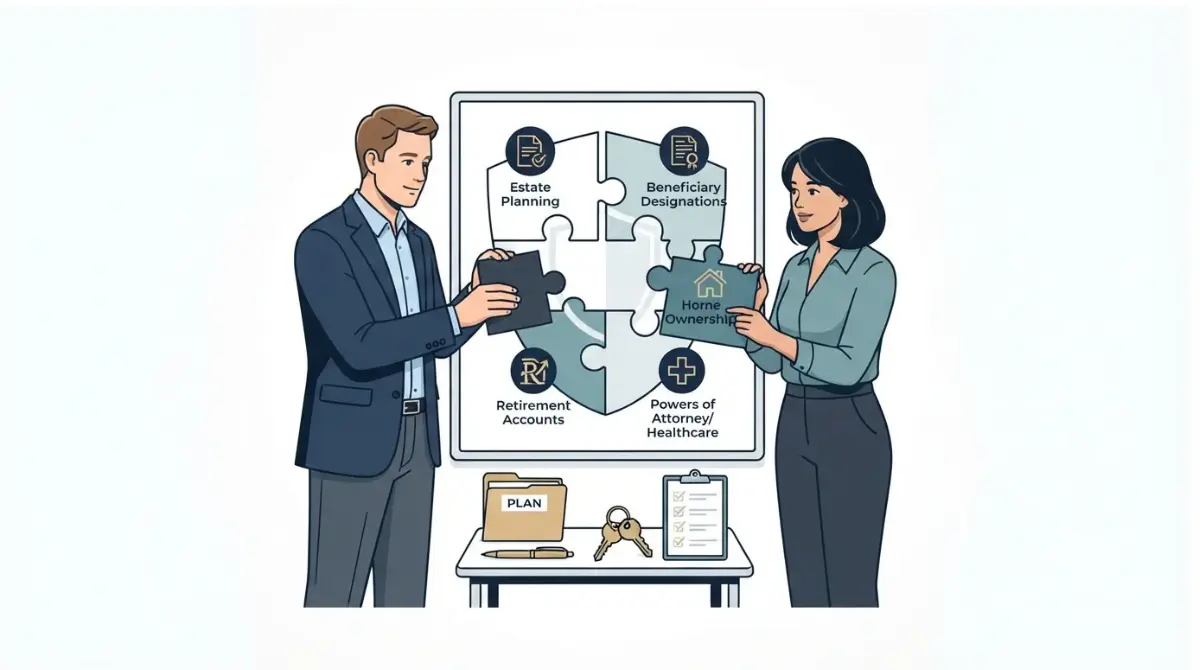 Estate Planning
 for Unmarried Couples and the Overlooked Gaps
October 2, 2026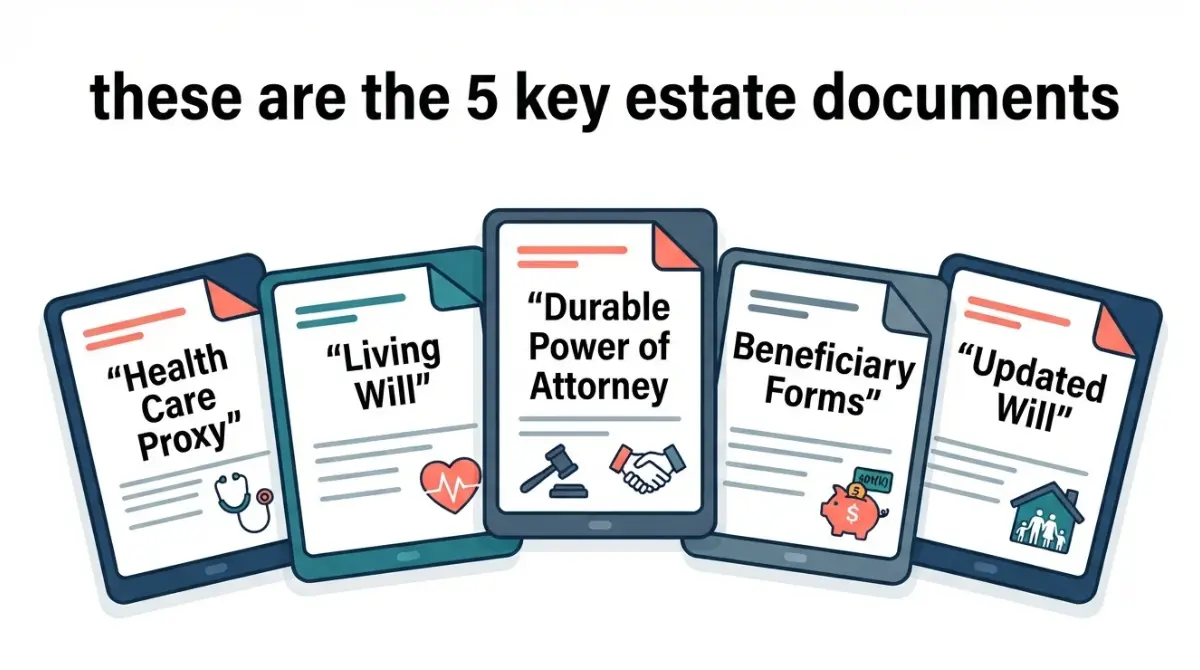 Estate Planning
A Clear Signing Order for Estate Planning After Diagnosis
October 2, 2026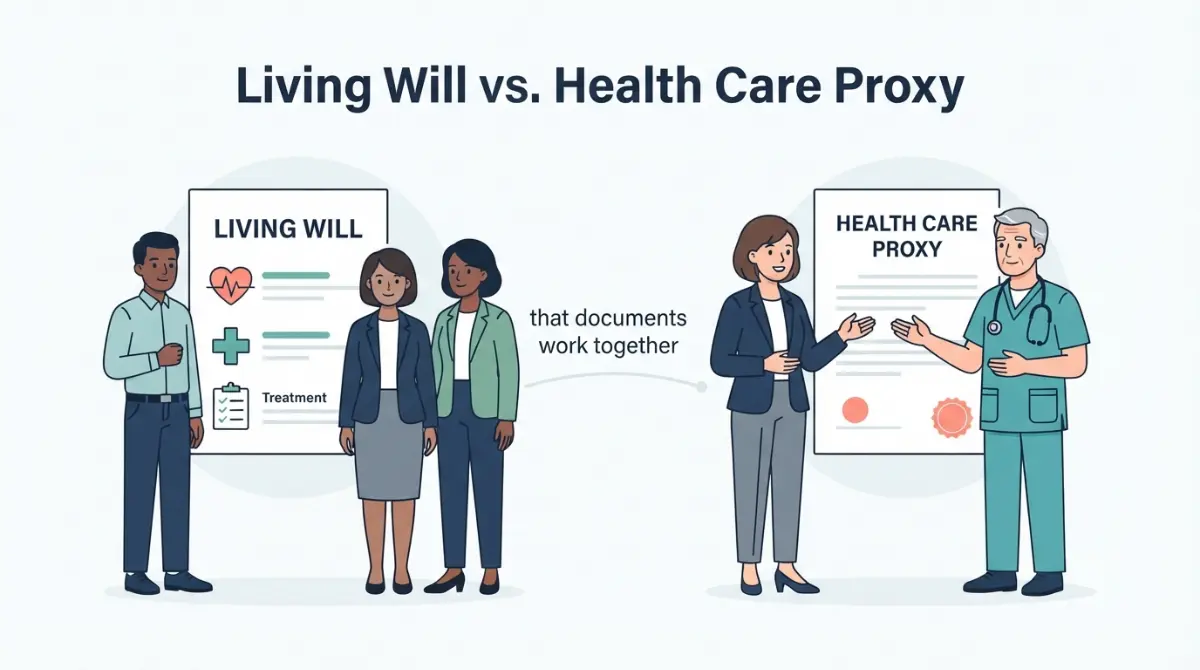 Estate Planning
Living Will vs Health Care Proxy and Who Speaks for You
September 29, 2026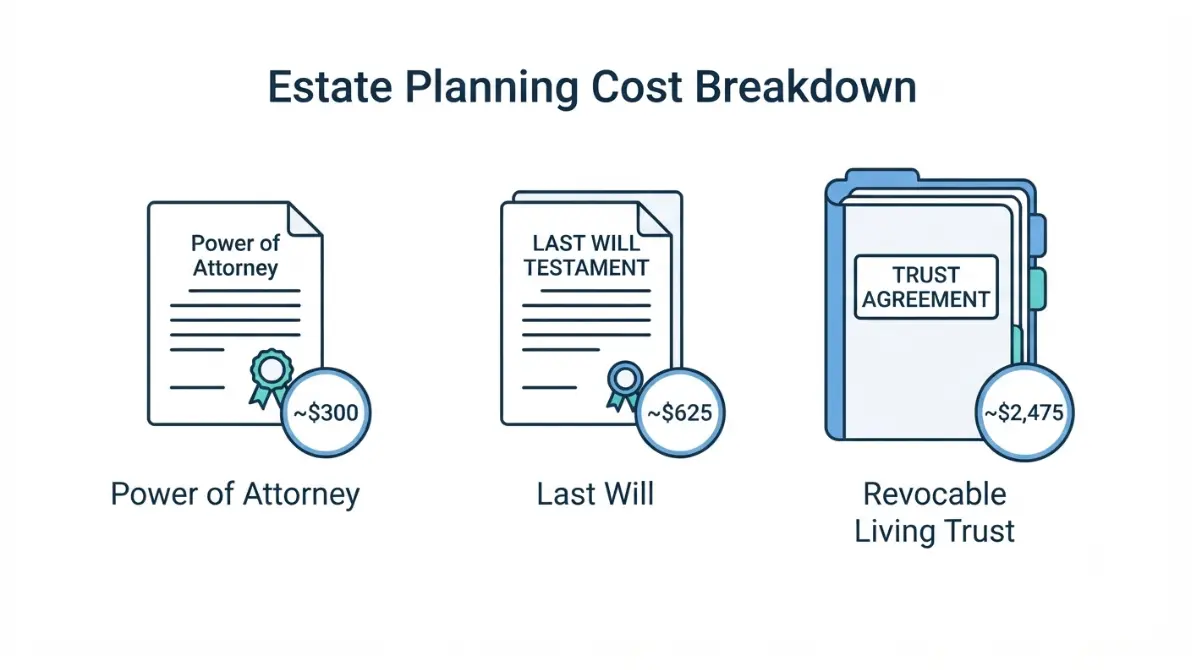 Estate Planning
A Clear Look at Estate Planning Costs for a Will, Trust, and POA
September 21, 2026 Estate Planning
The Right Way to Read the Percentage of Americans With a Will
October 5, 2026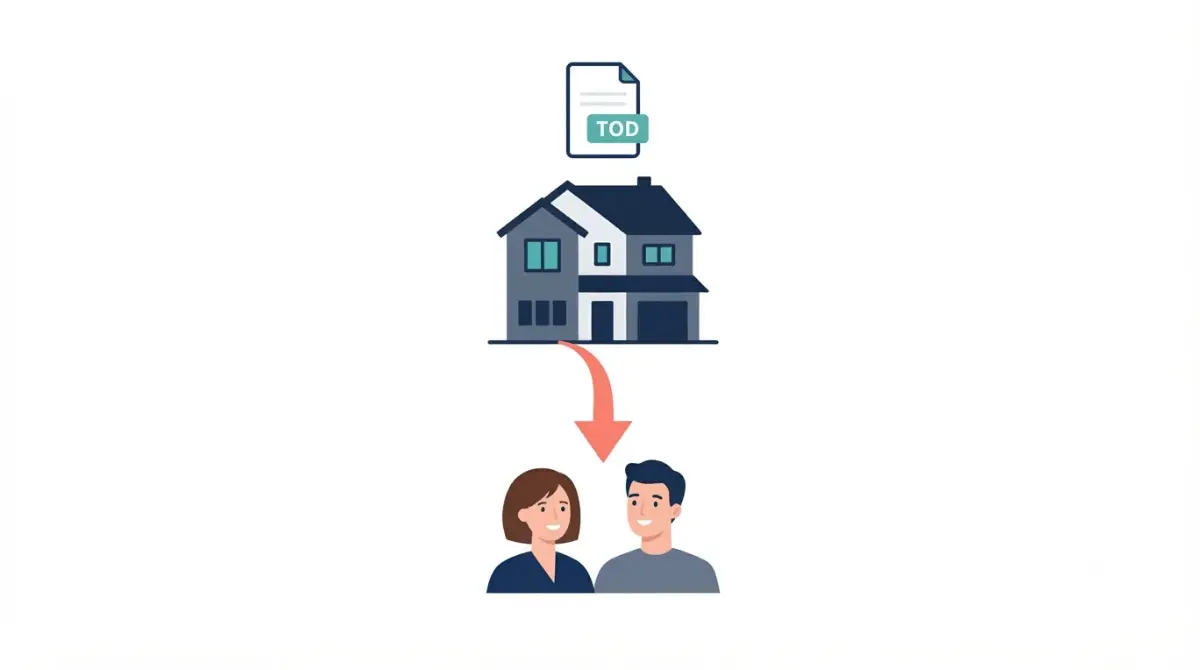 Estate Planning
Where a Transfer on Death Deed Works and Where It Goes Wrong
September 28, 2026
Informational disclaimer
The content on Finance Authority Hub is provided for general informational and educational purposes only and should not be considered personalized financial, investment, tax, legal, or professional advice. Financial decisions depend on your individual goals, income, risk tolerance, location, and regulatory situation. Before acting on any information, strategy, estimate, or calculator result, consult a qualified licensed professional who can evaluate your specific circumstances.