
A Smart Way to Plan Around Your PATH Act Refund Date
Your PATH Act refund date isn’t one date: the law sets a mid-February floor, then the tracker, the IRS target and your bank add their own.
In This Article
PATH Act refund date: the short answer
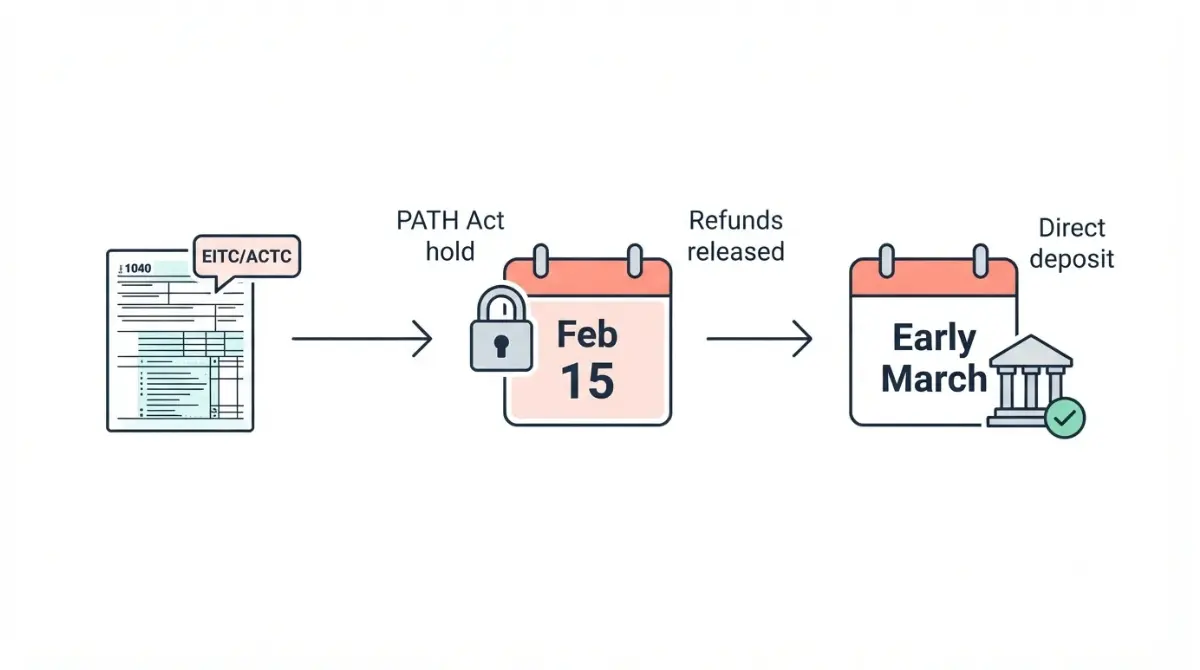
By law, the IRS can’t issue a refund before mid-February when your return claims the Earned Income Tax Credit (EITC) or the Additional Child Tax Credit (ACTC). For 2026, the IRS expected most such refunds by March 2 with online filing, direct deposit, and no issues.
If you claimed either credit, the hold applies; if a bill is due first, jump to the planning section. If you claimed neither, normal timing applies, as our tax refund schedule guide explains. For the amount rather than the date, see the tax refund formula.
ℹ️ Financial Disclaimer: This article is general education on tax, investment, lending and credit, insurance, and debt-relief topics, not personalized advice. IRS dates and rules change each filing season. Before acting on your own return or borrowing decisions, consult a fiduciary advisor, a CPA, or a qualified attorney.
What the PATH Act holds back, and why
Yes. The IRS holds the entire refund under the PATH Act, including any part not tied to the EITC or ACTC, per the Taxpayer Advocate Service.

The whole refund is held, not just the credit
Even a withholding refund waits alongside the credit.
Which returns are affected
The hold covers EITC or ACTC returns filed before February 15.
📊 Data Point: For tax year 2025, the maximum EITC ran from $649 with no children to $8,046 with three or more. Source: IRS EITC credit tables.
Why the delay exists
Section 201 of the PATH Act, enacted December 18, 2015, targets refund fraud built on fabricated wages and withholding, per the IRS.
PATH Act refund timeline: from filing to deposit
The IRS can’t issue these refunds before mid-February; for 2026 it expected most by March 2 with online filing, direct deposit, and no issues.

The four clocks
| Clock | Set by | 2026 date | Key Detail |
|---|---|---|---|
| Legal floor | Federal law | Mid-February | No early release |
| Tracker status | IRS | By February 21 | Early filers |
| Target deposit | IRS | By March 2 | Online, direct deposit, no issues |
| Bank posting | Your bank | Varies | Holidays add days |
Source: IRS refund timing page, reviewed September 25, 2026.
🔍 How It Works: A return can clear the legal floor and still lack a deposit date; these are separate steps.
The 2026 season, step by step
The season opened January 26; the tracker updated by February 21; deposits targeted March 2.
What we know about 2027
As of October 7, 2026, we found no IRS-published 2027 dates, so treat any as an estimate. February 15, 2027 is a Monday and a federal holiday, Washington’s Birthday, per the Office of Personnel Management.
How to check your refund status while it’s held
Your refund status is available 24 hours after you e-file a current-year return, per the IRS refund tracker.
What you need before you check
- Open the IRS tracker, IRS app, or IRS online account.
- Enter your exact refund amount, Social Security number or ITIN, filing status, and tax year.
How often it updates
The IRS updates these tools once a day, usually overnight, so checking more often shows nothing new. If approved but unpaid, see what to check when a refund is approved but missing.
If you mailed a paper return
Paper-return status appears after four weeks; mailed returns take six or more weeks versus about three e-filed.
How long will you actually wait? A worked example
Two e-filed, direct-deposit returns with no issues show how the hold changes the wait.
| Filed | Money expected | Days | Key Detail |
|---|---|---|---|
| Jan 26, 2026, EITC held | March 2 (IRS target) | 35 | 14 days over typical |
| Feb 20, 2026, not held | About March 13 | 21 | Illustration, typical timing |
Source: IRS; editor calculations.
🔍 How It Works: Wait = deposit date minus filing date: January 26 to March 2 is 35 days; February 20 plus 21 days is March 13 (illustration).
Filed on opening day
The opening-day filer waited 35 days, about 14 more than the typical 21.
Filed after the hold lifts
The February 20 filer waited 21 days yet got money about 11 days later, so early filing still pays.
What the gap means for your budget
Plan for roughly five weeks. Map bills with the budget calculator and estimate your refund with the income tax calculator.
Planning around the delay when you need the money
Neither the Taxpayer Advocate Service nor the IRS can release any part of your refund early, even in hardship.
What can’t be changed
Calling won’t move the date.
Covering the gap without a costly shortcut
See how many days of bills your savings cover with the emergency fund calculator, then check what each paycheck covers with the paycheck calculator.
⚠️ Costly Mistake: A loan or advance against a held refund carries a cost, yet the refund still arrives on schedule. Ask for the total dollar cost first.
Afterward, the savings calculator and take-home pay calculator help build a cushion.
Where to get free help
A Low Income Taxpayer Clinic or the Taxpayer Advocate Service can help with IRS problems beyond the hold.
✅ Action Step: Call a nonprofit credit counselor and ask, “My refund is held by law until mid-February; what are my options for this bill?”
What can push your refund past March 2
March 2 was the IRS’s expectation for most 2026 refunds, not a deadline; the IRS lists several causes of delay.
Reviews and corrections
Delays come from mistakes like an unsigned return or math error, an ACTC claim needing review, an amended return, or an injured spouse request; the IRS may also mail a letter.
Offsets and reductions
A refund can shrink for past-due child support, federal nontax debt, state income tax, or certain state unemployment debt, per the IRS reduced refund page. The Bureau of the Fiscal Service sends that notice.
Bank timing
Banks may need extra days, especially around holidays. If yours runs late, see our next steps when a tax refund is delayed.
PATH Act refund date: frequently asked questions
1. When is the PATH Act refund date?
The PATH Act refund date can’t precede mid-February; for the 2026 season, the IRS expected most refunds by March 2, with conditions. Ask a tax professional about your return.
2. Why is my EITC refund delayed?
Federal law holds EITC and ACTC refunds until mid-February, so the PATH Act refund date falls after that, even for early filers.
3. Does the PATH Act hold my whole refund?
Yes. The IRS holds the entire refund, not just the credit portion, so the PATH Act refund date covers the full amount.
4. Can the IRS release my refund early for hardship?
No. Neither the Taxpayer Advocate Service nor the IRS can release any part before the PATH Act refund date, even in hardship. A tax professional can advise you.
5. When does Where’s My Refund show a date for EITC filers?
For the 2026 PATH Act refund date, Where’s My Refund showed an updated status by February 21 for most early filers.
6. Does filing early get my refund faster?
Early filing queues your return, but nothing is released before the PATH Act refund date; in our example, the early filer arrived first.
7. How long does an e-filed refund normally take?
Outside the PATH Act refund date window, the IRS says e-filed refunds typically take three weeks; mailed returns take six or more.
8. Does the PATH Act apply if I file after mid-February?
No. The hold affects only EITC and ACTC returns filed before February 15, so later returns skip the PATH Act refund date wait.
9. What if my refund isn’t here by March 2?
The March 2 PATH Act refund date target assumed online filing, direct deposit, no issues; check the tracker and watch for an IRS letter. A tax professional can review your return.
10. Can my refund be reduced?
Yes. Past-due child support, federal nontax debt, or state income tax can reduce a refund, even after the PATH Act refund date.
11. How often does Where’s My Refund update?
The IRS updates Where’s My Refund once a day, usually overnight, so checking more often won’t change your PATH Act refund date.
Your next step while you wait
The PATH Act sets a legal floor, the IRS sets a target, and your bank sets the final day. When the 2027 season opens, watch the IRS timing page for new dates, check the tracker once a day, and cover essential bills first.
Related Articles
 Tax Refund
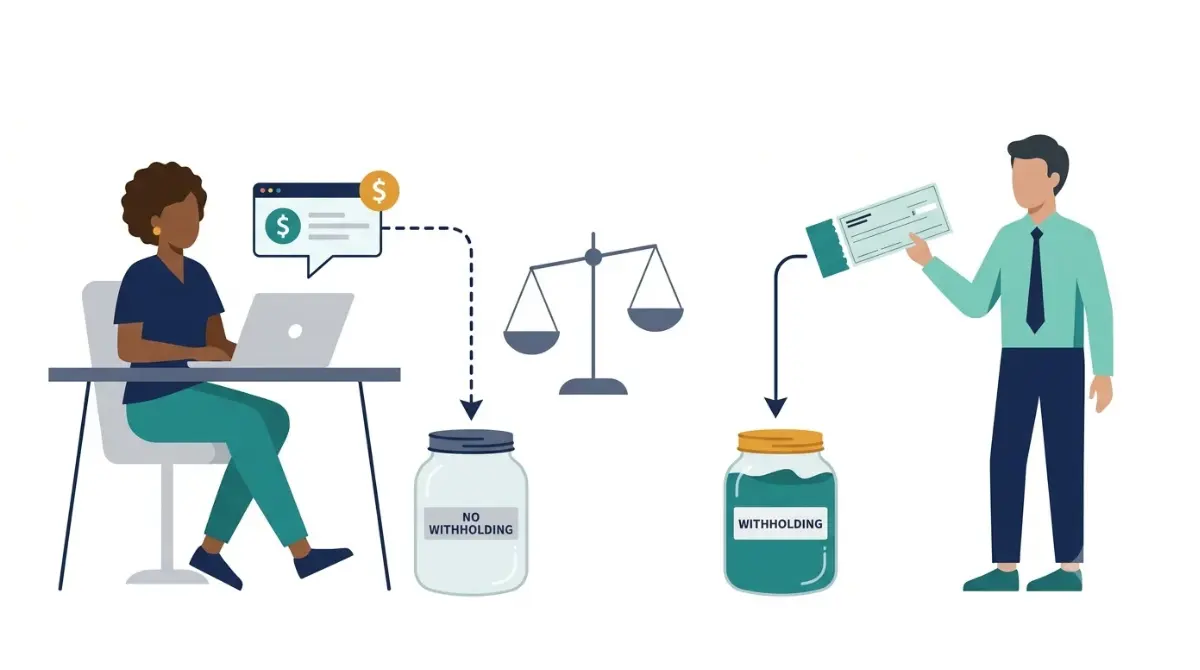
Self-Employed Tax Refund or Bill? A Clear 2026 Walkthrough
October 14, 2026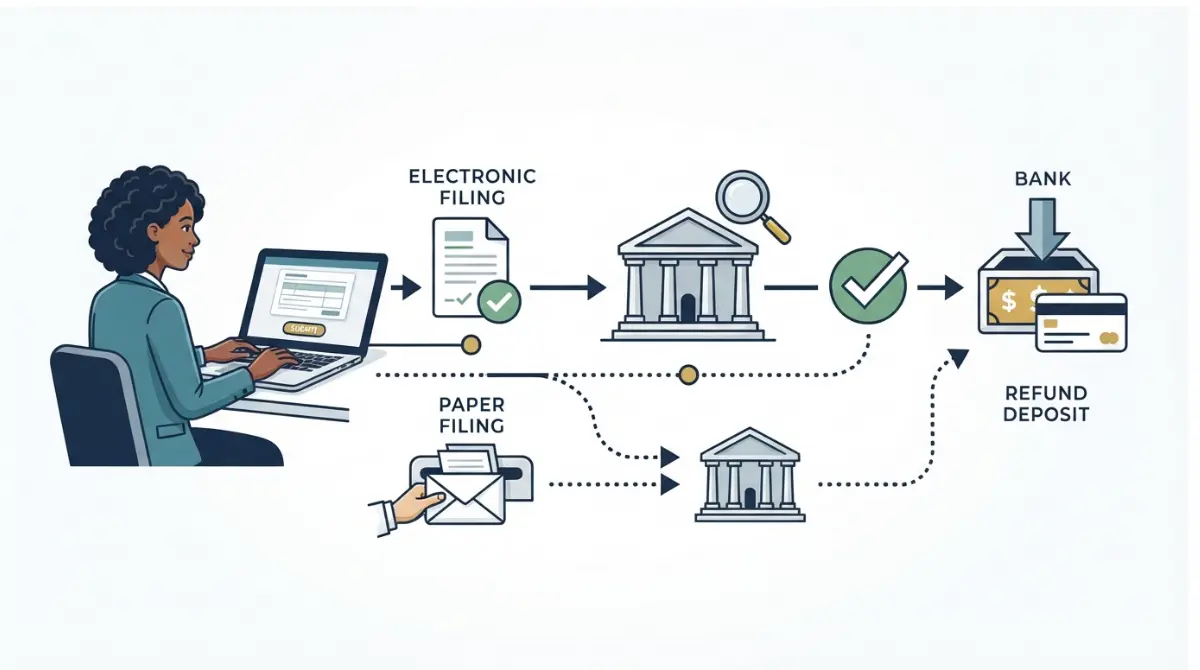 Tax Refund
 Delayed and Bills Running Late? Find the Cause First
October 7, 2026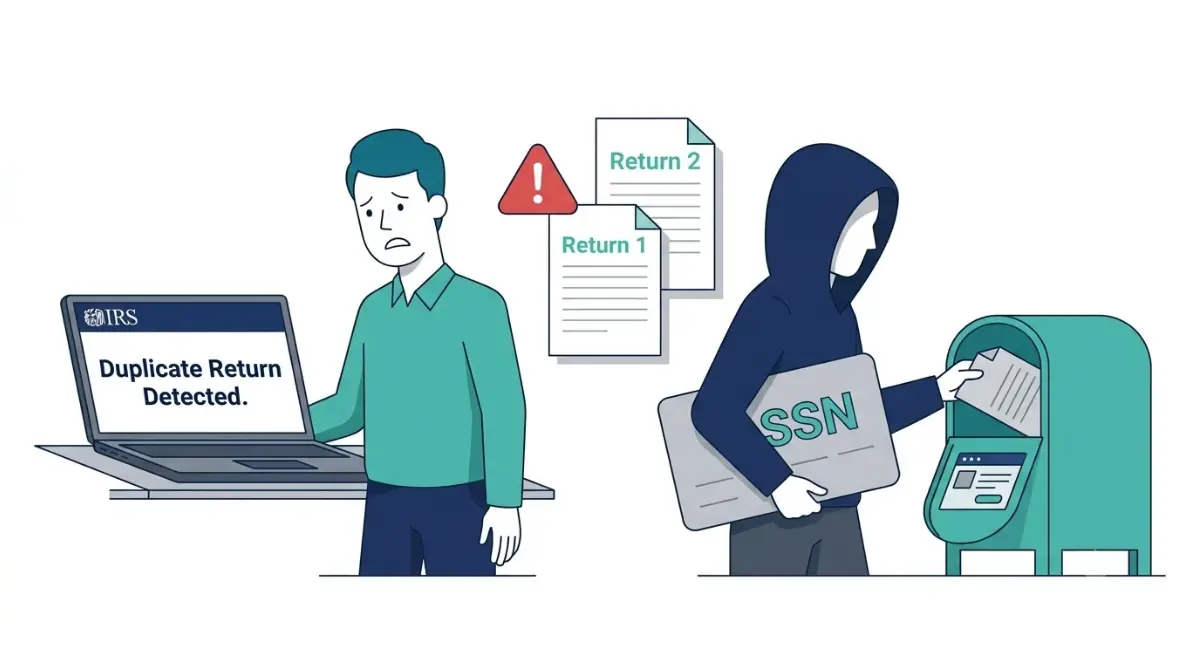 Tax Refund
Someone Filed Your Taxes for Your Refund? Your First Moves
October 17, 2026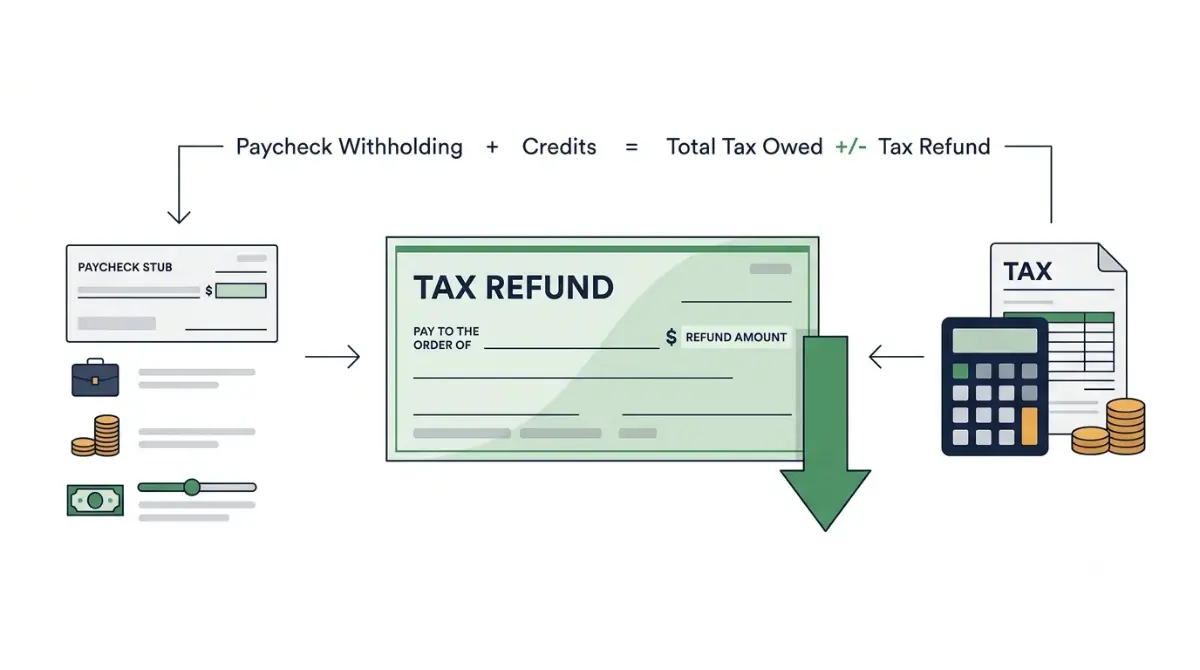 Tax Refund
Is Your Tax Refund Lower Than Last Year? Find the Real Reason
October 10, 2026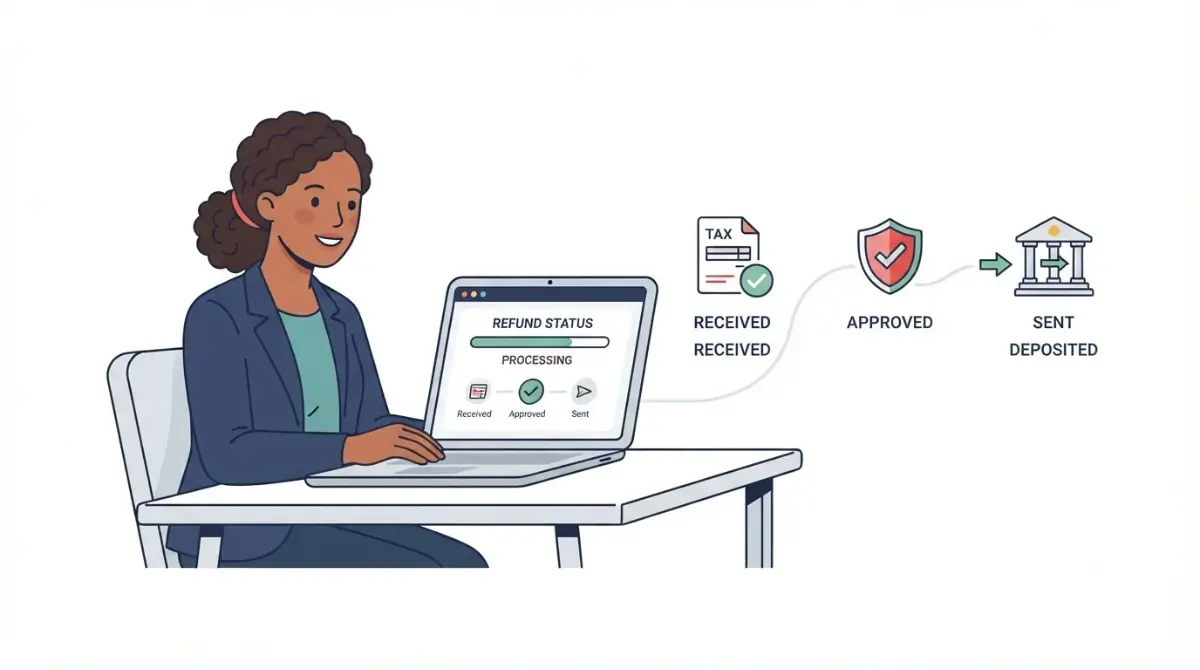 Tax Refund
The Right Way to Check Your Tax Refund Status With the IRS
October 6, 2026 Tax Refund
A Clear Look at Tax Refund vs Owing, Run as Math
October 12, 2026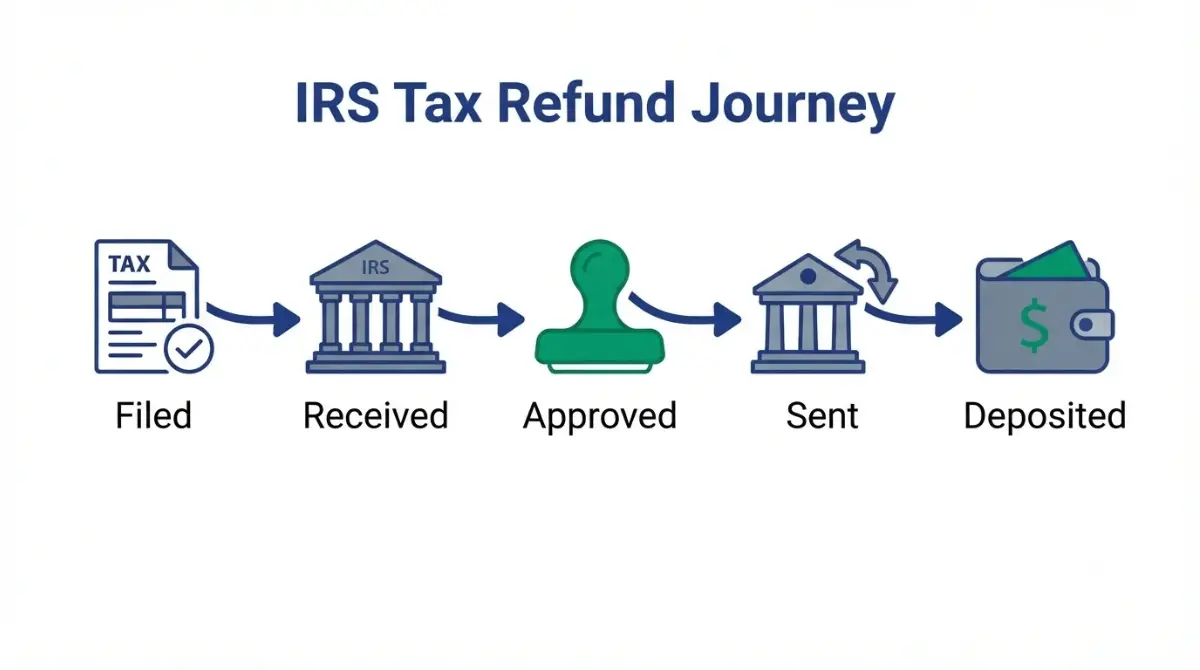 Tax Refund
Refund Approved but No Deposit? A Clear Way to Find It
October 7, 2026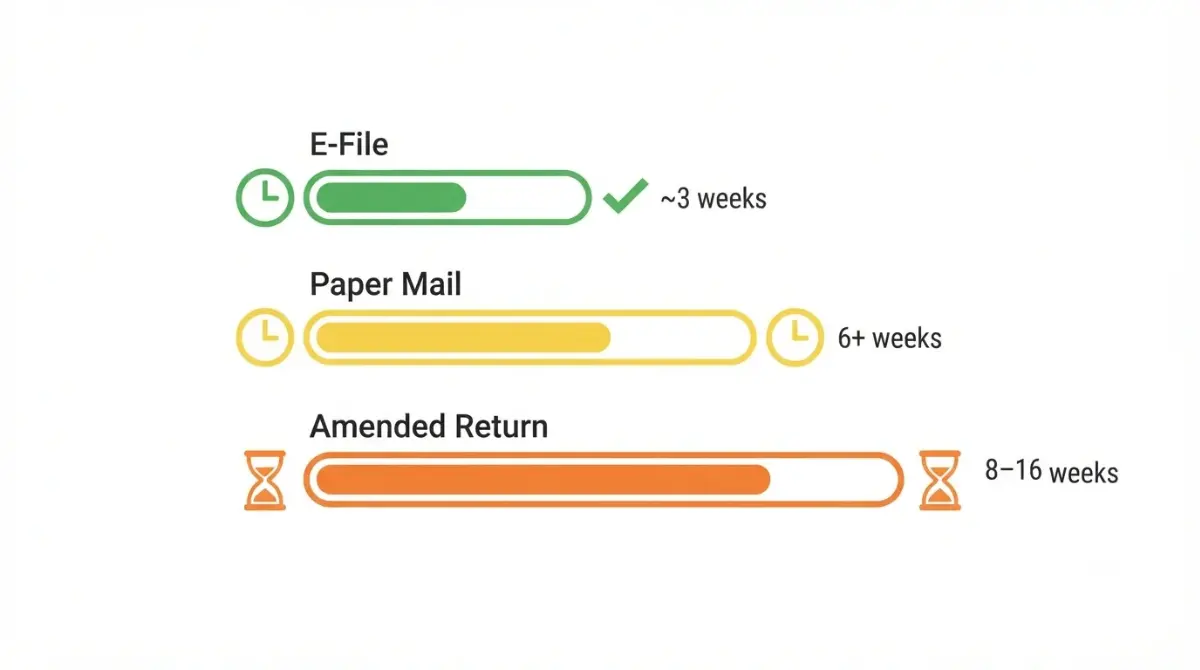 Tax Refund
A Clear Tax Refund Schedule, From Filing Day to Deposit Day
October 7, 2026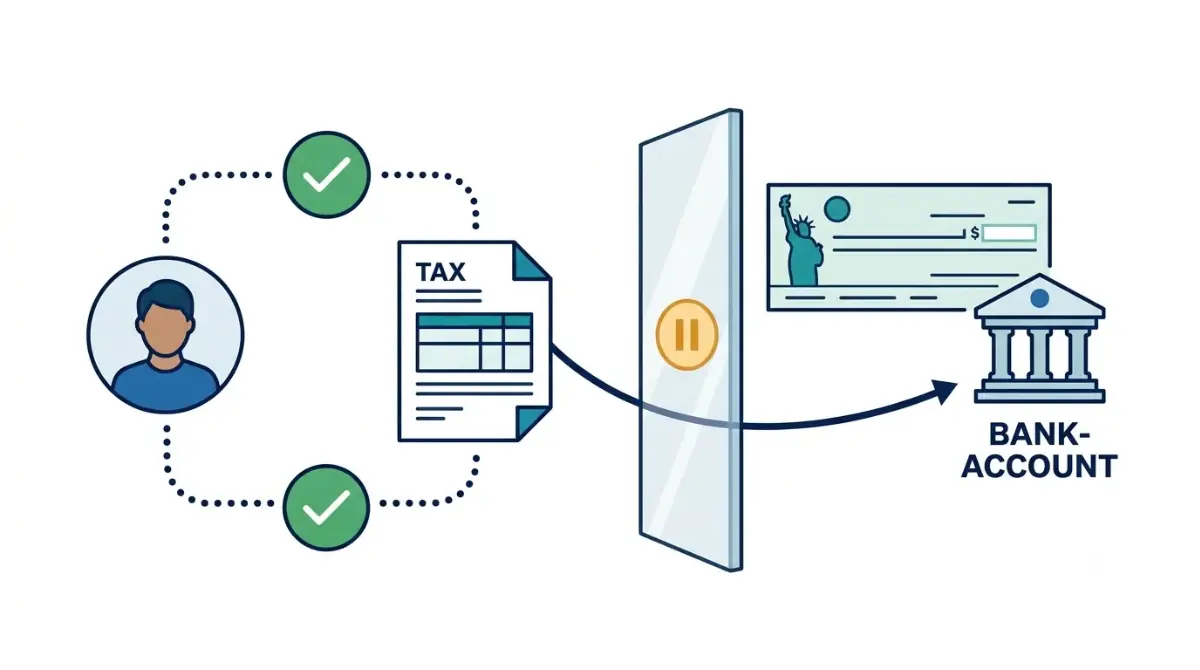 Tax Refund
The Right Way to Answer IRS Letter 5071C and Release Your Refund
October 17, 2026
Informational disclaimer
The content on Finance Authority Hub is provided for general informational and educational purposes only and should not be considered personalized financial, investment, tax, legal, or professional advice. Financial decisions depend on your individual goals, income, risk tolerance, location, and regulatory situation. Before acting on any information, strategy, estimate, or calculator result, consult a qualified licensed professional who can evaluate your specific circumstances.