
Someone Filed Your Taxes for Your Refund? Your First Moves
Someone filed your taxes first? The IRS says most victims never need Form 14039. Here’s how to spot your path and lock next year’s return with an IP PIN.
In This Article
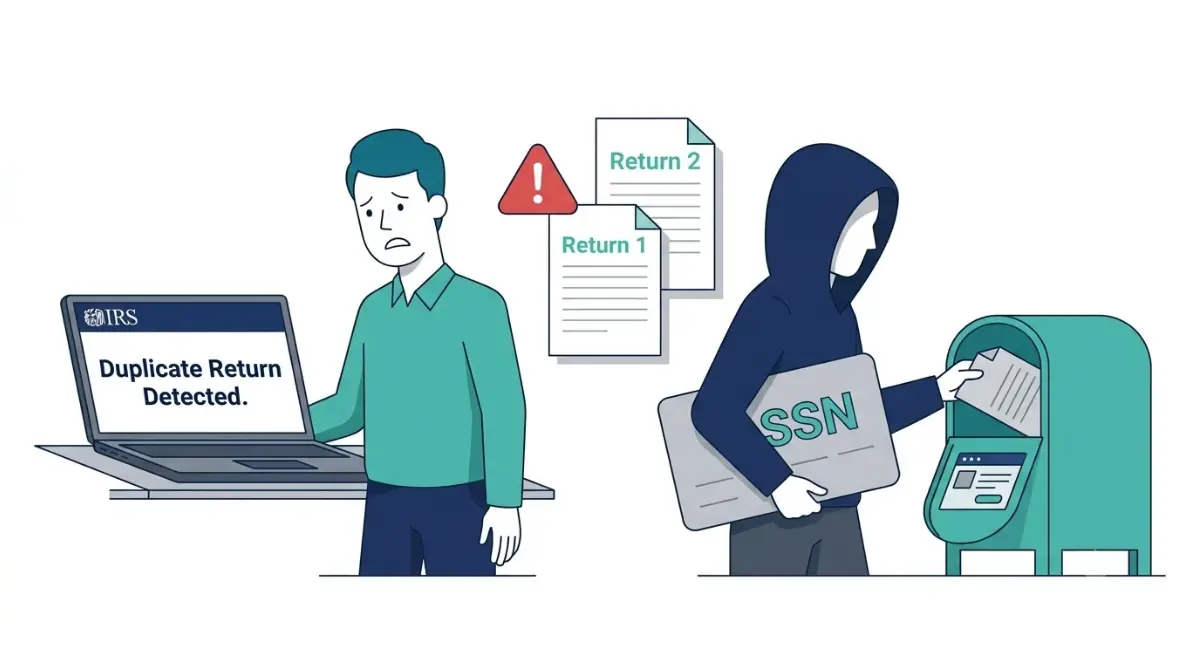
Someone filed taxes with your SSN: what it means right now
If someone filed taxes with your Social Security number, the IRS will reject your e-filed return as a duplicate return. Your refund, though, is not forfeited.
How you usually find out
Most people see an e-file rejection saying a return already exists, or get an IRS letter asking them to verify one.
Your refund is delayed, not gone
The IRS processes your real return, releases what you’re owed, and removes the fraudulent one. Your normal refund schedule no longer applies.
- E-file rejected as a duplicate? Follow Path A.
- Got Letter 5071C, 4883C, 5747C or 5447C? Follow Path B.
- IRS notice about wages you never earned? Follow Path C.
ℹ️ Financial Disclaimer: This article is general education about IRS identity theft procedures. It is not personalized tax, legal, lending/credit, insurance, investment, or debt-relief advice. Consult a CPA, an enrolled agent, or a tax attorney before acting on a complex situation.
Which IRS signal did you get? Your path depends on it
Your next step depends on how you found out, and the IRS says most victims never need Form 14039.
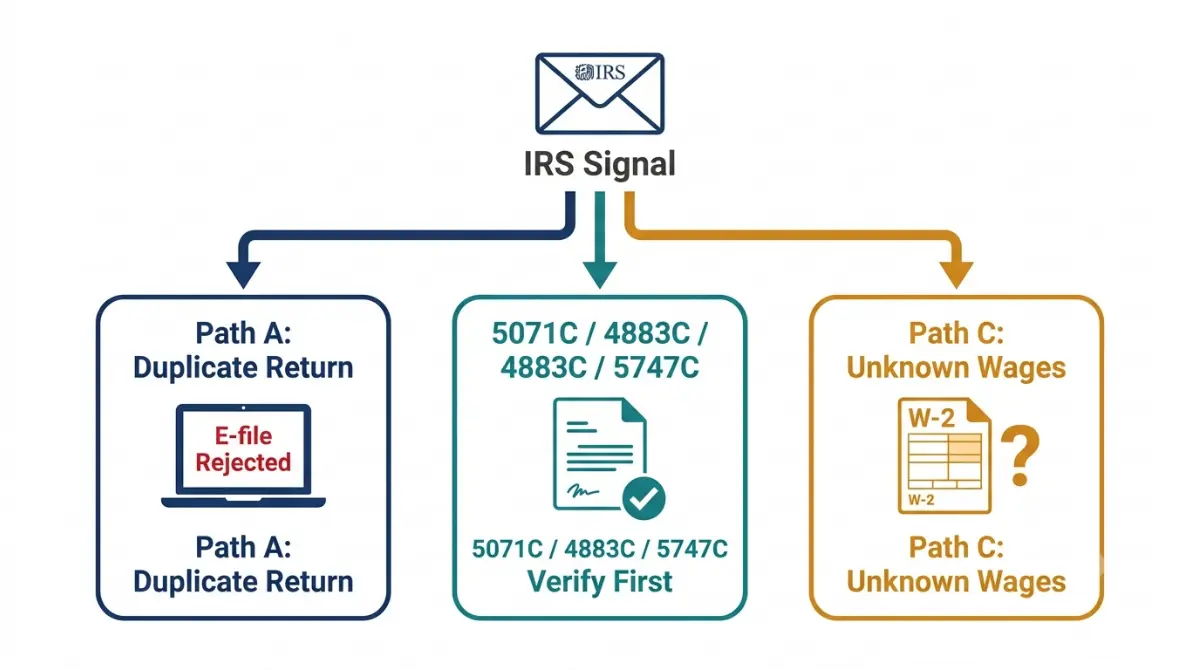
| Signal | Your first move | Key detail |
|---|---|---|
| E-file rejected as duplicate | Form 14039 + paper return | Rule out a mistyped SSN first |
| Letter 5071C, 4883C, 5747C or 5447C | Verify as the letter directs | No Form 14039 needed |
| IRS notice of wages you never earned | Form 14039, employment box | A different problem from refund theft |
Source: IRS Fact Sheet FS-2022-25; Form 14039 (Rev. February 2026).
E-file rejected as a duplicate (Path A)
Check every SSN for transposed digits, then continue below.
You got a 5071C, 4883C, 5747C or 5447C letter (Path B)
The IRS caught the return first; see the IRS’s guidance on when to file Form 14039.
A notice shows income you never earned (Path C)
✅ Action Step: Ask a CPA or enrolled agent: “Which wages on my IRS account aren’t mine, and how do I document that?”
How to report it: Form 14039 plus a paper return
If your e-file was rejected as a duplicate, take these steps:
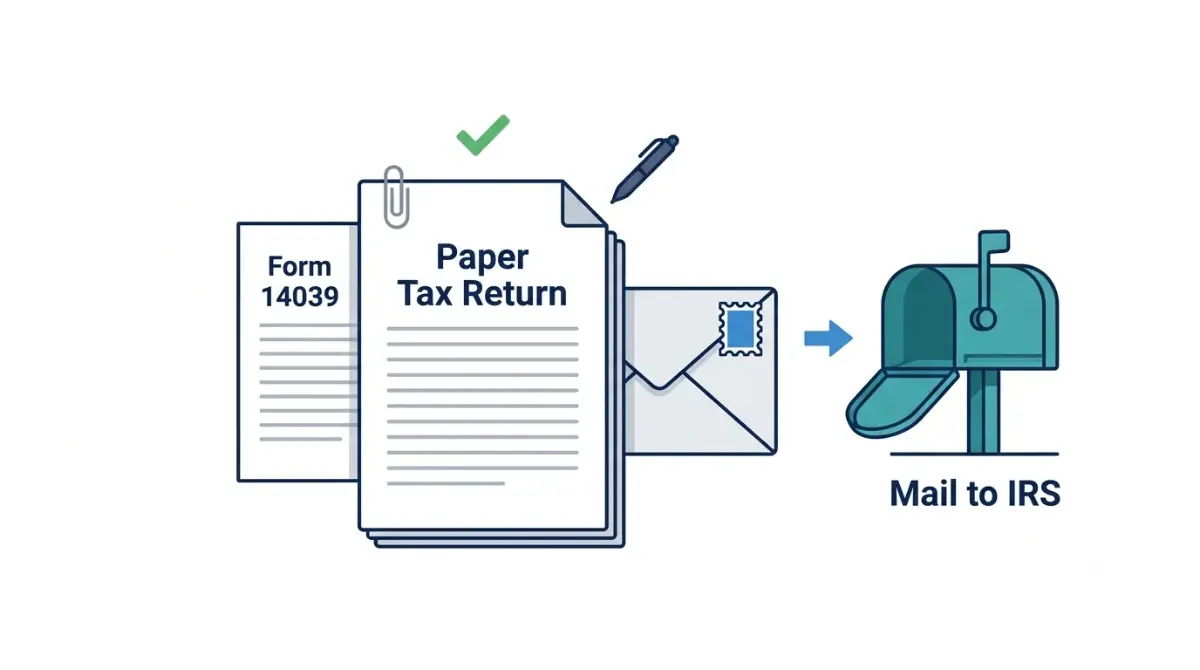
- Complete Form 14039, marking that someone used your information to file a return.
- Attach it to the back of your signed paper return.
- Mail both where you normally file, or mail the return separately.
Fill out Form 14039 (online, mail or fax)
The February 2026 form calls online submission the preferred method, though it takes no attachments. Use one method only.
File your real return on paper
The affidavit doesn’t replace your return. First, estimate your refund before filing with our income tax calculator.
What the IRS does after it arrives
An Identity Theft Victim Assistance (IDTVA) specialist removes the fraudulent return and processes yours, per the IRS identity theft victim assistance process.
💡 Expert Note: Some guides say to mail ID copies. The current Form 14039 doesn’t require them when you file for yourself.
Got a 5071C, 4883C or 5747C letter? Verify, don’t file 14039
No: if the IRS wrote first, skip Form 14039 and respond through the channel your letter names.
Which letter, which channel
- 5071C: the IRS online verification tool
- 4883C: the toll-free number on the letter
- 5747C: an in-person Taxpayer Assistance Center appointment
- 5447C: taxpayers outside the U.S.
The IRS won’t process the return or issue a refund until you respond.
If you did file that return
After you verify, it continues processing, and barring other errors your refund follows.
If you didn’t
The IRS removes it from your records and may ask you to file on paper.
✅ Action Step: Have the letter, your prior-year return, and the return named in the letter ready before you respond.
How long until you get your refund back
Expect a long wait: the National Taxpayer Advocate reported in June 2026 that these cases average about 20 months. The refund is still owed to you.
What the Taxpayer Advocate reported in 2026
| Measure | Figure | Key detail |
|---|---|---|
| Average case resolution | About 20 months | NTA, June 2026 |
| IRS’s own posted average | 580 days | IRS page, reviewed August 2026 |
| Cases pending | 500,000+ | End of 2026 filing season |
Source: the Taxpayer Advocate’s 2026 mid-year report; IRS.
What a 20-month hold means for an average refund
🔍 How It Works: The average 2026 refund was $3,275. Over 20 months, that’s about $164 a month on hold ($3,275 ÷ 20), an illustration, not a forecast.
Confirm how your refund amount is calculated; plan the gap with our budget calculator.
Read what to do when a refund is delayed and whether late refunds earn interest.
When to ask the Taxpayer Advocate Service for help
✅ Action Step: Call the Taxpayer Advocate Service (877-777-4778) and ask: “My refund hold is causing hardship. Does my case qualify?”
Lock it down: IP PIN, a copy of the fake return, credit freeze
An IP PIN is a six-digit number that stops anyone else from filing a return with your SSN or ITIN.
Get an IP PIN (and what if you can’t verify online)
Anyone with an SSN or ITIN who can verify their identity qualifies. Request an IP PIN from the IRS in your online account, where it’s viewable mid-January through mid-November. Can’t verify online? If the AGI on your last return was below $84,000 ($168,000 joint), Form 15227 usually brings one by mail in four to six weeks.
See what the thief filed with Form 4506-F
Form 4506-F returns a masked transcript of it, covering the current year and up to six prior years.
Freeze your credit for free
A credit freeze has been free at all three bureaus since September 2018. Choose a freeze, not a “lock,” for federal-law protection.
Mistakes that stall your case (and scams to ignore)
Avoid these three habits; each slows your case or puts it at risk.
Sending a second 14039 or calling for status
Duplicate affidavits and status calls slow your case. Check the IRS processing-status dashboard instead.
Skipping your own return
Form 14039 is a report, not a return. If your released refund is smaller, refund offsets may explain it.
Falling for “IRS” texts asking for your IP PIN
The IRS never asks for your IP PIN; learn the signs of fake IRS texts, calls and refund sites. Avoid refund advance loan costs while you wait.
⚠️ Costly Mistake: Paying for monitoring before using free protections. The CFPB’s guide to free identity theft protections explains that freezes and fraud alerts cost nothing.
Someone filed my taxes for the refund: FAQ
1. What happens if someone filed my taxes with my SSN?
The IRS rejects your e-filed return as a duplicate. You file on paper with Form 14039, unless an IRS letter flagged it first. An enrolled agent can confirm.
2. Will I still get my tax refund if someone filed first?
Yes. The IRS processes your real return, releases any tax refund owed, and removes the fraudulent return from your records. A CPA can review your case.
3. How long does the IRS take to fix tax identity theft?
The Taxpayer Advocate reported about 20 months on average in June 2026, with more than 500,000 tax identity theft cases pending. TAS handles hardship cases.
4. Do I need Form 14039 if I got a 5071C letter?
No. With a 5071C letter, verify through the channel it names; the IRS says these letters need no affidavit. An enrolled agent can confirm.
5. Can I file Form 14039 online?
Yes. The IRS calls online the preferred method for Form 14039, but it takes no attachments, so use one method only. A CPA can check your form.
6. Can I e-file after someone used my SSN?
Not for the rejected return. When someone used your SSN to file first, mail a paper return with Form 14039 attached. An enrolled agent can confirm.
7. What is an IRS IP PIN, and who can get one?
An IRS IP PIN is a six-digit number. Anyone with an SSN or ITIN who can verify their identity can request one. A CPA can help with dependents.
8. Can I see the fake tax return filed in my name?
Yes. Form 4506-F gets you a masked transcript of the fake tax return for the current year and up to six prior years. A CPA can interpret it.
9. Should I call the IRS about my identity theft case?
No. The IRS says status calls and duplicate Forms 14039 slow identity theft cases; check its processing-status dashboard instead. TAS handles hardship cases.
10. Does Form 14039 replace my tax return?
No. Form 14039 only reports the identity theft; your original tax return still has to reach the IRS. A CPA can confirm your filing.
11. Should I freeze my credit after tax identity theft?
Consider it. A credit freeze is free at all three bureaus and generally stops new credit being opened in your name. A nonprofit credit counselor can help.
Your next step today
Find your path in the table above, then file Form 14039 with a paper return or verify through your letter. Get your IP PIN online before mid-November, freeze your credit, and keep copies of everything. The wait is long, but the refund is still yours.
Related Articles
 Tax Refund
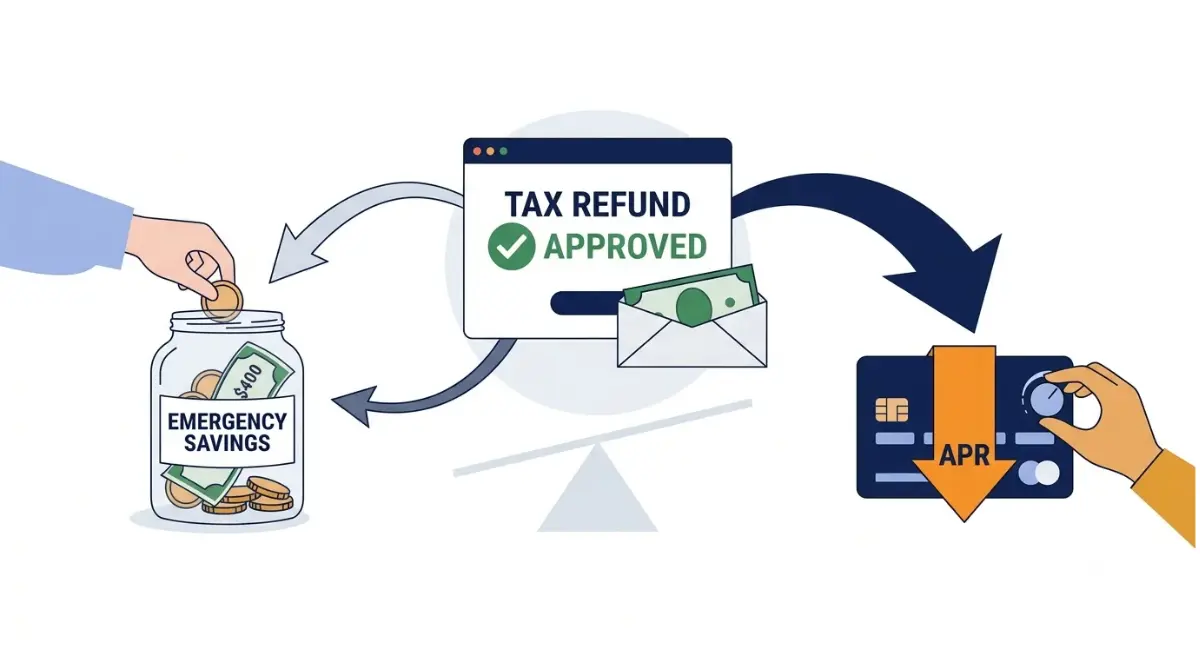
Should Your Tax Refund Pay Debt or Save? Find the Right Split
October 14, 2026 Tax Refund
The Right Way to Tell a Tax Refund Offset From a Correction
October 8, 2026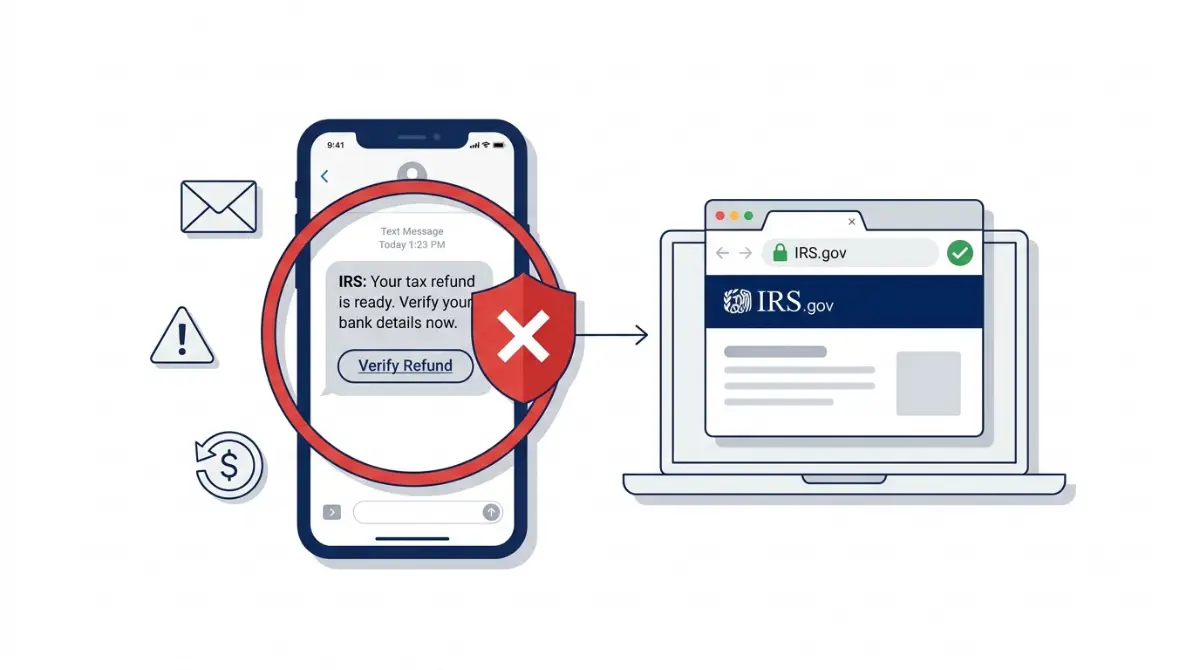 Tax Refund
 Scams and the Real Way the IRS Contacts You
October 17, 2026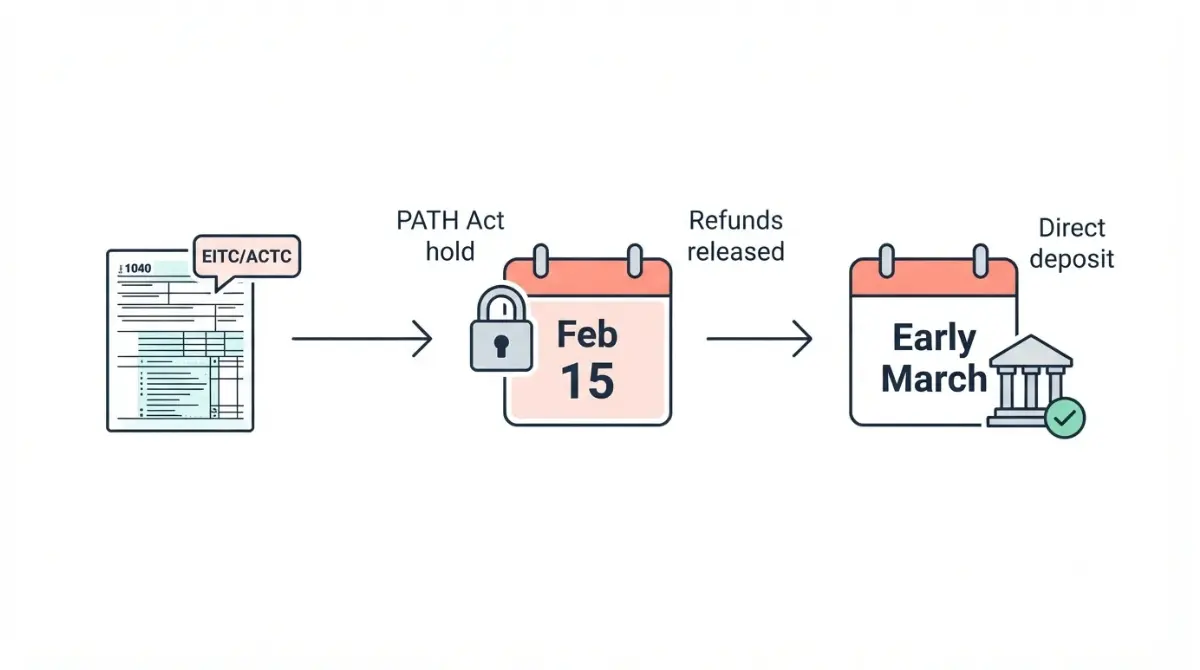 Tax Refund
A Smart Way to Plan Around Your PATH Act Refund Date
October 8, 2026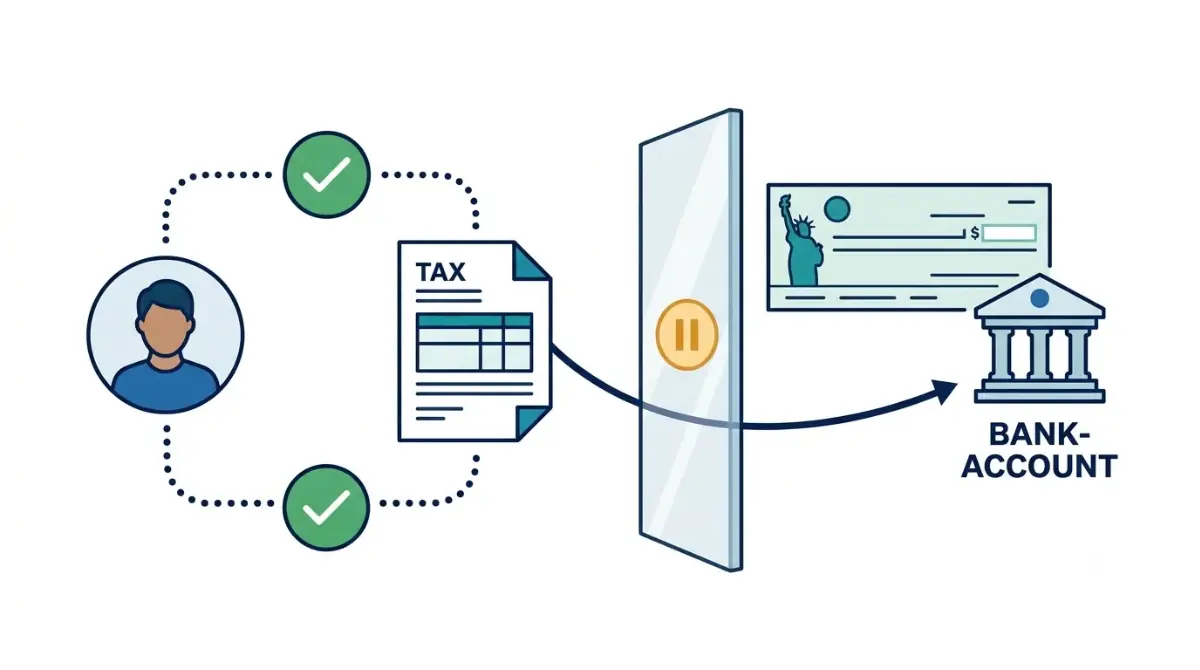 Tax Refund
The Right Way to Answer IRS Letter 5071C and Release Your Refund
October 17, 2026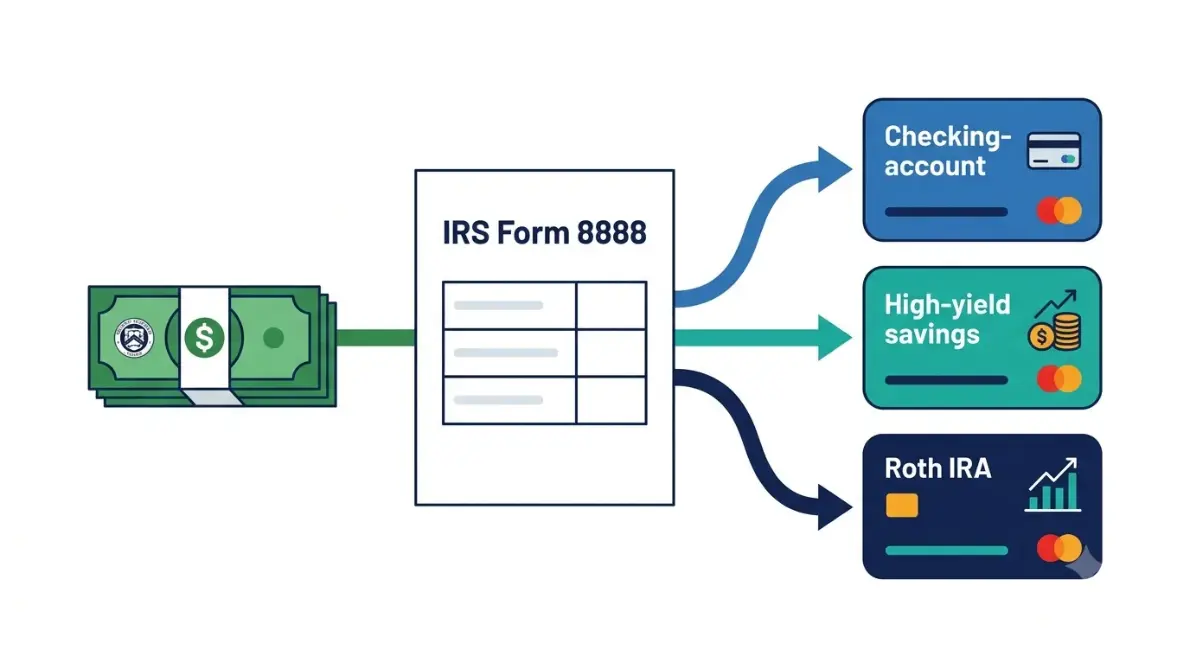 Tax Refund
Split Your Tax Refund With Form 8888 and Pick the Smart Order
October 16, 2026 Tax Refund
How the IRS Counts Interest on a Late Tax Refund, Made Clear
October 8, 2026 Tax Refund
Where to Put Tax Refund Money for a Smart 3-Month Hold
October 15, 2026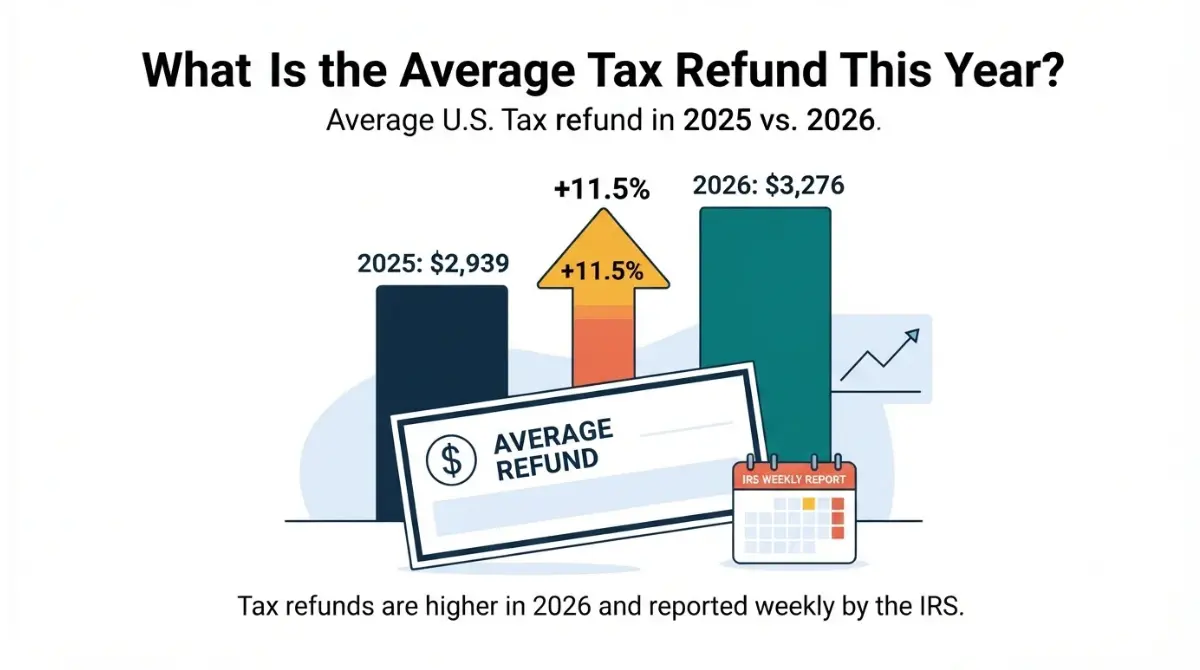 Tax Refund
A Clear Look at Why the Average Tax Refund Keeps Changing
October 9, 2026
Informational disclaimer
The content on Finance Authority Hub is provided for general informational and educational purposes only and should not be considered personalized financial, investment, tax, legal, or professional advice. Financial decisions depend on your individual goals, income, risk tolerance, location, and regulatory situation. Before acting on any information, strategy, estimate, or calculator result, consult a qualified licensed professional who can evaluate your specific circumstances.