
How the IRS Counts Interest on a Late Tax Refund, Made Clear
Late tax refund interest can run back to your due date, not from day 46. See which clock applies to you and what a split-quarter refund earns.
In This Article
Does the IRS owe you interest on a late refund?
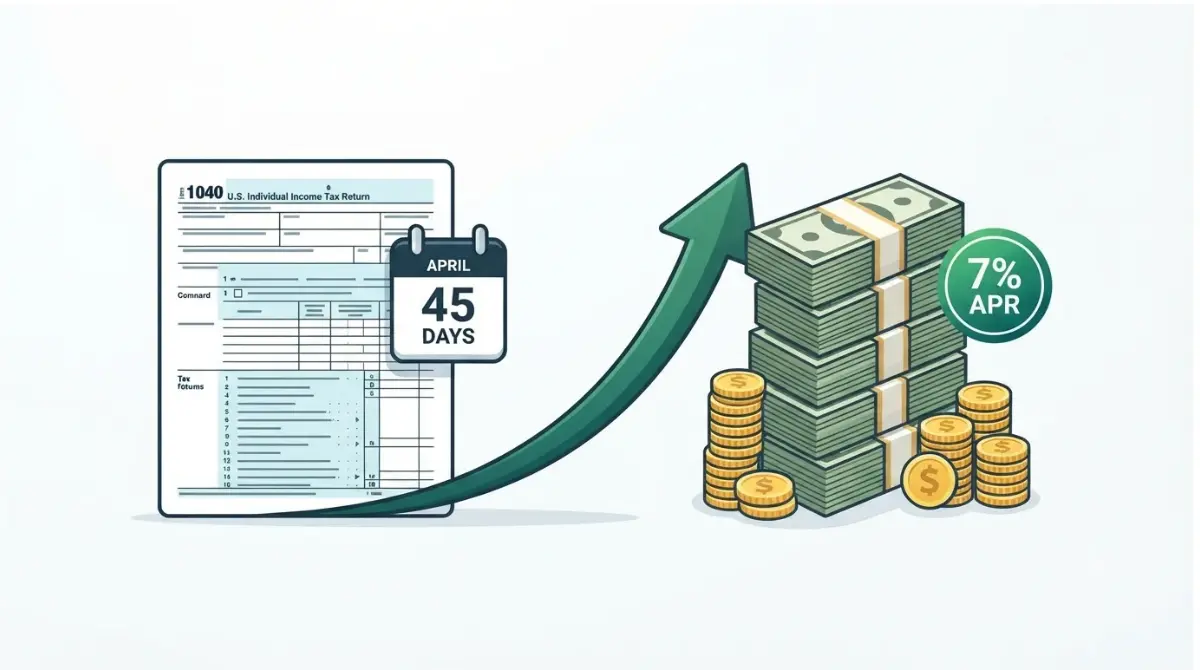
Yes. If the IRS misses a 45-day window, it owes interest on a late tax refund: 7% a year, compounded daily, for October 1 through December 31, 2026, per the IRS announcement of fourth-quarter 2026 interest rates.
The short answer
No interest is owed on a refund issued within 45 days of the later of your return’s due date or the date you filed. Past that point, interest counts back to a start date, not from day 46.
Where to start if your refund is late
Waiting on money you need? Read what to do if your refund is delayed. If you filed late, see the 45-day rule below; for dollar amounts, jump to the worked example.
ℹ️ Financial Disclaimer: This article is general education about tax, lending, investing, insurance and debt topics, not personalized tax, legal or financial advice. Rules and rates change, and your facts may differ. Consult a CPA, enrolled agent or tax attorney before acting on your own return.
How the 45-day rule decides if you get interest
The 45-day rule is a processing period: the IRS pays no interest on an overpayment it refunds within 45 days of the later of the due date or the date it receives a processible return (Internal Revenue Manual 20.2.4).
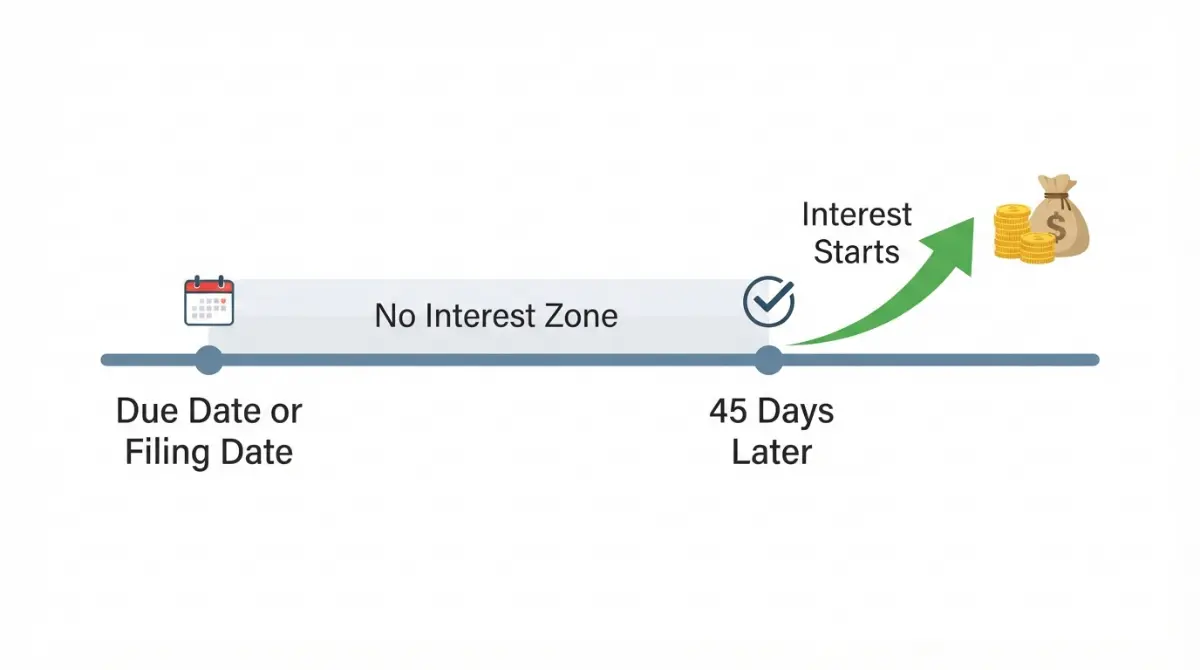
| Your situation | 45 days count from | Key Detail |
|---|---|---|
| On-time return | Due date, ignoring extensions | Interest starts no earlier than the due date |
| Late return | Date the IRS receives it | None before you filed |
| Amended return or claim | Date the IRS receives a processible claim | None if refunded within 45 days |
🔍 How It Works: The 45 days decide whether interest is owed, not when it starts.
If you filed on time
Early filers still count from the due date; see our refund schedule guide.
If you filed late
The IRS must first receive a processible return.
Amended returns, claims and special cases
Some nonresident-withholding refunds use longer periods than 45 days.
What is the IRS interest rate on a late refund?
The IRS pays 7% a year, compounded daily, on individual overpayments from October 1 through December 31, 2026.
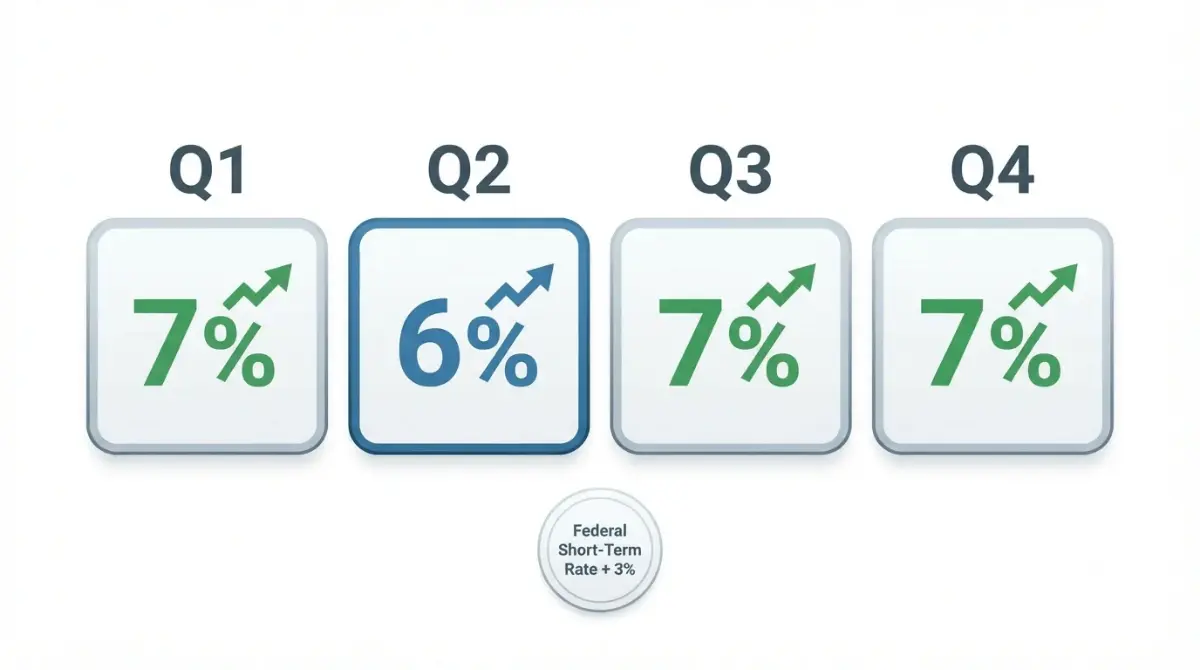
📊 Data Point: 7% for individual overpayments, October–December 2026 — Source: IRS, Revenue Ruling 2026-15, announced August 21, 2026.
How the IRS sets the rate
The rate is the federal short-term rate plus 3 percentage points, reset quarterly. That short-term rate was 4% in the third and fourth quarters of 2026, per the IRS quarterly interest rates table.
Rates by quarter, 2025–2026
| Year | Jan–Mar | Apr–Jun | Jul–Sep | Oct–Dec |
|---|---|---|---|---|
| 2025 | 7% | 7% | 7% | 7% |
| 2026 | 7% | 6% | 7% | 7% |
Source: IRS quarterly interest rates, individual overpayment rate.
How much interest will your late refund earn?
Interest compounds daily at each quarter’s rate, so a refund spanning two quarters is calculated in two pieces.
🔍 How It Works: For each quarter, interest = balance × ((1 + rate ÷ 365)^days − 1); carry the new balance forward. The IRS may stop counting up to 30 days before the refund date (Internal Revenue Manual 20.2.4).
Example: a $3,000 refund that arrives 153 days late
Hypothetical, not a real taxpayer: $3,000 overpaid through withholding, filed on time, refund issued September 15, 2026, after the April 15, 2026 due date.
- 76 days at 6% (April 15–June 30)
- 77 days at 7% (July 1–September 15)
- Total: about $82.90, or $65.21 if counting stops 30 days early
Quick estimate at a flat 7%
Per $1,000: 30 days earns $5.77, 100 days $19.36, 365 days $72.50. Try a compound interest calculator with daily compounding, or our refund formula guide with worked examples. Our calculations from IRS rates; the IRS’s figure may differ by cents.
How to check the interest the IRS paid you
Check the IRS’s math in five steps.
Gather your dates
- Find your start date in the table above: the due date, or your filing date if late.
- Note the date your refund was issued.
Run the numbers
- Look up each quarter’s rate between those dates.
- Apply the worked-example formula to each quarter, in order.
Compare with your Form 1099-INT
- Compare your total with the interest on your Form 1099-INT. No form can mean interest under $10, which is still taxable.
✅ Action Step: Ask a CPA or enrolled agent: “Which date does the IRS treat as my return’s received date?”
Is interest on a tax refund taxable?
Yes. The IRS treats interest paid on a refund as taxable interest income, per IRS Tax Topic 403 on interest received.
Yes, report all of it
You must report all taxable interest, even if you receive no Form 1099-INT.
When you get Form 1099-INT
The IRS says to expect a Form 1099-INT if the interest paid to you totals $10 or more in the year.
Which tax year it counts in
Interest is generally income in the year it becomes available: interest paid in 2026 goes on your 2026 return, even if the refund covers tax year 2025.
✅ Action Step: Ask a CPA or enrolled agent: “How should I report interest on my refund?”
Mistakes that cost you refund interest
Three misreadings cost readers interest or create false hope.
Counting from day 46
⚠️ Costly Mistake: Treating day 46 as the start date understates what you are owed. Once the window is missed, interest counts back to the start date.
Assuming every delay earns interest
A refund issued within the window earns nothing, and an offset stops interest on the debt’s due date (Internal Revenue Manual 20.2.4). See why a refund gets reduced or offset.
If the IRS paid too little
If your calculation exceeds what the IRS paid, time limits apply and the route depends on your facts.
✅ Action Step: Ask a CPA, enrolled agent or tax attorney: “Is a claim for added interest still within the time limit?”
Late tax refund interest: your questions answered
1. Do you get interest on a late tax refund?
Yes. Interest on a late tax refund is owed after the 45-day window, at 7% compounded daily through December 31, 2026.
2. How long before the IRS owes interest on a refund?
Generally 45 days after the unextended due date, or after your filing date if late. Refunds issued inside that window earn no interest.
3. What is the interest rate on a late tax refund?
Interest on a late tax refund is 7%, compounded daily, for October through December 2026. The IRS resets the rate quarterly.
4. When does refund interest start?
If the window is missed, interest generally runs back to the latest of the due date, your filing date, or the overpayment date. Ask a CPA to confirm.
5. How does the IRS calculate refund interest?
The IRS applies each quarter’s overpayment rate to your refund, compounded daily, from the start date until shortly before payment.
6. Is interest on a late tax refund taxable?
Yes. The IRS treats interest on a late tax refund as taxable interest income, reportable even without a Form 1099-INT. Ask a CPA how to report it.
7. Will I get a Form 1099-INT for refund interest?
The IRS says to expect Form 1099-INT if interest on your late tax refund totals $10 or more during the year.
8. Do amended returns or refund claims earn interest?
Amended returns and refund claims have their own clock: no interest accrues from the claim date if the IRS refunds within 45 days. Ask a CPA to confirm.
9. Do I get interest if I filed late?
Yes, if the refund runs late, but no interest accrues before you file. The 45-day window starts on your filing date. Ask a CPA to confirm.
10. What if the IRS paid me too little interest?
If interest on a late tax refund looks too low, ask a CPA or tax attorney about a claim; time limits apply.
11. Does interest stop if my refund is offset?
Yes, for amounts offset: interest on a late tax refund stops on the due date of the debt it pays.
Your next step on refund interest
Three checks cover most cases: your start date, each quarter’s rate, and your Form 1099-INT. The 7% rate holds through December 31, 2026; the IRS sets the January–March 2027 rate separately, and we will update this page then. Next, run your own dates through the worked example.
Related Articles
 Tax Refund
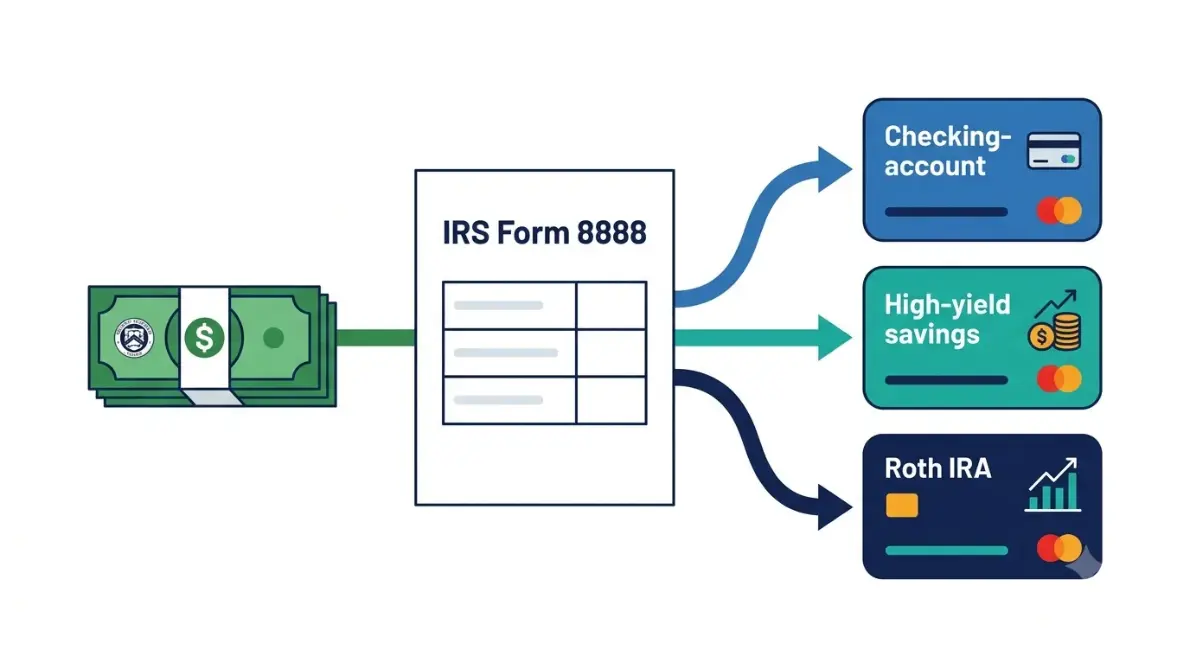
Split Your Tax Refund With Form 8888 and Pick the Smart Order
October 16, 2026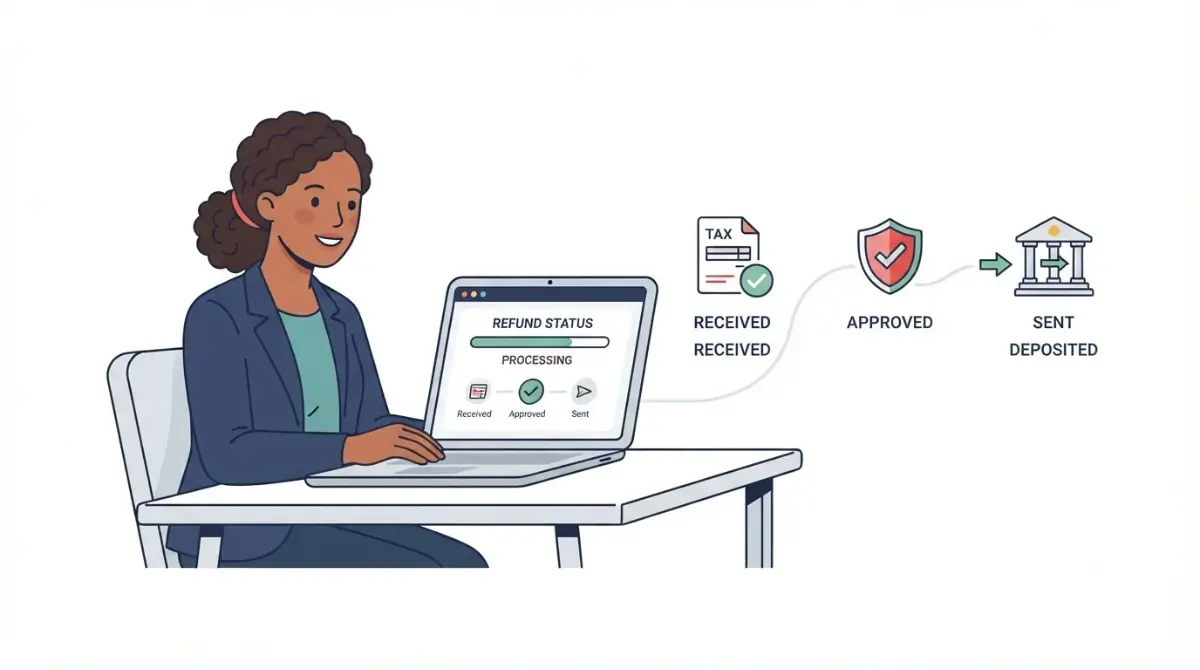 Tax Refund
The Right Way to Check Your Tax Refund Status With the IRS
October 6, 2026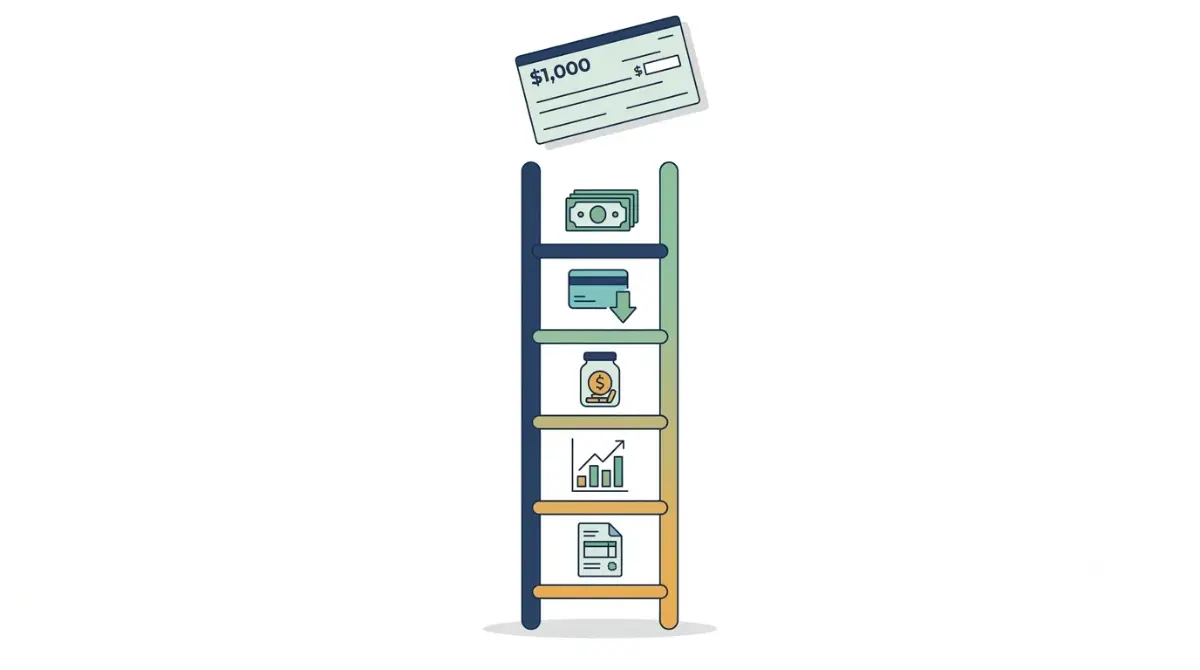 Tax Refund
What to Do With Tax Refund Money in a Clear, Simple Order
October 15, 2026 Tax Refund
Clear Signs of a Smaller Tax Refund Next Year
October 10, 2026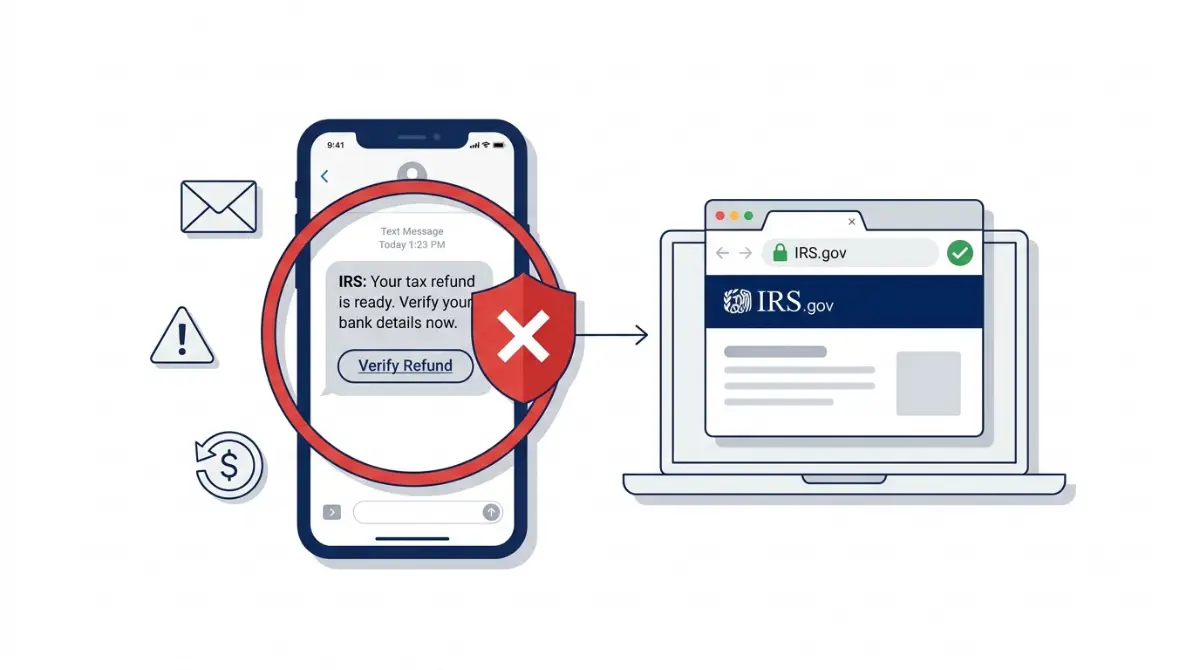 Tax Refund
 Scams and the Real Way the IRS Contacts You
October 17, 2026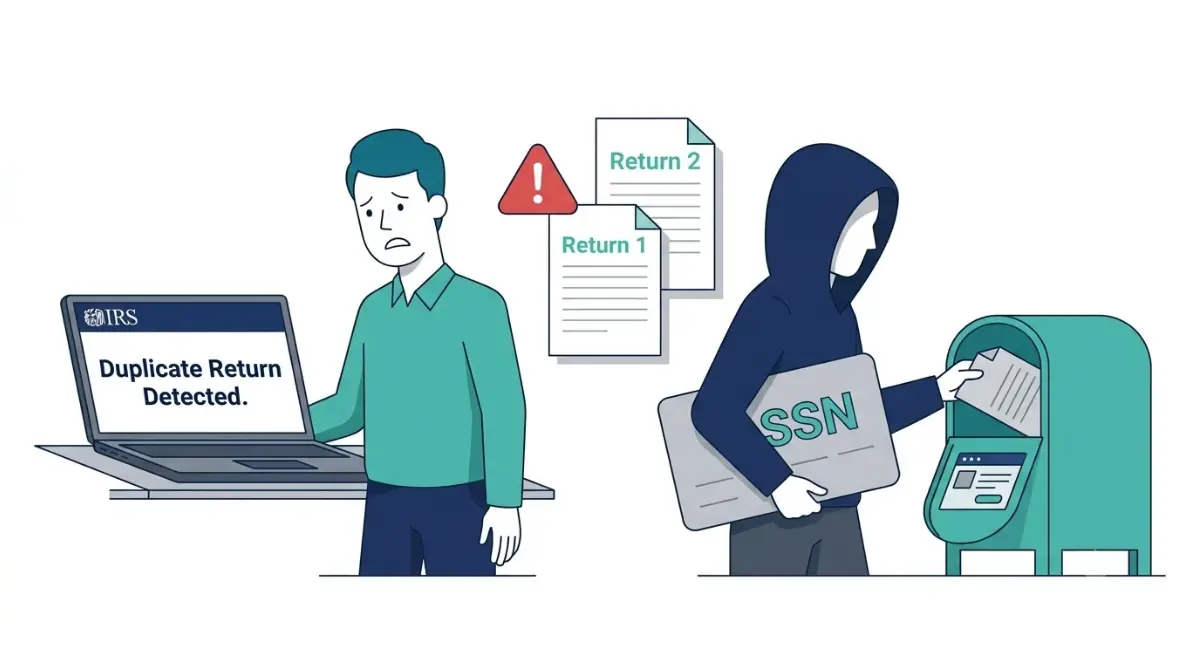 Tax Refund
Someone Filed Your Taxes for Your Refund? Your First Moves
October 17, 2026 Tax Refund
Where to Put Tax Refund Money for a Smart 3-Month Hold
October 15, 2026 Tax Refund
Do You Need to File to Get a Tax Refund If You Owe Nothing?
October 12, 2026 Tax Refund
How Injured Spouse Relief Returns Your Share of a Joint Refund
October 21, 2026
Informational disclaimer
The content on Finance Authority Hub is provided for general informational and educational purposes only and should not be considered personalized financial, investment, tax, legal, or professional advice. Financial decisions depend on your individual goals, income, risk tolerance, location, and regulatory situation. Before acting on any information, strategy, estimate, or calculator result, consult a qualified licensed professional who can evaluate your specific circumstances.