
Is Your Tax Refund Lower Than Last Year? Find the Real Reason
Smaller tax refund than last year? It can be withholding, not extra tax. The IRS says a new Form W-4 goes to your employer, not the IRS.
In This Article
Why is my tax refund lower than last year?
A smaller tax refund rarely means you made a mistake. Refunds were high in the 2026 filing season: IRS data through March 13, 2026 put the average refund at $3,623, up 10.8% from $3,271 a year earlier, per the IRS filing season statistics. Weekly figures shift; see how the average tax refund changes week to week.
A new job or raise points to Causes 1–2; a child turning 17 or a new filing status, Causes 3–4; side income, Cause 5; a deposit smaller than your return showed, Cause 6.
ℹ️ Financial Disclaimer: This article is educational and is not personalized tax, investment, lending, insurance, or debt-relief advice. Your refund depends on your own return. Before acting, consult a CPA or enrolled agent on tax questions, a fiduciary advisor on investments, and a qualified attorney on legal or debt matters.
How your refund is calculated (and what “lower” really means)
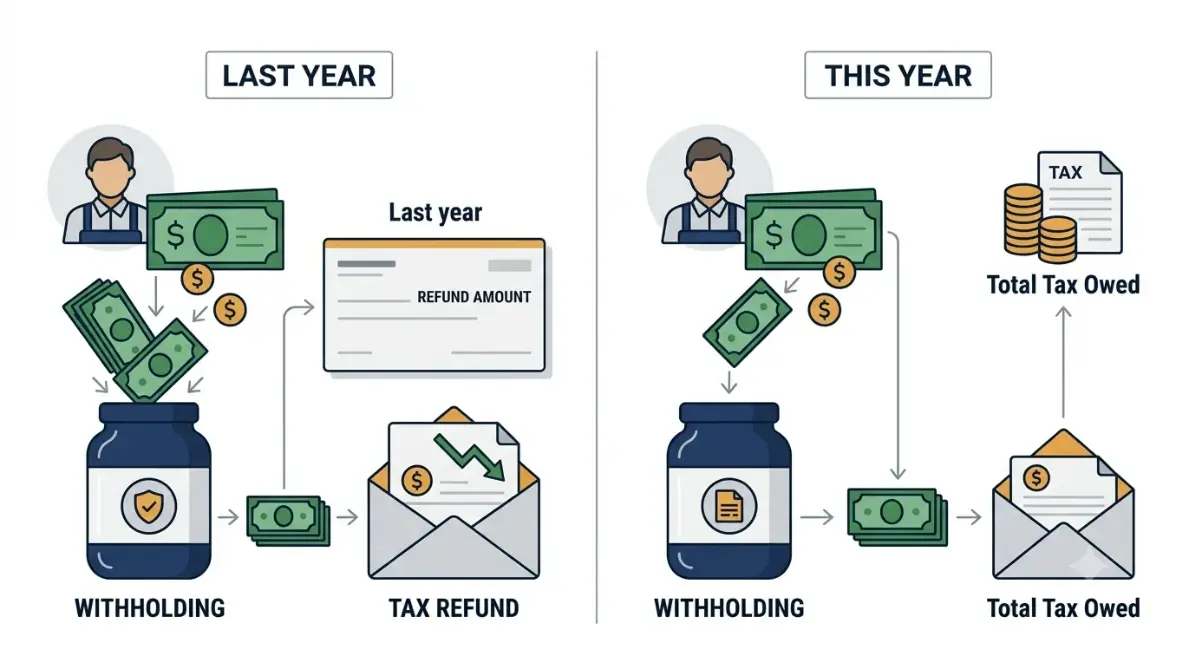
Your refund is the gap between what you prepaid and what you owed.
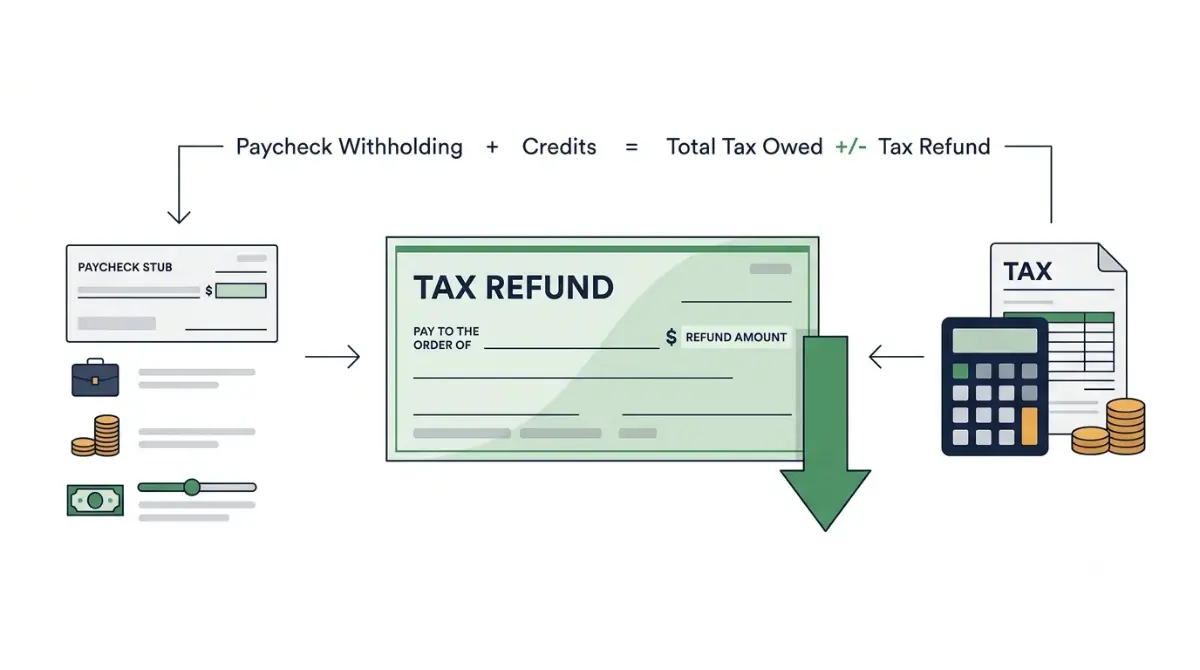
Refund = payments minus total tax
🔍 How It Works: Refund = total payments (withholding, estimated payments, refundable credits) minus total tax. At filing, the IRS compares what you prepaid with your actual tax. Run the full refund formula on your own numbers.
The 6 causes at a glance
A smaller refund usually means one of six things changed:
- Less tax was withheld
- Your income rose
- A credit shrank or ended
- A deduction or filing status changed
- Some income had no tax withheld
- Part of your refund was offset or adjusted
A smaller refund isn’t the same as paying more tax
If withholding fell while your tax stayed flat, you simply prepaid less.
Causes 1–2: Less tax withheld, or more income
Withholding and income move your refund more than anything else.
Cause 1: Your withholding changed
Your employer withholds tax based on your Form W-4, so a new job or form changes what you prepay. The IRS announced no 2025 withholding table changes under the new tax law, and news reports tied 2026’s larger refunds partly to that. A smaller refund may mean withholding now sits closer to your actual tax.
Cause 2: Your income rose
A raise, bonus, or second job lifts your taxable income, and your total tax with it, unless withholding rises to match.
✅ Action Step: Ask a CPA or enrolled agent: “Is my withholding on track for my pay and any second job?”
Causes 3–4: Smaller credits or fewer deductions
Losing a credit hits your refund dollar for dollar.
Cause 3: A credit shrank or ended
A child who turns 17 by year-end no longer counts for the Child Tax Credit, and the Earned Income Tax Credit can shrink as income rises.
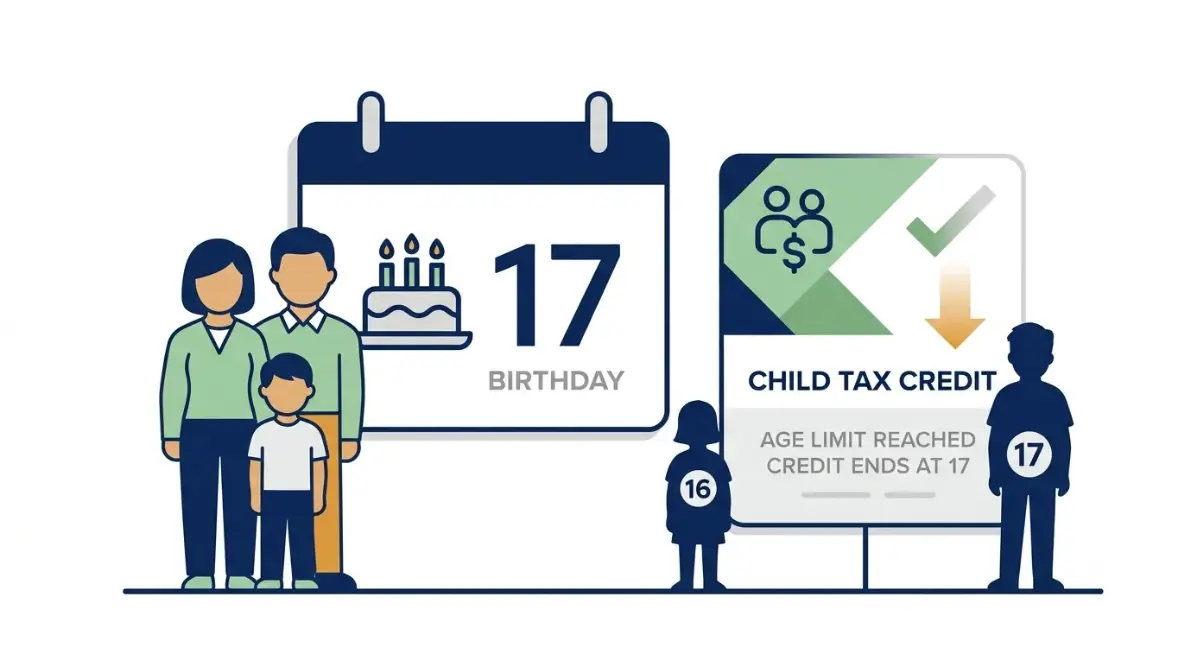
📊 Data Point: For tax year 2025, the Child Tax Credit is up to $2,200 per child, up to $1,700 refundable, and the child must be under 17 at year-end. Source: IRS Tax Tip 2026-17 on parent and family credits, March 2026.
Cause 4: A deduction or filing status changed
Marriage, divorce, or a new dependent changes your filing status; deductions tied to tips or overtime shrink with that income.
✅ Action Step: Ask a CPA or enrolled agent: “Did my filing status or dependents change my claims?”
Causes 5–6: Untaxed income, or a refund reduced after filing
Some income has no withholding, and some refunds shrink after filing.
Cause 5: Income with no tax withheld
Self-employment, gig, and some Form 1099 income carry no withholding, so tax on it reduces your refund unless you paid estimated tax.
Cause 6: Your refund was offset or adjusted
A refund can shrink after you file through a debt offset or an IRS change:
- Offset: the Bureau of the Fiscal Service applies part to past-due debts like child support or state taxes and mails a notice naming the agency; dispute it there (IRS guidance on reduced refunds). See also why a refund gets reduced by an offset.
- IRS adjustment: the IRS changes your return and sends a notice.
✅ Action Step: Ask a CPA, enrolled agent, or the Taxpayer Advocate Service: “Is this offset valid, and is any owed back?”
Compare two years of returns to find your cause
Two returns show which cause moved your refund.
The Refund Bridge, step by step
Start with last year’s refund and adjust one line at a time.
| Bridge step | Example change | Key Detail |
|---|---|---|
| Last year’s refund | $2,600 | Refund amount line |
| Less withholding | −$600 | Total payments; Causes 1, 5 |
| Higher income | −$500 | Total tax; Cause 2 |
| Smaller credit | −$400 | Credits; Cause 3 |
| Offset | −$300 | Fiscal Service notice; Cause 6 |
| This year’s refund | $800 | 2,600 − 600 − 500 − 400 − 300 |
Source: illustrative example computed by FinanceAuthorityHub, not a real taxpayer.
An illustrative example (hypothetical numbers)
Here, $600 less withholding, $900 more tax, and a $300 offset turn $2,600 into $800.
What to do now so next year’s refund isn’t a surprise
The IRS tool does the math.
Check your withholding in four steps
- Gather recent pay stubs and last year’s return.
- Enter them in the IRS Tax Withholding Estimator, updated March 2026 for tips, overtime, car loan interest, and senior deductions.
- If it recommends a change, give a new Form W-4 to your employer, not the IRS.
- Recheck after a job, pay, or family change.
Mistakes to avoid when your refund shrinks
⚠️ Costly Mistake: Cutting withholding too far can leave you owing; a refund-advance offer is a loan with its own terms.
See what a smaller refund next year could mean and plan around a smaller refund.
Tax refund lower than last year: your questions answered
1. Why is my tax refund lower than last year?
A tax refund lower than last year usually traces to less withholding, higher income, a smaller credit, changed deductions, untaxed income, or an offset. Ask a CPA.
2. Does a smaller refund mean I paid more tax?
No. If less tax was withheld, a smaller tax refund means you prepaid less, not that you owed more. Ask a CPA.
3. Is a smaller tax refund a bad thing?
Not by itself. A tax refund lower than last year can mean withholding now matches your actual tax. Ask a CPA.
4. Why is my refund smaller if I earned the same?
Your tax refund can shrink on steady pay if withholding changed, a credit ended, or a deduction changed. Ask a CPA.
5. Why was my refund reduced after I filed?
A reduced tax refund after filing usually comes from a debt offset or an IRS change, each explained in a notice. Contact the agency named.
6. Can the IRS take my refund for a debt?
The Bureau of the Fiscal Service can apply part of a tax refund to certain past-due debts and mails a notice. Dispute it with that agency.
7. Does my child turning 17 lower my refund?
It can. A child must be under 17 at year-end for the Child Tax Credit. Ask a CPA.
8. Why is my tax refund smaller after a new job or raise?
A new job changes withholding and a raise lifts taxable income, so your tax refund can shrink unless withholding keeps pace. Ask a CPA.
9. Why is my refund smaller with side or gig income?
Gig income usually has no withholding, so tax on it reduces your tax refund unless you paid estimated tax. Ask a CPA.
10. How do I check my withholding?
Use the IRS Tax Withholding Estimator, then give any new Form W-4 to your employer, not the IRS. Ask a CPA.
11. What if I owe tax instead of getting a refund?
If your payments fall short of your total tax, you owe the difference instead of a refund. Ask a CPA.
Your next step if your refund came in lower
Pull last year’s and this year’s returns and fill in the Refund Bridge. Then run the IRS estimator before your next paycheck. A smaller refund isn’t automatically worse; it shows how closely your paychecks matched your tax.
Related Articles
 Tax Refund
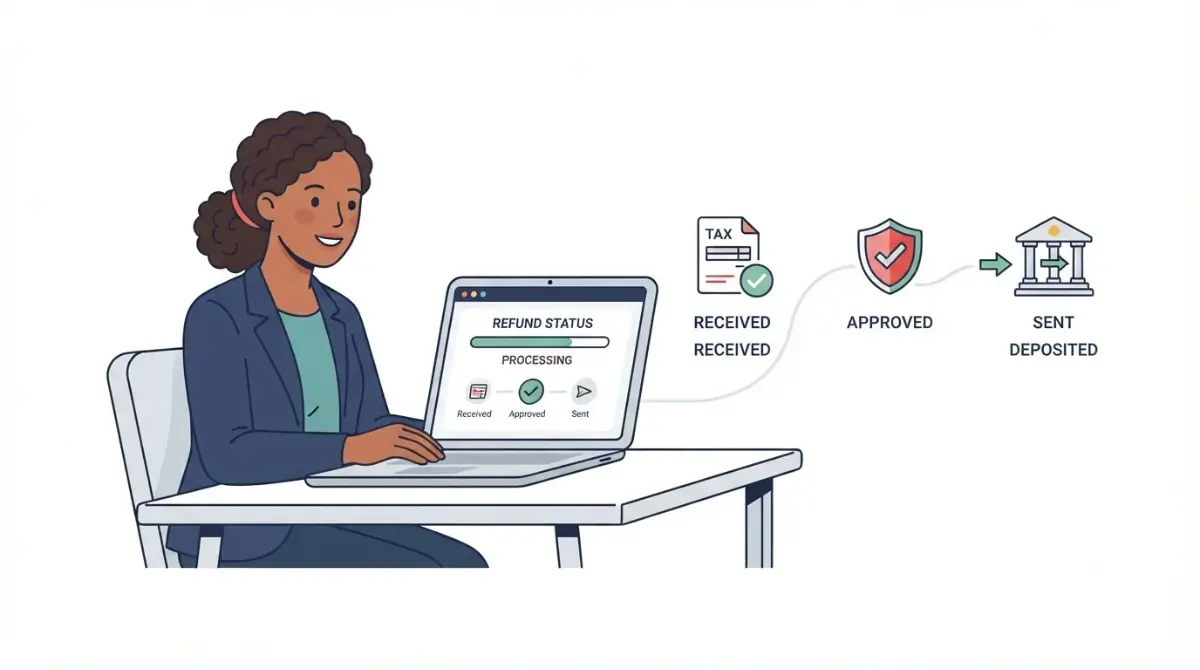
The Right Way to Check Your Tax Refund Status With the IRS
October 6, 2026 Tax Refund
The Key Return in Your Amended Return Refund Timeline
October 9, 2026 Tax Refund
Refund Approved but No Deposit? A Clear Way to Find It
October 7, 2026 Tax Refund
A Clear Look at Why the Average Tax Refund Keeps Changing
October 9, 2026 Tax Refund
The Right Way to Tell a Tax Refund Offset From a Correction
October 8, 2026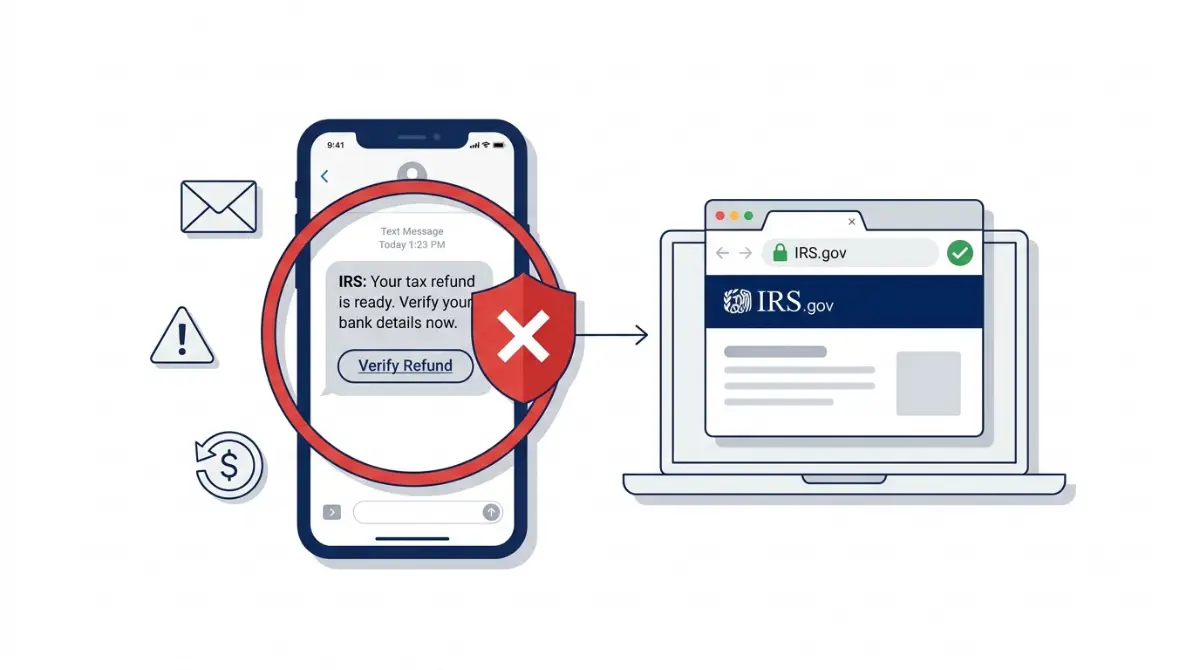 Tax Refund
 Scams and the Real Way the IRS Contacts You
October 17, 2026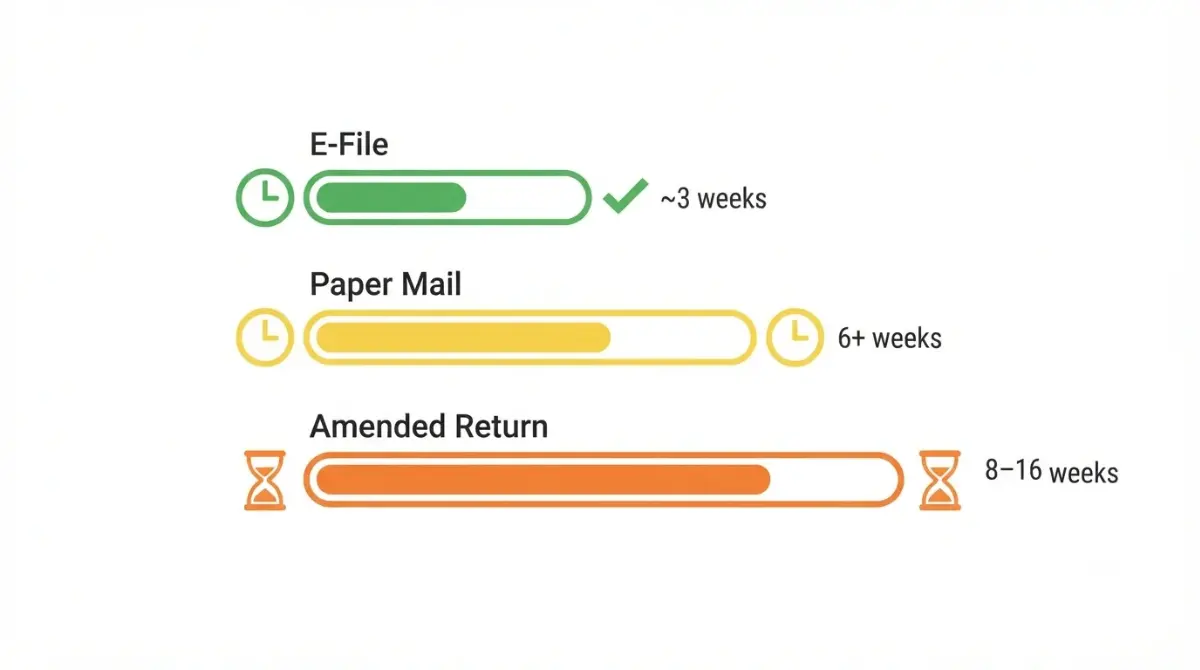 Tax Refund
A Clear Tax Refund Schedule, From Filing Day to Deposit Day
October 7, 2026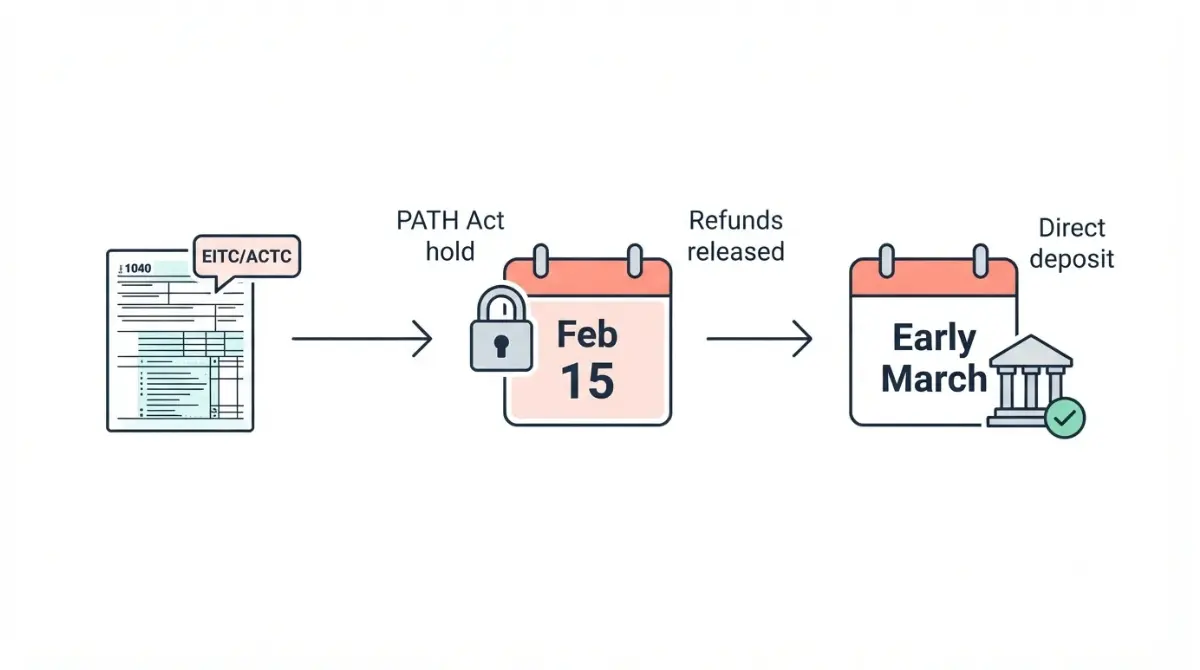 Tax Refund
A Smart Way to Plan Around Your PATH Act Refund Date
October 8, 2026 Tax Refund
Where to Put Tax Refund Money for a Smart 3-Month Hold
October 15, 2026
Informational disclaimer
The content on Finance Authority Hub is provided for general informational and educational purposes only and should not be considered personalized financial, investment, tax, legal, or professional advice. Financial decisions depend on your individual goals, income, risk tolerance, location, and regulatory situation. Before acting on any information, strategy, estimate, or calculator result, consult a qualified licensed professional who can evaluate your specific circumstances.