
What a Tax Refund Advance Loan Really Costs You
Tax refund advance loans usually beat a $150 two-week payday loan on $1,000, but they rarely beat waiting 21 days for the IRS. Here’s the full math.
In This Article
Is a refund advance worth it if your refund comes in 3 weeks?
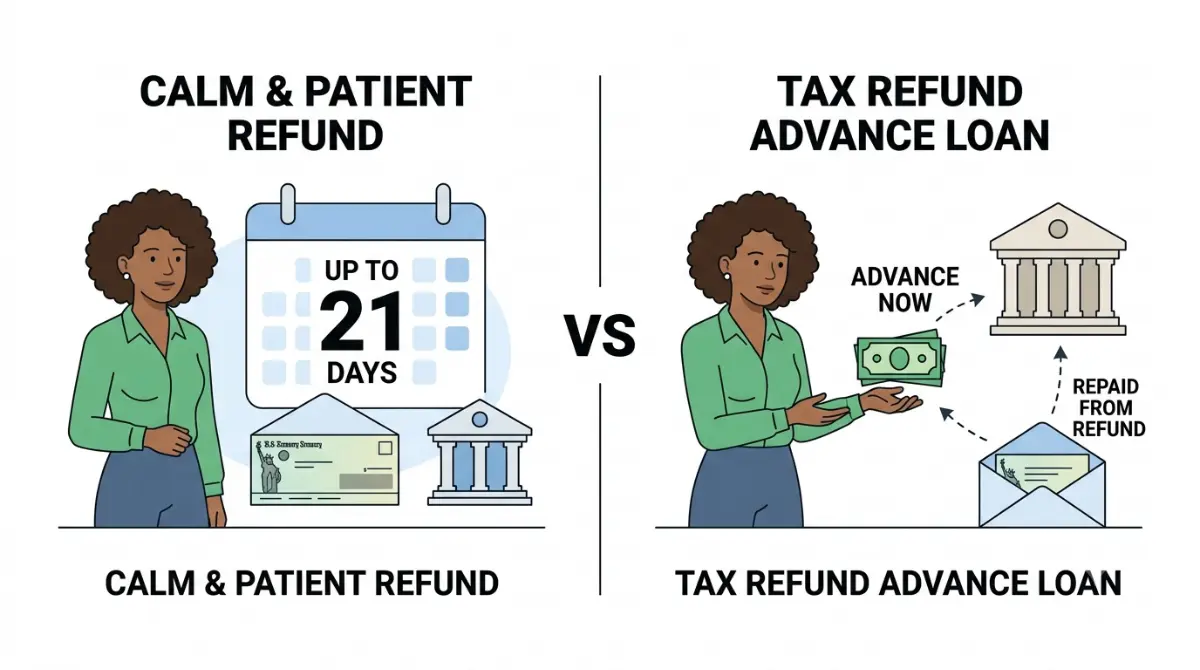
A tax refund advance loan gets you part of your refund now. Since most IRS refunds arrive within 21 days, the question is what you pay to get your own money three weeks sooner.
- Bill due before your refund? Jump to the cost table in Section 5.
- Claiming the EITC or ACTC? Your wait is longer. See Section 3.
- Owe child support or state tax? Read Section 7 first.
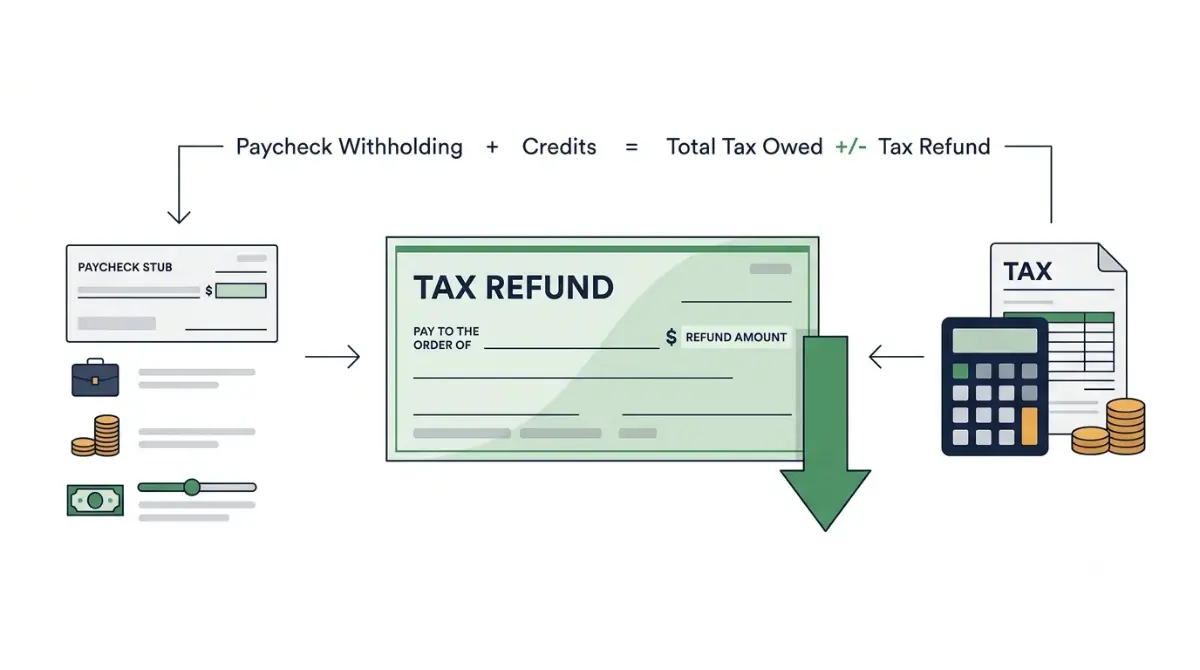
Before you compare, run the refund formula on your own numbers.
ℹ️ Financial Disclaimer: This article is educational, not personalized lending, credit, tax, investment, insurance, or debt-relief advice. Confirm current loan terms with the lender, and consult a CPA, VITA volunteer, or nonprofit credit counselor before acting.
A refund advance is a loan, not your refund
A refund advance is a short-term loan from your preparer’s partner bank, repaid from your refund. The CFPB is clear that it doesn’t make the IRS send your refund faster.
Who actually lends the money
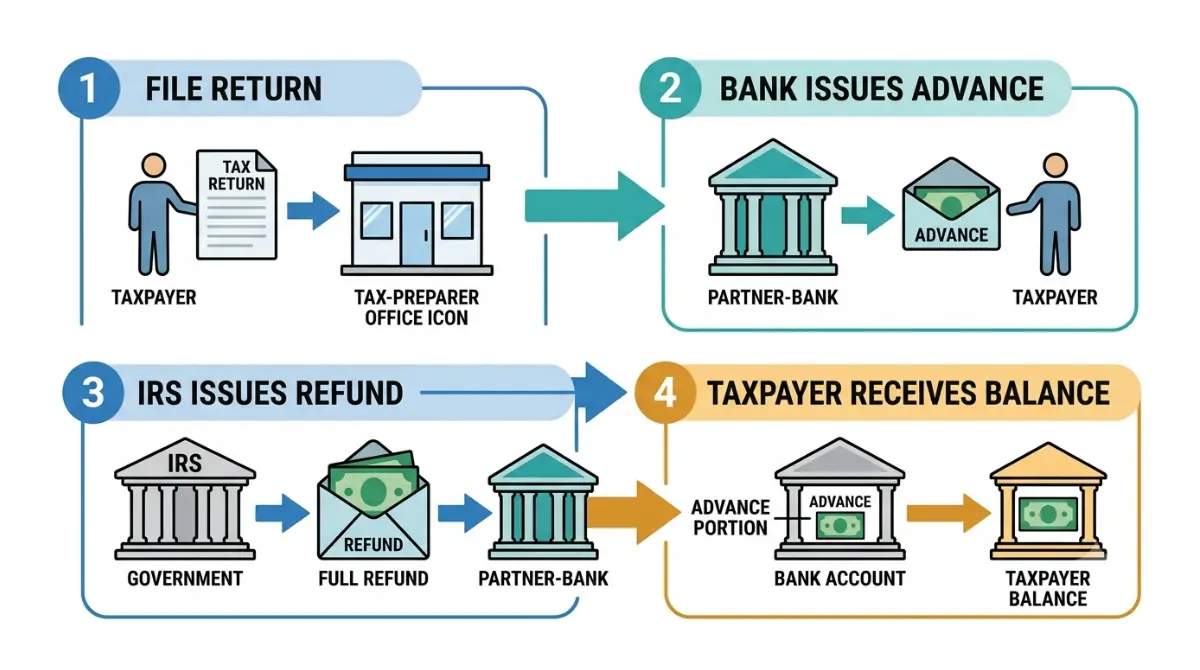
In 2026, Pathward, N.A. issued H&R Block’s advance and WebBank issued TurboTax’s. First Century Bank issued Jackson Hewitt’s.
How it gets repaid
🔍 How It Works: You file through the preparer, and the bank lends you a fixed amount. When the IRS releases your refund, it repays the bank first, and you get the rest.
How long you’d wait without an advance
Your refund wait time depends on how you file and which credits you claim:
- E-file with direct deposit: The IRS issues most refunds in under 21 days; some need extra review.
- EITC or ACTC claimed: By law, the IRS holds your entire refund until mid-February. See our PATH Act refund dates.
- Paper return: The CFPB says a mailed return can take about six weeks.
📊 Data Point: The IRS expected most EITC and ACTC refunds in bank accounts by March 2, 2026, for direct-deposit filers with no other issues. Source: IRS, IR-2026-12.
Paper refund checks are largely gone, but you can still get a refund without a bank account. Our refund schedule from filing to deposit maps each stage.
What a “0% APR” refund advance can still cost you
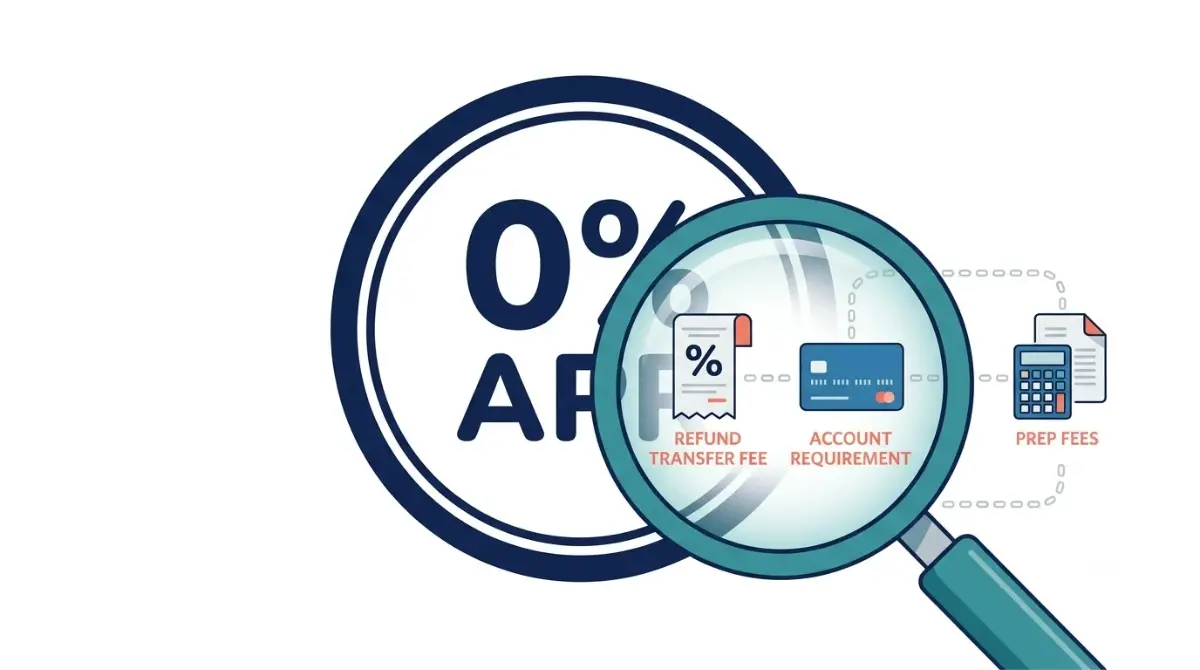
H&R Block and TurboTax both offered 0% APR advances of up to $4,000 in 2026. “No interest” still isn’t “no cost.”
Paying prep fees from your refund
Paying preparation fees out of your refund adds a refund transfer fee: $42 at H&R Block and $40 at TurboTax. Paying prep fees upfront avoids it.
Where your money lands
H&R Block’s advance went only to its Emerald prepaid card or a Spruce account. TurboTax’s required a Credit Karma Money account.
Not every advance is interest-free
Jackson Hewitt’s 2025–26 disclosure lists a 35.99% APR on its Tax Refund Advance, except for residents of Connecticut and Nebraska.
⚠️ Costly Mistake: Assuming every advance is free because one brand’s is. Each requires filing with that company, so get the finance charge and prep fee in dollars.
The real cost of getting $1,000 three weeks early
What a $1,000 bridge costs over about three weeks:
| Option | Cost on $1,000 | Key Detail |
|---|---|---|
| Wait for the IRS | $0 | Most e-filed refunds arrive in under 21 days |
| 0% advance, prep fees paid upfront | $0 loan cost | You still pay for preparation |
| 0% advance, prep fees from refund | $40–$42 | Refund transfer fee |
| Credit card at 22.15% APR, 21 days | About $12.74 | If repaid in full when the refund lands |
| Jackson Hewitt advance, 35.99% APR | About $23.66 | Lender estimate at 24 days; up to $88.74 at 90 |
| Payday loan at $15 per $100 | $150 | Two-week term; APR of almost 400% |
Sources: IRS; H&R Block, Intuit and Jackson Hewitt disclosures; Federal Reserve G.19 (October 2026); CFPB. Card and payday rows are our calculations.
🔍 How It Works: Simple interest = balance × APR × days ÷ 365. For the card, $1,000 × 22.15% × 21 ÷ 365 ≈ $12.74. Our APR calculator turns any fee into an annual rate.
The CFPB explains why a two-week payday loan’s APR runs so high, and our guide covers what payday loans really cost.
When an advance makes sense — and when to wait
The rule: pay for speed only when waiting costs more.
An advance can fit if…
- A late fee or shutoff within three weeks would cost more than the advance.
- You were filing with that preparer anyway and can pay prep fees upfront.
- Your refund isn’t exposed to offsets (Section 7).
Waiting wins if…
- You’d pay for preparation just to get the advance. IRS-certified VITA volunteers file free, generally for people earning about $70,244 or less.
- Your bill can wait 21 days. Check with our budget calculator.
- You’re unsure of your refund. Estimate it before you file.
✅ Action Step: Borrowing against every refund? Ask a nonprofit credit counselor: “How do I build a one-month buffer?”
What happens if your refund comes in smaller
Your advance is sized to the refund you expected, which can shrink.
Debts that can take your refund
The Treasury can reduce your refund for past-due child support, federal non-tax debts, state income tax, and certain unemployment debts, and the IRS can apply it to prior-year federal taxes. See how refund offsets work.
Questions to ask before you sign
- Will I owe anything if my refund is smaller or offset?
- What is the finance charge in dollars?
- Where will the money land, and what does that account charge?
- What happens if the IRS delays my refund?
✅ Action Step: If you owe child support or state tax, ask a CPA: “Will an offset hit my refund before the advance is repaid?”
Tax refund advance loan FAQs
1. Does a tax refund advance loan speed up my IRS refund?
No. A tax refund advance loan is a bank loan, and the CFPB notes it doesn’t make the IRS pay faster. Confirm loan terms with the lender.
2. Is a tax refund advance loan free?
Not always. H&R Block and TurboTax offered 0% APR in 2026; Jackson Hewitt listed 35.99%. Confirm current terms with the lender.
3. How much can a tax refund advance loan be?
In 2026, H&R Block and TurboTax advances reached $4,000, depending on your expected refund. Confirm current limits with the lender.
4. Does a refund advance loan check my credit?
TurboTax says its refund advance loan has no credit-score impact; other lenders set their own reviews, so read each disclosure.
5. What if my refund is smaller than my advance?
Terms vary by lender, so ask before signing whether you’d owe the difference on your advance. A CPA can review your situation.
6. Can debts reduce the refund that repays my advance?
Yes. Child support, federal non-tax debts, state income tax, and some unemployment debts can shrink the refund repaying your advance. A CPA can check your exposure.
7. Why does my EITC refund take longer than 21 days?
The law holds EITC refunds until mid-February, and the IRS expected most 2026 EITC refunds by March 2. A VITA volunteer can confirm your timing.
8. What’s a refund transfer versus a refund advance?
A refund advance is a loan; a refund transfer pays prep fees from your refund, for $40 to $42. Ask your preparer which you’re signing.
9. When are tax refund advance loans available?
In 2026, H&R Block’s tax refund advance loan ran January 2 to March 15; TurboTax’s ran until April 15. Check current dates with the lender.
10. Is a tax refund advance loan cheaper than a payday loan?
Usually. Even a 35.99% APR advance cost about $23.66 on $1,000, versus $150 for a two-week payday loan. Compare dollar costs first.
11. Can I get my tax refund without a bank account?
Yes. The IRS has largely stopped paper refund checks and points taxpayers without accounts to alternatives like certain prepaid debit cards.
The bottom line: price the speed before you sign
A tax refund advance loan pays off only when waiting three weeks costs more than the advance. Compare both in dollars. If you wait, e-file with direct deposit, and if your refund runs late, here’s what to do when your refund is delayed.
Related Articles
 Tax Refund
Is Your Tax Refund Lower Than Last Year? Find the Real Reason
October 10, 2026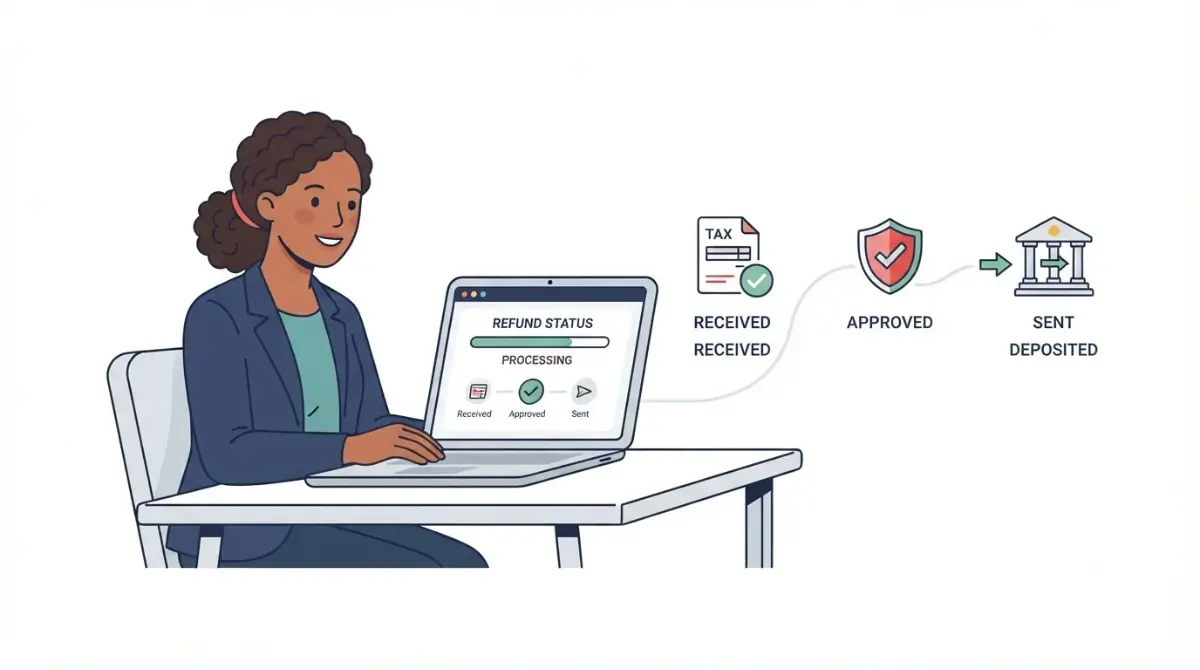 Tax Refund
The Right Way to Check Your Tax Refund Status With the IRS
October 6, 2026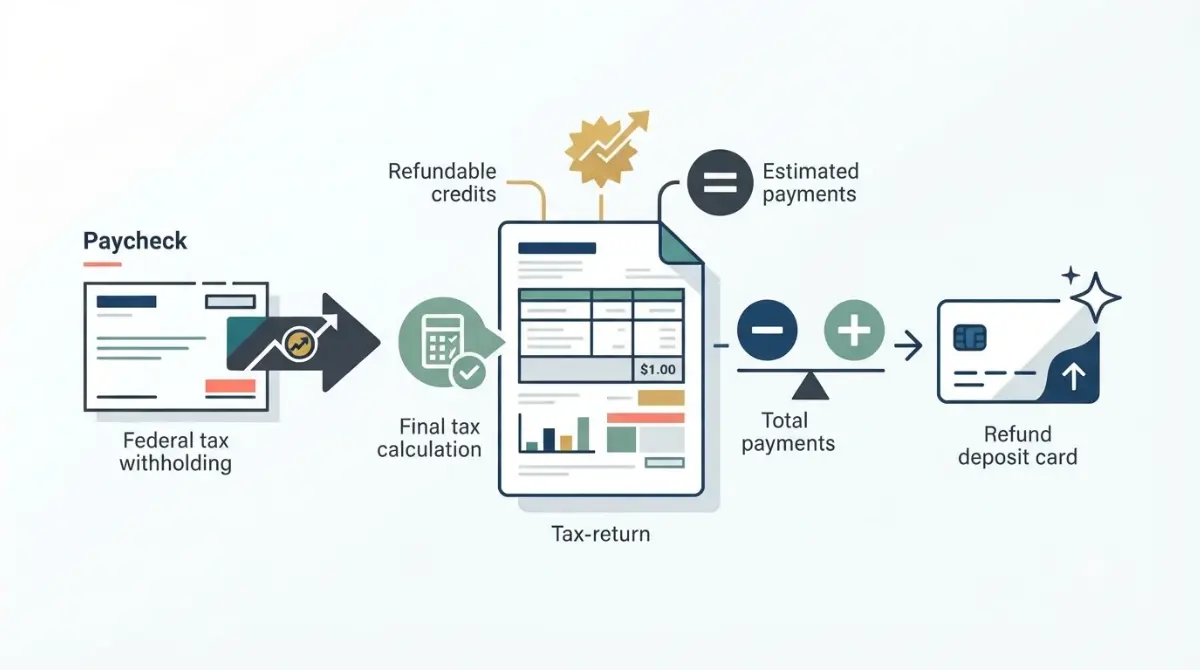 Tax Refund
A Clear Tax Refund Formula You Can Run on Your Own Numbers
October 6, 2026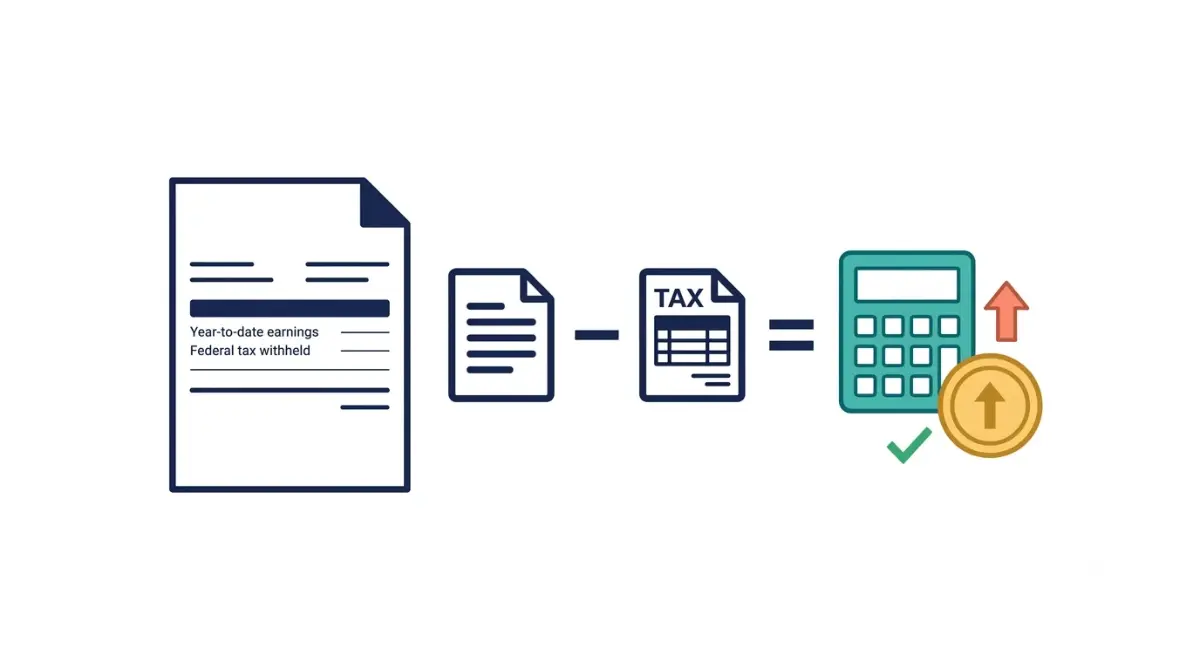 Tax Refund
Smart Ways to Estimate Your Tax Refund Before Filing
October 10, 2026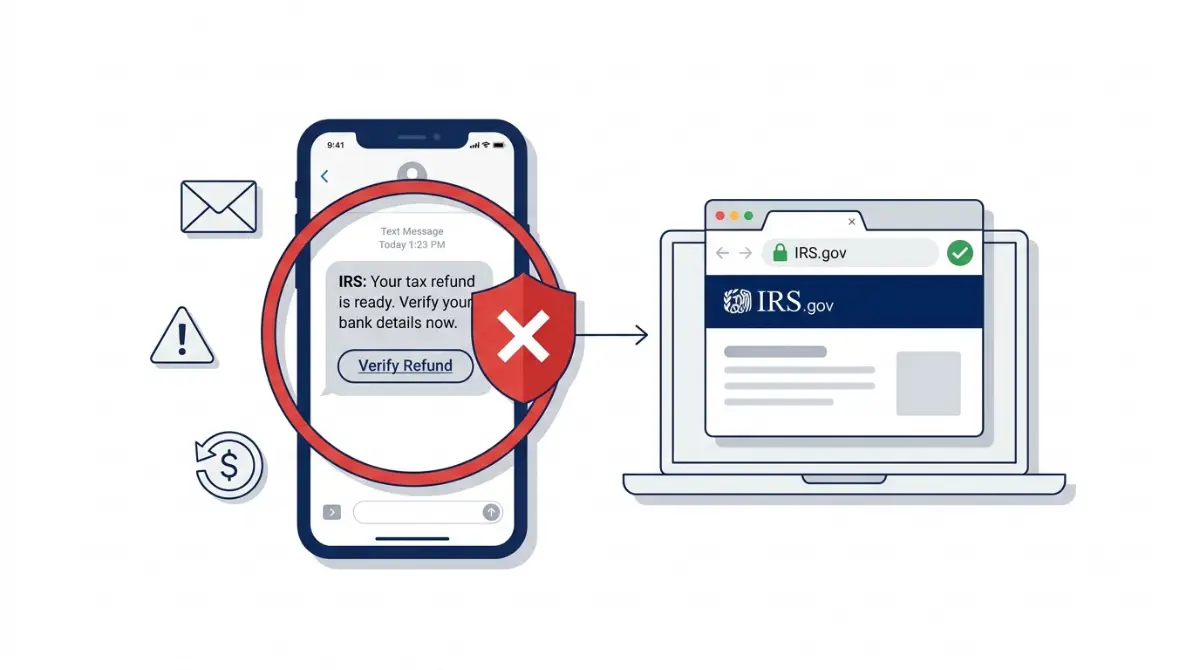 Tax Refund
 Scams and the Real Way the IRS Contacts You
October 17, 2026 Tax Refund
The Key Return in Your Amended Return Refund Timeline
October 9, 2026 Tax Refund
A Clear Way to Adjust Your W-4 Refund Up or Down
October 12, 2026 Tax Refund
Clear Signs of a Smaller Tax Refund Next Year
October 10, 2026 Tax Refund
Should Your Tax Refund Pay Debt or Save? Find the Right Split
October 14, 2026
Informational disclaimer
The content on Finance Authority Hub is provided for general informational and educational purposes only and should not be considered personalized financial, investment, tax, legal, or professional advice. Financial decisions depend on your individual goals, income, risk tolerance, location, and regulatory situation. Before acting on any information, strategy, estimate, or calculator result, consult a qualified licensed professional who can evaluate your specific circumstances.