
A Clear Look at Why the Average Tax Refund Keeps Changing
Average tax refund headlines clash because the IRS number is a running total: $2,476 on Feb. 13, then $3,804 a week later. Here is how to read it.
In This Article
What is the average tax refund this year?
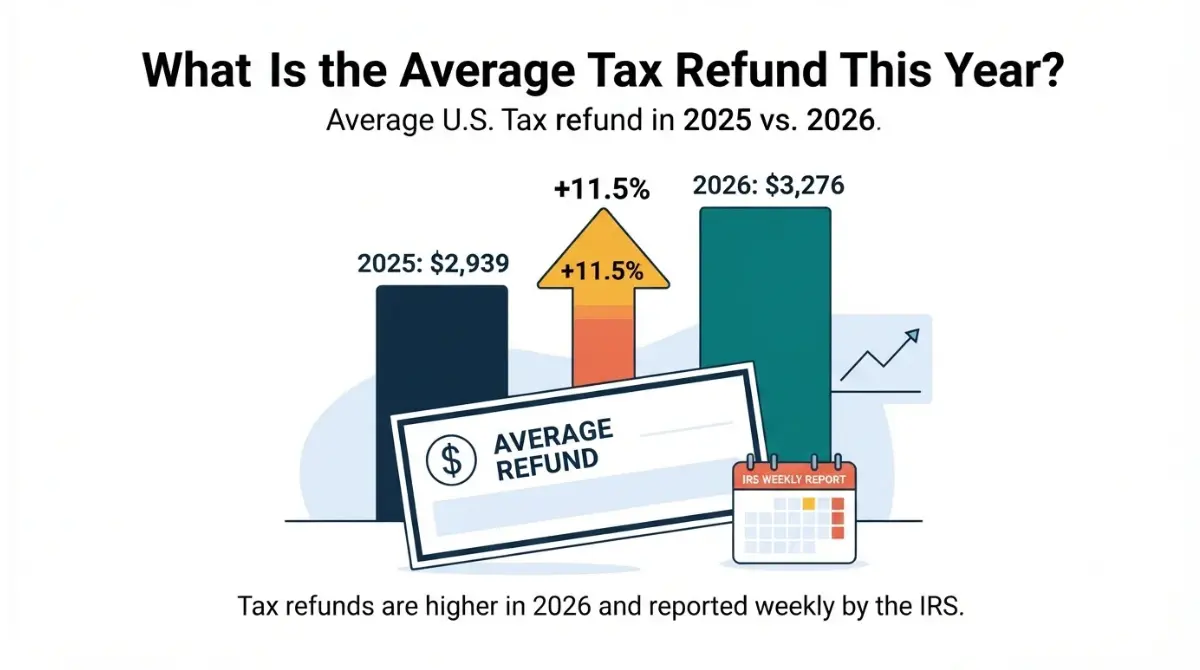
The average tax refund was $3,276 in the most recent 2026 report the IRS lists, for the week ending May 8, up from $2,939 at the same point in 2025, per the IRS weekly filing season statistics. That figure is a running total, and it sat anywhere from $2,290 to $3,804 at different points this season.
Comparing your refund, waiting on a deposit, or wondering about withholding? Use the weekly table, the “Expecting an exact date” section, or “Is your refund too big or too small?” respectively.
ℹ️ Financial Disclaimer: This article is for education only and is not personalized tax, investment, lending, insurance or debt-relief advice. National IRS averages describe all filers, not your refund. Before acting on your return or withholding, consult a CPA, an enrolled agent or a tax attorney.
Why the IRS average tax refund changes every week
The IRS average changes every week because it is a running total of refunds paid, divided by the number of refunds issued.

It’s a running average, not an annual one
The IRS posts a new cumulative table each week, so a February number covers only refunds paid by then.
🔍 How It Works: Average refund = total dollars refunded ÷ number of refunds issued. Each week adds to both, so the average moves.
The mid-February hold on EITC and ACTC refunds
Under the PATH Act, the IRS holds refunds on returns claiming the Earned Income Tax Credit or Additional Child Tax Credit until Feb. 15. The IRS left those out of its Feb. 6 and Feb. 13 reports; its refund FAQ confirms the hold.
Average tax refund by week: 2026 vs 2025
The average jumped from $2,476 to $3,804 between the IRS’s Feb. 13 and Feb. 20, 2026 reports, the first after the Feb. 15 hold date.

| IRS report week (2026 / 2025) | 2026 average | 2025 average | Change | Key Detail |
|---|---|---|---|---|
| Feb. 6 / Feb. 7 | $2,290 | $2,065 | +10.9% | Held refunds not yet included |
| Feb. 13 / Feb. 14 | $2,476 | $2,169 | +14.2% | Held refunds still excluded |
| Feb. 20 / Feb. 21 | $3,804 | $3,453 | +10.2% | 2026 peak |
| Feb. 27 / Feb. 28 | $3,742 | $3,382 | +10.6% | Average starts easing |
| Mar. 20 / Mar. 21 | $3,571 | $3,221 | +10.9% | Steady decline continues |
| Apr. 17 / Apr. 18 | $3,275 | $2,942 | +11.3% | Mid-April |
| May 8 / May 9 | $3,276 | $2,939 | +11.5% | Latest 2026 report listed |
Source: IRS, Filing Season Statistics weekly reports for the weeks shown; 2025 dates are the IRS’s matching comparison weeks. Averages are cumulative for the season to date.
The February jump
That is a 53.6% rise in one week (our calculation from IRS figures).
How 2026 compares with 2025
In every weekly report this season, the 2026 average ran 10.2% to 14.2% above the matching 2025 week; both years peaked in the third week of February.
📊 Data Point: The 2025 average kept moving after spring: $2,939 on May 9, $3,052 on Oct. 17 and $3,167 on Dec. 26. Source: IRS, 2025 weekly Filing Season Statistics.
How the average is calculated, with a worked example
Rebuild the IRS average by dividing total refunded by the number of refunds.
Rebuild the IRS number yourself
- Total amount refunded, week ending Feb. 20, 2026: $109.329 billion.
- Number of refunds: 28.738 million.
- Divide: $109.329 billion ÷ 28.738 million is about $3,804, the IRS average.
What refunds issued after mid-February averaged
By May 8: $324.757 billion across 99.138 million refunds. The refunds added since February came to $215.428 billion across 70.4 million, about $3,060 each (our calculation, not an IRS statistic).
🔍 How It Works: A running average falls when later refunds are smaller than the average so far.
For your own refund, use our tax refund formula you can run on your own numbers.
Why refunds are running higher than last year
Refunds ran 10.2% to 14.2% above 2025 in every weekly report, and the IRS tables don’t say why.
What changed on 2025 returns
For returns filed this season, the IRS publishes guidance on new deductions for tips, overtime and seniors; its Working Families Tax Cuts page links the explainers. A deduction lowers taxable income, so with unchanged withholding, the difference returns as a bigger refund.
Why the gap isn’t your forecast
National averages can’t predict your result. See who gets the bigger 2026 refunds for how filers compare.
✅ Action Step: Ask a CPA or enrolled agent: “Which of the new deductions apply to me, and has my withholding caught up?”
Is your refund too big or too small? What to do about it
A refund is your own money returned, so sitting above or below the average says little about your filing.
If your refund is below the average
The average mixes every income level, filing status and credit, so a smaller refund often reflects a different situation.
If your refund is large
A large refund can mean more tax was withheld than your return required, though refundable credits can add to it. The IRS Tax Withholding Estimator shows what your employer should withhold; our paycheck calculator shows pay after withholding.
✅ Action Step: Ask a CPA or enrolled agent: “Given my income and credits, should I change my W-4?” Too little withholding can leave a balance due.
Mistakes people make comparing their refund to the average
Most mistakes come from treating a moving national number as a personal benchmark.
Comparing to a single snapshot
Quoting the February peak as “the average” overstates what filers had received by May: $3,804 versus $3,276. The IRS table reports only an average, not a median.
Expecting an exact date
The IRS says e-filed refunds typically take about three weeks and mailed returns six or more; check yours on the IRS refunds page. Our refund schedule by filing date shows common timelines, and EITC or ACTC claims run later, as our PATH Act refund dates for EITC and ACTC filers explains.
Average tax refund FAQs
1. What is the average tax refund right now?
The IRS’s latest 2026 report, for the week ending May 8, put the average tax refund at $3,276, up 11.5% from 2025.
2. Why does the average tax refund change every week?
The IRS reports a running total, so each week’s new refunds change both numbers behind the average tax refund.
3. Why did the average tax refund jump in mid-February?
The PATH Act held EITC and ACTC refunds until Feb. 15; the average tax refund then rose from $2,476 to $3,804.
4. Is the average tax refund higher than last year?
Yes: in every weekly report this season, the 2026 average tax refund ran 10.2% to 14.2% above 2025’s matching week.
5. How is the average tax refund calculated?
The average tax refund is total amount refunded divided by refunds issued; Feb. 20, 2026’s $109.329 billion ÷ 28.738 million is about $3,804.
6. Is the average tax refund the same as a typical refund?
No. The IRS weekly table reports only an average tax refund, not a median, so it may differ from a typical filer’s refund.
7. Why are refunds bigger this year?
The IRS doesn’t name one cause for the higher average tax refund, but it now explains new deductions for tips, overtime and seniors. A CPA or enrolled agent can confirm which deductions fit you.
8. How long does it take to get my refund?
The IRS says e-filed refunds typically take about three weeks, so the average tax refund figure says nothing about your timing.
9. Why is my refund later than the usual timeframe?
Returns claiming the EITC or ACTC are held until mid-February, which delays those refunds past the usual three weeks.
10. Does a smaller refund than the average mean I made a mistake?
No. The average tax refund blends every filer’s income, credits and withholding, so a smaller refund often reflects a different tax situation. A CPA or enrolled agent can check your return for errors.
11. Should I adjust my withholding if my refund is large?
A refund far above the average tax refund can reflect extra withholding or refundable credits; the IRS Tax Withholding Estimator shows whether withholding fits. A CPA or enrolled agent can say whether a W-4 change suits you.
What to take from the average tax refund
Treat the IRS average as a dated snapshot of a running total: $3,276 in the May 8, 2026 report, after a $3,804 peak in February. Judge your own refund against your own return, not the headline.
✅ Action Step: Compare this refund with last year’s return, then try the IRS Tax Withholding Estimator.
Related Articles
 Tax Refund
A Clear Look at Tax Refund vs Owing, Run as Math
October 12, 2026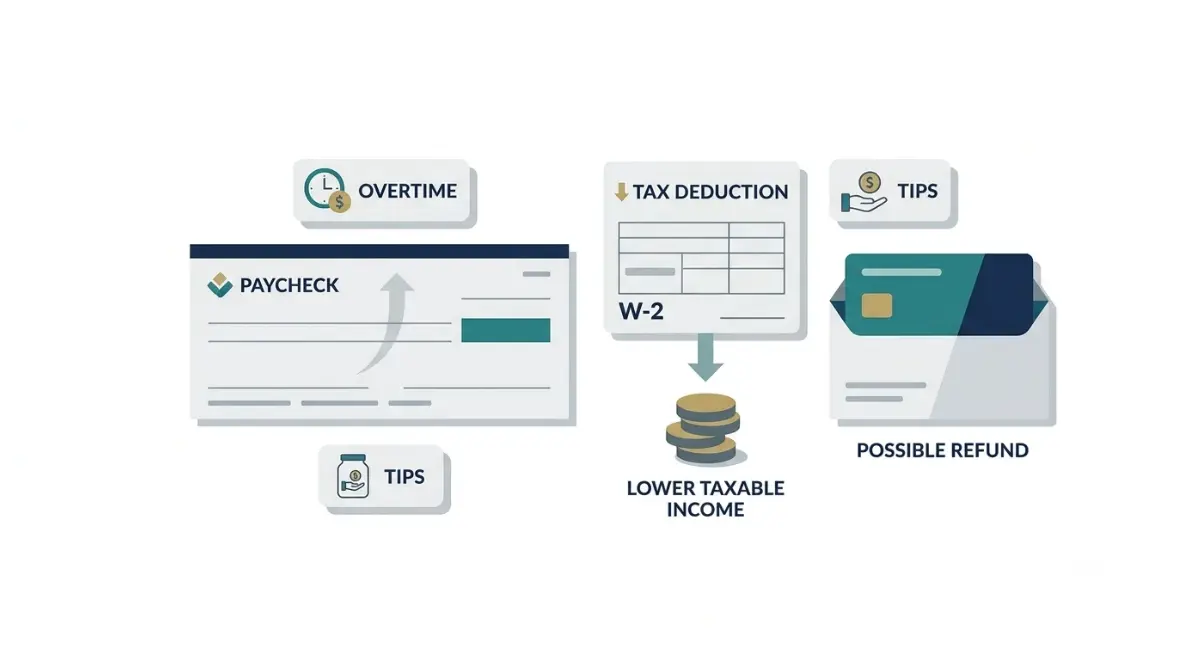 Tax Refund
Set the Right Overtime Tips Deduction Withholding for 2026
October 13, 2026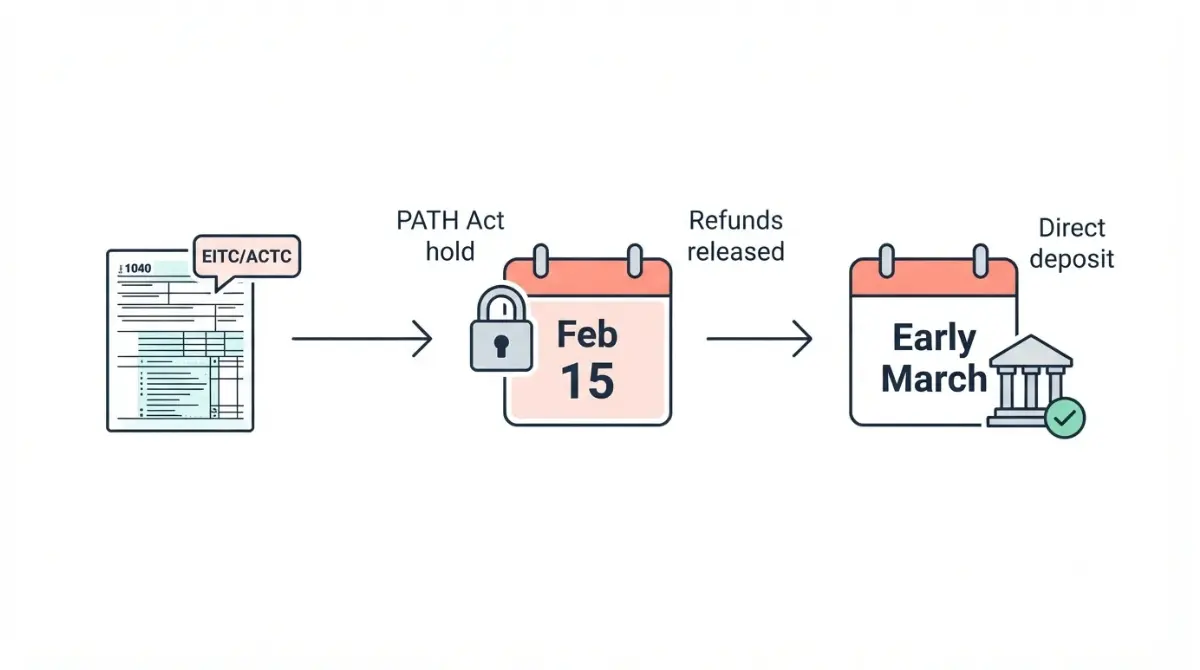 Tax Refund
A Smart Way to Plan Around Your PATH Act Refund Date
October 8, 2026 Tax Refund
The Right Way to Tell a Tax Refund Offset From a Correction
October 8, 2026 Tax Refund
A Clear Walk Through the Tax Withholding Estimator Screens
October 13, 2026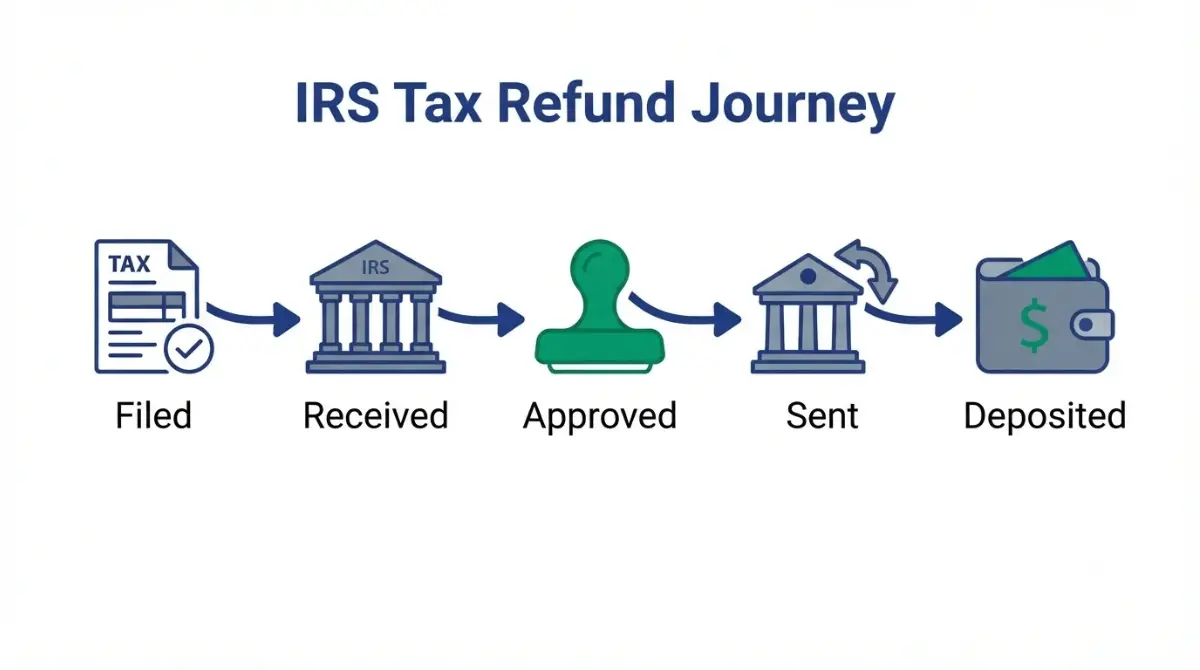 Tax Refund
Refund Approved but No Deposit? A Clear Way to Find It
October 7, 2026 Tax Refund
A Clear Tax Refund Formula You Can Run on Your Own Numbers
October 6, 2026 Tax Refund
What a Tax Refund Advance Loan Really Costs You
October 16, 2026 Tax Refund
The Right Way to Answer IRS Letter 5071C and Release Your Refund
October 17, 2026
Informational disclaimer
The content on Finance Authority Hub is provided for general informational and educational purposes only and should not be considered personalized financial, investment, tax, legal, or professional advice. Financial decisions depend on your individual goals, income, risk tolerance, location, and regulatory situation. Before acting on any information, strategy, estimate, or calculator result, consult a qualified licensed professional who can evaluate your specific circumstances.