
Tax Refund Delayed and Bills Running Late? Find the Cause First
A tax refund delayed by a CP53E notice gives you 30 days to add bank details online. Here is how to spot it and what to do next.
In This Article
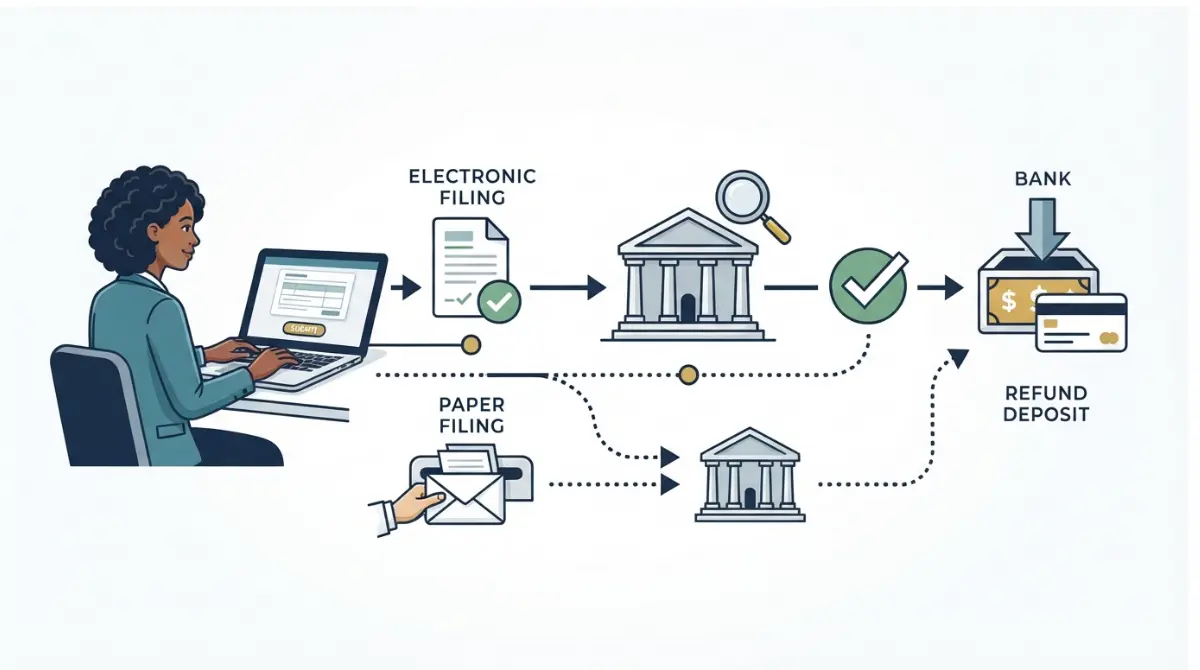
A late refund is stressful, especially when a bill is waiting on it. The IRS says an e-filed return typically brings a refund in about 3 weeks, and a mailed return takes 6 or more weeks.
- E-filed, no notice: you may still be inside the window; see the timeline below.
- Got an IRS or Treasury notice: the delay may need action from you; see the fixes section.
- Filed on extension: the same timeframes apply; the IRS extension deadline is October 15.
For how the amount itself is calculated, see how your refund amount is calculated.
ℹ️ Financial Disclaimer: This article is educational and covers tax, lending/credit and debt topics; it is not investment, tax, legal, insurance or debt-relief advice for your situation. Consult a CPA or enrolled agent before acting on a tax notice, and a nonprofit credit counselor or attorney before acting on a debt.
How long should a tax refund take?
The IRS says an e-filed refund takes about 3 weeks, and a mailed return takes 6 or more weeks.
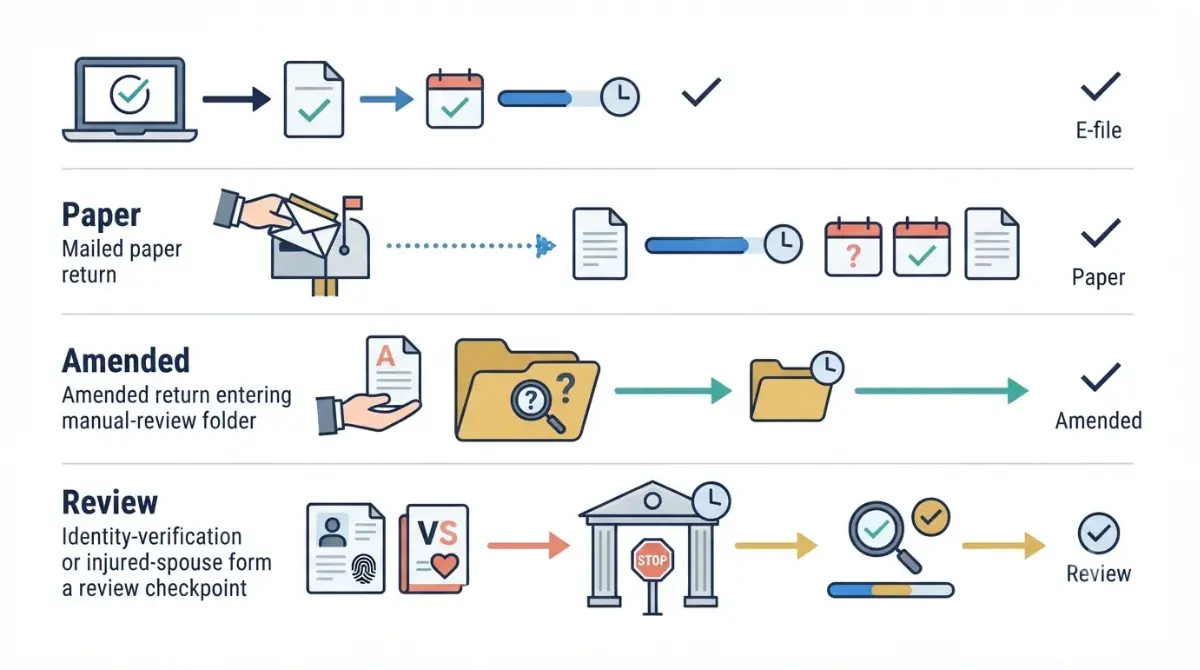
| Situation | Typical timeframe | Key detail |
|---|---|---|
| E-filed return | About 3 weeks | Status shows after 24 hours |
| Mailed return | 6 or more weeks | Status shows after 4 weeks |
| Amended return (Form 1040-X) | Generally 8–12 weeks, up to 16 | Status shows after about 3 weeks |
| Form 8379 with a joint return | About 11 weeks e-filed, 14 paper | Filed alone: up to 8 weeks |
| After Letter 5071C verification | Up to 9 weeks | Verify identity first |
Source: IRS refund timeframes and status tracker. Related: our refund schedule by filing and deposit method.
Why is my tax refund delayed? 7 common reasons
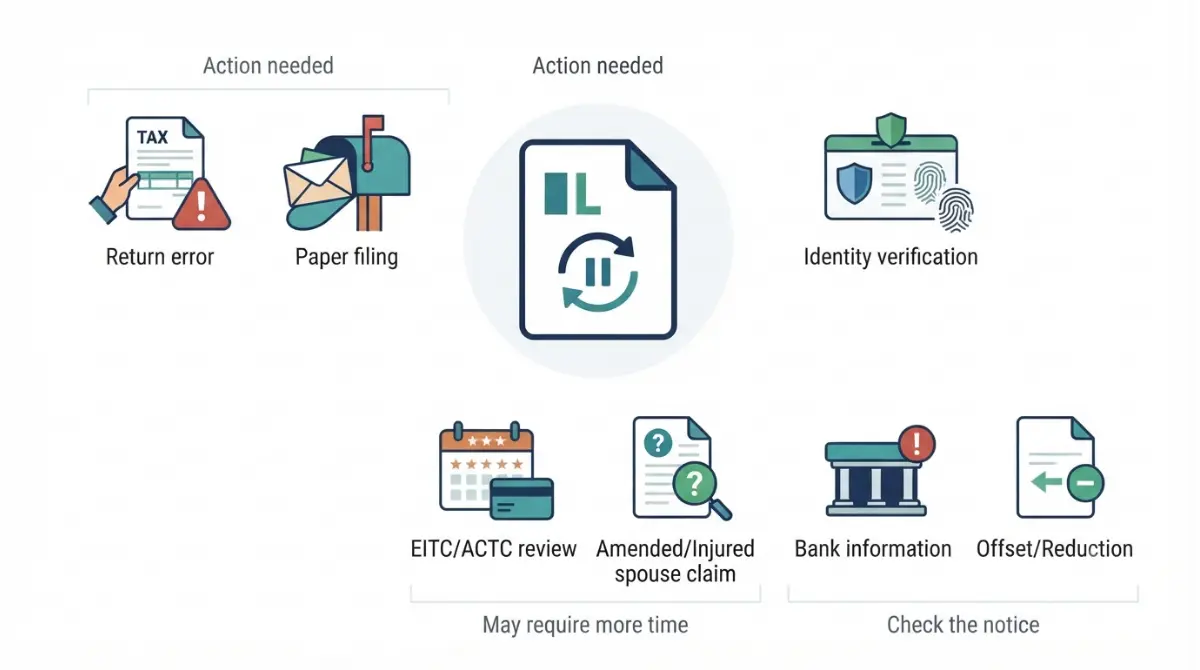
The IRS lists several common causes of a delayed refund; these seven are tagged by who must act.
- Return errors: a forgotten signature or math error (you act); see common 1040 mistakes.
- Paper filing: mailed returns take 6 or more weeks (wait); try e-filing with direct deposit.
- EITC or ACTC claim: held until mid-February by law (wait).
- Bank information: missing or rejected details trigger a CP53E notice (you act).
- Identity check: Letter 5071C holds your return (you act).
- Amended or injured-spouse claim: manual review (wait).
- Offset or adjustment: your refund was reduced (read the notice).
Delays you can fix: bank info, ID checks and errors
CP53E notice: update your bank info
The IRS sends a CP53E notice when your return’s bank details are missing, invalid or rejected. You have 30 days to add an account in your IRS online account, since staff can’t update it by phone; otherwise a paper check follows after 6 weeks. See understanding your CP53E notice.
⚠️ Costly Mistake: You get one update, and the account must be yours or joint. A typo means a paper check.
Letter 5071C: verify your identity
A Letter 5071C means the IRS must confirm your identity before processing your return. Respond within 30 days; afterward a refund may take up to 9 weeks, and the phone line gives no refund status. Read the Taxpayer Advocate Service’s 5071C guidance.
Spotted a mistake after filing?
File an amended return, covered next.
✅ Action Step: Ask a CPA or enrolled agent: “Is this notice legitimate, and what must I do by its deadline?”
Delays that just take time: credits, amended returns
EITC and ACTC reviews
The IRS holds the whole refund when you claim the Earned Income Tax Credit or Additional Child Tax Credit, but only on returns filed before February 15.
Amended returns (Form 1040-X)
Allow generally 8 to 12 weeks, up to 16 in some cases; call only if the IRS tracker says to.
Injured spouse claims (Form 8379)
If your joint refund pays your spouse’s debt, Form 8379 claims your share. File within 3 years of the return or 2 years of payment, whichever is later.
✅ Action Step: Ask a CPA or enrolled agent: “Does injured spouse relief or innocent spouse relief fit my situation?”
Why your tax refund was reduced or taken
Adjustments by the IRS
The IRS can reduce a refund for math errors, ineligible credits, prior taxes owed or underpaid estimated taxes, and mails a notice explaining it.
Debt offsets
The Bureau of the Fiscal Service can apply your refund to past-due child support, federal non-tax debts, state income tax or certain state unemployment debts through the Treasury Offset Program. Its notice names the agency paid; no notice, call 800-304-3107. Dispute the debt with that agency, per the IRS reduced refund page.
✅ Action Step: Ask a nonprofit credit counselor or attorney: “Is this debt valid, and what repayment options exist?”
What to do next, and when the IRS owes you interest
Escalation steps
- Check Where’s My Refund (available 24 hours after e-filing).
- Read any IRS or Treasury notice; act by its deadline.
- Past the timeframes above, use the IRS contact options.
- If hardship persists, ask the Taxpayer Advocate Service.
Taxpayer Advocate Service
The Taxpayer Advocate Service helps when a delay causes hardship or IRS attempts haven’t worked: 1-877-777-4778, per its refund guidance.
Interest on late refunds
The IRS has administrative time, typically 45 days, to issue your refund interest-free. The individual rate is 7% from October 1 to December 31, 2026, compounded daily (IR-2026-98), generally from the latest of the due date, processable-return date or payment date.
🔍 How It Works: On a hypothetical $3,000 refund, 7% compounded daily (7% ÷ 365 per day) is about $17.31 after 30 days. This is our illustration, not an IRS figure.
✅ Action Step: Ask a CPA or enrolled agent: “Does my refund qualify for interest, and from what date?”
Tax refund delayed: your questions answered
1. How long does a tax refund take?
The IRS says a tax refund typically arrives about 3 weeks after e-filing and 6 or more weeks after mailing a return.
2. Why is my tax refund delayed?
A tax refund is delayed by return errors, EITC or ACTC review, bank problems, identity checks, amended returns or offsets.
3. When should I contact the IRS about a delayed refund?
Contact the IRS once your delayed refund passes the 3-week e-file or 6-week mailed timeframe, or when a notice says to. Ask a CPA or enrolled agent if unsure.
4. When does Where’s My Refund update?
Where’s My Refund shows your tax refund status 24 hours after you e-file, or 4 weeks after you mail a paper return.
5. What is a CP53E notice?
A CP53E notice means your refund lacks usable bank details; you have 30 days to add an account online.
6. What is Letter 5071C?
Letter 5071C asks you to verify your identity within 30 days; afterward, a refund may take up to 9 weeks.
7. Can my tax refund be taken for a debt?
Yes, the Treasury Offset Program can apply your refund to past-due child support, federal non-tax debts or state income tax. Ask a nonprofit credit counselor about repayment options.
8. How long does an amended return refund take?
An amended return refund generally takes 8 to 12 weeks, though the IRS says some cases take up to 16 weeks.
9. What is injured spouse relief?
Injured spouse relief, claimed on Form 8379, lets you recover your share of a joint refund applied to your spouse’s debt. Ask a CPA or enrolled agent if it fits.
10. Will the IRS pay interest on a late tax refund?
Often yes: the IRS has typically 45 days to issue a refund interest-free, and the Q4 2026 rate is 7%, compounded daily. Ask a CPA or enrolled agent about your dates.
11. Can the Taxpayer Advocate Service help with a delayed refund?
Yes, it helps when a delayed refund causes hardship or normal IRS channels haven’t resolved it; call 1-877-777-4778. Ask a CPA or enrolled agent how to document your case.
Check your status, act on any notice by its deadline, and escalate only if hardship leaves you stuck. Skip short-term loans while you wait; see our payday loan trap breakdown. Budget the wait with our budget calculator, then estimate next year’s refund with the income tax calculator, check withholding with the paycheck calculator or take-home pay calculator, and build a cushion with the emergency fund calculator.
Related Articles
 Tax Refund
Self-Employed Tax Refund or Bill? A Clear 2026 Walkthrough
October 14, 2026 Tax Refund
What to Do With Tax Refund Money in a Clear, Simple Order
October 15, 2026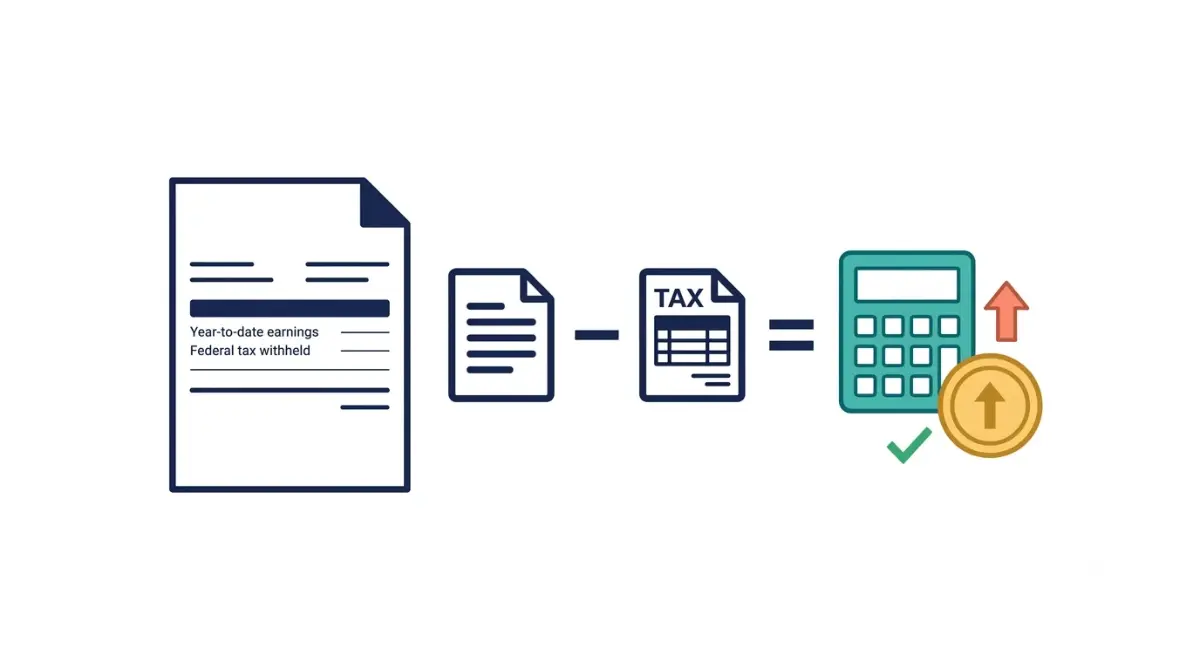 Tax Refund
Smart Ways to Estimate Your Tax Refund Before Filing
October 10, 2026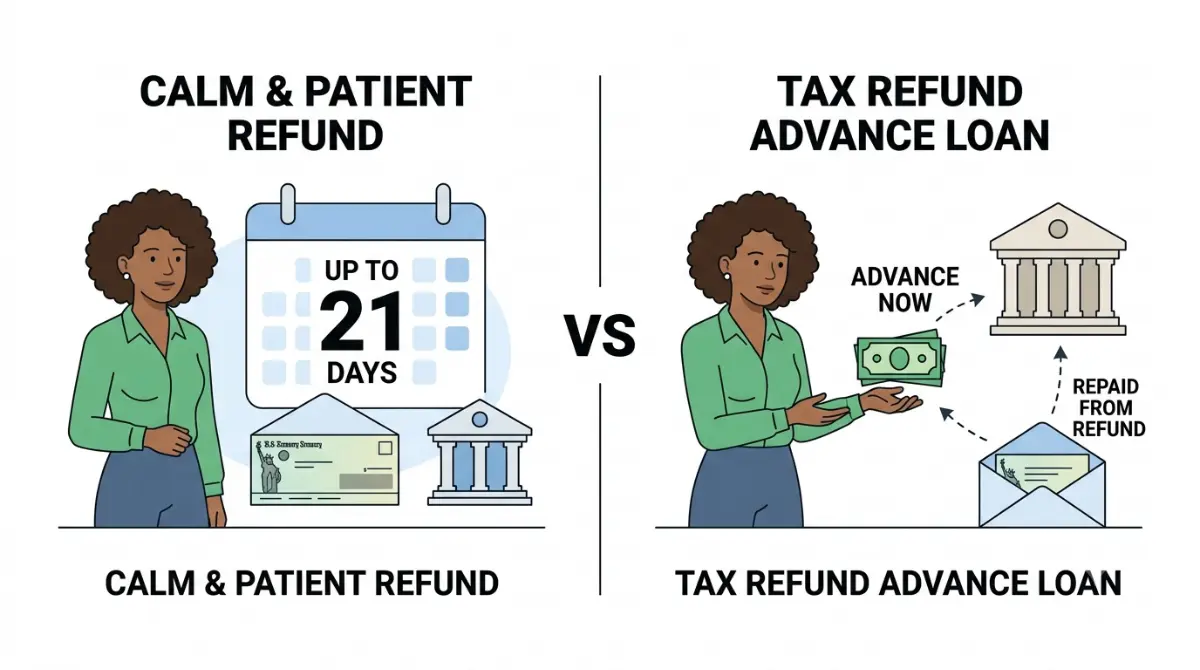 Tax Refund
What a Tax Refund Advance Loan Really Costs You
October 16, 2026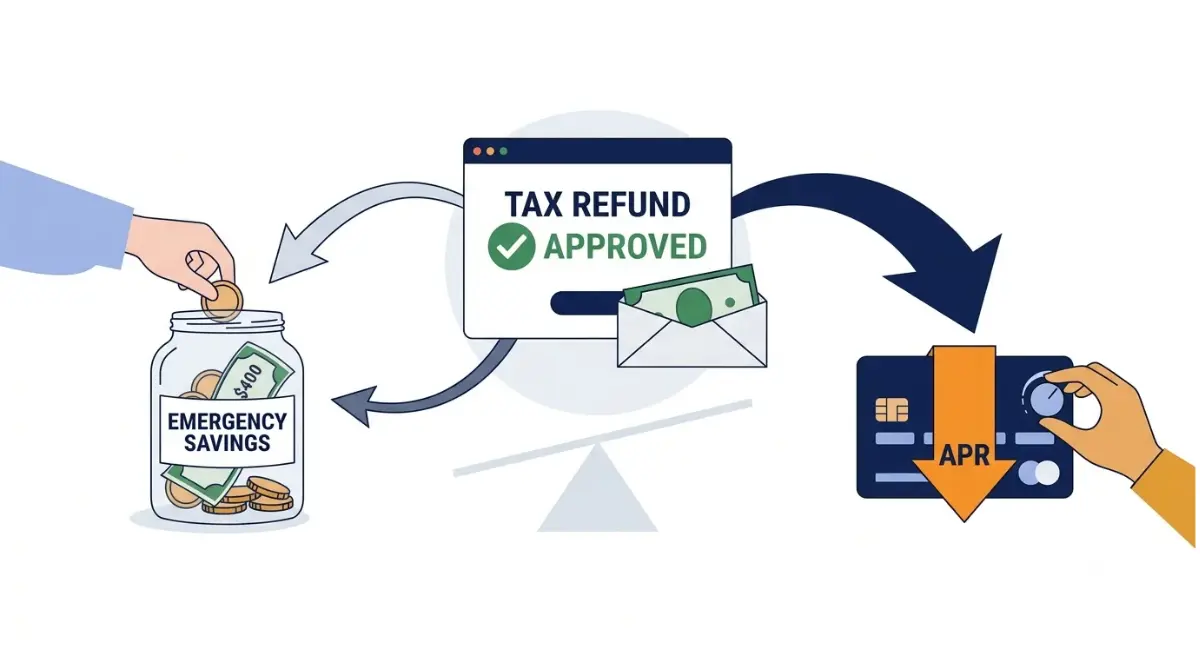 Tax Refund
Should Your Tax Refund Pay Debt or Save? Find the Right Split
October 14, 2026 Tax Refund
A Clear Look at Tax Refund vs Owing, Run as Math
October 12, 2026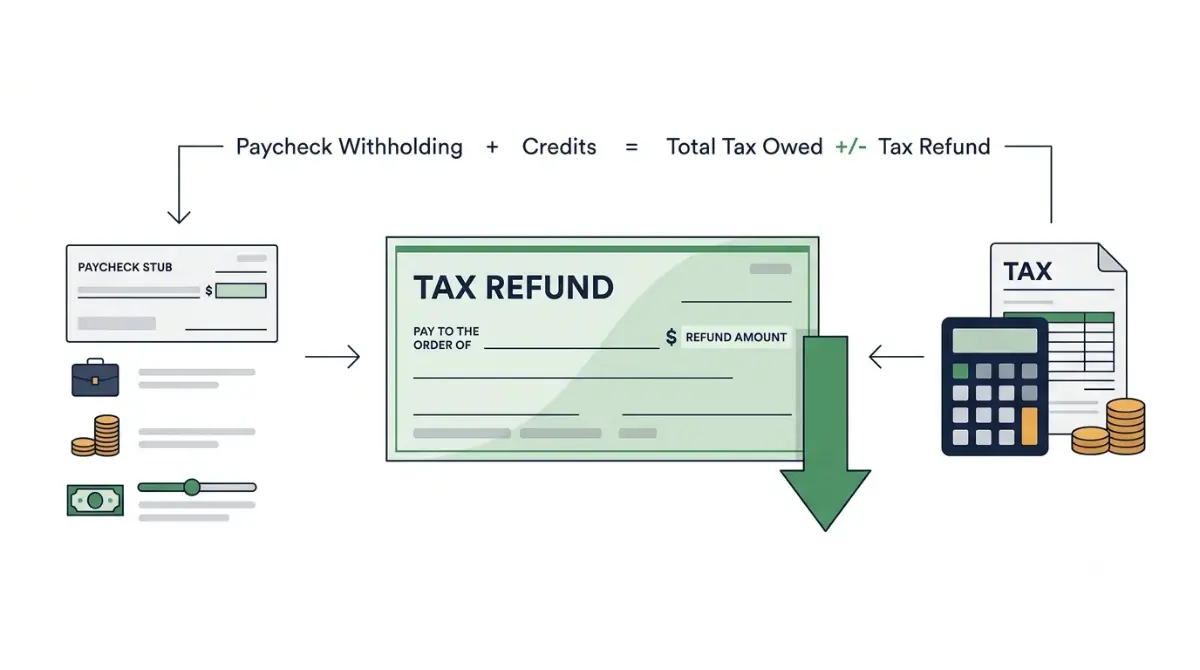 Tax Refund
Is Your Tax Refund Lower Than Last Year? Find the Real Reason
October 10, 2026 Tax Refund
A Clear Walk Through the Tax Withholding Estimator Screens
October 13, 2026 Tax Refund
The Right Way to Check Your Tax Refund Status With the IRS
October 6, 2026
Informational disclaimer
The content on Finance Authority Hub is provided for general informational and educational purposes only and should not be considered personalized financial, investment, tax, legal, or professional advice. Financial decisions depend on your individual goals, income, risk tolerance, location, and regulatory situation. Before acting on any information, strategy, estimate, or calculator result, consult a qualified licensed professional who can evaluate your specific circumstances.