Rolling Over Your 401(k) to an IRA the Right Way
Rolling over a 401(k) to an IRA is simple as a direct transfer—but one wrong move triggers a 20% withholding and a 60-day scramble to get it back.

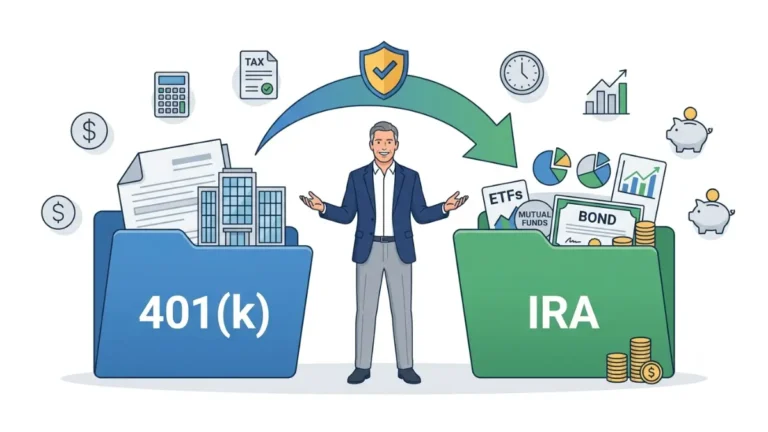
Rolling over a 401(k) to an IRA is simple as a direct transfer—but one wrong move triggers a 20% withholding and a 60-day scramble to get it back.
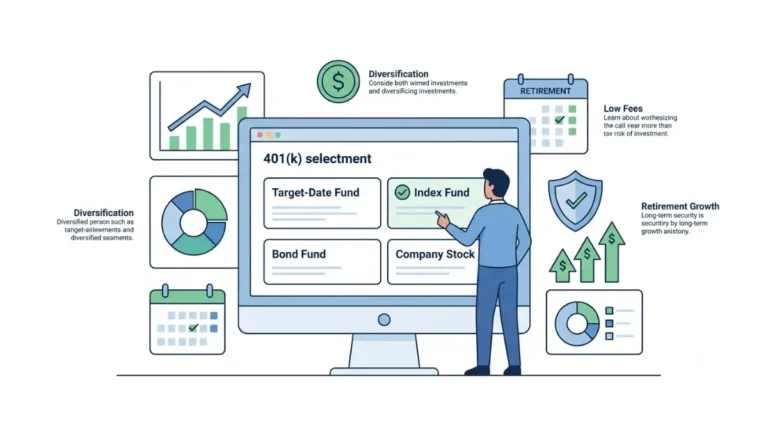
Choosing 401(k) investments is simpler than it looks: two paths, and one factor—fees—that outweighs fund names. The average fund charges 0.26%.
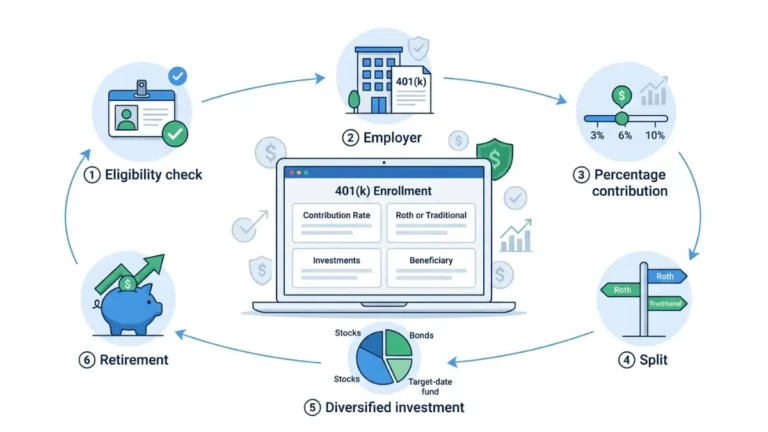
Setting up a 401(k) doesn’t have to be confusing. Here’s the step-by-step—from eligibility to your full match—plus the 2026 $24,500 limit.
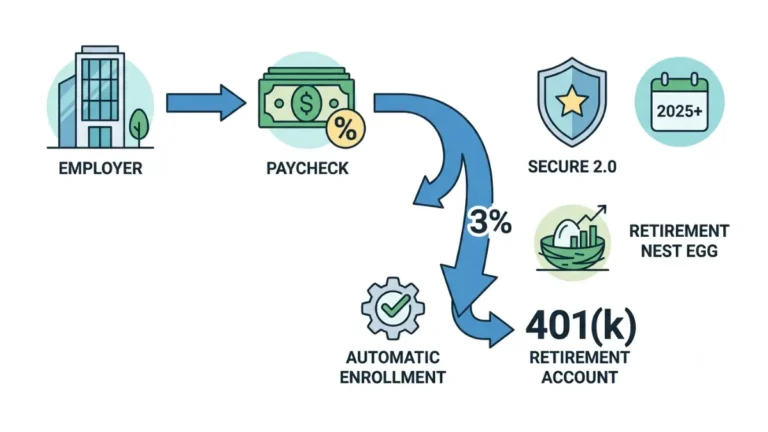
Auto-enrolled in a 401(k) and not sure why? SECURE 2.0 signs new hires up at a 3%–10% default—here’s what it means and how to change it.
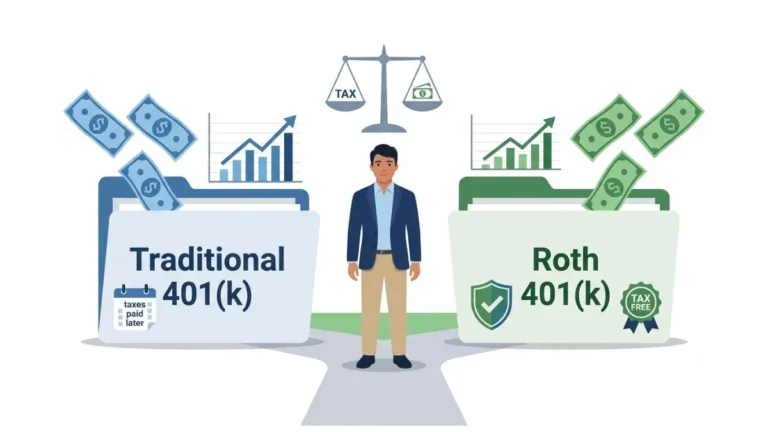
Roth vs traditional 401(k) is one question: pay tax now or later? Both cap at $24,500 in 2026, so it’s about timing — plus a new high-earner Roth rule.
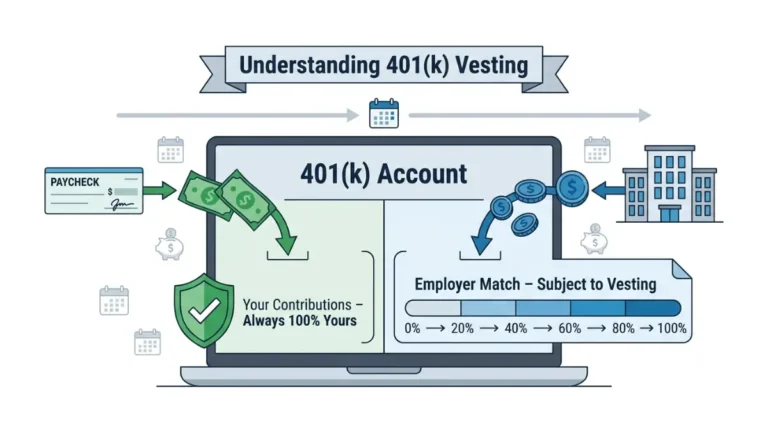
401(k) vesting decides when your employer match is truly yours. Your paycheck contributions are 100% vested from day one; the match can take up to 6 years.
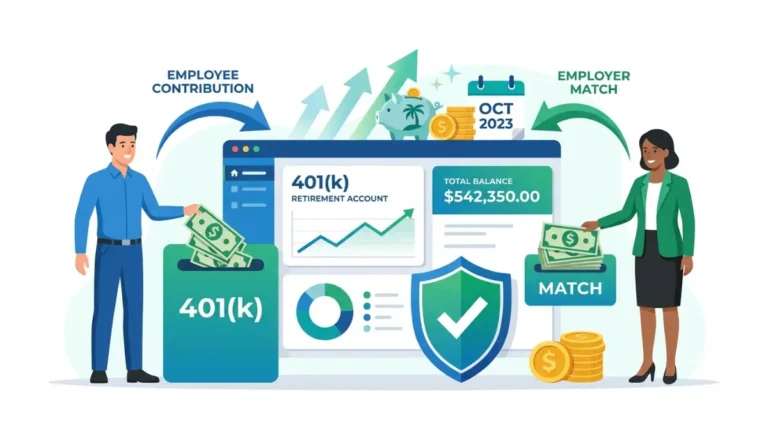
A 401(k) match is free money—if you contribute enough to trigger it. See how formulas and vesting work, and how yours compares to the 4.7% average.
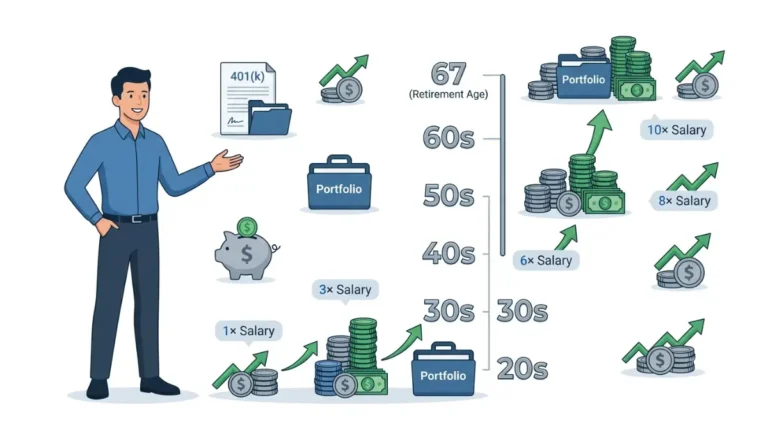
How much should be in your 401(k) by 40, 50, or 60? Fidelity says 3x, 6x, and 8x your salary — see how your balance really compares.
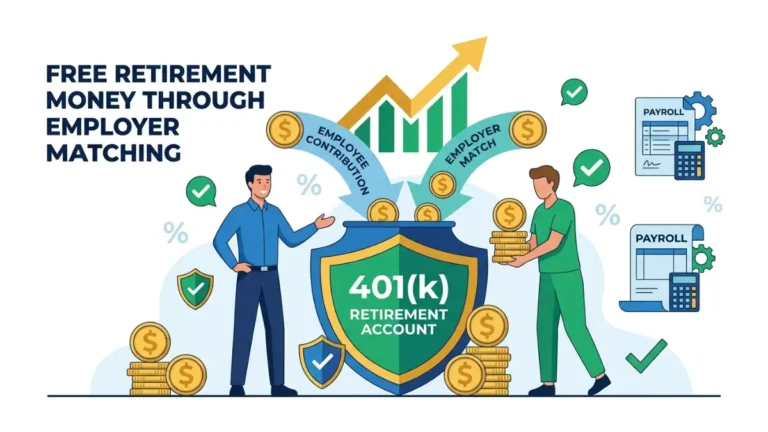
The average 401(k) employer match is worth about 4-6% of pay, yet auto-enrollment often defaults workers below the level that earns the full amount.

Who maxes out a 401(k)? Barely one in seven—and nearly all are high earners. The reason isn’t discipline; it’s arithmetic most salaries can’t beat.