The Key Protections If Your Annuity Insurer Fails
Your annuity isn’t FDIC-insured—and by law, your agent can’t tell you about the state safety net that covers at least $250,000 if the insurer fails.


Your annuity isn’t FDIC-insured—and by law, your agent can’t tell you about the state safety net that covers at least $250,000 if the insurer fails.

When you die, your annuity may leave your family everything—or nothing. The payout you chose decides, and heirs owe ordinary income tax on the gains.

Annuity red flags hide in the pitch, not the contract. An annuity isn’t FDIC-insured and “tax-free” means tax-deferred — learn to read a pitch first.
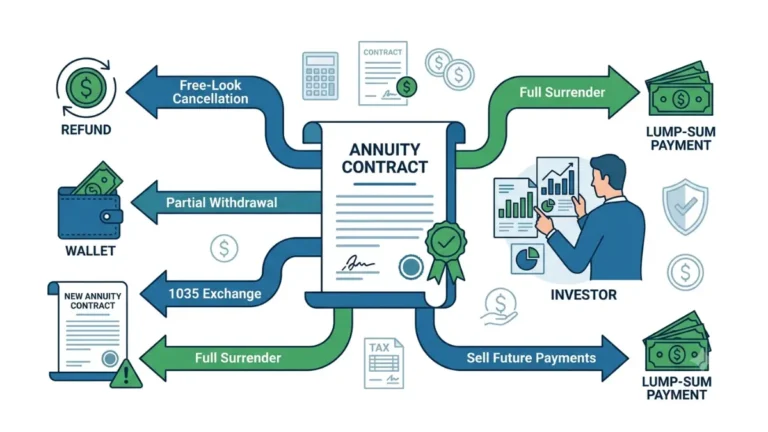
Getting out of an annuity isn’t hopeless — but surrender fees and a 10% penalty before 59½ make timing everything. Here’s every exit, ranked by real cost.

A 1035 exchange moves your annuity to a better contract tax-free — but the same swap can hand you a fresh eight-year surrender period and new fees.

Is an annuity right for you? It can pay income you can’t outlive—but a 10% penalty hits withdrawals before 59½. Here’s how to tell if one fits you.

Buying an annuity? Six steps protect you — from checking the insurer’s AM Best rating to the 10–30 day free-look window that lets you cancel free.
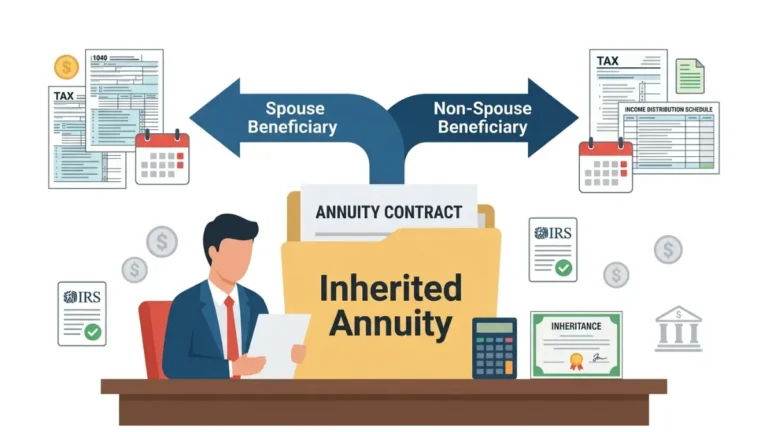
Inherit an annuity and only the earnings are taxable—but a lump sum can trigger the 3.8% net investment income tax. See how payout choice changes the bill.

Qualified vs non-qualified annuity taxes hinge on one detail—whether your principal was already taxed—and it changes how much you keep.

How annuities are taxed comes down to funding and payout. Only earnings are taxed as ordinary income — see the exclusion ratio behind each payment.