A Clear Guide to RILA Annuity Buffers and Caps
A RILA annuity limits losses with a buffer, but a cap limits your gains in return—and you can still lose money beyond the buffer. Here’s the honest math.


A RILA annuity limits losses with a buffer, but a cap limits your gains in return—and you can still lose money beyond the buffer. Here’s the honest math.
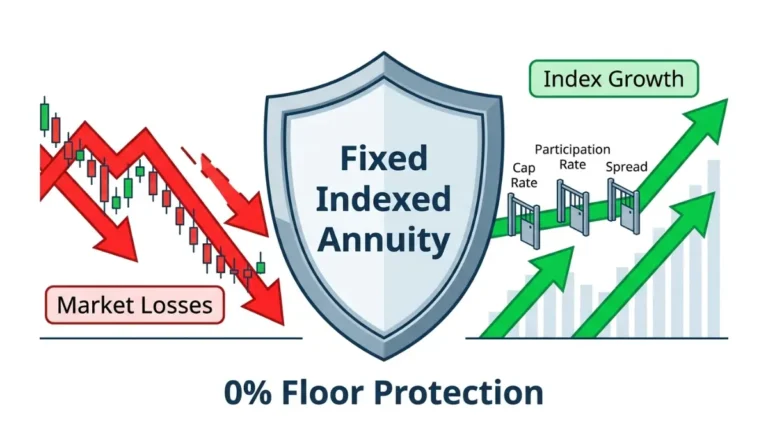
Fixed indexed annuities hit a record $127.9B in 2025 — but the 0% floor that attracts buyers comes with caps that limit your real return.
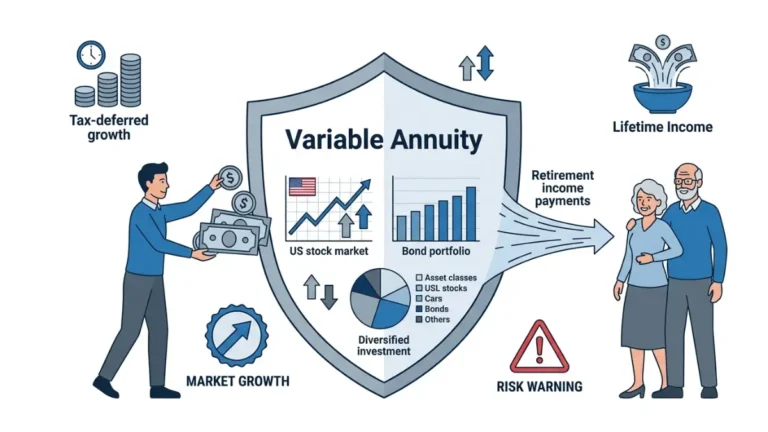
A variable annuity blends market growth with insurance — but its ~1.25% M&E fee, surrender charges, and 10% early-withdrawal penalty hide the real cost.
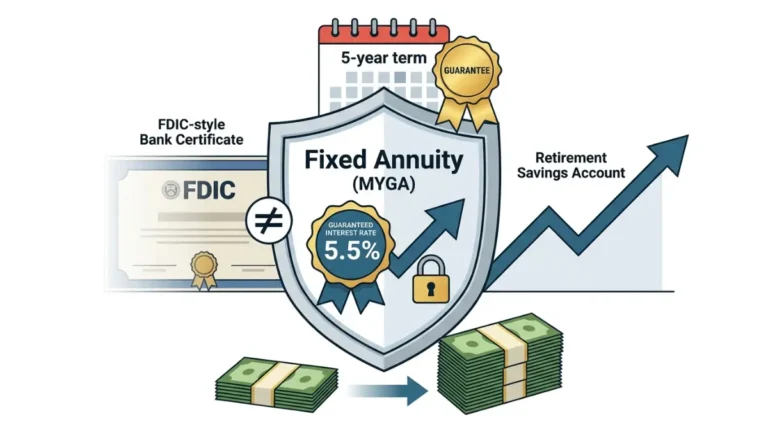
Fixed annuity rates look attractive right now, but the real cost of a MYGA shows up if you cash out before 59½. Here’s how they actually work.
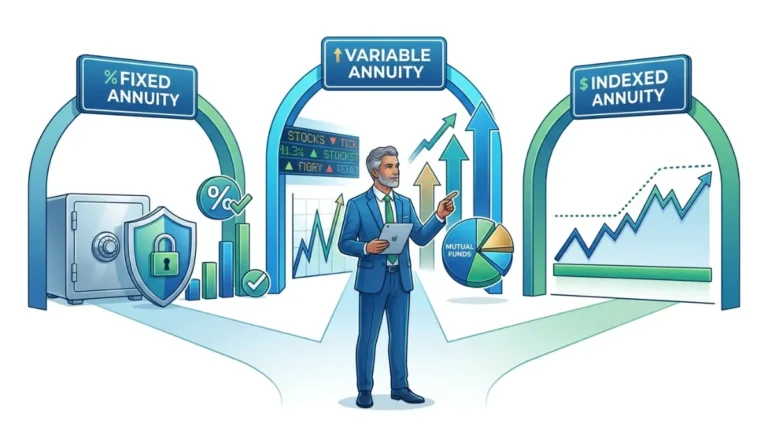
The types of annuities aren’t interchangeable: fixed locks a rate, variable rides the market, indexed caps gains behind a 0% floor. Here’s which fits.

How annuities work comes down to two phases and their cost. The honest version: payouts, the 10% penalty before 59½, and the fees that erode returns.
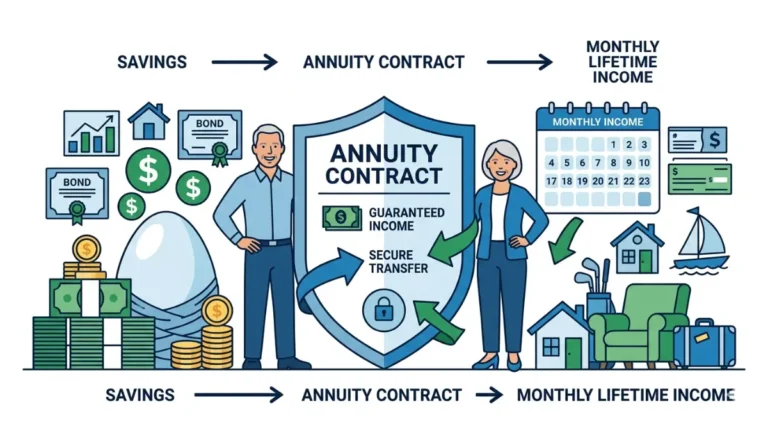
Is an annuity worth it? The answer is in the fees — near zero on a fixed annuity, over 3% a year on a variable one. Here’s how to decide.

A Health Savings Account gives you triple tax-free savings in 2026 — and new law makes millions more eligible. Here’s the strategy most Americans completely miss.

Americans poured $461B into annuities in 2025. Our certified financial experts break down all 5 types, real 2026 payout tables, and the fastest-growing product most retirees have never heard of.

Your 30s are the most powerful decade for building retirement wealth. Get exact benchmarks, account strategies, and catch-up frameworks backed by Federal Reserve data and 21 CFPs.