
Self-Employed Tax Refund or Bill? A Clear 2026 Walkthrough
A self-employed tax refund is possible, but 15.3% self-employment tax applies to 92.35% of net profit. See one freelancer land in three outcomes.
In This Article
Why freelancers often owe taxes instead of a refund
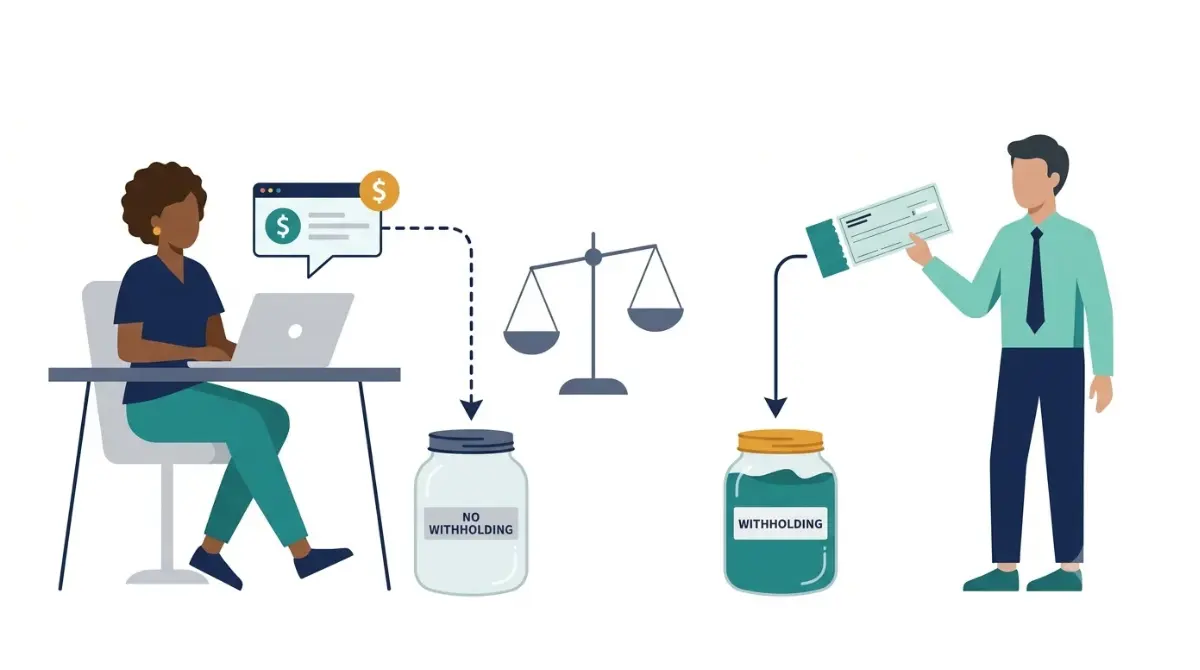
Freelancers can get a refund, but many owe, because clients generally withhold no tax from payments and self-employment tax lands on top of income tax. A paycheck arrives with tax already taken out; freelance income does not. The IRS says self-employed people generally pay estimated tax during the year, so the whole balance due can arrive at filing.
Start here:
- Freelancing full time: see the 2026 ledger below.
- Side hustle plus a W-2 job: you may be able to adjust your W-4 withholding instead of paying quarterly.
- Already owe: jump to the penalty section.
ℹ️ Financial Disclaimer: This article explains federal income tax and self-employment tax calculations, estimated payments, underpayment penalties and interest, and IRS payment arrangements for educational purposes only. It is not personalized tax advice, and it does not cover state taxes or investment, insurance, lending, or debt-relief decisions. Before acting on your own numbers, consult a CPA or Enrolled Agent; for investment, lending, or legal questions, consult a fiduciary advisor or a qualified attorney.
Can self-employed people get a tax refund?
Yes. A self-employed person gets a tax refund when estimated tax payments plus refundable credits exceed the final tax bill, and owes the difference when they fall short. The same freelancer can land on either side, depending on how much was prepaid.
Yes, if payments beat final tax
A self-employed tax refund follows the same tax refund formula: payments minus final tax. A positive result is a refund, and a negative result is what you owe.
Why withholding isn’t the payments side for you
Employees prepay through withholding. Freelancers prepay through estimated payments they send themselves, which the IRS says self-employed people generally make during the year.
Why freelancers owe: income tax plus self-employment tax
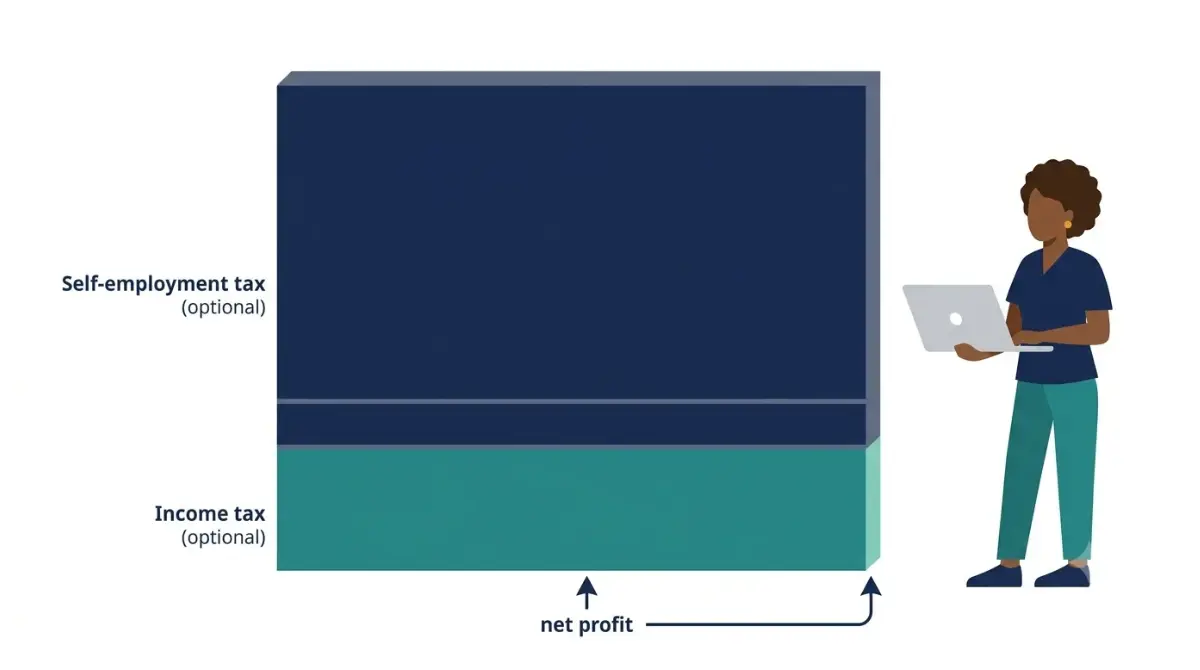
Multiply net profit by 92.35%, then by 15.3%, and you have the self-employment tax; you can deduct half of it. The IRS Topic No. 554 on self-employment tax sets it at 12.4% for Social Security plus 2.9% for Medicare.
| Component | Rate | Key Detail |
|---|---|---|
| Social Security | 12.4% | Applies to net earnings up to $184,500 in 2026 |
| Medicare | 2.9% | Applies to all net earnings |
| Self-employment tax | 15.3% | Applied to 92.35% of net earnings from self-employment |
Source: IRS Topic No. 554 (reviewed September 24, 2026); 2026 Social Security limit from the 2026 Form 1040-ES, cross-checked against the Social Security Administration.
The three-step self-employment tax calculation
🔍 How It Works: Step one multiplies net profit by 92.35%. Step two multiplies that result by 15.3%. Step three deducts half the answer when figuring adjusted gross income.
Why the Social Security part stops at a cap but Medicare doesn’t
Social Security tax stops at a maximum of net earnings, the IRS says, while Medicare tax applies to all of it. For 2026, the Social Security limit is $184,500 of combined wages and net self-employment earnings.
Worked example: an $80,000 freelancer’s 2026 refund or bill
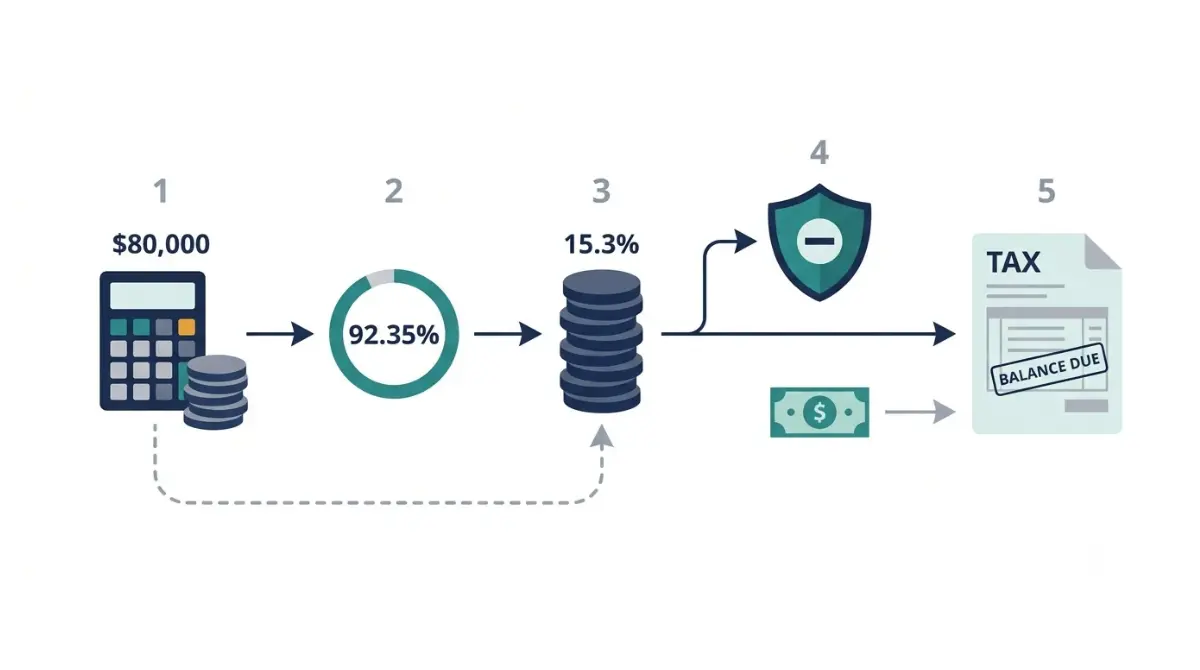
Start with net profit, not what clients paid you. This ledger applies the 2026 Form 1040-ES worksheet to one illustrative freelancer.
Assumptions: single filer; $80,000 net profit; no other income, QBI deduction, or credits; federal tax only. Net profit and payments are assumptions, not IRS statistics.
The 2026 ledger line by line
| Ledger line | Amount |
|---|---|
| Net profit (assumed) | $80,000.00 |
| × 92.35% | $73,880.00 |
| Self-employment tax at 15.3% (12.4% = $9,161.12; 2.9% = $2,142.52) | $11,303.64 |
| Half of self-employment tax (deduction) | −$5,651.82 |
| Adjusted gross income | $74,348.18 |
| Standard deduction, single | −$16,100.00 |
| Taxable income | $58,248.18 |
| Income tax ($5,800 + 22% × ($58,248.18 − $50,400)) | $7,526.60 |
| Total tax (income tax + self-employment tax) | $18,830.24 |
Source: 2026 Form 1040-ES (standard deduction, Tax Rate Schedule X, Self-Employment Tax and Deduction Worksheet). Arithmetic checked October 14, 2026.
The same income with three different payment levels
- $20,000 paid: refund of $1,169.76
- $18,830.24 paid: balance of $0
- $12,000 paid: $6,830.24 owed
Self-employment tax is $11,303.64 of the $18,830.24 total, about 60% in this example.
✅ Action Step: Use the income tax calculator to estimate your own 2026 income tax; it excludes self-employment tax, so add that separately. Ask a CPA or Enrolled Agent: “What is my expected total of income tax plus self-employment tax for 2026?”
2026 estimated tax due dates and the safe harbor rule
Estimated payments for 2026 are due April 15, June 15, and September 15, 2026, then January 15, 2027. IRS guidance on estimated taxes says they are generally required if you expect to owe $1,000 or more.
The four 2026 dates
| Payment | Due date |
|---|---|
| 1st | April 15, 2026 |
| 2nd | June 15, 2026 |
| 3rd | September 15, 2026 |
| 4th | January 15, 2027 |
Source: 2026 Form 1040-ES, Payment Due Dates.
The 90% / 100% / 110% safe harbor
Most taxpayers avoid the penalty by paying the smaller of:
- 90% of 2026 tax, or
- 100% of 2025 tax.
If 2025 adjusted gross income exceeded $150,000 ($75,000 if married filing separately), use 110% instead of 100%.
Uneven income and the January 15 skip rule
Seasonal income can use the annualized income installment method (Form 2210, Schedule AI) for unequal payments. You can skip the January 15, 2027 payment only if you file by February 1, 2027 and pay in full. To check, estimate your refund or balance before filing.
✅ Action Step: Ask a CPA or Enrolled Agent: “Which safe harbor fits my income, and should I annualize?”
What owing late costs: the underpayment penalty and interest
Owing at filing carries no automatic penalty, but short or late payments can.
How the penalty accrues
The penalty applies to each underpayment for the days it stays unpaid. Form 2210 figures it.
📊 Data Point: The IRS underpayment interest rate is 7% for October–December 2026, compounded daily, and resets quarterly. — Source: IRS quarterly interest rates, reviewed September 10, 2026.
Owing without a penalty
In the example, $12,000 paid on time meets the safe harbor if it equals 2025 tax (assumed, with 2025 income at or below $150,000). The $6,830.24 owed then carries no estimated tax penalty; owing versus a refund, run as math shows why owing isn’t automatically worse.
If you can’t pay in full
If you can’t pay in full, you can apply for an online monthly installment agreement; a user fee applies.
✅ Action Step: Ask a CPA or Enrolled Agent: “How is the Form 2210 penalty figured, and could a waiver apply?”
Four mistakes that turn a freelancer’s refund into a bill
These four errors can turn an expected refund into a bill.
Estimating income tax only
Self-employment tax is part of the estimated amount, about 60% of the bill in this example.
Using gross income or skipping the 92.35% step
Use 92.35% of net profit. Gross income overstates the tax and ties up cash.
Forgetting wages when you also have a job
Side income owes self-employment tax at $400 of net earnings, and wages count toward the $184,500 limit. The IRS says an employee can ask the employer to withhold more instead.
Paying late, even when a refund is due
⚠️ Costly Mistake: The IRS says a penalty may apply to late estimated payments, even when a refund is due.
Self-employed tax refund FAQs
1. Can self-employed people get a tax refund?
Yes. A self-employed tax refund occurs when estimated payments exceed final tax; in the example, paying $20,000 against $18,830.24 of tax returns $1,169.76. Ask a CPA or Enrolled Agent.
2. Why do I owe taxes as a freelancer?
A self-employed tax refund becomes a bill because nothing is withheld from client payments and 15.3% self-employment tax adds to income tax.
3. How much is self-employment tax?
Self-employment tax is 15.3% of 92.35% of net earnings, which equals $11,303.64 in the $80,000 self-employed tax refund example.
4. Do I have to pay estimated taxes?
Generally yes, if you expect to owe $1,000 or more in tax when you file; self-employment tax is part of that amount. Ask a CPA or Enrolled Agent.
5. When are 2026 estimated taxes due?
The 2026 estimated tax due dates are April 15, June 15, and September 15, 2026, plus January 15, 2027.
6. What is the safe harbor rule?
The safe harbor is paying at least the smaller of 90% of 2026 tax or 100% of 2025 tax; 110% if 2025 AGI topped $150,000. Ask a CPA or Enrolled Agent.
7. What is the penalty for not paying quarterly taxes?
The penalty applies to each underpayment for the days it stays unpaid; the IRS underpayment interest rate is 7% for October–December 2026, compounded daily. Ask a CPA or Enrolled Agent.
8. Can I owe money and still avoid the penalty?
Yes. In the example, $12,000 paid on time met the safe harbor, so owing $6,830.24 carried no estimated tax penalty. Ask a CPA or Enrolled Agent.
9. Do I owe self-employment tax with a W-2 job too?
Yes. Self-employment tax applies at $400 or more of net earnings; wages count toward the $184,500 Social Security limit. Ask a CPA or Enrolled Agent.
10. What if my income is uneven or seasonal?
The annualized income installment method, filed with Form 2210 Schedule AI, can allow unequal payments when self-employed income arrives unevenly. Ask a CPA or Enrolled Agent.
11. Can I skip the January 15 payment?
You can skip the January 15, 2027 payment if you file by February 1, 2027 and pay the full balance.
Your next step before the January 15 payment
Run your own net profit through the three steps, add income tax, and compare the total with what you’ve paid. Then decide on the January 15, 2027 payment.
✅ Action Step: Ask a CPA or Enrolled Agent: “Should I make the January 15 payment or file early and pay in full?”
Related Articles
 Tax Refund
Set the Right Overtime Tips Deduction Withholding for 2026
October 13, 2026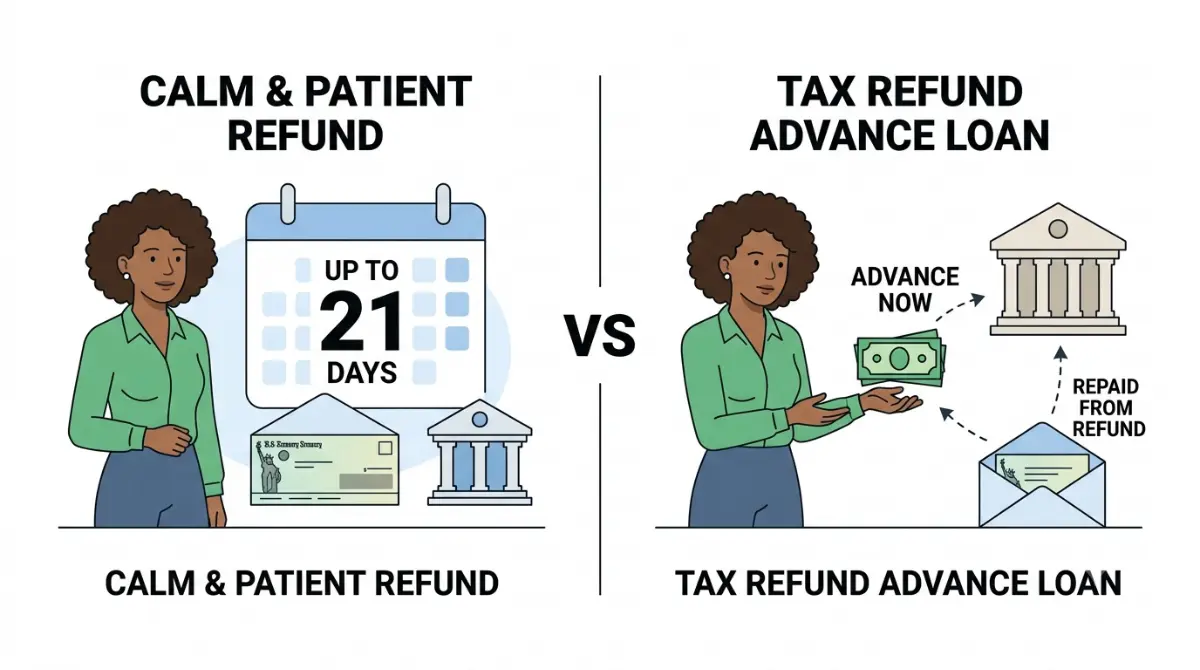 Tax Refund
What a Tax Refund Advance Loan Really Costs You
October 16, 2026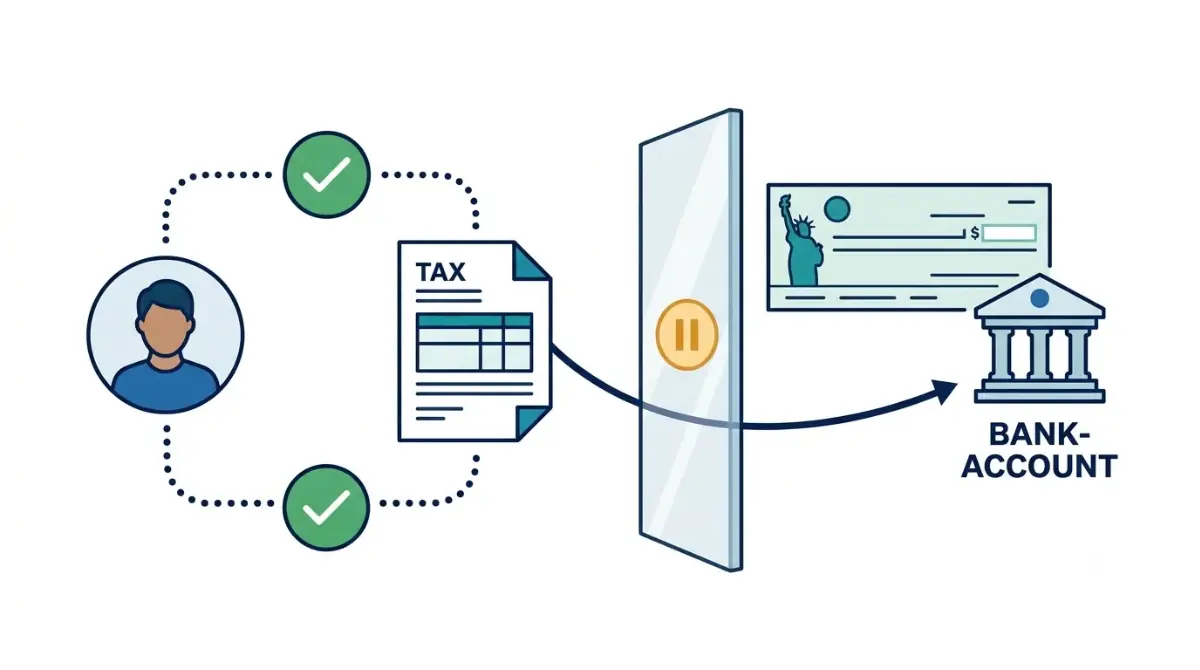 Tax Refund
The Right Way to Answer IRS Letter 5071C and Release Your Refund
October 17, 2026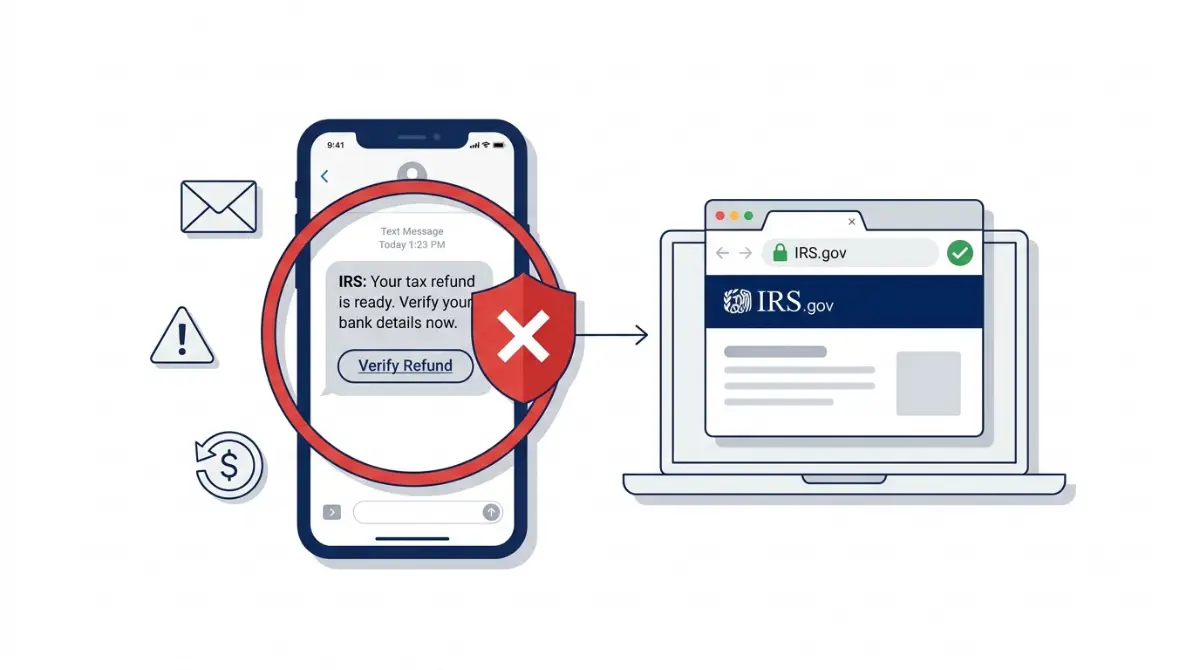 Tax Refund
 Scams and the Real Way the IRS Contacts You
October 17, 2026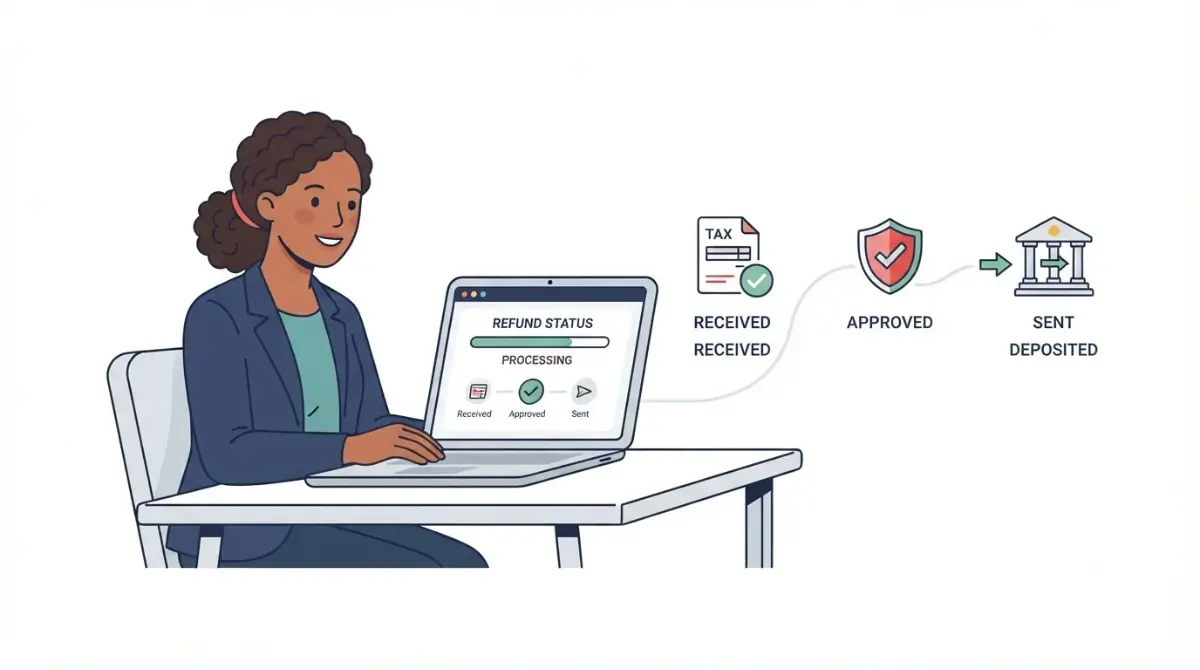 Tax Refund
The Right Way to Check Your Tax Refund Status With the IRS
October 6, 2026 Tax Refund
Do You Need to File to Get a Tax Refund If You Owe Nothing?
October 12, 2026 Tax Refund
A Clear Way to Adjust Your W-4 Refund Up or Down
October 12, 2026 Tax Refund
Is Your Tax Refund Lower Than Last Year? Find the Real Reason
October 10, 2026 Tax Refund
Someone Filed Your Taxes for Your Refund? Your First Moves
October 17, 2026
Informational disclaimer
The content on Finance Authority Hub is provided for general informational and educational purposes only and should not be considered personalized financial, investment, tax, legal, or professional advice. Financial decisions depend on your individual goals, income, risk tolerance, location, and regulatory situation. Before acting on any information, strategy, estimate, or calculator result, consult a qualified licensed professional who can evaluate your specific circumstances.