
How to make a will and avoid the errors that void it
How to make a will comes down to the signing room: two witness signatures, an interested-witness trap, and eleven states that can forgive a mistake.
In This Article
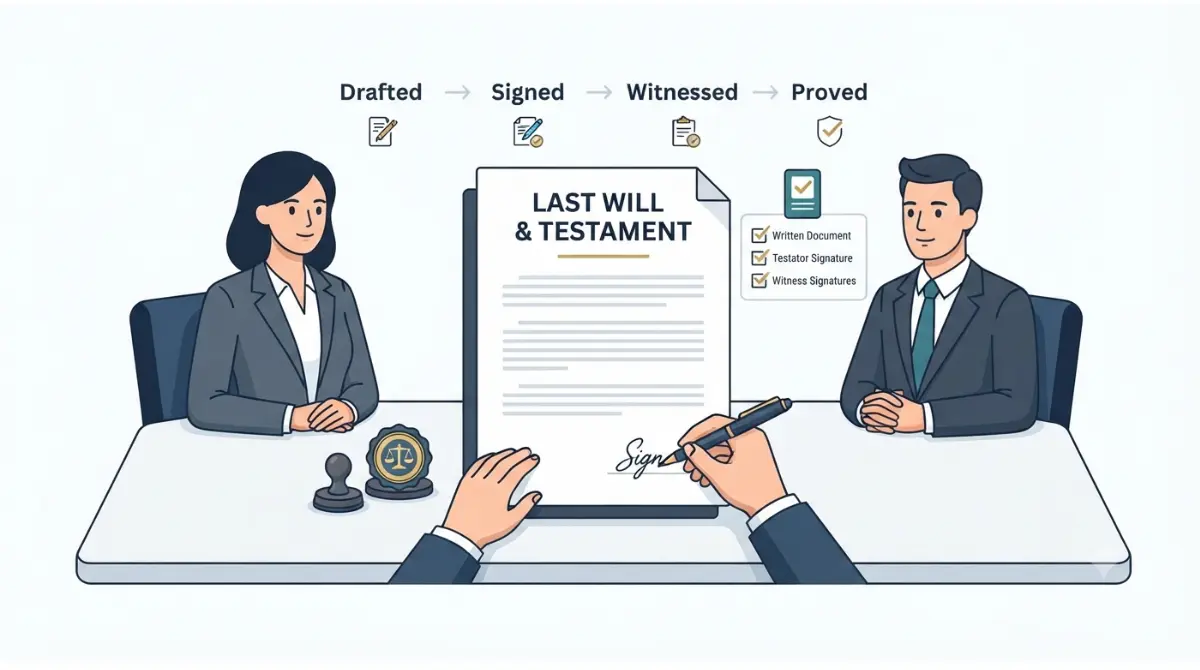
Your will fails in the signing room, not the drafting room. Most people asking how to make a will have already written one — through an online platform, a template, or an attorney — and are stuck on the last step.
If your document is drafted but unsigned, go to the signing sequence below. If you signed one already and now suspect a witness was the wrong person, skip to who can witness and what happens when signing goes wrong.
One thing to settle first: even a flawlessly signed will leaves out assets a will doesn’t control, including securities held under transfer-on-death registration.
ℹ️ Financial Disclaimer: This article is educational and is not personalized legal, tax, investment, insurance, or debt-relief advice. Will execution requirements are set by state law and vary. Consult a licensed estate planning attorney in your state before signing, a CPA on estate tax questions, and a fiduciary advisor on how your accounts and beneficiary designations fit your plan.
What makes a will legally valid
Nearly every state requires at least two witnesses to sign a will. The Uniform Probate Code, the model law most states built their execution rules on, sets three requirements in §2-502: the document must be in writing, signed by the testator, and signed by at least two witnesses.
The three things every state requires
Paper, your signature, two witness signatures. You may also direct another person to sign your name for you, provided they do it in your conscious presence.
Who can make a will in the first place
You must be 18 and of sound mind in nearly every state, under UPC §2-501. Louisiana sets the age at 16.
🔍 How It Works: Witnesses don’t always have to watch the pen move. Under UPC §2-502(a)(3), they may sign after you acknowledge that the signature is yours, or that the document is your will. Some states are stricter — New Mexico requires witnesses to sign in the presence of the testator and each other.
How to sign your will, step by step
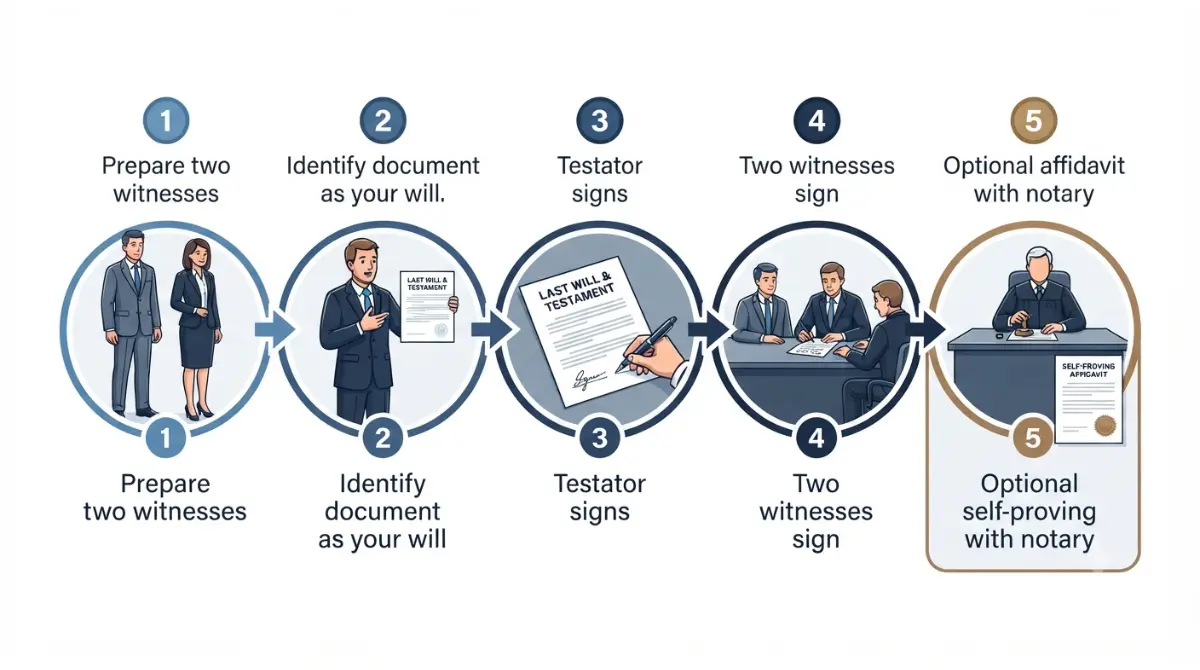
To sign a will validly, complete these five steps in order:
- Gather two adult witnesses who inherit nothing under the will, plus a notary if you want a self-proving affidavit.
- State to both witnesses that the document is your will. You don’t have to reveal its contents.
- Sign the will at the end, in front of both witnesses, while they watch.
- Have both witnesses sign, with you and each other still in the room.
- Sign the self-proving affidavit last, with the notary present, before anyone leaves.
Your state may add requirements to this sequence. Confirm it against your own state’s probate code before you sign.
✅ Action Step: Book all four people — you, two witnesses, one notary — into the same room for the same 30 minutes. Splitting the signing across days or rooms is the most common way a correctly drafted will becomes a contested one.
Who can witness your will (and who shouldn’t)
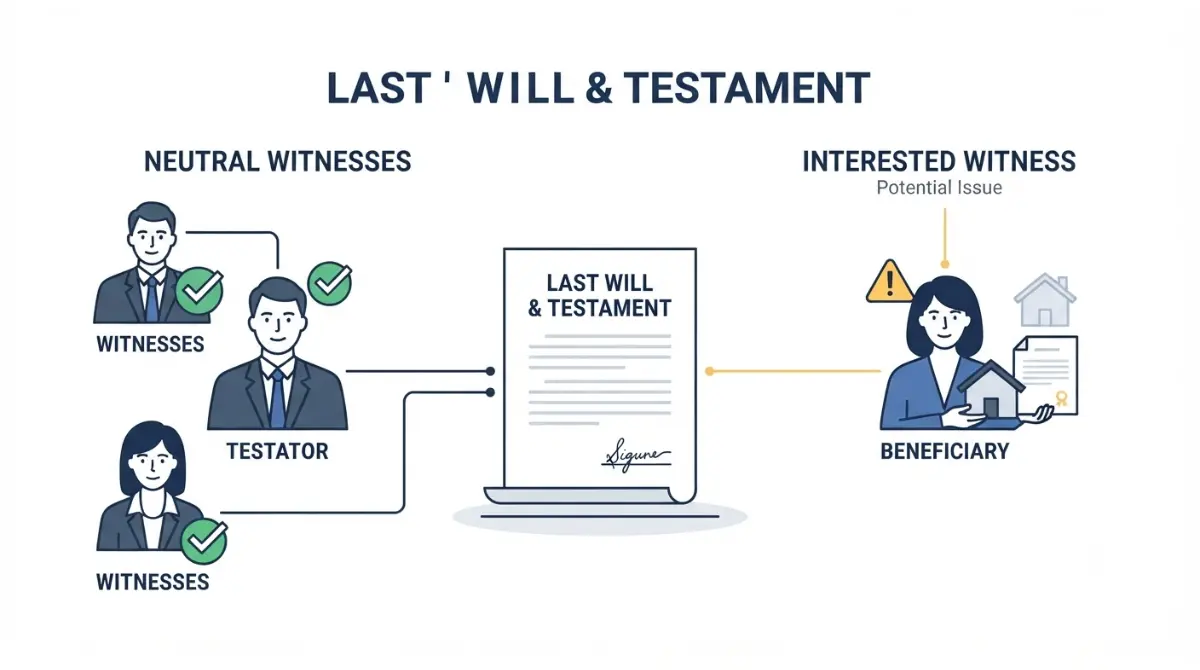
In most states, anyone who inherits under the will should not witness it. Witnesses generally need to be competent adults, usually 18 or older.
The basic requirements
Two people. Adults. Mentally competent. Able to be found years later, which argues for choosing someone younger than you.
Why beneficiaries shouldn’t witness
Here the web gets it wrong. UPC §2-505 does not disqualify an interested witness at all, but many states have purging statutes that void the witness’s gift rather than the will itself.
What happens if one already did
Usually fixable while you’re alive: sign a fresh will with two neutral witnesses. The old one is replaced, not repaired.
⚠️ Costly Mistake: Asking the daughter who inherits the house to witness the will can cost her the house, in states that purge an interested witness’s gift. The will typically survives; her inheritance may not.
✅ Action Step: Ask a licensed estate planning attorney in your state: “Does my state purge an interested witness’s gift, and does that apply to a will I’ve already signed?”
Does your will need to be notarized?
In nearly every state, no — a will is valid without a notary. Louisiana is the exception: its notarial testament must be signed before a notary and two witnesses, under Civil Code provisions rewritten by 2025 Louisiana Acts No. 30, effective August 2025.
Notarization versus witnessing
These do different jobs. Witnesses make the will valid. A notary makes it easier to prove.
What a self-proving affidavit actually does
It’s a sworn statement, signed by you and your witnesses before a notary and attached to the will. Under UPC §2-504, it lets a probate court accept the will without tracking down your witnesses to testify. It’s optional in most states, and Louisiana doesn’t use them at all.
💡 Expert Note: Notarizing the will itself does not make it self-proving. Only the affidavit does that — a distinction most online guides blur.
Handwritten and electronic wills: where the rules change
About half the states accept a handwritten will with no witnesses at all. Under UPC §2-502(b), the material provisions and the signature must be in the testator’s own handwriting — a typed document signed by hand doesn’t qualify.
Electronic wills are a different matter, and the map is moving. A growing minority of states now authorize them, under two incompatible kinds of statute: the Uniform Electronic Wills Act, and separate state-drafted versions with their own witnessing and custodian rules. New York enacted its own act in 2026, phased in over time.
We aren’t publishing a count, because current sources disagree on it. Check your own state’s probate code before signing anything on a screen — and if you’re weighing structures rather than formalities, a will and a trust solve different problems.
What happens when a will is signed wrong
Most execution defects are fixable while you’re alive, by signing a new will correctly. After death, the options narrow sharply.
A will refused at probate sends your estate to your state’s intestacy rules, which distribute property by relationship — typically spouse and children first — regardless of what your document said.
📊 Data Point: Eleven states have adopted some form of the harmless error doctrine, letting a court accept a defectively executed will on clear and convincing evidence that the decedent intended it as their will — Source: Uniform Probate Code §2-503; Oregon Law Commission harmless-error state review, July 2026.
Eleven is a minority, the evidentiary standard is demanding, and a missing signature is far harder to excuse than a missing witness. It is not a plan.
✅ Action Step: Ask an estate planning attorney in your state: “My will was signed [describe exactly what happened] — does my state’s law allow it, or should I re-execute?”
Common questions about making a will
1. How many witnesses does a will need?
Nearly every state requires at least two witnesses, who sign after watching you sign or after you acknowledge the signature as yours.
2. Does a will have to be notarized to be valid?
In nearly every state, no. Louisiana is the exception, requiring a notary plus two witnesses. Confirm your state’s rule with a licensed estate planning attorney.
3. Can a beneficiary witness my will?
They can, but many states purge an interested witness’s gift. Use two people who inherit nothing. An attorney can confirm your state’s rule.
4. Is a handwritten will legal?
In about half the states, yes — if the material provisions and your signature are in your own handwriting. Verify with a local attorney.
5. Do I have to sign every page of my will?
Signing at the end is generally what the law requires. Initialing each page is common practice and deters page substitution later.
6. Can I sign my will electronically?
Only in a minority of states with electronic wills statutes, and their rules differ sharply. Check your state with an attorney first.
7. What is a self-proving affidavit?
A notarized sworn statement attached to your will, letting probate courts accept it without calling your witnesses to testify.
8. Who can be a witness to a will?
Generally any competent adult who inherits nothing under the will. Two are needed in nearly every state.
9. Does a will need to be filed while I’m alive?
No. Keep the signed original somewhere your executor can reach, and tell that person exactly where it is.
10. What happens if a will isn’t signed correctly?
It can be refused at probate, sending your estate to intestacy rules. Eleven states let courts excuse defects. Consult an attorney.
11. Can I make a will without a lawyer?
Yes, in every state. Blended families, business interests, or property in several states are worth an attorney’s review.
Before you sign
Four things decide your signing: how many witnesses your state wants, whether a notary is required, whether handwriting is accepted, and whether screens are.
Then book the room. Two neutral adults, thirty minutes, everyone signing before anyone leaves.
And check your beneficiary forms — annuities pass to whoever is named on them, not to whoever is named in your will.
Related Articles
 Estate Planning
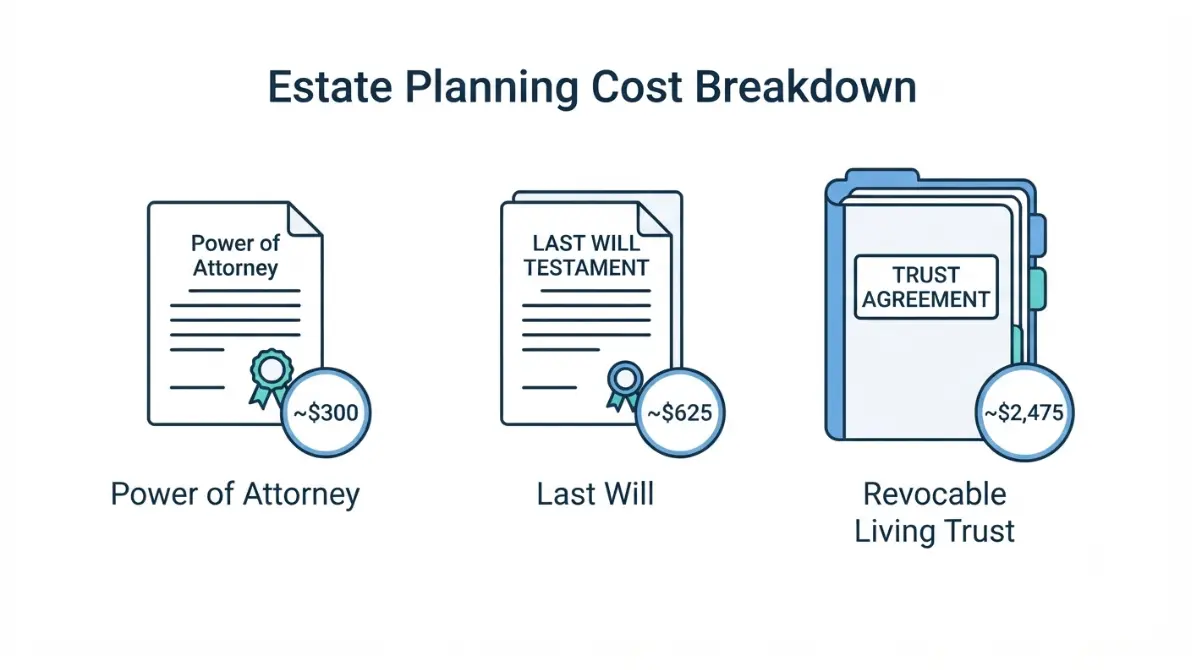
A Clear Look at Estate Planning Costs for a Will, Trust, and POA
September 21, 2026 Estate Planning
Key Rules for the $19,000 Annual Gift Tax Exclusion and Form 709
September 24, 2026 Estate Planning
The Portability Election and Your Spouse’s Overlooked Exemption
September 24, 2026 Estate Planning
The estate planning checklist, ordered so nothing gets overlooked
September 19, 2026 Estate Planning
Assets Not Covered by a Will and the Hidden Rules on Who Inherits
September 16, 2026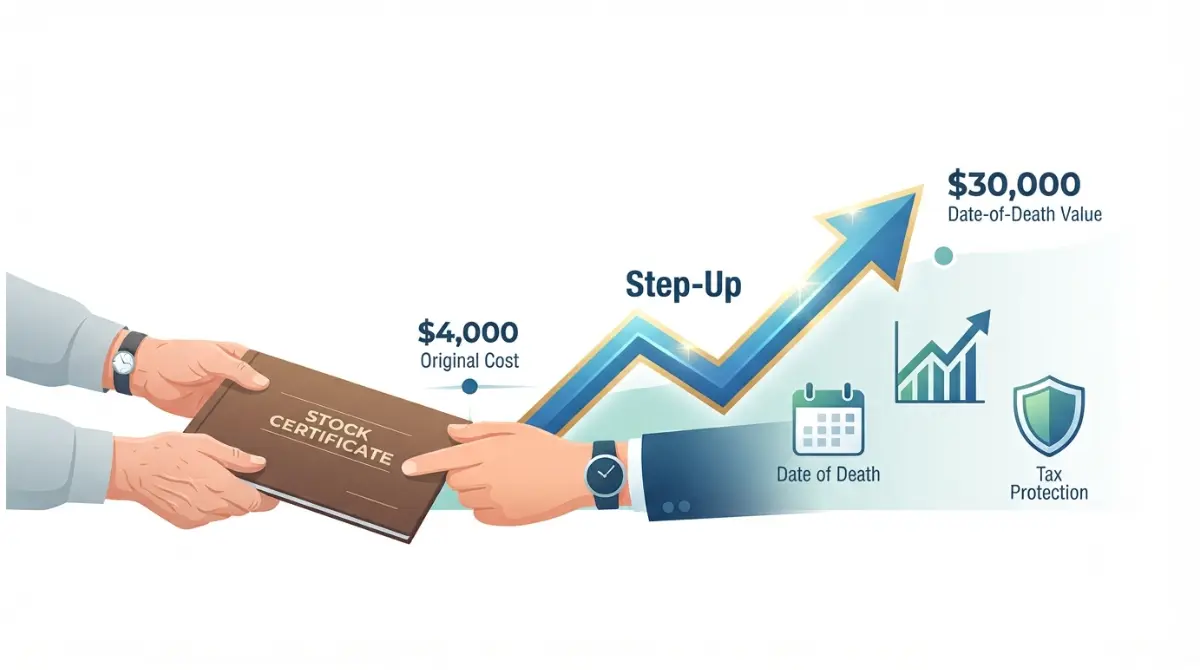 Estate Planning
How a step-up in basis can cut tax on inherited stock
September 26, 2026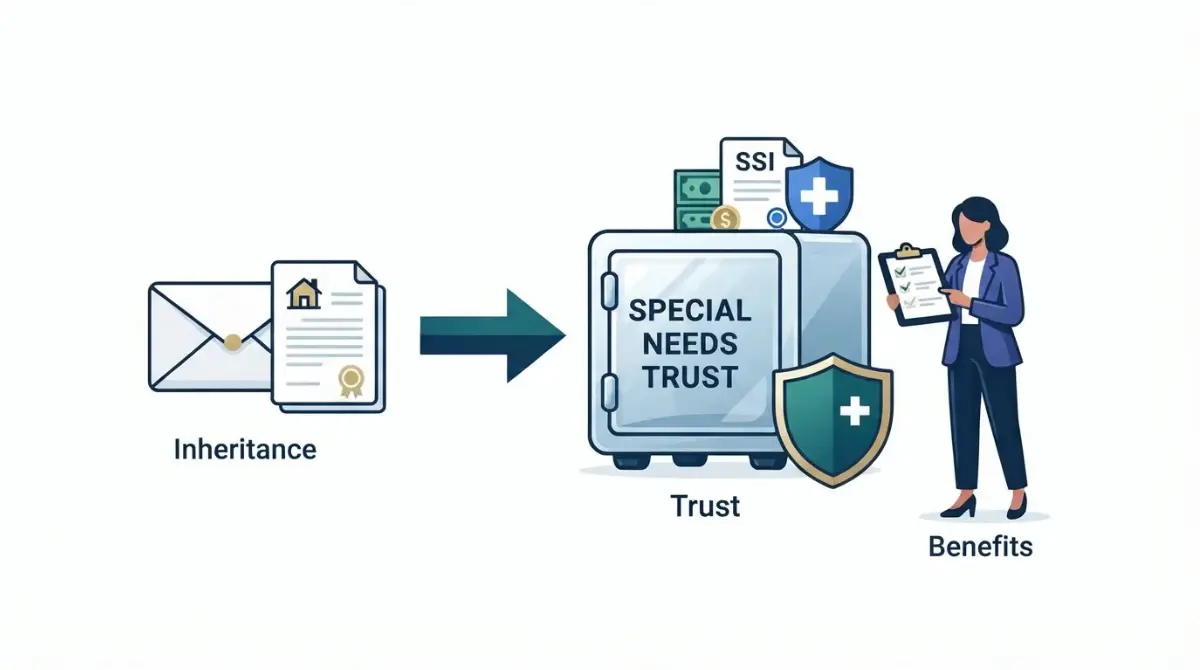 Estate Planning
How a Special Needs Trust Can Protect SSI and Medicaid
September 30, 2026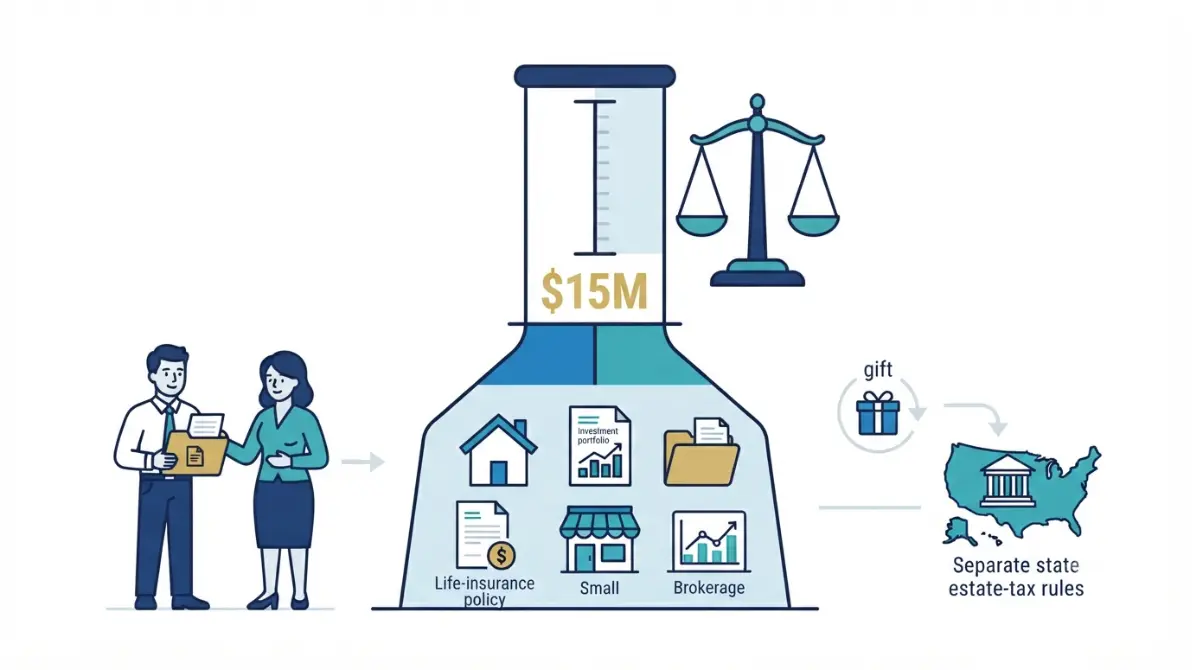 Estate Planning
A Clear Guide to the $15 Million Estate Tax Exemption
September 23, 2026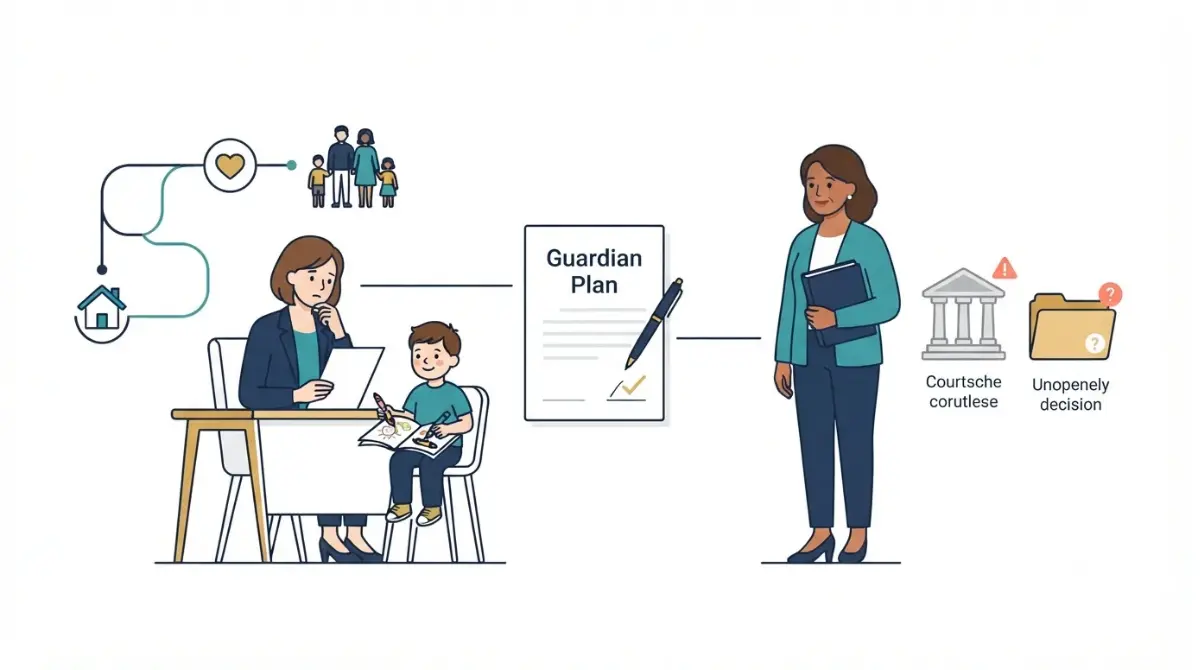 Estate Planning
Naming a Guardian for Minor Children in Your Will, Step by Step
October 2, 2026
Informational disclaimer
The content on Finance Authority Hub is provided for general informational and educational purposes only and should not be considered personalized financial, investment, tax, legal, or professional advice. Financial decisions depend on your individual goals, income, risk tolerance, location, and regulatory situation. Before acting on any information, strategy, estimate, or calculator result, consult a qualified licensed professional who can evaluate your specific circumstances.