How the Rule of 55 Unlocks Your 401(k) Before 59½
The rule of 55 can waive the 10% early-withdrawal penalty on your 401(k) if you leave a job at 55+ — but one rollover mistake erases it for good.
Independent money education for US readers. Not financial advice.
Education, not advice. Written for US readers.

The rule of 55 can waive the 10% early-withdrawal penalty on your 401(k) if you leave a job at 55+ — but one rollover mistake erases it for good.
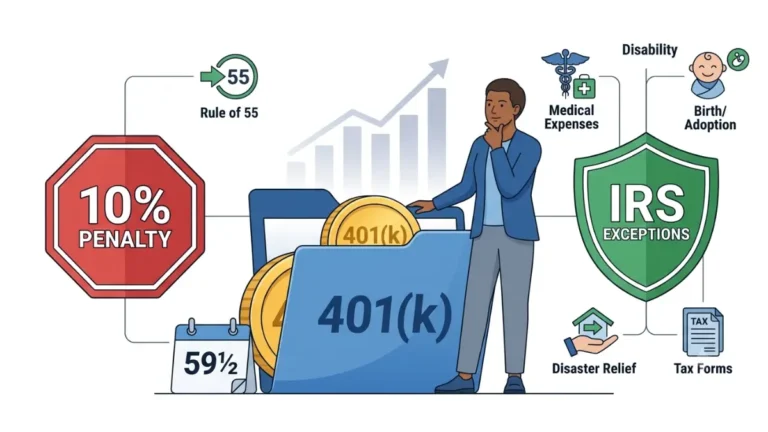
401(k) early withdrawal exceptions aren’t just the Rule of 55 — eleven situations can legally remove the 10% penalty before age 59½, if you qualify.
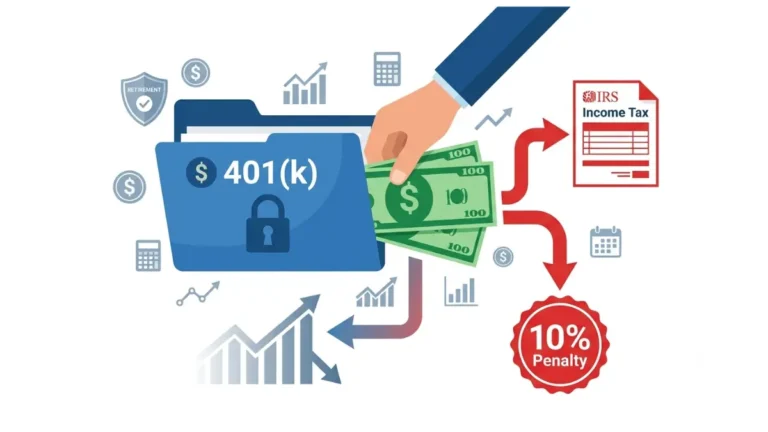
A 401(k) early withdrawal costs more than the 10% penalty — income tax and lost growth stack on top. Here’s the real math on a $50,000 cash-out.
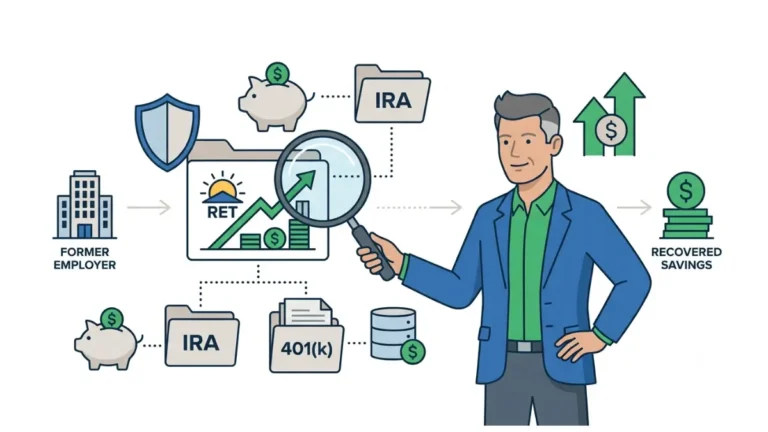
Have an old 401(k) you lost track of? An estimated 31.9M accounts—worth $2.1T—sit forgotten from past jobs. Find yours free, usually with just your SSN.
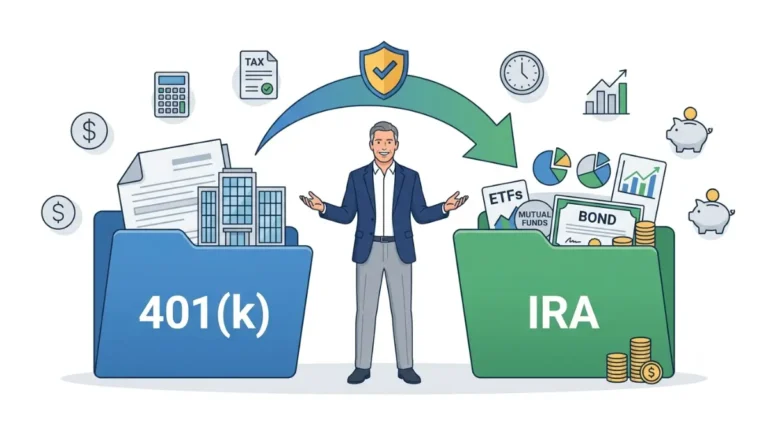
Rolling over a 401(k) to an IRA is simple as a direct transfer—but one wrong move triggers a 20% withholding and a 60-day scramble to get it back.
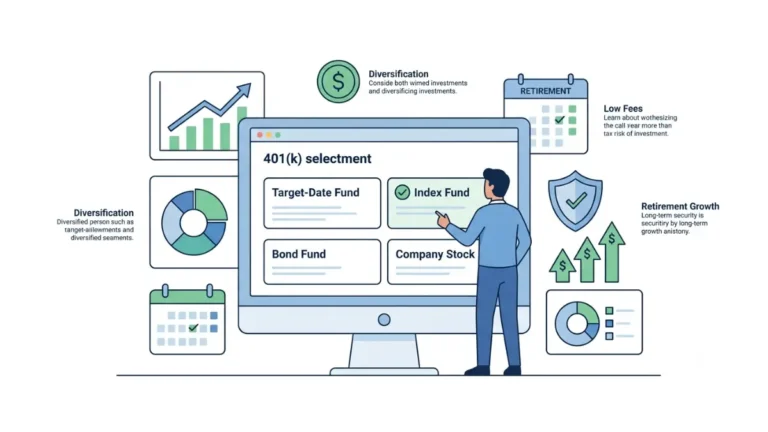
Choosing 401(k) investments is simpler than it looks: two paths, and one factor—fees—that outweighs fund names. The average fund charges 0.26%.
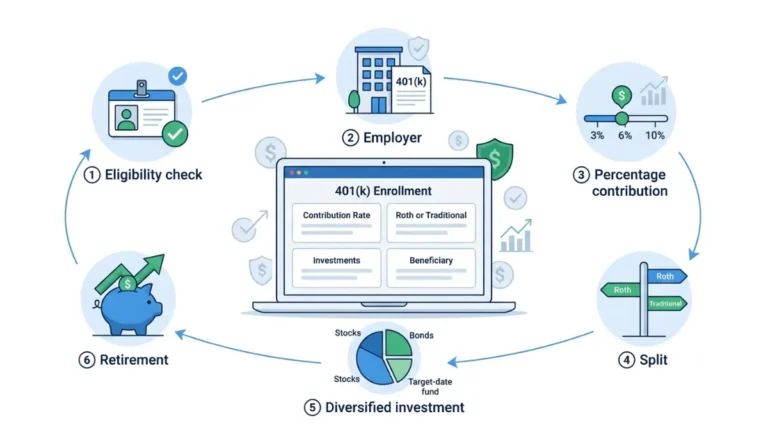
Setting up a 401(k) doesn’t have to be confusing. Here’s the step-by-step—from eligibility to your full match—plus the 2026 $24,500 limit.
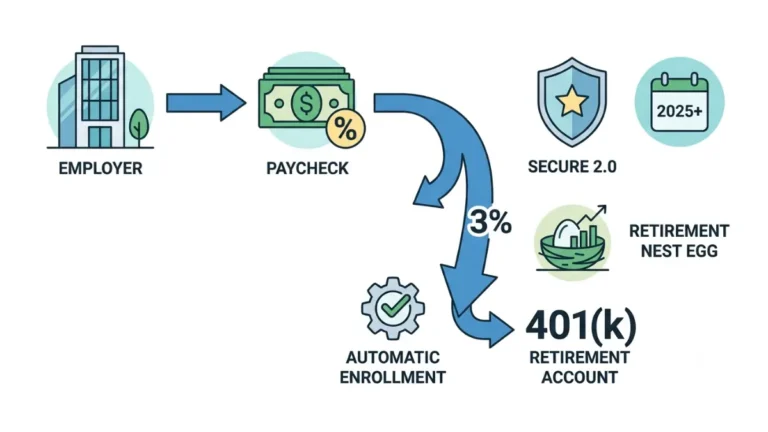
Auto-enrolled in a 401(k) and not sure why? SECURE 2.0 signs new hires up at a 3%–10% default—here’s what it means and how to change it.
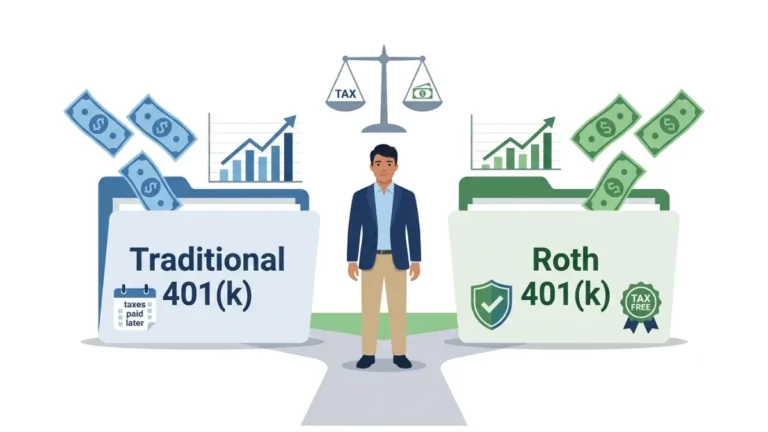
Roth vs traditional 401(k) is one question: pay tax now or later? Both cap at $24,500 in 2026, so it’s about timing — plus a new high-earner Roth rule.
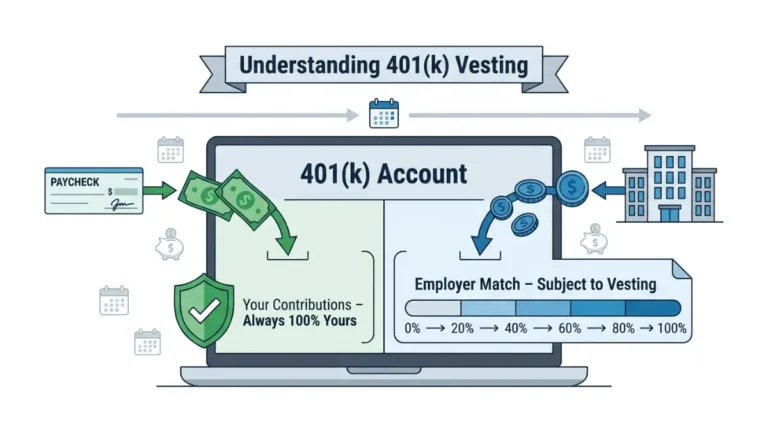
401(k) vesting decides when your employer match is truly yours. Your paycheck contributions are 100% vested from day one; the match can take up to 6 years.