
Where to Put Tax Refund Money for a Smart 3-Month Hold
Where to put tax refund money for 3 months? Your state tax rate can decide whether a T-bill or a HYSA comes out ahead.
In This Article
Where to put a tax refund you need in 3 months
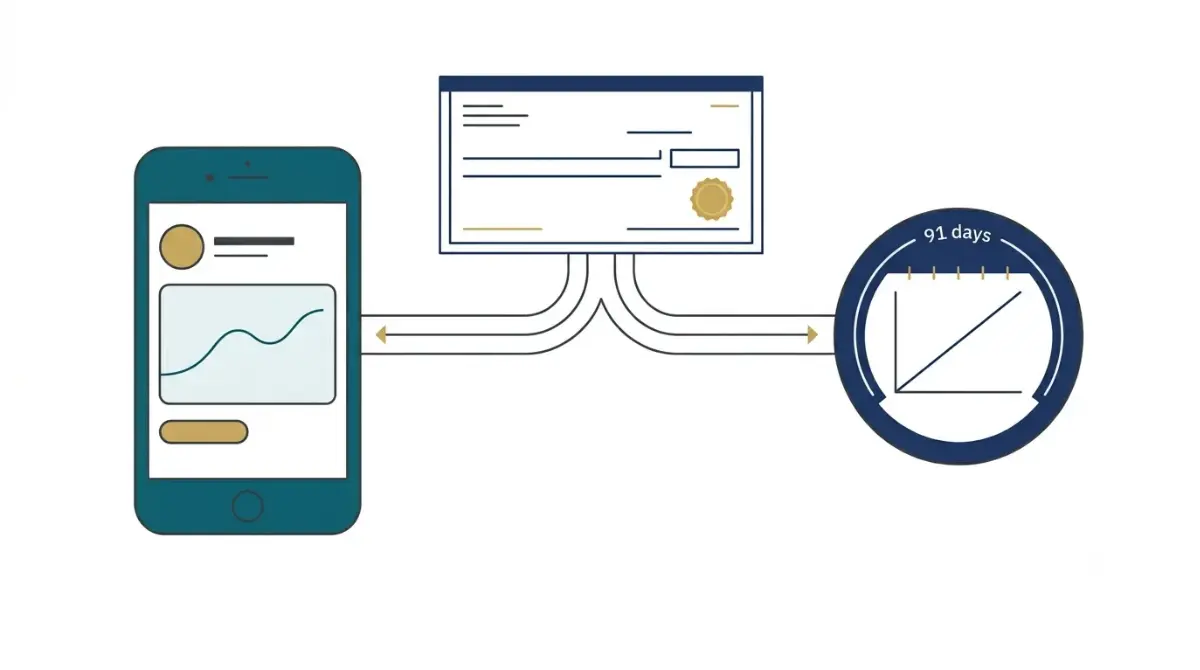
A high-yield savings account (HYSA) suits you if you want same-day access. A 13-week Treasury bill suits you if you can leave the money alone and want the rate locked. The gap is usually a few dollars before tax.
Who this comparison is for
You have a refund coming and need it in about three months.
📊 Data Point: The average refund was $3,273 through May 1, 2026. Source: IRS filing season statistics.
When to run the refund formula first
With high-interest debt or no starter emergency fund, run a tax refund formula you can run on your own numbers first.
ℹ️ Financial Disclaimer: This article is general education about investing, tax, lending and credit, insurance and debt-relief topics, not personalized advice. Before acting, consult a fiduciary advisor for investment choices, a CPA or enrolled agent for tax questions, and a qualified attorney for legal ones.
HYSA vs T-bill: how each one earns interest
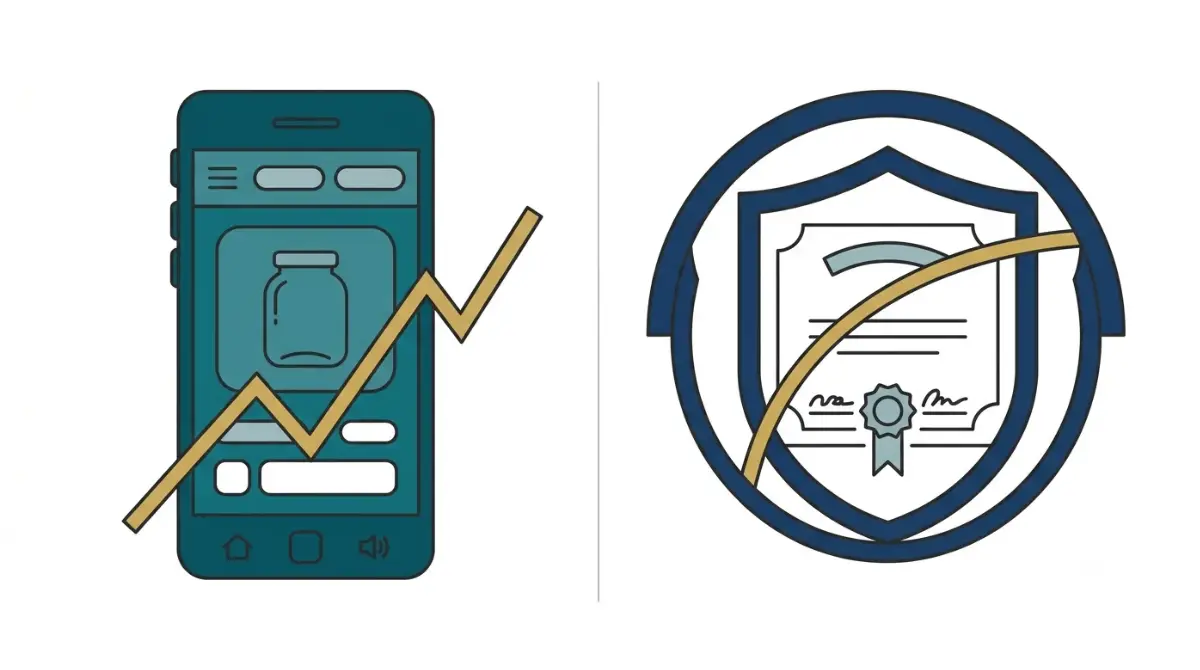
A T-bill locks its rate until maturity, while a HYSA rate can change at any time.
How a high-yield savings account pays
A HYSA pays a variable APY that the bank can change.
How a T-bill pays
🔍 How It Works: A T-bill is sold at a discount: you pay less than face value and receive face value at maturity. The difference is your interest.
| Feature | HYSA | 13-week T-bill | Key Detail |
|---|---|---|---|
| Rate | Variable | Set at purchase | Locked 91 days if held |
| If rates fall | APY can drop | Return stays | Early sale pays market price |
Source: TreasuryDirect.
Why the Fed’s September move matters
The Fed raised its target range to 3.75%–4.00% on September 16, 2026 (the Fed’s September 16 statement). Each bank sets its own HYSA rate.
How much interest does a refund earn in 3 months?
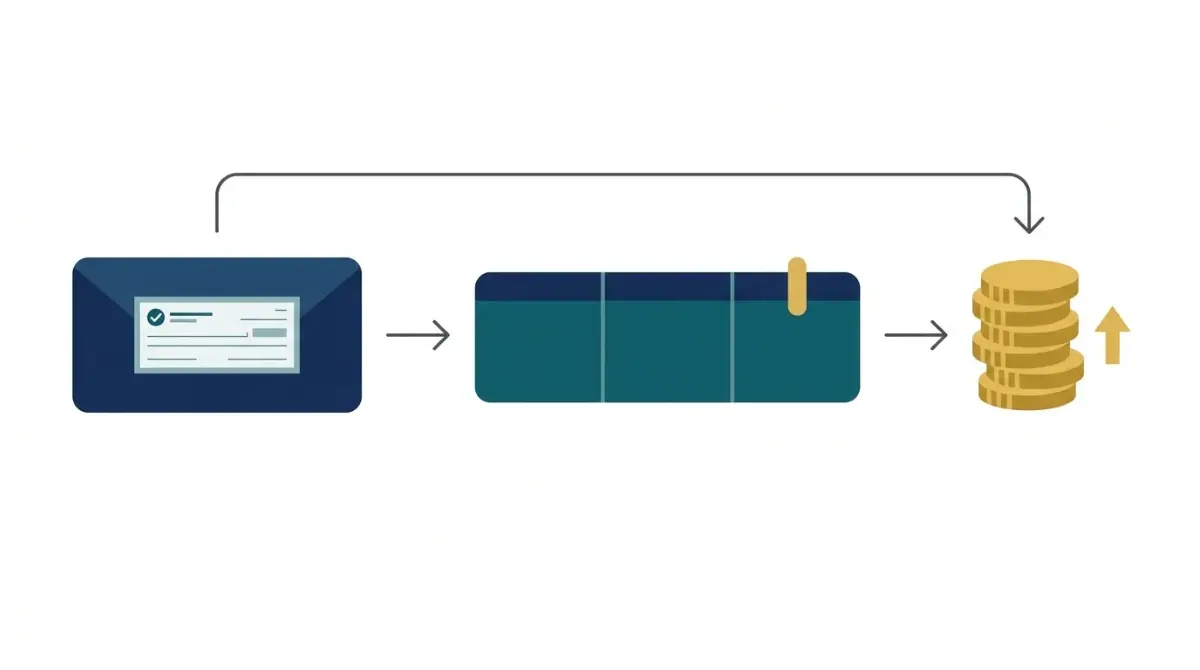
Multiply the refund by the annual rate, then by 91 ÷ 365.
The 91-day interest formula
🔍 How It Works: A 13-week bill runs 91 days. Bill interest is refund × yield × 91 ÷ 365, and HYSA interest is refund × ((1 + APY)^(91/365) − 1).
📊 Data Point: The 13-week bill yielded 4.20% (coupon equivalent; 4.10% bank discount) on October 14, 2026. Source: U.S. Treasury, Daily Treasury Bill Rates; a secondary-market quote.
What $1,000, $3,000 and $3,273 earn
| Refund | T-bill at 4.20% | HYSA at 3.50% | HYSA at 4.00% | HYSA at 4.50% |
|---|---|---|---|---|
| $1,000 | $10.47 | $8.61 | $9.83 | $11.03 |
| $3,000 | $31.41 | $25.84 | $29.48 | $33.10 |
| $3,273 | $34.27 | $28.19 | $32.16 | $36.12 |
Hypothetical HYSA rates, not offers; check your bank’s own page.
At 4.00%, the bill leads by $2.11 on $3,273 before tax, and at 4.50% the HYSA leads.
What a T-bill costs to buy
Bills start at $100 in $100 steps, per TreasuryDirect’s Treasury bill terms.
After-tax math: when a T-bill beats a HYSA
Tax changes the result: T-bill interest escapes state income tax.
The break-even formula
🔍 How It Works: The matching HYSA APY is the bill’s effective annual rate × (1 − federal) ÷ (1 − federal − state); the 4.20% quote compounds to 4.267%. Test yours in the compound interest calculator.
Break-even HYSA rate by state tax rate
| State tax | Federal 12% | Federal 22% | Federal 24% |
|---|---|---|---|
| 0% | 4.27% | 4.27% | 4.27% |
| 3% | 4.42% | 4.44% | 4.44% |
| 5% | 4.52% | 4.56% | 4.57% |
| 7% | 4.64% | 4.69% | 4.70% |
| 9% | 4.75% | 4.82% | 4.84% |
HYSA APY that matches a 4.20% bill after tax; tax rates are hypothetical.
Worked example: $3,273 in a 5% state
At a hypothetical 22% federal and 5% state rate, the bill nets $26.73 and a 4.00% HYSA nets $23.48. The bill leads by $3.25, or $1.65 with no state tax.
✅ Action Step: Ask a CPA or enrolled agent: “Does my state tax Treasury interest, and where do I subtract it?”
How to move a refund into a HYSA or a T-bill
Form 8888 splits a refund among up to three U.S. financial institutions, per the IRS guidance on splitting a refund.
Send the refund to the account you choose
Give the IRS your HYSA’s routing and account numbers.
Split a refund with Form 8888
Split between your HYSA and your bank; the IRS page does not confirm TreasuryDirect accepts refunds.
Buy a 13-week bill
- Open a TreasuryDirect account and link your bank.
- After the refund lands, check Treasury’s next 13-week auction date.
- Buy at least $100 before that auction closes.
- Note the maturity date, 91 days after issue.
More options: what to do with a tax refund.
How HYSA and T-bill interest are taxed and reported
Federal income tax applies to T-bill interest, but state and local income tax does not.
Federal tax applies to both
HYSA interest is taxable too, and the IRS says to report all taxable interest.
Where T-bills differ on state tax
The IRS says Treasury bill interest is exempt from state and local income taxes, as the Section 4 grid assumes.
Form 1099-INT and the $10 rule
Payers send Form 1099-INT at $10 or more, but you must report all interest (IRS guidance on reporting interest). Treasury bill interest goes in box 3 (IRS Form 1099-INT instructions) and counts in the year the bill matures or is sold (TreasuryDirect).
✅ Action Step: Ask a CPA or enrolled agent which state-return line removes Treasury interest.
When neither option fits your refund
Parking a refund fails in three cases, each quick to check.
If you need the money before day 91
⚠️ Costly Mistake: Buying a bill that matures after you need the cash: an early sale pays that day’s market price, possibly below what you paid plus interest.
A HYSA is FDIC-insured to $250,000 per depositor, per FDIC-insured bank, per ownership category; bills are not (FDIC deposit insurance coverage).
If your refund arrives late
Plan around the date you need the money, not the refund’s arrival.
If you carry high-interest debt
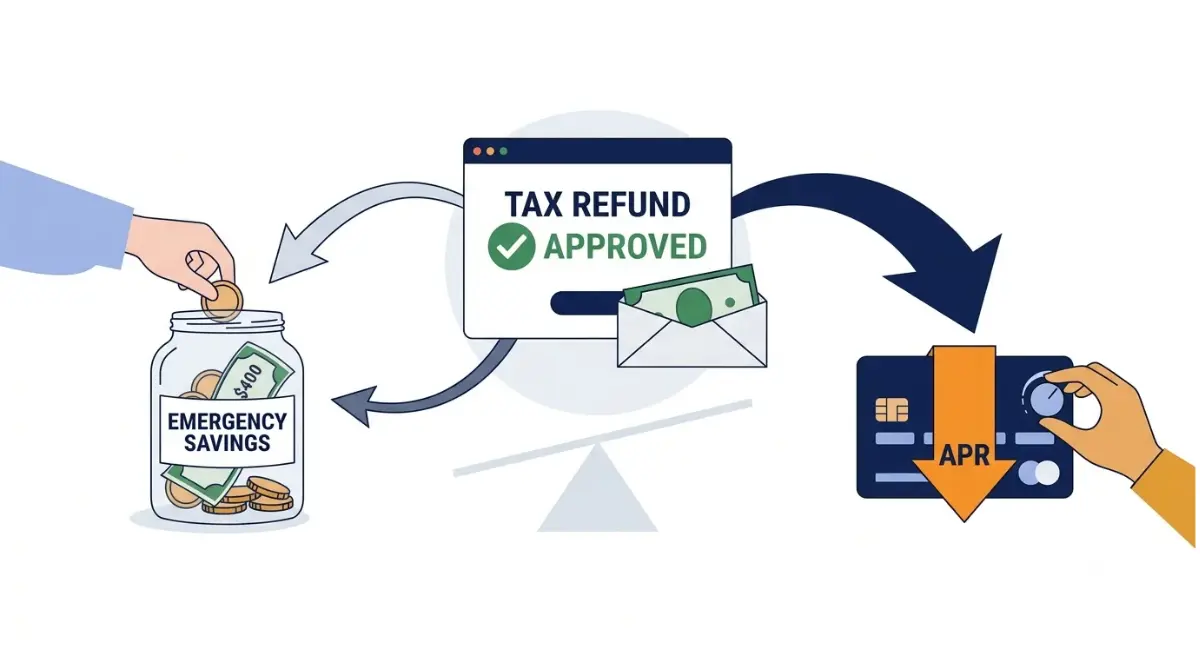
If high-interest debt costs more than savings pay, ask a nonprofit credit counselor whether the refund should go to debt first; see paying debt before saving a refund and the emergency fund calculator.
Before choosing:
- When do I need the money?
- Which bill term matches?
- Does any debt cost more?
- Could the refund arrive late?
Questions about parking a tax refund
1. Where should I put my tax refund for 3 months?
A HYSA offers access at a variable rate; a 13-week T-bill locks its return for 91 days, with a small pre-tax gap. Ask a fiduciary advisor about your goals.
2. Is a T-bill better than a high-yield savings account?
It depends on state tax. With none, a HYSA needs about 4.27% to match a 4.20% T-bill. Ask a CPA about your return.
3. How much interest will $3,000 earn in 3 months?
A $3,000 tax refund earns $31.41 in a 13-week T-bill at 4.20%, or $29.48 at a hypothetical 4.00% HYSA, over 91 days.
4. How is a T-bill different from savings for short holds?
A T-bill’s return is set at purchase and paid at maturity; a savings account’s rate can change meanwhile.
5. Is T-bill interest taxable?
Yes, T-bill interest is subject to federal income tax and belongs on your tax return. Ask a CPA about your return.
6. Are T-bills exempt from state tax?
Yes. The IRS says Treasury bill interest is exempt from state and local income taxes, but not federal tax. Ask a CPA about your return.
7. How do I buy a T-bill with my tax refund?
Open a TreasuryDirect account, wait for your tax refund to reach your bank, then buy at least $100 at auction.
8. Can I split my tax refund between two accounts?
Yes. Form 8888 splits a tax refund among up to three U.S. financial institutions, such as a HYSA and a checking account.
9. What is the minimum to buy a T-bill?
The minimum purchase is $100, in $100 steps, so even a small tax refund fits in a bill.
10. Do I report interest under $10?
Yes. Payers send Form 1099-INT at $10 or more, but the IRS says to report all taxable interest. Ask a CPA about your return.
11. How much of my savings is FDIC-insured?
FDIC insurance covers $250,000 per depositor, per FDIC-insured bank, per ownership category; Treasury bills are not covered.
Choose a HYSA for access or a 13-week T-bill for a locked rate, then check your state tax rate, because the gap can widen after tax. If debt costs more than savings pay, run the refund formula first.
Related Articles
 Tax Refund
Should Your Tax Refund Pay Debt or Save? Find the Right Split
October 14, 2026 Tax Refund
Refund Approved but No Deposit? A Clear Way to Find It
October 7, 2026 Tax Refund
What a Tax Refund Advance Loan Really Costs You
October 16, 2026 Tax Refund
How a Tax Refund Affects SSI, SNAP and Medicaid Benefits
October 16, 2026 Tax Refund
A Clear Tax Refund Schedule, From Filing Day to Deposit Day
October 7, 2026 Tax Refund
A Smart Way to Plan Around Your PATH Act Refund Date
October 8, 2026 Tax Refund
What to Do With Tax Refund Money in a Clear, Simple Order
October 15, 2026 Tax Refund
The Right Way to Tell a Tax Refund Offset From a Correction
October 8, 2026 Tax Refund
A Clear Walk Through the Tax Withholding Estimator Screens
October 13, 2026
Informational disclaimer
The content on Finance Authority Hub is provided for general informational and educational purposes only and should not be considered personalized financial, investment, tax, legal, or professional advice. Financial decisions depend on your individual goals, income, risk tolerance, location, and regulatory situation. Before acting on any information, strategy, estimate, or calculator result, consult a qualified licensed professional who can evaluate your specific circumstances.