
Clear Signs of a Smaller Tax Refund Next Year
Smaller tax refund next year? Tips and overtime deductions reach paychecks only through an updated W-4, so your refund may not shrink at all.
In This Article
Will my tax refund be smaller next year?
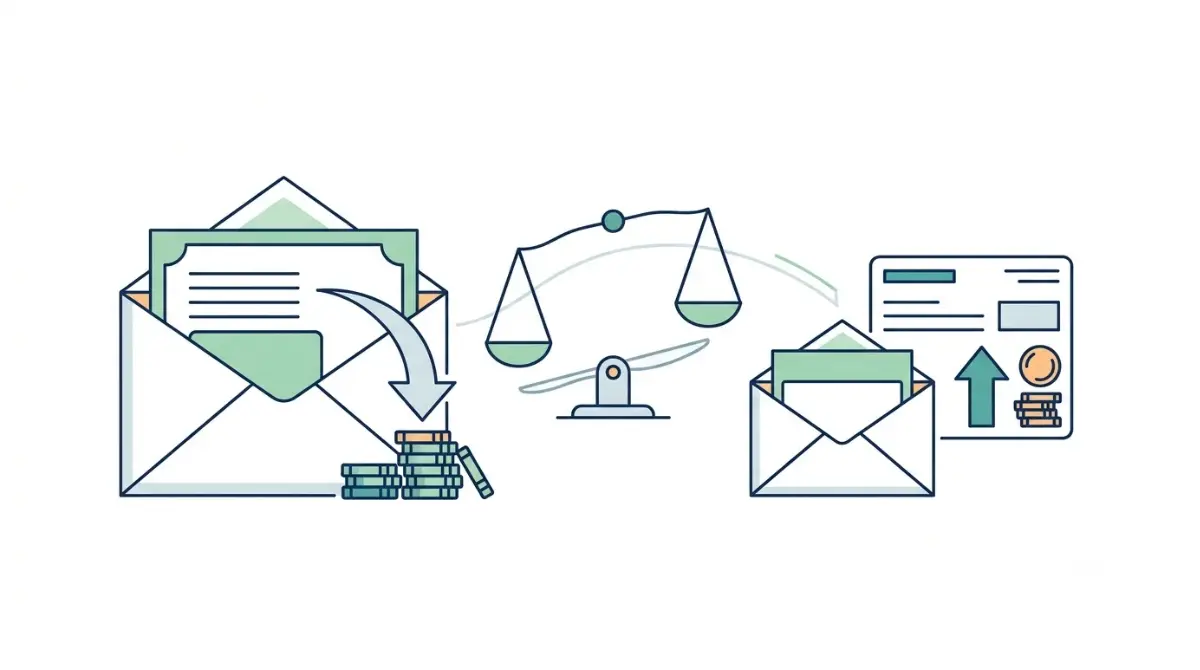
For many workers, yes on average, but your own refund depends on whether your 2026 paycheck withholding changed. A refund is your own overpayment returned, so smaller is not automatically worse.
📊 Data Point: The average refund was $3,276 through May 8, 2026, versus $2,939 a year earlier (+11.5%) — Source: IRS filing-season statistics.
A Tax Foundation analyst told USA TODAY Network in July 2026 that refunds will likely normalize in 2027.
- Big refund last spring? See why it happened.
- Tips, overtime or age 65+? See who is affected.
- Want a number? Estimate it.
- Self-employed? Estimated payments decide.
ℹ️ Financial Disclaimer: This article is general education about federal income tax, not tax, investment, lending, insurance or debt-relief advice, and it cannot account for any one person’s situation. Tax rules and amounts change, and the examples here are hypothetical. Before acting, consult a CPA or enrolled agent for tax questions, and a fiduciary advisor or qualified attorney for investment, lending, insurance or debt decisions.
Why were 2026 tax refunds so big?

How a refund is calculated
A refund is what you paid in through withholding minus the tax you owe; for tax year 2025 the IRS did not update withholding tables for the new law. The law is the One Big Beautiful Bill Act (the IRS calls it the Working Families Tax Cuts).
🔍 How It Works: Refund = tax paid in − tax owed. In 2025, tax owed fell but tax paid in did not, so the gap came back as a refund.
What the IRS did and didn’t update in 2025
The IRS decided not to update 2025 withholding tables. Treat last spring as a one-time timing mismatch, not a bonus; see who gets a larger 2026 refund.
What changed in 2026 paychecks and tax breaks
For tax year 2026 the standard deduction is $16,100 for single filers, $32,200 for married couples filing jointly and $24,150 for heads of household.

2025 vs 2026 withholding setup
| Item | 2025 | 2026 | Key Detail |
|---|---|---|---|
| Withholding tables | Not updated | Updated | Set paycheck withholding |
| Tips and overtime deductions | Current procedures | Via updated Form W-4 | Not automatic |
| Standard deduction (single / joint / head of household) | $15,750 / $31,500 / $23,625 | $16,100 / $32,200 / $24,150 | Single filers gain $350 |
Source: the IRS’s 2026 withholding methods publication and IRS summary of the new deductions and 2026 amounts, reviewed August 27, 2026.
Standard deduction, side by side
The $350 single-filer increase is worth about $42 of tax at 12%, so the bigger swings come from the new deductions.
Who is most likely to get a smaller refund?
Direction depends on whether the new breaks apply to you and your withholding changed.
Did your withholding change in 2026?
| Your situation | Refund vs. last spring | Why |
|---|---|---|
| Updated W-4 filed in 2026 | Likely smaller | Break now in paychecks |
| Qualify, but no new W-4 | May stay large | Break not in paychecks |
| No new break applies | Likely a modest change | 2026 tables reflect the law |
Tips, overtime and car-loan interest
Qualified tips are deductible up to $25,000 and overtime up to $12,500 ($25,000 joint), both phasing out above $150,000 modified adjusted gross income (MAGI), or $300,000 joint. Car-loan interest is deductible up to $10,000, phasing out above $100,000 ($200,000 joint).
Age 65+ and the senior deduction
The senior deduction is $6,000 per eligible person age 65 or older, phasing out above $75,000 MAGI ($150,000 joint). The 2026 Form W-4 worksheet covers all four breaks. Self-employed: paycheck tables don’t apply.
How to estimate next spring’s refund from a paystub
Estimated refund = your projected full-year federal withholding minus your estimated tax.
The four-step estimate
- Project full-year federal withholding from your latest paystub.
- Subtract the standard deduction and any qualifying deduction from wages.
- Apply 2026 marginal tax bracket rates (single): 10% to $12,400, then 12% to $50,400.
- Subtract that tax from projected withholding.
🔍 How It Works: Each deduction dollar comes off your top layer: at 12%, $8,000 of tips saves 12% × $8,000 = $960.
Worked example: standard deduction only
Hypothetical single filer: $60,000 wages, $5,460 projected withholding (an invented figure).
- Taxable income: $60,000 − $16,100 = $43,900
- Tax: 10% × $12,400 + 12% × $31,500 = $1,240 + $3,780 = $5,020
- Refund: $5,460 − $5,020 = $440
Worked example: with $8,000 in qualified tips
- Taxable income: $43,900 − $8,000 in tips = $35,900
- Tax: $1,240 + 12% × $23,500 = $1,240 + $2,820 = $4,060
- Refund: $5,460 − $4,060 = $1,400, which is $960 more
These hypothetical figures exclude credits, state tax, payroll taxes and other income. For more cases, see the full tax refund formula; to check your tax line, run your own numbers in the income tax calculator.
How to adjust your withholding before year-end
Use the IRS Tax Withholding Estimator
- Gather your latest paystub and last year’s return.
- Run the IRS Tax Withholding Estimator; it takes about 25 minutes on average and needs no login.
Update your Form W-4
- If it suggests a change, complete a new Form W-4: Step 3 for credits, Step 4(b) for deductions, Step 4(c) for extra withholding.
- Give the form to your employer. Preview take-home pay with the paycheck calculator.
What a late-year change can and can’t do
Fewer paychecks remain, so a change now is spread thinner; Publication 15-T suggests employers prompt a January W-4 refresh.
✅ Action Step: Ask a CPA or enrolled agent: “Given my jobs, filing status and other income, what W-4 setup avoids an underpayment penalty?”
Mistakes that turn a smaller refund into a tax bill
A smaller refund is not a higher tax. Cut $440 from Example A’s withholding and the refund is $0, yet the tax is still $5,020.
Cutting withholding too far
Withholding well below your tax can mean a balance due and an underpayment penalty. Match anticipated tax, not zero.
Forgetting a second job or spouse’s income
The IRS names multiple jobs and working spouses as reasons to use the Estimator.
Claiming a break you don’t qualify for
Phase-outs apply, and the tips deduction excludes certain specified service trades.
Spending the refund before you’ve checked
Plan around the Estimator’s result, not last spring’s check. Side income? See how to schedule estimated tax payments.
✅ Action Step: Ask a CPA or enrolled agent: “Do I owe an underpayment penalty if I lower withholding, and how should I set estimated payments for side income?”
Smaller tax refund FAQs
1. Will I get a smaller tax refund next year?
A smaller tax refund next year is likely on average, but yours depends on whether your 2026 paycheck withholding changed. Consult a CPA or enrolled agent.
2. Why were 2026 tax refunds so big?
Refunds were large because the IRS did not update 2025 withholding tables, so tax paid in exceeded tax owed.
3. Did the IRS update withholding tables for 2026?
Yes. The IRS updated its 2026 withholding tables and Form W-4 for the new law, according to Publication 15-T (2026).
4. What is the 2026 standard deduction?
The 2026 standard deduction is $16,100 for single filers, $32,200 for married couples filing jointly and $24,150 for heads of household.
5. Is a smaller tax refund a bad sign?
A smaller tax refund is not a bad sign by itself: less withholding shrinks it without raising your tax.
6. How do I estimate my refund before filing?
Estimate your refund by subtracting your estimated tax from projected full-year federal withholding, applying 2026 brackets to wages minus deductions.
7. How do I change my withholding?
Change your withholding by submitting a new Form W-4 to your employer, guided by the Tax Withholding Estimator. Consult a CPA or enrolled agent.
8. How long does the IRS Tax Withholding Estimator take?
The IRS Tax Withholding Estimator takes about 25 minutes on average and requires no login, according to the IRS.
9. Will the tips and overtime deductions change my refund?
The tips and overtime deductions reach paychecks only through an updated Form W-4. Caps: $25,000 tips, $12,500 overtime ($25,000 joint). Consult a CPA or enrolled agent.
10. Can lowering my withholding cause a tax bill?
Yes. Lowering your withholding too far can leave you owing a balance at filing, plus a possible underpayment penalty. Consult a CPA or enrolled agent.
11. Does the senior deduction affect my 2026 refund?
The senior deduction can lower your tax: $6,000 per eligible person, phasing out above $75,000 MAGI ($150,000 joint). Consult a CPA or enrolled agent.
Your next step
A smaller refund can mean your own money arrives in paychecks instead of one lump sum, not that you owe more. This week, run the IRS Tax Withholding Estimator with your last two paystubs, then decide whether a new Form W-4 makes sense.
Related Articles
 Tax Refund
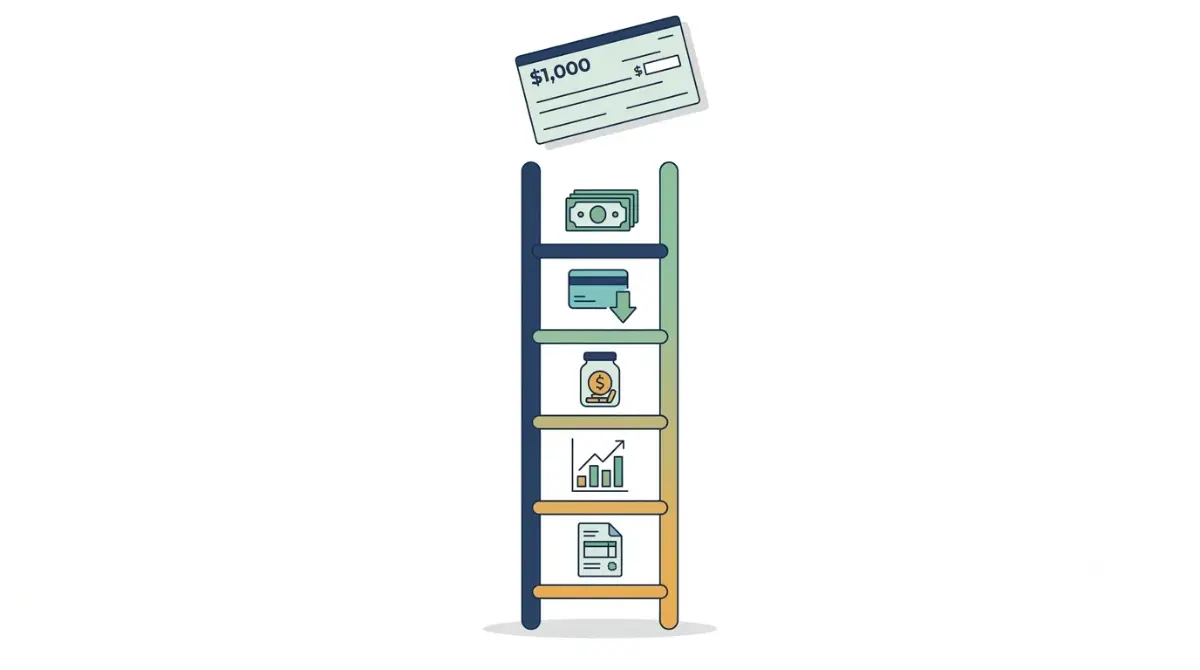
What to Do With Tax Refund Money in a Clear, Simple Order
October 15, 2026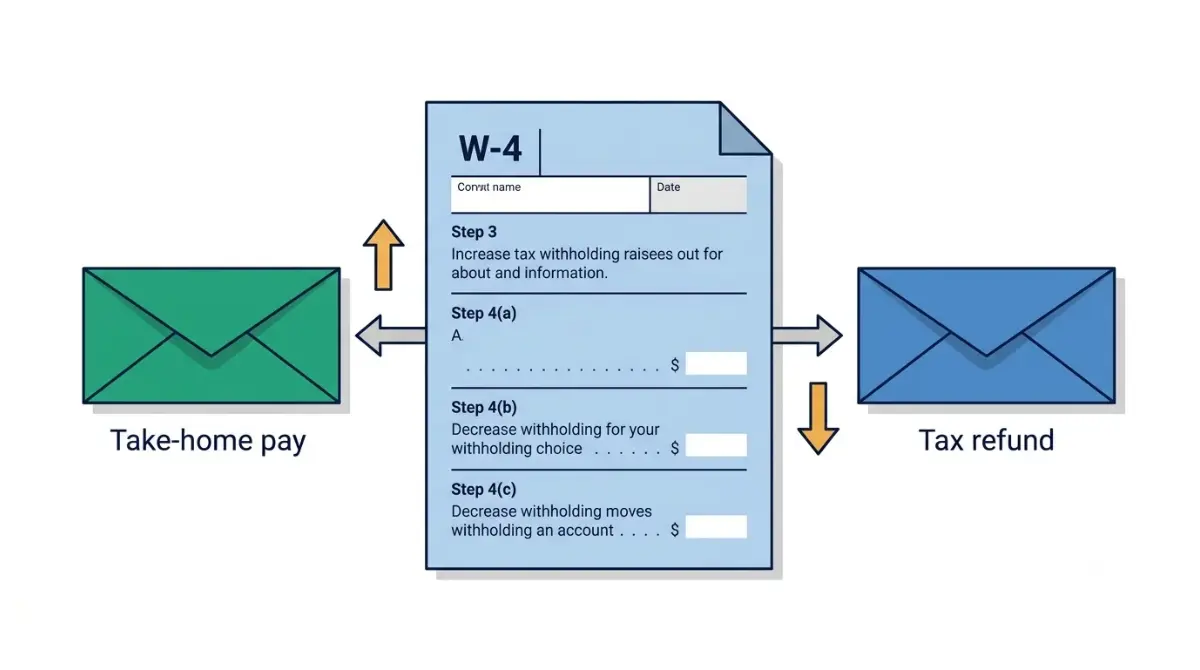 Tax Refund
A Clear Way to Adjust Your W-4 Refund Up or Down
October 12, 2026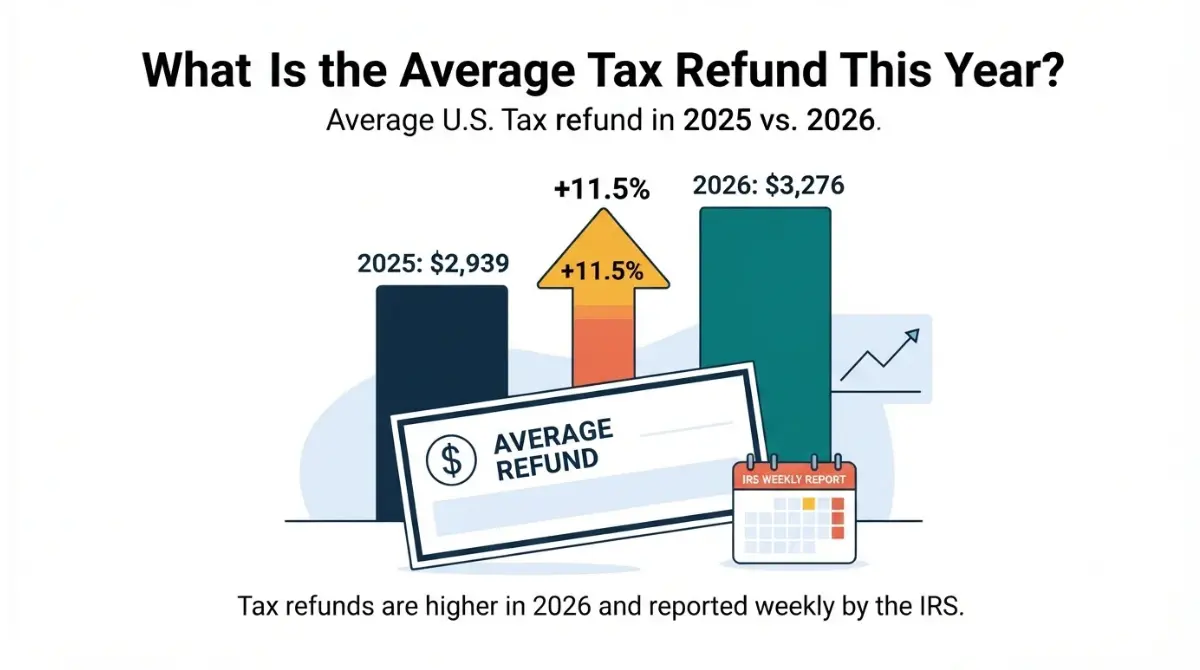 Tax Refund
A Clear Look at Why the Average Tax Refund Keeps Changing
October 9, 2026 Tax Refund
What a Tax Refund Advance Loan Really Costs You
October 16, 2026 Tax Refund
Self-Employed Tax Refund or Bill? A Clear 2026 Walkthrough
October 14, 2026 Tax Refund
The Right Way to Tell a Tax Refund Offset From a Correction
October 8, 2026 Tax Refund
The Key Return in Your Amended Return Refund Timeline
October 9, 2026 Tax Refund
The Right Way to Answer IRS Letter 5071C and Release Your Refund
October 17, 2026 Tax Refund
A Smart Way to Plan Around Your PATH Act Refund Date
October 8, 2026
Informational disclaimer
The content on Finance Authority Hub is provided for general informational and educational purposes only and should not be considered personalized financial, investment, tax, legal, or professional advice. Financial decisions depend on your individual goals, income, risk tolerance, location, and regulatory situation. Before acting on any information, strategy, estimate, or calculator result, consult a qualified licensed professional who can evaluate your specific circumstances.