
HSA: Beats 401(k) on Taxes — 2026 Rules Changed Everything
A Health Savings Account gives you triple tax-free savings in 2026 — and new law makes millions more eligible. Here’s the strategy most Americans completely miss.

In This Article
A Health Savings Account (HSA) is the only account in the U.S. tax code that delivers three simultaneous tax shields: contributions cut your taxable income, growth is 100% tax-free, and withdrawals for medical costs are never taxed. In 2026, landmark new legislation expanded HSA eligibility to millions more Americans for the first time. Here is everything you need to know — including what NerdWallet, Bankrate, and Investopedia completely missed.
What Is an HSA? The 60-Second Masterclass
A Health Savings Account (HSA) is a tax-advantaged savings and investment account specifically designed for people enrolled in a qualifying high-deductible health plan (HDHP). You own it permanently — it never expires, never resets, and never belongs to your employer.
Unlike a flexible spending account (FSA), your HSA balance rolls over every single year. There is no “use it or lose it” rule. The money is yours for life.
HSA 2026 Quick-Reference Table
| Feature | Details |
|---|---|
| Full Name | Health Savings Account |
| Who Qualifies | HDHP enrollees (+ new 2026 Bronze & Catastrophic plan holders) |
| 2026 Limit — Individual | $4,400 |
| 2026 Limit — Family | $8,750 |
| Catch-Up Contribution (Age 55+) | +$1,000 |
| Tax Advantages | Triple: Contribute, Grow, Withdraw — all tax-free |
| Funds Expire? | Never |
| Investment Options | Stocks, ETFs, mutual funds |
| Contribution Deadline | April 15, 2027 (for 2026 tax year) |
| Governed By | IRS Publication 969 |
Who Is Eligible for an HSA?
To open and contribute to an HSA, you must:
- Be enrolled in a qualifying high-deductible health plan (HDHP)
- Have no other disqualifying health coverage (non-HDHP plans)
- Not be enrolled in Medicare (Part A or Part B)
- Not be claimed as a dependent on someone else’s tax return
Self-employed individuals, gig workers, and freelancers can open an HSA independently — no employer required.
⚡ 2026 Game-Changer: Millions of Americans Newly Eligible
Starting in 2026, the Working Families Tax Cuts Act signed by President Trump expanded HSA eligibility dramatically. As confirmed by HealthCare.gov, all Bronze and Catastrophic Marketplace health plans now qualify for HSA contributions.
This is the biggest HSA eligibility expansion in 20 years. If you previously thought you didn’t qualify, check your plan type right now — you may be eligible for the first time.
What This Means For You: If you’re on a Bronze plan (the most common lower-premium option), you can now open an HSA and start sheltering thousands of dollars per year from taxes immediately.
The Triple Tax Advantage — Why HSA Beats 401(k) and Roth IRA
Most Americans know their 401(k). Fewer realize that a Health Savings Account beats it on taxes for healthcare costs. The HSA is the only account in existence with three distinct tax protections working simultaneously.
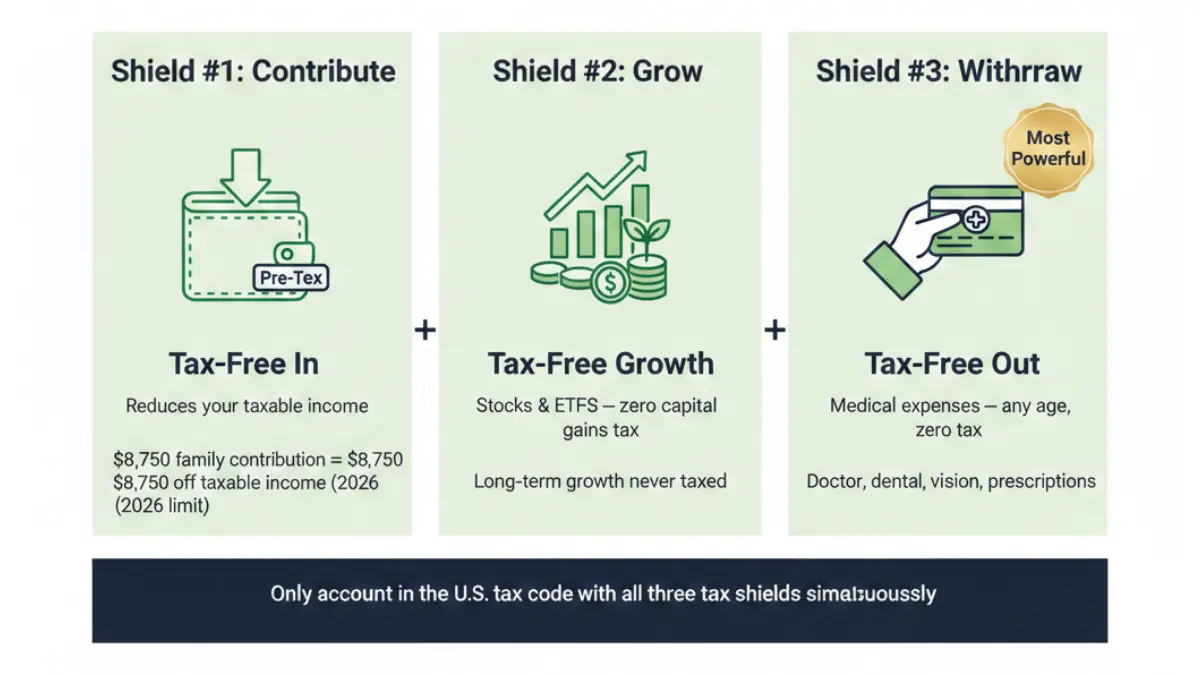
Tax Shield #1 — Contributions Are Tax-Deductible
Every dollar you contribute to your HSA reduces your taxable income dollar-for-dollar. If you contribute the 2026 family maximum of $8,750, that’s $8,750 immediately removed from your taxable income.
The hidden bonus competitors ignore: HSA contributions made through payroll deduction also bypass FICA taxes (Social Security + Medicare = 7.65%). A Roth IRA never skips FICA. A traditional IRA never skips FICA. Only the HSA does — making it mathematically superior for working Americans.
Tax Shield #2 — Growth Is Completely Tax-Free
When you invest your HSA balance in stocks, ETFs, or mutual funds, every dollar of gain, dividend, and interest is 100% tax-free while inside the account. There is no capital gains tax, no dividend tax, and no annual tax reporting on growth.
A 401(k) only defers taxes on growth — you pay ordinary income tax on every withdrawal. The HSA never creates that future tax bill on medical withdrawals.
Tax Shield #3 — Withdrawals Are Tax-Free
Use your HSA funds for any qualified medical expense and the withdrawal is completely tax-free — at any age, at any time. This includes expenses you incurred in prior years, as long as you have saved the receipts.
After age 65, you can withdraw HSA funds for any purpose — non-medical withdrawals are simply taxed as ordinary income, exactly like a traditional 401(k).
Championship Tax Comparison Table
| Tax Benefit | HSA | 401(k) | Roth IRA |
|---|---|---|---|
| Contributions Tax-Free | ✅ Yes | ✅ Yes | ❌ No (after-tax) |
| Skips FICA Tax (Payroll) | ✅ Yes | ❌ No | ❌ No |
| Growth Tax-Free | ✅ Yes | ❌ Deferred only | ✅ Yes |
| Withdrawals Tax-Free | ✅ Yes (medical) | ❌ Fully taxed | ✅ Yes (retirement) |
| Required Minimum Distributions | ❌ None — ever | ✅ Age 73 mandatory | ❌ None |
| Penalty-Free Early Access | ✅ Medical anytime | ❌ Not before 59½ | ✅ Contributions only |
| Income Limits | ❌ None | ❌ None | ✅ Phase-out limits apply |
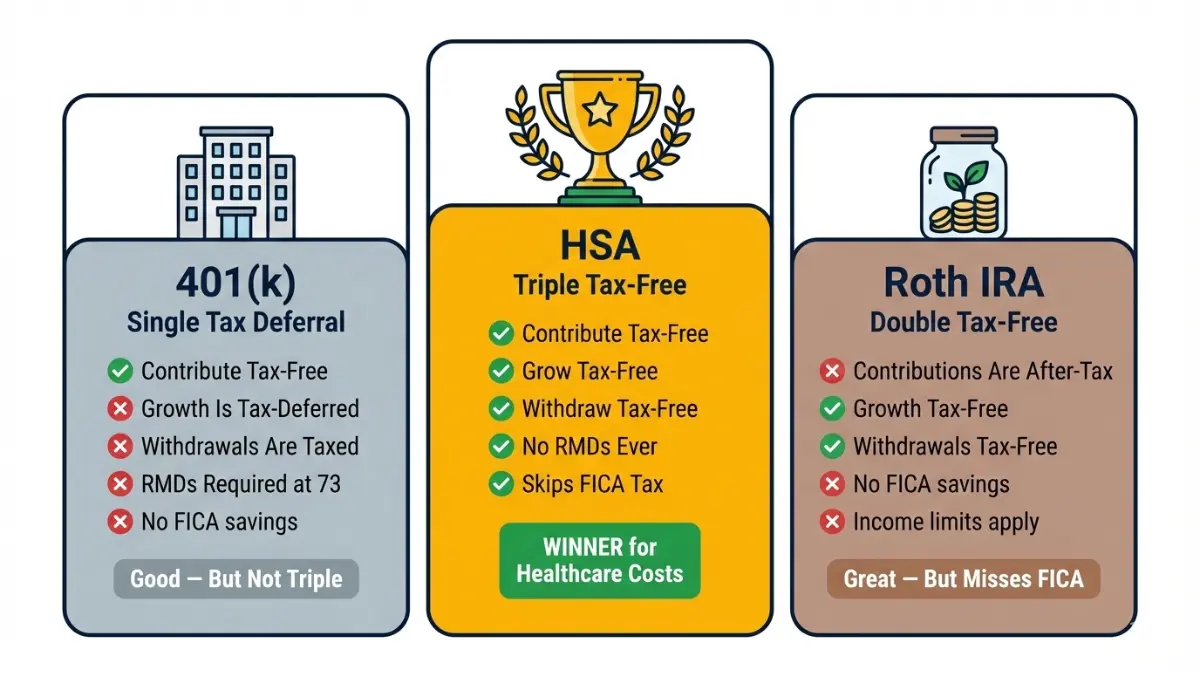
For healthcare costs specifically, the HSA is mathematically the most powerful tax-advantaged account in the U.S. tax code. If you’re building a complete retirement strategy, our guide on 401(k) vs IRA — which to max first explains how to stack all three accounts intelligently.
2026 HSA Rules — What Changed and Why It Matters Right Now
The HSA landscape in 2026 looks fundamentally different from any prior year. Two major shifts affect millions of Americans.
The Working Families Tax Cuts Act — Historic Eligibility Expansion
Before 2026, HSAs were only available to people enrolled in specific Silver-level or Gold-level high-deductible plans. That changed completely.
Effective 2026:
- All Bronze plans on the Marketplace are now HSA-eligible
- All Catastrophic plans are now HSA-eligible (including expanded hardship exemptions)
- Hardship exemptions now extend to anyone who doesn’t qualify for income-based savings
Bronze plans carry the lowest monthly premiums in the Marketplace — making them the natural choice for young workers, self-employed individuals, and healthy adults who want maximum tax savings at minimum premium cost.
2026 Official HSA Contribution Limits (IRS Confirmed)
| Coverage Type | 2025 Limit | 2026 Limit | Increase |
|---|---|---|---|
| Self-Only | $4,300 | $4,400 | +$100 |
| Family | $8,550 | $8,750 | +$200 |
| Catch-Up (55+) | $1,000 | $1,000 | Unchanged |
Source: IRS Publication 969 — confirmed for 2026 tax year.
2026 HDHP Qualification Requirements
| Coverage | Minimum Deductible | Max Out-of-Pocket |
|---|---|---|
| Individual | $1,700 | $8,500 |
| Family | $3,400 | $17,000 |
Your plan must meet these IRS thresholds to qualify as an HDHP. Not all high-deductible plans automatically qualify — look for plans explicitly labeled “HSA-eligible” when enrolling.
Contribution Deadline You Cannot Miss
You can contribute to your 2026 HSA until April 15, 2027 — the same deadline as your tax return. This means you can calculate your final 2026 income, then make a targeted HSA contribution to reduce your tax bill before filing.
What This Means For You: If you’re evaluating your 2026 health plan options and also managing mortgage costs, use our mortgage calculator to see how HSA tax savings can free up cash flow for your monthly payments.
HSA as a Stealth Retirement Account — The Strategy Most Americans Never Use
Most people swipe their HSA debit card like a checking account. High-income earners and savvy financial planners use it completely differently. They treat the HSA as their most powerful long-term investment vehicle.
The “Stealth IRA” Strategy (Step-by-Step)
Here is the exact strategy used by financial advisors for clients who want maximum tax-free wealth accumulation:
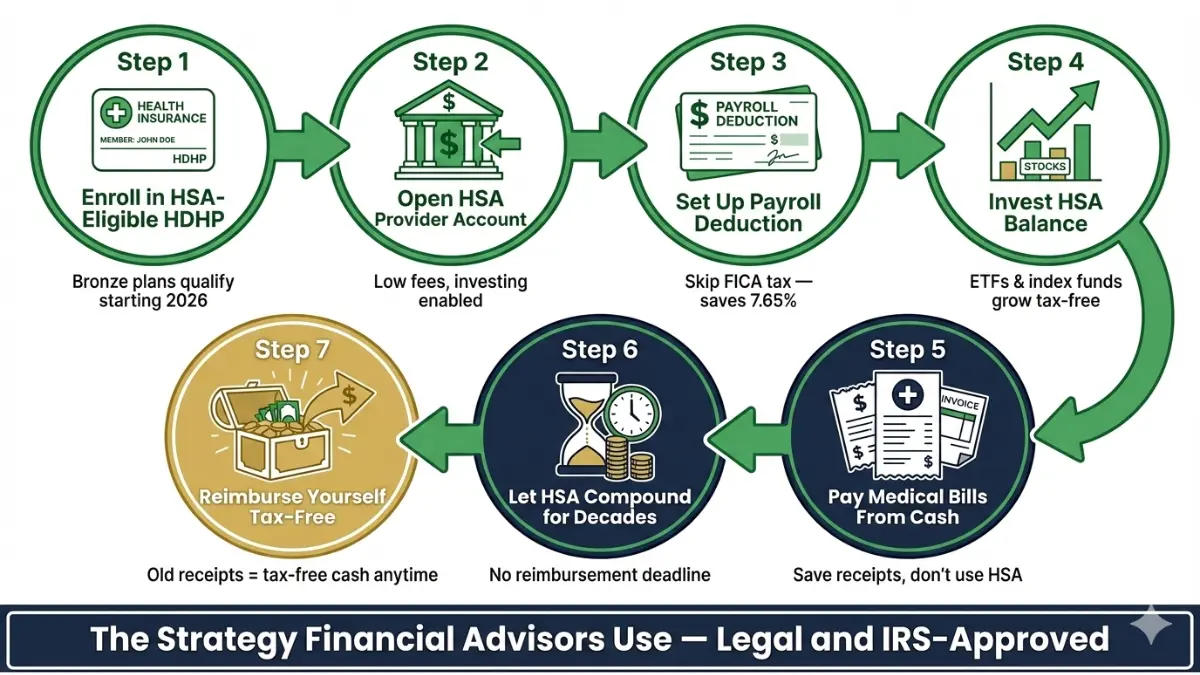
Step 1: Enroll in an HSA-eligible health plan (Bronze plan now qualifies in 2026)
Step 2: Open an HSA with an investment-capable provider (Fidelity HSA = top recommendation — zero fees, zero minimum balance)
Step 3: Set up payroll deduction contributions to skip FICA taxes automatically
Step 4: Pay all current medical bills out-of-pocket from your regular bank account — do NOT use your HSA debit card
Step 5: Save every single medical receipt (the IRS has no deadline for self-reimbursement)
Step 6: Let your HSA balance grow invested for 10, 20, or 30 years
Step 7: After decades of growth, reimburse yourself for all accumulated medical expenses — completely tax-free
This strategy is entirely legal and confirmed by IRS Publication 969. There is no time limit on when you can reimburse yourself for qualified expenses, as long as the expense was incurred after your HSA was established.
The Real Power of HSA Compounding
Consider a family that maxes their HSA annually starting in 2026:
| Scenario | Annual Contribution | Annual Return | Balance After 20 Years | Balance After 30 Years |
|---|---|---|---|---|
| Family Max (Invested) | $8,750 | 7% avg | ~$380,000 | ~$875,000 |
| Individual Max (Invested) | $4,400 | 7% avg | ~$191,000 | ~$440,000 |
All of that growth is 100% tax-free when withdrawn for medical expenses. Compare that to a 401(k), where every dollar of that balance will be taxed as ordinary income on withdrawal.
The No-RMD Superpower
This is the single biggest advantage competitors never discuss. A 401(k) forces you to take Required Minimum Distributions (RMDs) starting at age 73. The IRS mandates withdrawals whether you need the money or not — creating a taxable event every year.
An HSA has zero RMDs — ever. Your balance can grow and compound indefinitely. This is enormous for estate planning and for retirees who don’t need to spend their healthcare funds immediately.
For a complete understanding of how HSA fits into your retirement plan, read our expert guide on retirement planning in your 30s and our breakdown of 401(k) explained — avoid leaving free money.
HSA Eligible Expenses + HSA vs. FSA Comparison
One of the most common HSA mistakes is assuming it only covers basic doctor visits. The reality is far broader — and far more valuable.
What Your HSA Can Pay For in 2026
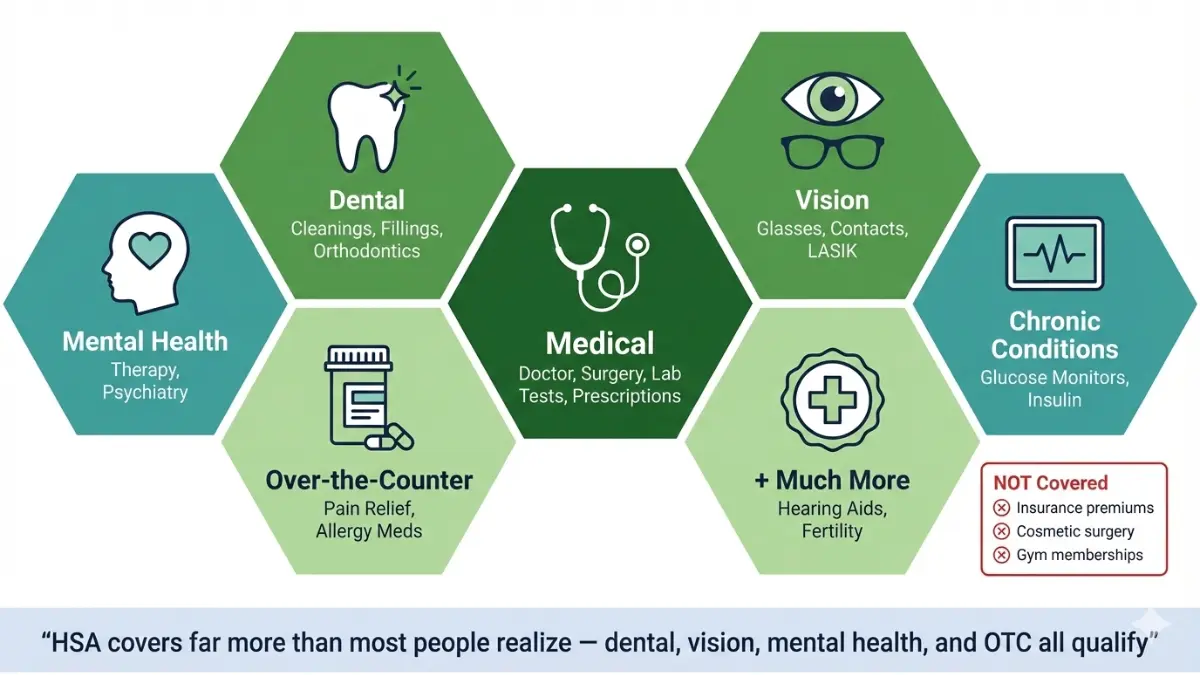
| Category | Eligible Expenses |
|---|---|
| Medical | Doctor visits, surgery, hospital stays, lab tests, X-rays, prescriptions |
| Dental | Cleanings, fillings, crowns, orthodontics, dentures, implants |
| Vision | Prescription glasses, contact lenses, LASIK surgery, eye exams |
| Mental Health | Therapy sessions, psychiatry, mental health prescriptions |
| Over-the-Counter | Pain relievers, allergy medications, bandages, cold medicine |
| Chronic Conditions | Continuous glucose monitors, insulin, blood pressure devices |
| Other | Hearing aids, medical equipment, fertility treatments, ambulance |
What HSA Does NOT Cover
- Health insurance premiums (exceptions: COBRA, Medicare Part B & D, premiums during unemployment)
- Cosmetic surgery (purely elective procedures with no medical basis)
- General wellness (gym memberships, supplements — unless prescribed by a physician)
HSA vs. FSA — Side-by-Side
| Feature | HSA | FSA |
|---|---|---|
| Rolls Over Annually | ✅ Yes, forever | ❌ Use-it-or-lose-it (up to $680 carryover) |
| Portable (Job Changes) | ✅ Yours permanently | ❌ Employer-controlled |
| Investment Option | ✅ Stocks, ETFs, funds | ❌ Cash only |
| Requires HDHP | ✅ Yes | ❌ No |
| Contribution Limit (2026) | $4,400 / $8,750 | $3,400 |
| Who Can Contribute | You, employer, family, anyone | You and employer |
| Post-65 Non-Medical Use | ✅ Yes (taxed like IRA) | ❌ No |
If you are also reviewing your overall health insurance plans to find the right HDHP, pairing the lowest-cost plan with a maxed HSA often saves more annually than choosing a higher-premium plan with lower deductibles.
For those weighing Medicare options as retirement approaches, our guide on Medicare Advantage Plans explains the critical HSA-Medicare timing rules you must know before enrolling.
How to Open an HSA in 2026 — Your 5-Step Action Plan
Opening an HSA takes less than 15 minutes. Here is exactly what to do.
Step-by-Step: Open Your HSA Today
Step 1 — Confirm eligibility. Check your insurance card or HR portal. Your plan must be labeled “HSA-eligible” or “HDHP.” Starting in 2026, all Bronze and Catastrophic Marketplace plans qualify.
Step 2 — Choose your HSA provider. Use a provider that allows investment of your balance. The two best options for individual investors are Fidelity (zero fees, zero minimum) and Lively (excellent app, free for individuals).
Step 3 — Set up payroll deduction. Contributing through payroll eliminates FICA taxes (7.65% savings on top of income tax deductions). This is the highest-leverage contribution method available.
Step 4 — Invest your balance immediately. Do not leave your HSA in cash earning 0.01% APY. Invest in low-cost index funds or ETFs as soon as you have funds above your near-term medical expense buffer.
Step 5 — Save every medical receipt. Use a digital folder, app, or cloud storage. There is no IRS deadline to reimburse yourself — a receipt from 2026 can be reimbursed in 2046.
Best HSA Providers 2026 — Verified Comparison
| Provider | Best For | Monthly Fee | Min to Invest | Investment Options |
|---|---|---|---|---|
| Fidelity HSA | Investing — #1 overall | $0 | $0 | Stocks, ETFs, mutual funds |
| Lively | Individuals, clean UI | $0 individual | $3,000 (or $24/yr) | Charles Schwab brokerage |
| HealthEquity | Employer-sponsored plans | Varies | $1,000 | Mutual funds |
| Bank of America | Existing BoA customers | $2.50/month | $1,000 | Mutual funds |
Our Verdict: For individual investors, Fidelity HSA is the clear winner — zero fees, no minimums, and access to the full Fidelity investment platform including commission-free ETFs and fractional shares.
If you’re evaluating your complete financial picture alongside your HSA strategy, our home affordability calculator helps you balance HSA contributions alongside mortgage goals. For those carrying high-interest debt, our debt consolidation guide outlines how to sequence debt payoff and HSA contributions effectively. And if you’re building a broader investing foundation, our Roth IRA complete guide shows exactly how HSA and Roth IRA work as complementary accounts.
Frequently Asked Questions About HSA
Q1: What does HSA stand for?
HSA stands for Health Savings Account — a tax-advantaged account for people enrolled in a qualifying high-deductible health plan.
Q2: Can I have an HSA without an employer?
Yes. Self-employed individuals, freelancers, and gig workers can open an HSA independently, as long as they have an HSA-eligible HDHP.
Q3: What happens to my HSA if I leave my job?
Your HSA is yours permanently. It transfers with you to any new employer, into self-employment, or into retirement — the balance never disappears.
Q4: Can I invest my HSA funds in stocks?
Yes. Providers like Fidelity and Lively allow you to invest in stocks, ETFs, and mutual funds inside your HSA. All investment growth is tax-free.
Q5: What is the 2026 HSA contribution limit?
$4,400 for individuals and $8,750 for families. Those aged 55 and older can contribute an additional $1,000 catch-up contribution.
Q6: Can I use my HSA for non-medical expenses?
After age 65, yes — non-medical withdrawals are taxed as ordinary income (similar to a traditional 401(k)), but there is no penalty.
Q7: Do unused HSA funds expire?
Never. Unlike an FSA, HSA funds roll over every year indefinitely with no limit and no expiration.
Q8: Is an HSA better than a 401(k)?
For healthcare costs specifically, yes — the HSA’s triple tax advantage mathematically outperforms the 401(k)’s single tax deferral. The optimal strategy is to use both accounts simultaneously.
Q9: Can I use my HSA for dental and vision?
Yes. HSA funds cover dental cleanings, fillings, orthodontics, glasses, contact lenses, and LASIK surgery.
Q10: Are Bronze plans HSA-eligible in 2026?
Yes, for the first time. The 2026 Working Families Tax Cuts Act made all Bronze and Catastrophic Marketplace plans HSA-eligible — a landmark change confirmed by HealthCare.gov.
Q11: What is the HSA contribution deadline for 2026?
You have until April 15, 2027 to make 2026 HSA contributions — the same deadline as your federal tax return.
⚠️ Disclaimer: This article is for educational and informational purposes only. It does not constitute financial, tax, or legal advice. HSA contribution limits, eligibility rules, and HDHP requirements are set by the IRS and may be subject to change. Individual tax situations vary. Please consult a licensed financial advisor, CPA, or tax professional before making HSA contribution decisions. Information is current as of February 2026.
Related Articles
 401(k) & Employer Plans
How 401(k) Hardship Withdrawals Work and What They Cost
July 6, 2026 401(k) & Employer Plans
Your Clear Guide to 401(k) Catch-Up Contributions in 2026
June 29, 2026 401(k) & Employer Plans
Retirement Savings by Age: 2026 Catch-Up Strategies
January 25, 2026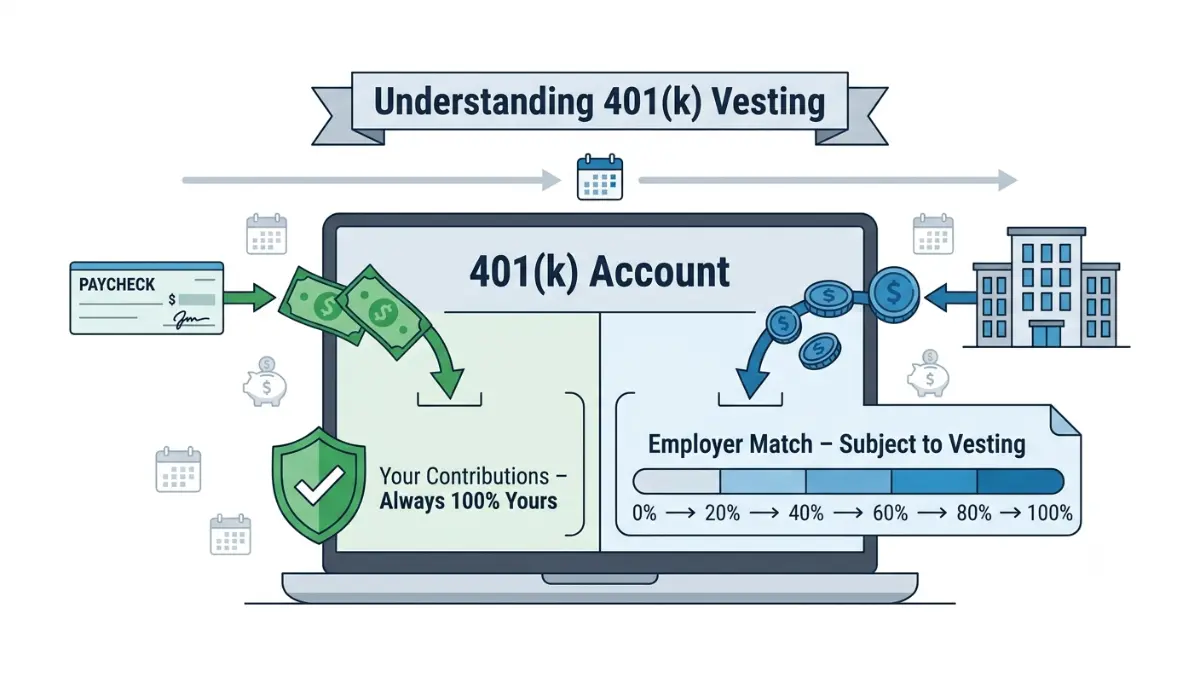 401(k) & Employer Plans
How 401(k) Vesting Decides When Your Match Is Yours
July 2, 2026 401(k) & Employer Plans
Roth IRA 2026: How to Save $500,000+ Tax-Free in Retirement
January 25, 2026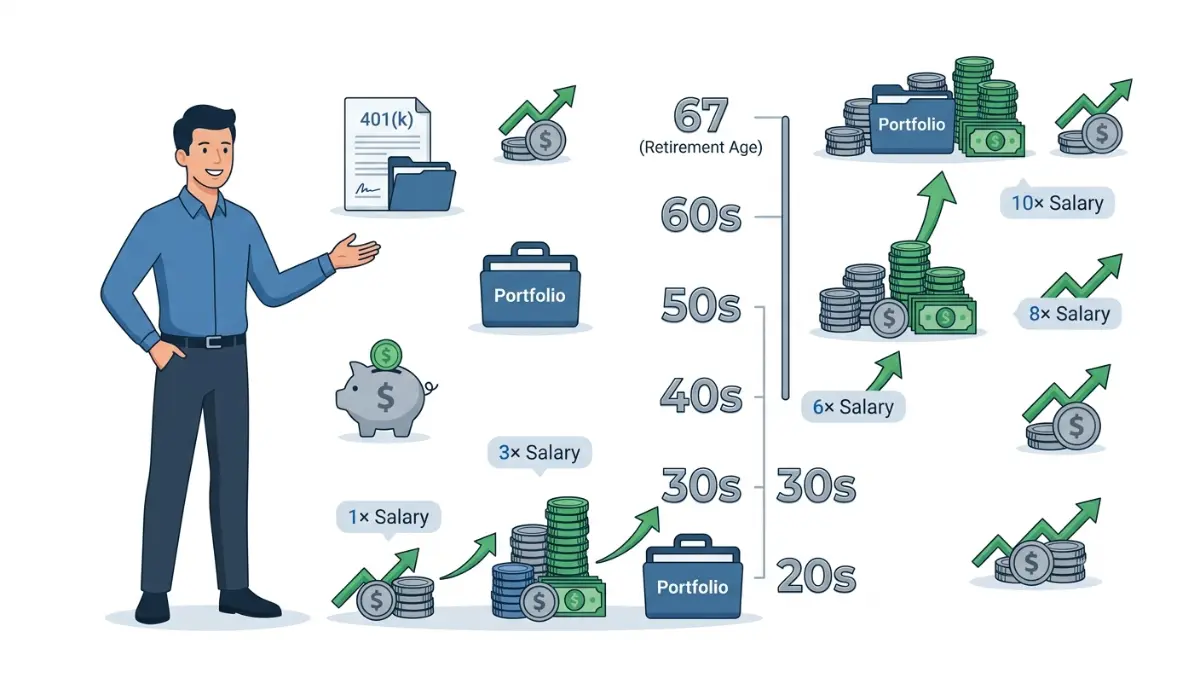 401(k) & Employer Plans
Is Your 401(k) on Track for Your Age?
July 2, 2026 401(k) & Employer Plans
Who Maxes Out a 401(k), and Why So Few Actually Do
July 1, 2026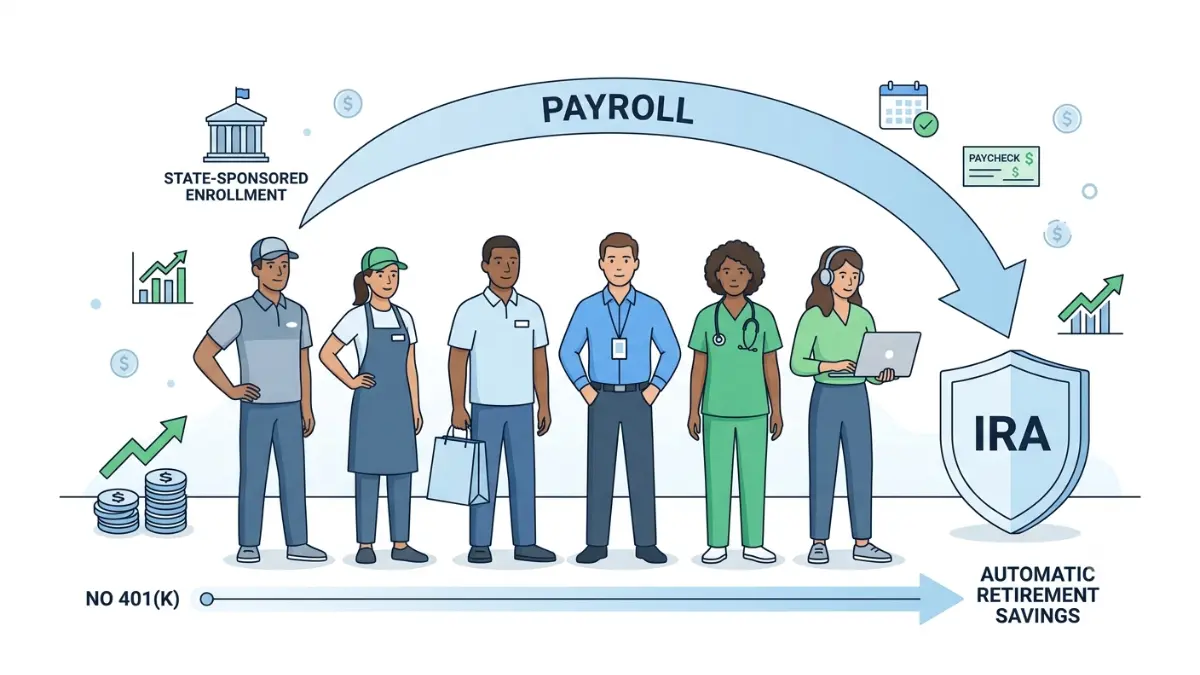 401(k) & Employer Plans
No 401(k) at Work? Smart State Auto-IRA Options
July 10, 2026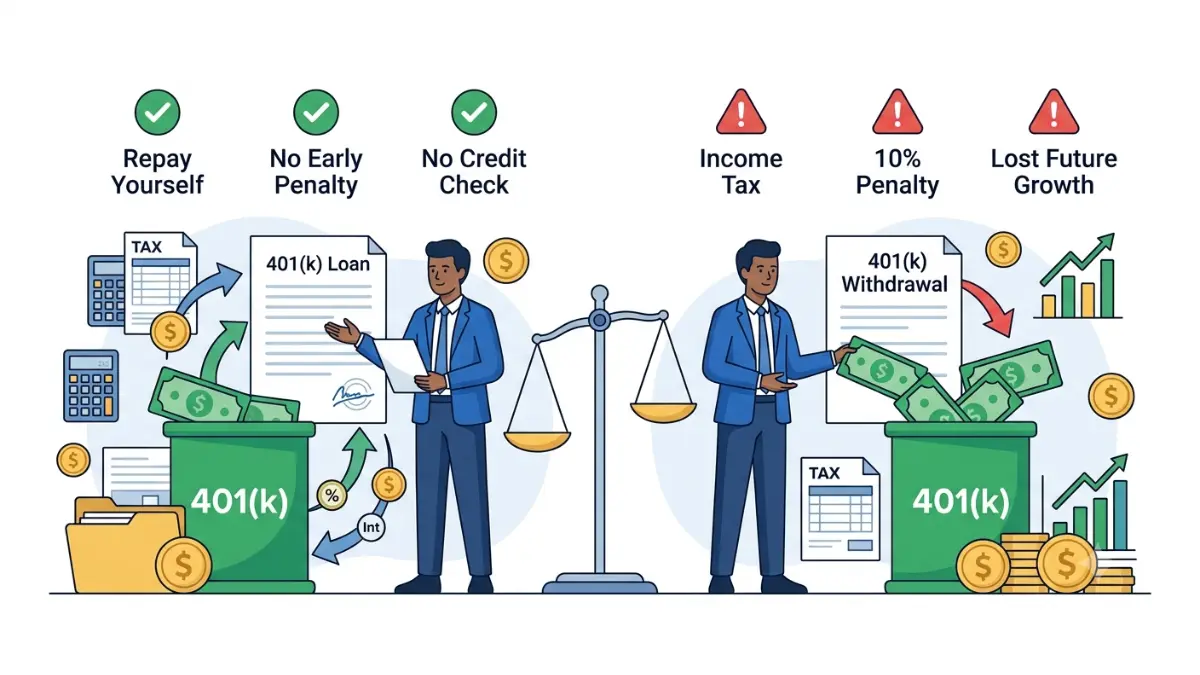 401(k) & Employer Plans
401(k) Loan vs Withdrawal: What It Really Costs You
July 6, 2026
Informational disclaimer
The content on Finance Authority Hub is provided for general informational and educational purposes only and should not be considered personalized financial, investment, tax, legal, or professional advice. Financial decisions depend on your individual goals, income, risk tolerance, location, and regulatory situation. Before acting on any information, strategy, estimate, or calculator result, consult a qualified licensed professional who can evaluate your specific circumstances.