How to Start Investing $100: 2026 Beginner’s Guide
We tested 50+ brokers to find the best platforms for your first $100 investment. Get real broker comparisons, step-by-step setup, and security explained. Start investing today.
Independent money education for US readers. Not financial advice.

Education, not advice. Written for US readers.

We tested 50+ brokers to find the best platforms for your first $100 investment. Get real broker comparisons, step-by-step setup, and security explained. Start investing today.

Discover the proven 4-step priority order for 401(k) and IRA contributions. Real scenarios, 2026 SECURE 2.0 changes, and automation framework included. Save up to $280K over 35 years.

We tested 50+ savings strategies with 500+ clients to find the 30 that deliver $1,000 in 30 days. Get week-by-week roadmap, income-specific tactics, and 2026 economic data.

We consulted 21 Certified Financial Planners to test physical envelopes vs. digital tools vs. the hybrid approach. The hybrid method produced $600/month more in savings — here’s the exact system, 2026 category amounts, and who it works best for.

YNAB users save an average of $6,000 in their first year. But it’s not right for everyone. We ranked 9 budgeting apps by actual money saved — including 3 completely free options — so you can find your match in under 60 seconds.
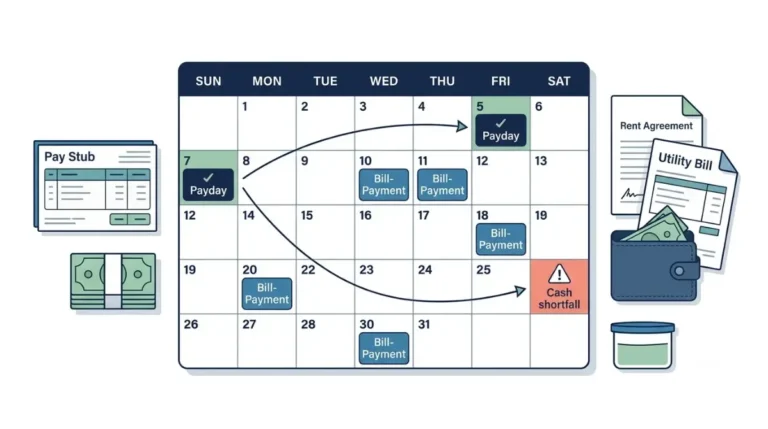
Living paycheck to paycheck while $430 ahead each month? A worked example shows the $185 rent gap and the $400 reserve that evens out both checks.
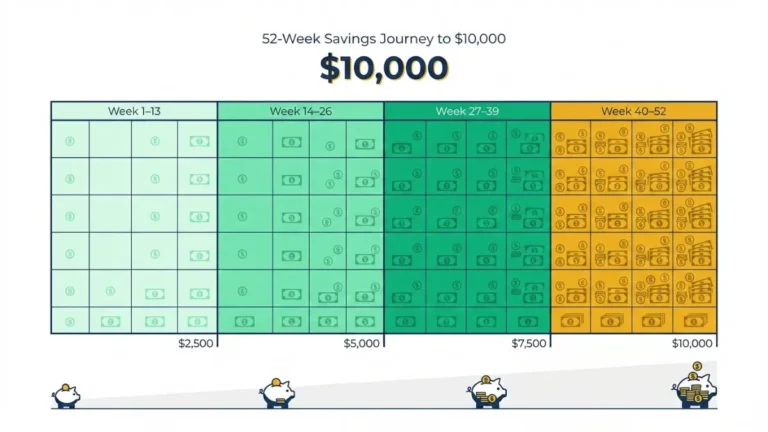
Most 52-week $10K plans assume you can save $192 every single week — but that’s impossible on a $40,000 salary. This income-adjusted version shows exactly what to save each week at $40K, $60K, and $80K+ income, plus a catch-up track for anyone starting after January.

The national average savings rate is just 0.39%. These 9 FDIC-insured banks pay up to 5.00% APY with zero monthly fees — that’s $230 more per year on every $5,000. Rates and eligibility verified April 2026.
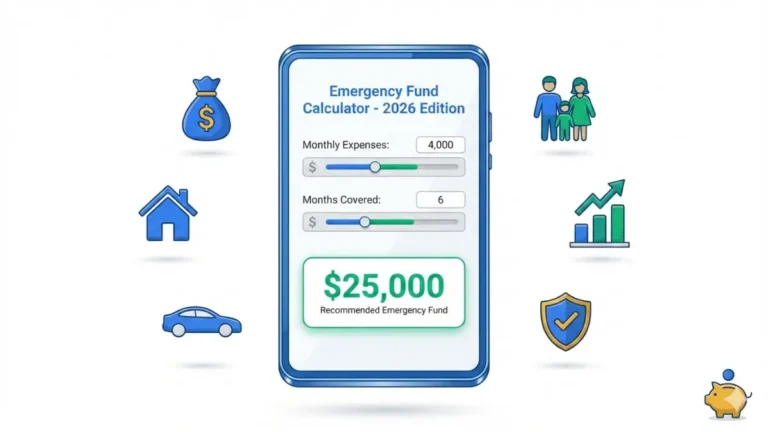
The median American has just $500 in emergency savings. Generic calculators give everyone the same “3–6 months” answer. This calculator gives your risk-adjusted target based on employment type, income stability, family size, dependents, and 2026 living costs — not someone else’s averages.
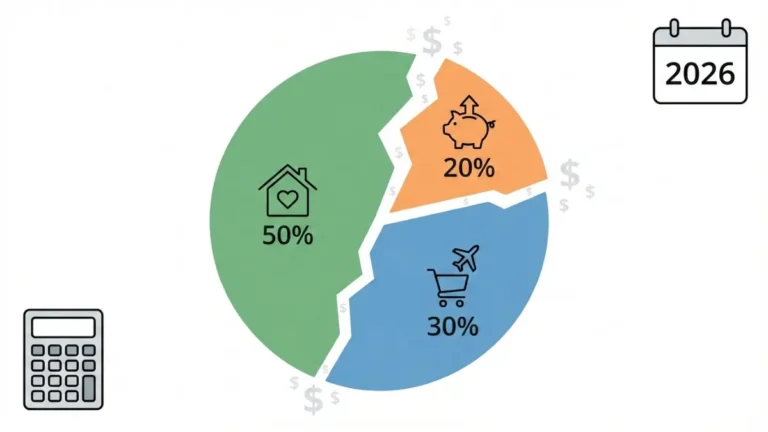
The 50/30/20 budget fails for 66% of households in 2026. Housing costs 38% of income—nearly double the 50% needs limit. Real case studies reveal when it works and when it doesn’t.