How 401(k) Vesting Decides When Your Match Is Yours
401(k) vesting decides when your employer match is truly yours. Your paycheck contributions are 100% vested from day one; the match can take up to 6 years.
In This Article
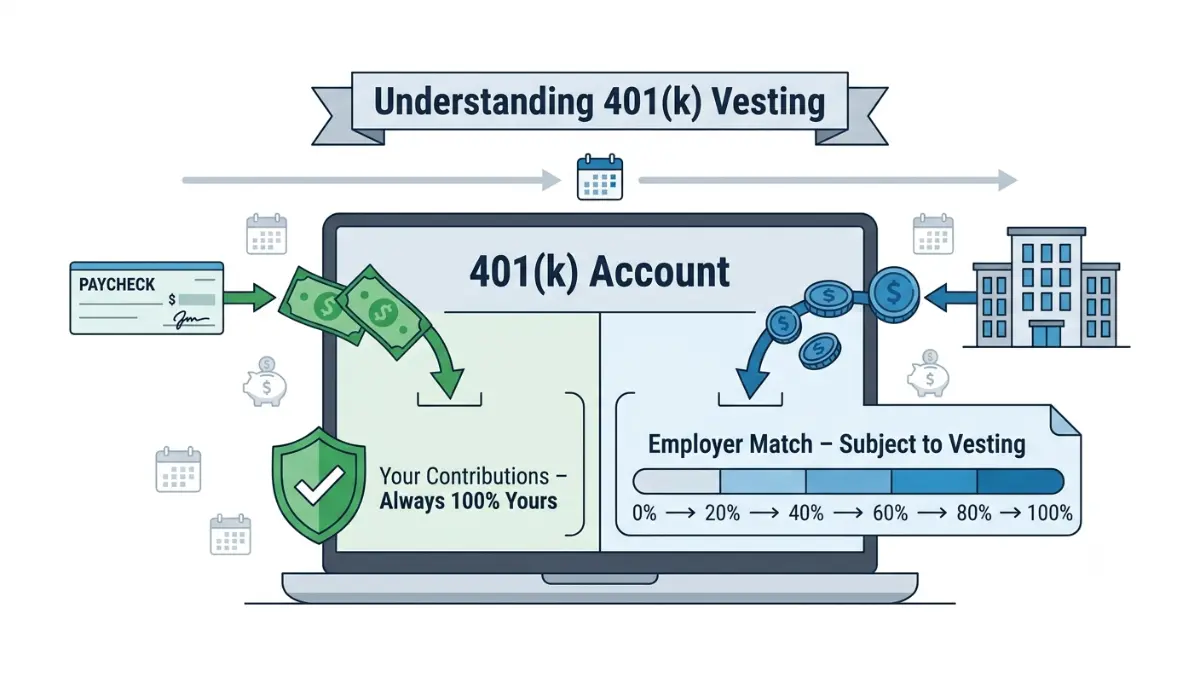
Your own 401(k) contributions are always 100% yours — every dollar you defer from your paycheck, plus its earnings, is yours the moment it lands in the account. 401(k) vesting decides only when your employer’s contributions — the match and any profit-sharing — become yours to keep.
That distinction is the whole game. Weighing a job change? The question is how much of the match you’d forfeit by leaving now. Just saw “unvested” on your statement? You’re working out what’s at risk. Just started getting a match? You want to know whether it’s yours yet. This guide covers the three vesting schedules, how to find and read yours, what you keep if you leave, and how to think about timing a move.
ℹ️ Financial Disclaimer: This article is educational only, not personalized investment, tax, or retirement advice. Vesting rules and plan terms vary by employer and change over time. Before a decision that turns on your vesting — timing a resignation, moving retirement money — confirm the specifics in your plan documents and consult a fiduciary financial advisor, a CPA, or a qualified benefits attorney.
What “vesting” actually means in a 401(k)
Vesting is the rule that determines how much of your employer’s 401(k) contributions you keep when you leave a job. Your own contributions are never subject to it.
Your money vs. your employer’s money
Think of a 401(k) as two buckets. Your elective deferrals — money from your paycheck — are always 100% yours under federal retirement law (ERISA), along with any growth. Employer contributions — the match and profit-sharing — can be placed on a vesting schedule before they fully belong to you. How much goes into each is capped separately; see the annual 401(k) contribution limits and how the employer match works.
Vested vs. unvested balance
Your vested balance is what you’d walk away with today: all your contributions and earnings, plus the employer share your schedule has unlocked. The unvested balance is employer money you haven’t earned yet. If your statement’s “vested” figure is below your total, that gap is employer money still on the clock.
The three vesting schedules: immediate, cliff, and graded
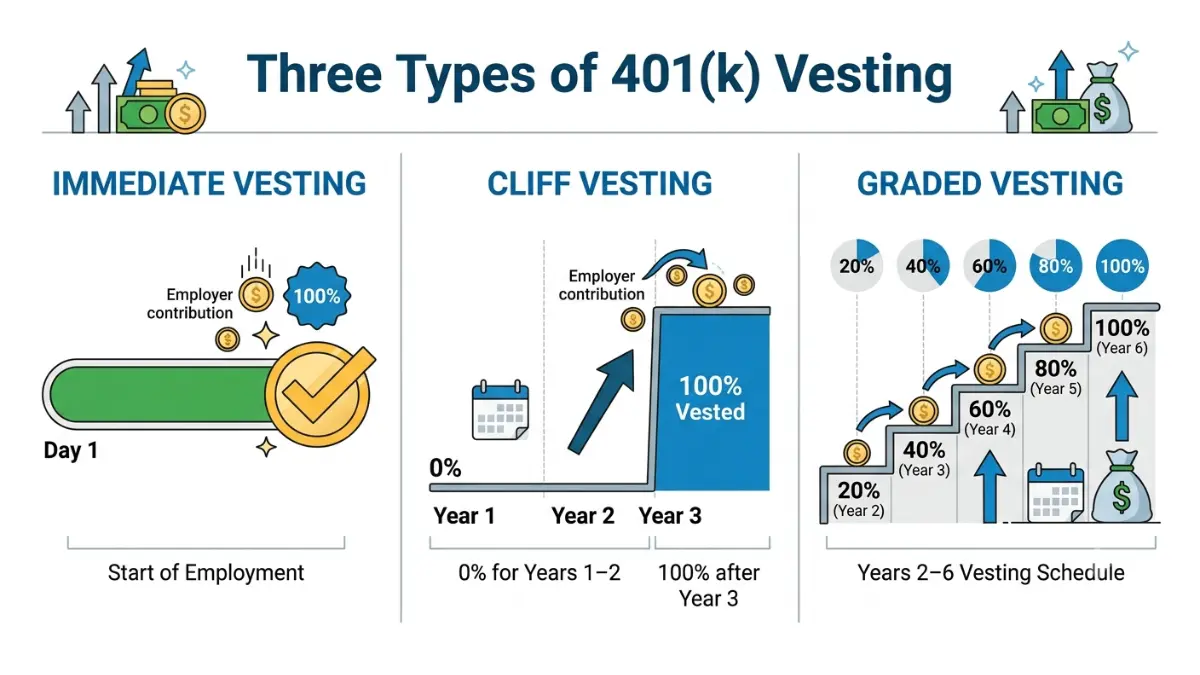
Federal law lets employers use one of two maximum vesting schedules — a three-year cliff or a two-to-six-year graded schedule — or vest you faster, including immediately. These caps come from the Internal Revenue Code and are the longest an employer can make you wait.
| Years of service | 3-year cliff | 2-to-6-year graded | Key detail |
|---|---|---|---|
| 1 year | 0% | 0% | Nothing employer-side yet |
| 2 years | 0% | 20% | Graded begins |
| 3 years | 100% | 40% | Cliff pays in full |
| 4 years | 100% | 60% | Graded past halfway |
| 5 years | 100% | 80% | One step from full |
| 6 years | 100% | 100% | Both fully vested |
Maximum schedules permitted under IRC §411(a)(2)(B); a plan may vest faster. Source: IRS.
Whatever applies governs only the employer’s money, itself capped by separate employer contribution limits.
Immediate vesting (100% from day one)
With immediate vesting, every employer dollar is yours the instant it’s contributed. This is the rule for the match in a traditional safe harbor plan, which must vest matching contributions fully at all times, per the IRS’s allowable vesting schedules.
Cliff vesting (up to three years)
Under cliff vesting, you’re 0% vested until you cross the line, then jump straight to 100% — with a three-year maximum.
Graded vesting (two to six years)
A graded schedule vests employer money gradually over two to six years.
🔍 How It Works: Graded vesting adds 20 points a year — 20% at two years, up to 100% at six. Leave in year four and you keep 60% of the match; the other 40% is forfeited.
How to find your vesting schedule and calculate what you keep
To find your 401(k) vesting schedule, take three steps: read the Summary Plan Description (SPD) your plan must provide, ask HR in writing for your vesting percentage, and confirm the “vested balance” on your latest statement.
Where to find your vesting schedule
Your Summary Plan Description spells out the schedule and how service is counted, and your plan must furnish it on request.
✅ Action Step: Email HR: “Please send my most recent Summary Plan Description and a written calculation of my current vesting percentage.” Federal law requires the plan to provide this on request.
How to calculate your vested balance
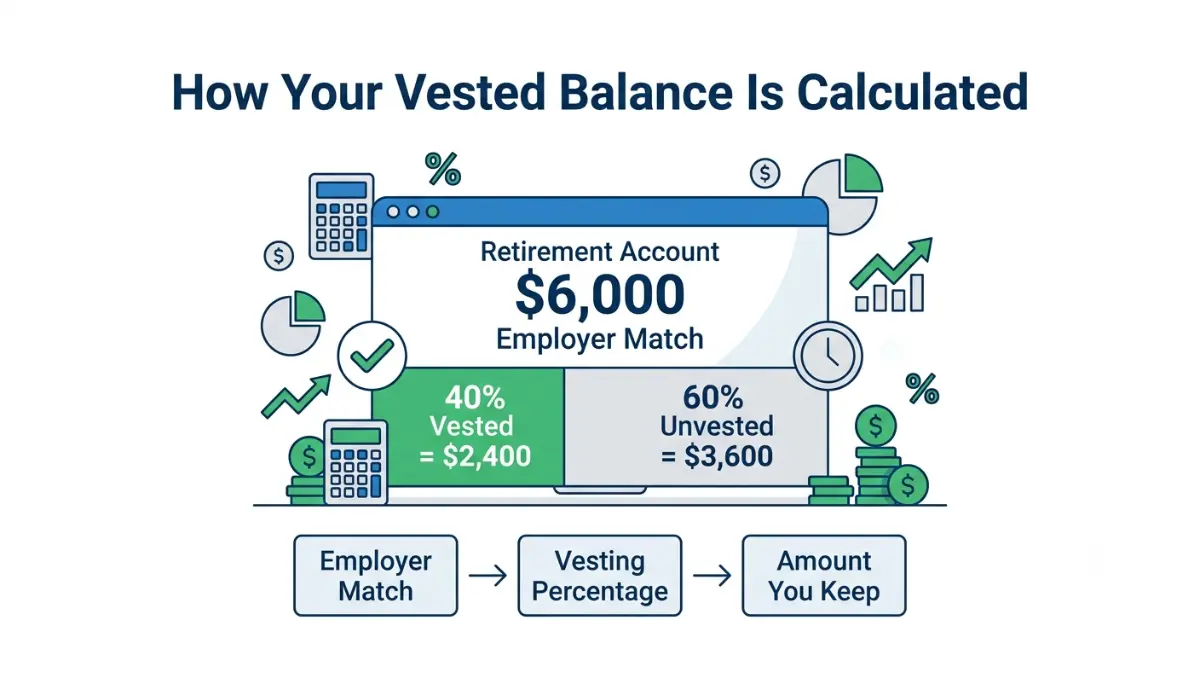
🔍 How It Works: Say your employer contributed $6,000 in match, you’re three years in, and your plan uses six-year graded vesting. At three years you’re 40% vested — $2,400 is yours, $3,600 unvested. Your own contributions and earnings sit outside this, always 100% yours. (Illustrative.)
To run your figures, model your vested balance by tenure, and confirm you’re contributing enough to capture the full match first.
What counts as a “year of service”
A year of service is defined by your plan, not a universal rule, so two plans can reach full vesting months apart. Some count elapsed time from hire; others require set hours — often 1,000 — in a plan year. The SPD is the authority for your situation.
What happens to your unvested match when you leave
If you leave before you’re fully vested, you forfeit the unvested portion of employer contributions but keep everything that’s yours:
- You keep: all your own contributions and earnings, plus the vested percentage of employer money.
- You forfeit: only the unvested percentage of employer contributions.
- You can roll over: the vested balance only — forfeited money was never yours to move.
Forfeiture: what you actually lose
Forfeiture applies only to employer money you hadn’t earned. It returns to the plan, often offsetting the employer’s future contributions or costs. Your paycheck deferrals and their growth stay yours regardless of why or when you leave.
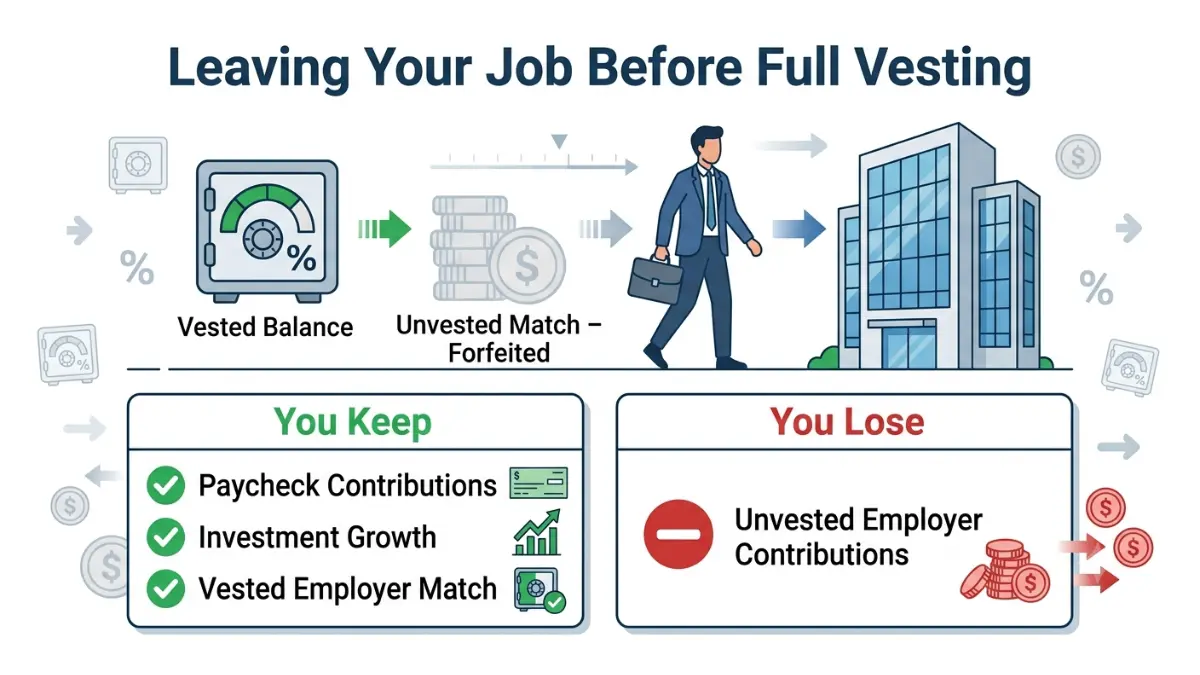
What you keep and can roll over
Your vested balance can move with you — into an IRA or a new 401(k), or left in place if allowed. In Vanguard’s plan data, most departing participants preserve it rather than cash out, which matters because the average employer match has climbed for years.
📊 Data Point: Employer matching contributions reached a record average of 4.7% of pay in 2025 — Source: Vanguard, How America Saves. Preserving your vested share of a match that size keeps employer money compounding for retirement.
Should you time a job change around vesting?
Sometimes waiting a few months to cross a cliff is worth thousands; sometimes it isn’t. This is a personal decision, so weigh four factors instead of following a rule.
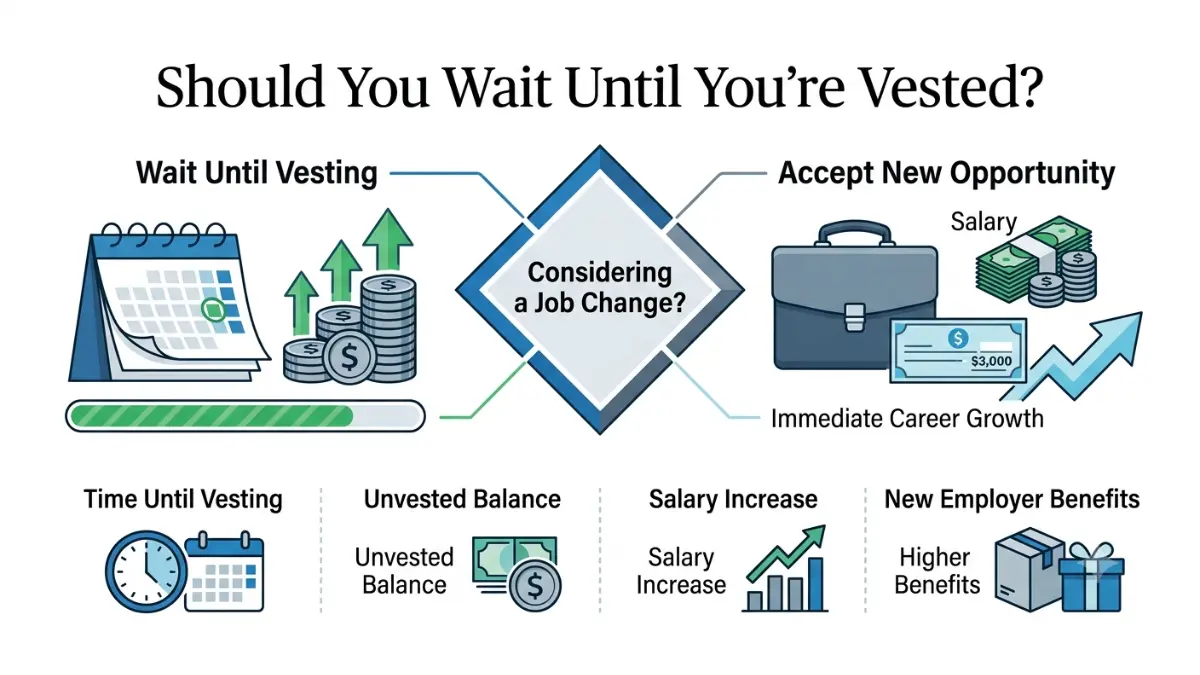
When waiting for the cliff makes sense
Waiting pays off when the unvested amount is large, you’re close to the next step, and a new role wouldn’t dramatically outpay staying. Two months from a three-year cliff worth several thousand dollars may be the best “raise” you have — one way people avoid leaving free money behind.
When it usually doesn’t
It makes less sense when the unvested amount is small, the next step is far off, or an offer brings higher pay, a better match, or immediate vesting. A 10–20% salary bump usually dwarfs a modest forfeited match within a year or two. To size the cost, estimate what a forfeited match could have grown to.
Questions to ask before you decide
Pull your vesting percentage from HR, calculate the exact unvested dollars, and compare that one-time figure against the new opportunity.
✅ Action Step: If the unvested amount could change your decision, ask a fee-only fiduciary financial advisor: “Given my unvested balance of $X and Y months to my next vesting step, does delaying my start date make sense after taxes and the new offer?”
⚠️ Costly Mistake: Resigning days before a vesting date can forfeit the entire unvested match. Confirm your exact vesting date in the SPD first — a plan’s “year of service” definition can shift it by months.
Common 401(k) vesting mistakes to avoid
A few predictable misunderstandings cost people real money at the wrong moment.
Assuming the whole balance is yours
The costliest error is reading your total balance as your take-home number. Only your vested balance is guaranteed yours, so check the vested figure before any move.
Miscounting your years of service
Because a “year of service” is plan-defined, people misjudge their vesting date and can quit weeks short of a cliff. Confirm the exact rule and date in writing.
Overlooking safe-harbor immediate vesting
Many workers assume they must wait when their plan vests the match immediately. In a safe harbor 401(k), the match is 100% vested at all times; in a QACA design, after no more than two years — set out in the federal minimum vesting standards every qualified plan must meet.
💡 Expert Note: Worried your employer could erase your vesting? IRS rules include anti-cutback protection: an employer can change a schedule going forward but can’t take away vesting you’ve earned, and participants with at least three years of service can keep the old schedule.
401(k) vesting FAQ
1. Are my own 401(k) contributions ever forfeited?
No. The money you defer from your paycheck is always 100% vested, along with its earnings, under federal retirement law. Vesting schedules apply only to employer contributions like the match and profit-sharing. You keep every dollar you personally contributed, no matter when or why you leave.
2. How long until I’m fully vested in my 401(k)?
It depends on your plan’s schedule, but federal law caps the wait: a three-year cliff (0% until year three, then 100%) or a two-to-six-year graded schedule. Many plans vest faster, and some vest the match immediately, so check your Summary Plan Description for your exact 401(k) vesting timeline.
3. What’s the difference between cliff and graded vesting?
Cliff vesting gives you 0% of employer contributions until you hit the threshold, then 100% at once — capped at three years. Graded vesting unlocks employer money gradually: 20% after two years, then 20% more annually until fully vested at six years. Leaving early still keeps a partial share.
4. Do I lose my employer match if I quit before vesting?
You lose only the unvested portion of the match; your own contributions, their earnings, and any vested employer money stay yours. If your plan vests immediately, you forfeit nothing. Because the exact figure turns on your plan’s schedule, confirm your vesting percentage with HR and consult a financial advisor before timing a resignation.
5. What counts as a “year of service” for vesting?
Your plan defines it, so it varies. Some plans count elapsed time from your hire date; others require set hours — often 1,000 — worked in a plan year. This definition sets your exact vesting date, so two similar plans can differ by months. Your Summary Plan Description is the authority.
6. Is a safe harbor 401(k) match vested immediately?
Usually, yes. In a traditional safe harbor 401(k), employer matching contributions must be 100% vested at all times, so there’s nothing to forfeit if you leave. One exception: a QACA safe harbor design can require up to two years of service before the match fully vests.
7. Can my employer change the vesting schedule?
Yes, but with limits. An employer can amend the schedule for future contributions, but an anti-cutback rule protects vesting you’ve already earned — it can’t be reduced retroactively. Participants with at least three years of service can elect to keep the old schedule. Any change must be communicated in writing.
8. What happens to my vesting if the plan is terminated?
You generally become 100% vested. Federal rules require full vesting in employer contributions upon a full or partial termination of the plan, and upon reaching the plan’s normal retirement age. So if your employer ends the 401(k), unvested money you’d otherwise forfeit typically becomes fully yours.
9. Does vesting apply to a Roth 401(k)?
Your Roth 401(k) contributions, like traditional deferrals, are always 100% vested because they come from your paycheck. Vesting schedules apply the same way to employer contributions whether you contribute Roth or pre-tax. Note that employer match dollars are typically pre-tax and follow the plan’s standard vesting schedule.
10. Can I roll over unvested money when I leave?
No. Only your vested balance — your own contributions, their earnings, and the vested share of employer money — can be rolled into an IRA or a new 401(k). Unvested employer contributions were never legally yours, so they’re forfeited, not transferred. Confirm a rollover’s tax treatment with your plan administrator or a tax professional.
11. Is the eligibility waiting period the same as vesting?
No — they’re different rules. An eligibility period is how long before you can join the plan or start receiving the match. Vesting is how long employer contributions take to become yours after they’re made. You can be fully eligible and contributing while still working through a vesting schedule.
The bottom line on 401(k) vesting
Your own money is never at risk: every dollar you contribute, plus growth, is yours from day one. Only employer contributions vest on a schedule — capped by federal law at a three-year cliff or a six-year graded timeline, and often faster.
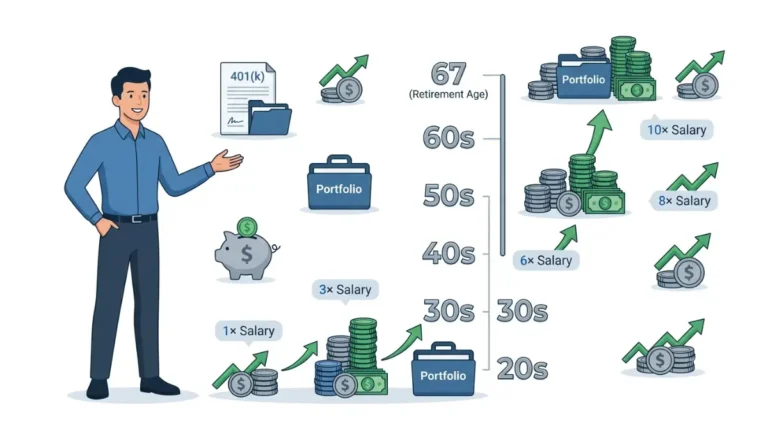
The most useful thing you can do is stop guessing. Pull your Summary Plan Description, confirm your exact vesting percentage in writing, and know your real number before any job change. From there, see how much you should have saved by your age and project your retirement savings.
Informational disclaimer
The content on Finance Authority Hub is provided for general informational and educational purposes only and should not be considered personalized financial, investment, tax, legal, or professional advice. Financial decisions depend on your individual goals, income, risk tolerance, location, and regulatory situation. Before acting on any information, strategy, estimate, or calculator result, consult a qualified licensed professional who can evaluate your specific circumstances.