The Saver’s Match Rules Worth Knowing Before 2027
The Saver’s Match reaches zero at $35,500 for single filers in 2027 — a lower ceiling than the credit it replaces, which still covers $40,250 this year.

In This Article
Starting with the 2027 tax year, the federal government will pay 50 cents for every dollar some workers put into a retirement account, up to $1,000 a year. It is called the Saver’s Match. Unlike nearly every other tax break aimed at savers, you do not need to owe any income tax to receive it.
Three things decide your number: your filing status, your income, and which account you tell the IRS to send the money to. Get that third one wrong and the payment cannot be completed at all.
Find yourself here:
- Filing single and earning under $35,500? The threshold table and the arithmetic are both below.
- No retirement account yet, or only a Roth IRA? Go to where the money can actually land — the Roth rule catches most people off guard.
- Already contributing to a 401(k) at work? You qualify too, despite what several widely shared articles say.
- Wondering what to do before 2027 arrives? 2026 is the final year of the old credit, and it works differently.
One honest caveat before any numbers: the law is settled, but the IRS paperwork is not. There is no published claim form yet.
ℹ️ Financial Disclaimer: This article is general financial education, not personalized advice. It covers tax rules, retirement-account selection, and investment accounts — all regulated activities where your own circumstances change the answer. Before acting on anything here, consult a CPA or enrolled agent about your tax position, a fiduciary financial advisor about your retirement accounts, or a qualified attorney about any legal question. Nothing here creates a professional relationship.
What actually changes when 2027 arrives
A near-identical incentive has existed since 2002, and almost nobody used it. Understanding why explains the whole redesign.
The old credit only helped if you owed tax
The Saver’s Credit reduces your federal income tax bill by a percentage of what you contribute to a retirement account. It is nonrefundable, which means it can take your tax to zero and no further.
For a worker whose income tax is already zero after the standard deduction, that is worth nothing. The people the credit was aimed at were frequently the people it could not reach.
The new match is money in an account, not money in your pocket
The Saver’s Match is paid regardless of whether you owe tax. Treasury sends it as a contribution into a retirement account you nominate, not as a refund into your bank account.
That distinction matters. You will get the money even with no tax liability, but you cannot spend it — it sits in the account until retirement, and it will be taxed when you eventually withdraw it.
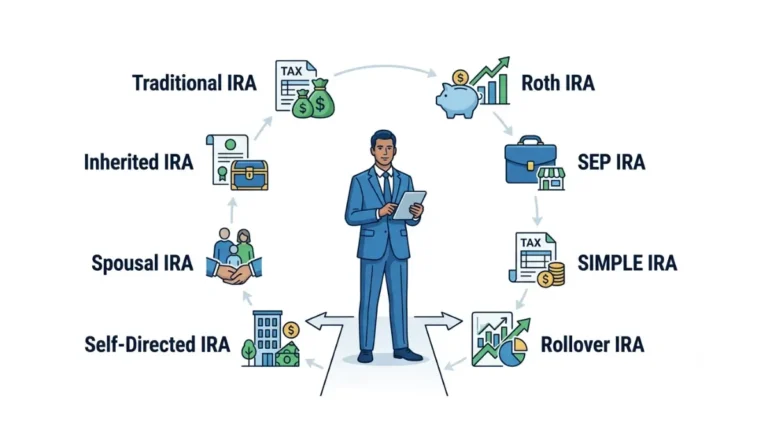
Both IRA contributions and workplace elective deferrals qualify. If you defer into a 401(k), 403(b), governmental 457(b), SIMPLE or SEP plan, those contributions count, and so do traditional and Roth IRA contributions — subject to the annual IRA contribution limit and your plan’s deferral limit.
What still has to be figured out
The statute is law. The mechanics are not finished.
The Internal Revenue Service opened a public comment process on implementation and has said it anticipates issuing further guidance, publications and updated forms. As of this writing, the claim form, the method for nominating an account, and the process by which plans opt in are all still outstanding — the questions the agency itself raised in the IRS request for comments on Saver’s Match implementation.
The 2027 income limits, by filing status
| Filing status | Full 50% match up to | Match reaches $0 at | 2026 Saver’s Credit cut-off | Key detail |
|---|---|---|---|---|
| Married filing jointly | $41,000 | $71,000 | $80,500 | Each spouse has a separate $2,000 ceiling |
| Head of household | $30,750 | $53,250 | $60,375 | Three-quarters of the joint figures |
| Single / married filing separately | $20,500 | $35,500 | $40,250 | Half of the joint figures |
2027 figures are set by Internal Revenue Code section 6433(b)(3). The 2026 comparison column reflects the IRS 2026 retirement plan limits.

Where the match stops entirely
Below the first figure, you get the full 50%. Above the second, you get nothing at all. In between, the percentage slides down in a straight line rather than dropping in steps.
The income being measured is modified adjusted gross income, which is not quite the number on your return. That difference is the subject of the next section, and it is the single most misunderstood part of this benefit.
Why these 2027 numbers will not change
Several widely read pages state that the IRS will publish higher 2027 thresholds later this year. That is not what the statute says.
Section 6433(h) applies its inflation adjustment only to tax years beginning in a calendar year after 2027. The 2027 figures in the table are the statutory ones and will not be revised upward. The $2,000 of matched contributions is never indexed at all.
Three groups that qualified in 2026 but will not in 2027
Compare the last two columns and three gaps appear: single filers between $35,500 and $40,250, heads of household between $53,250 and $60,375, and couples between $71,000 and $80,500.
Those bands qualified for the credit in 2026 and qualify for no match in 2027. The honest footnote is that the top credit band pays only 10% — a maximum of $200 — and being nonrefundable, many in that range never collected it anyway.
How to work out your own match, step by step
Four steps, in this order:
- Find your modified adjusted gross income. Start from your adjusted gross income, then add back any deduction or exclusion you received for the retirement contribution itself.
- Subtract the “full match” figure for your filing status from the table above. If the result is zero or negative, your rate is the full 50%.
- Divide that excess by your phase-out range — $30,000 joint, $22,500 head of household, $15,000 for everyone else — then multiply by 50. Round the result down to a whole number. That is your reduction in percentage points.
- Subtract the reduction from 50, then apply that percentage to your contributions, capped at $2,000.

🔍 How It Works: Step 1 is where most people go wrong. Section 6433(f)(1) defines modified adjusted gross income without regard to any exclusion or deduction for the retirement contribution you are being matched on. A pre-tax 401(k) deferral therefore does not push you down the phase-out for this benefit — the deferral gets added back before the test is run. That is the opposite of how the same deferral behaves for the traditional IRA deduction and Roth eligibility, where lowering the adjusted gross income on line 11 genuinely moves you.
A worked example: $27,000, single
A single filer with modified AGI of $27,000 who contributes $2,000 in 2027:
$27,000 − $20,500 = $6,500 over the threshold. $6,500 ÷ $15,000 = 0.4333, multiplied by 50 = 21.67 percentage points. Rounded down, that is 21 points, so the applicable percentage is 29%.
The match is 29% of $2,000, or $580.
That round-down is written into section 6433(b)(2), and it works in your favour — a straight-line calculation would have produced about $567. Small in dollars, but it is why our figure will differ from most online calculators.
✅ Action Step: Before you rely on your own arithmetic, ask a CPA, enrolled agent or IRS-certified volunteer preparer this specific question: “What is my modified AGI for the Saver’s Match after adding back my retirement contributions, and where does that put me in the phase-out range?”
Where the money can actually land
Why a Roth IRA cannot receive it
No. A Roth IRA is not an eligible destination for the Saver’s Match, and neither is the Roth portion of a workplace plan.
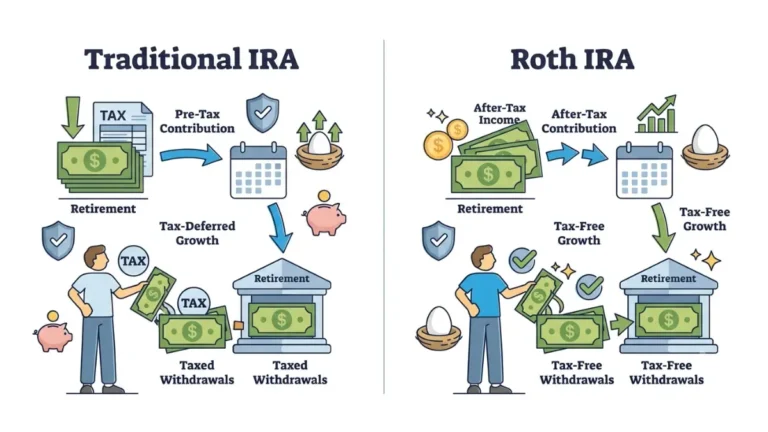
Section 6433(e)(2) limits the receiving account to a traditional, non-Roth IRA or the non-Roth portion of a 401(k), 403(b) or governmental 457(b). The logic is consistent: the match is untaxed going in, so it has to sit in an account that will be taxed coming out.

⚠️ Costly Mistake: Contributing to a Roth IRA still earns you the match — the contribution qualifies. But the Roth cannot receive the payment. If a Roth is your only retirement account, you can qualify on paper and have nowhere for the money to go. Research from the Employee Benefit Research Institute suggests roughly 2 million likely-eligible savers are in exactly this position.
What to do if the only account you have is a Roth
Open or nominate a traditional IRA. That is the whole fix, and opening a traditional IRA generally takes under half an hour.
If you are unsure which type you actually hold, the difference between a traditional and Roth IRA comes down to when the tax is paid. Workers enrolled through state-run auto-IRA programs should check carefully — several of those programs default participants into Roth accounts, and the IRS has flagged this specific mismatch as an open implementation problem.
If you have a 401(k) at work
Your deferrals qualify, and the federal match is on top of any employer match — it does not replace it.
One thing to verify: a plan is not required to accept these payments. Ask your plan administrator whether yours will, and if the answer is no, nominate a traditional IRA instead.
How many people this reaches — and what to do in 2026
The gap between who qualifies and who contributes
📊 Data Point: Roughly 69 million tax filers with W-2 wage income had incomes in the eligible range, but only about 21.9 million actually contributed to a qualifying account — 18.9 million through employer plans, 1 million through traditional IRAs and 2 million through Roth IRAs. Source: Employee Benefit Research Institute, “Sizing the Market for the Saver’s Match,” February 2024, based on 2018 tax-year data and described by EBRI as a lower-bound estimate.
The binding constraint is not eligibility. It is having an open account with money going into it.
Awareness is the other constraint. Transamerica Center for Retirement Studies research fielded in late 2025 among 6,153 workers found 48% aware of the existing credit, falling to 38% among those earning under $50,000 — and the average credit claimed in 2022 was $194. You can project what a repeated match builds over time to see what a decade of $580 looks like next to that.
2026 is the last year of the old credit
The Saver’s Credit applies to retirement contributions for the final time on your 2026 return, claimed on Form 8880. The eligibility rules and current AGI bands are set out on the IRS Saver’s Credit page.
If you have not contributed for 2026 yet, you have not missed it — the deadline for a 2026 IRA contribution falls in April 2027, after the tax year has closed.
Four ways to lose the match after you’ve earned it
None of these are common. All four are avoidable if you know they exist.

Withdrawals in the wrong three-year window reduce what counts
Your qualifying contributions are cut by any distributions you took during the testing period — the tax year itself, the two years before it, and the stretch after year-end up to your filing deadline.
So cashing out a small 401(k) when you change jobs in 2026 can shrink or erase your 2027 match, with nothing to connect the two events at the time. Rollovers are specifically excluded and do not count against you. On a joint return, your spouse’s distributions count as yours.
Taking the money out early can trigger a recovery tax
If you take an early distribution and your match contributions end up exceeding the account balance at year-end, a Saver’s Match Recovery tax can apply on top of the 10% early withdrawal penalty.
It is reduced by the 10% tax you already paid, and you can cancel it entirely by putting the distributed amount back by your filing deadline.
Students, dependents, and the under-18 rule
You must be 18 by the end of the tax year, not claimed as a dependent, and not a full-time student. The student bar disqualifies a large share of otherwise-eligible young earners, so check it before planning around the match.
If your match comes to less than $100
Where the calculated match is above zero but under $100, you may elect to take it as a refundable credit instead of a deposit. What happens if you make no election is one of the open questions the IRS has asked the public about — so do not assume a default.
✅ Action Step: If you took any retirement distribution in the last two years, ask an IRS-certified volunteer preparer or an enrolled agent: “Does this distribution reduce the contributions that count toward my Saver’s Match, and by how much?” Households under roughly $69,000 can get this done at no cost through free IRS-certified tax help.
Saver’s Match questions people are asking
1. Who qualifies for the Saver’s Match?
You qualify if you are 18 or older by year-end, not a full-time student, not claimed as a dependent, and your modified AGI falls under the ceiling for your filing status — $71,000 joint, $53,250 head of household, $35,500 single. You must also make a qualifying retirement contribution. Confirm your own position with a CPA or enrolled agent.
2. How much is the Saver’s Match?
The maximum is $1,000 per person: 50% of the first $2,000 you contribute in a year. The full 50% applies only below the lower income figure for your filing status, then slides down to zero. A married couple who each contribute $2,000 and stay under $41,000 could receive $2,000 between them.
3. When does the Saver’s Match start?
It applies to tax years beginning after 31 December 2026, so 2027 is the first year. Because it is claimed on your tax return and paid afterwards, contributions made during 2027 produce a payment once that return is filed the following year. The IRS has not published a payment schedule.
4. Does the Saver’s Match replace the Saver’s Credit?
For retirement plan and IRA contributions, yes. The Saver’s Credit applies for the last time on your 2026 return, and the Saver’s Match takes over from tax year 2027. The two work differently: the credit reduced tax owed, while the match is deposited into a retirement account. Ask a CPA which applies to your year.
5. Can I get the Saver’s Match if I have a 401(k) at work?
Yes. Elective deferrals to a 401(k), 403(b), governmental 457(b), SIMPLE or SEP plan all count as qualifying contributions, and the federal match sits on top of any employer match rather than replacing it. Your plan is not required to accept the payment, so ask your plan administrator before you rely on it.
6. Can the match go into my Roth IRA?
No. The receiving account must be a traditional, non-Roth IRA or the non-Roth part of a workplace plan. You can still earn the match by contributing to a Roth IRA — the contribution qualifies — but you will need to nominate a separate non-Roth account to receive the payment itself.
7. Do I get the match if I owe no income tax?
Yes, and this is the central improvement over the old credit. The Saver’s Credit was nonrefundable, so it was worthless to anyone whose tax was already zero. The Saver’s Match is paid regardless of tax liability, though it arrives as a retirement account deposit rather than cash. A tax professional can confirm your position.
8. When will the money actually show up?
The statute says Treasury pays it as soon as practicable after you file the return claiming it. For 2027 contributions, that means sometime after you file your 2027 return in 2028. No official date has been published, and the mechanism for transferring funds to account providers is still being worked out.
9. Does a 401(k) contribution lower the income they test?
No, and this trips up a lot of people. The modified AGI used for the Saver’s Match is calculated without regard to any exclusion or deduction for the retirement contribution being matched, so the deferral is added back before the test runs. It behaves differently here than it does for IRA deduction limits. Confirm with a CPA.
10. What happens if I withdraw the money early?
An early distribution can trigger a Saver’s Match Recovery tax if your match contributions exceed the account balance at year-end, charged in addition to the usual 10% early withdrawal penalty. The recovery tax is reduced by that 10% amount and can be cancelled entirely by recontributing the distribution before your filing deadline. Speak to a CPA first.
11. Are students eligible for the Saver’s Match?
No. Anyone who counts as a full-time student under the tax code is excluded, as is anyone claimed as a dependent on someone else’s return or under 18 at year-end. This removes a large group of young workers who would otherwise qualify on income alone, so check your status before planning around the benefit.
What to do before January
Two things, both dated.
First, if your 2026 income lands under the Saver’s Credit ceiling, make the contribution and claim it on your 2026 return — that is the last year it exists for retirement savings.
Second, make sure a non-Roth account is open and ready before you contribute in 2027. If you are choosing a provider, what to look for in an IRA provider matters more than usual here, because a small annual fee can eat a meaningful share of a $580 match.
The law itself is settled. The paperwork is not — no claim form, no nomination process, no payment date has been published yet. Check back before you file your 2027 return.
Informational disclaimer
The content on Finance Authority Hub is provided for general informational and educational purposes only and should not be considered personalized financial, investment, tax, legal, or professional advice. Financial decisions depend on your individual goals, income, risk tolerance, location, and regulatory situation. Before acting on any information, strategy, estimate, or calculator result, consult a qualified licensed professional who can evaluate your specific circumstances.