How to Open an IRA, Even If You’ve Never Invested
Opening an IRA takes about 20 minutes—but the step most people skip is the one that actually grows their money. Here’s the full 6-step path for 2026.

In This Article
Opening an individual retirement account is one of the simplest high-impact money moves you can make — and the online application really does take about 15 to 20 minutes. This guide walks you through it start to finish, whether you’re a recent graduate opening your first account, someone comparing providers before committing, a self-employed earner weighing your options, or a late starter catching up in your 40s or 50s. Each of those readers needs slightly different things, and we’ll flag where your path changes.
Here’s the honest version of the promise. The account application is the fast part; funding it can take a few business days to clear, and choosing what to invest in is a separate step most guides skip — the one that actually decides whether your money grows. We’ll cover all three so you finish with an account that’s open, funded, and working.
By the end, you’ll know which type to pick, where to open it, exactly what the form asks, and the one step that keeps your cash from sitting idle.
ℹ️ Financial Disclaimer: This article is general educational information about retirement accounts, investing, and taxes — not personalized investment, tax, or financial advice. Contribution and income figures are current for the 2026 tax year and verified against IRS Notice 2025-67; rules change and individual circumstances differ. Confirm current limits at IRS.gov and consult a fiduciary financial advisor or a CPA before making decisions specific to your situation.
Traditional or Roth: pick your IRA type first
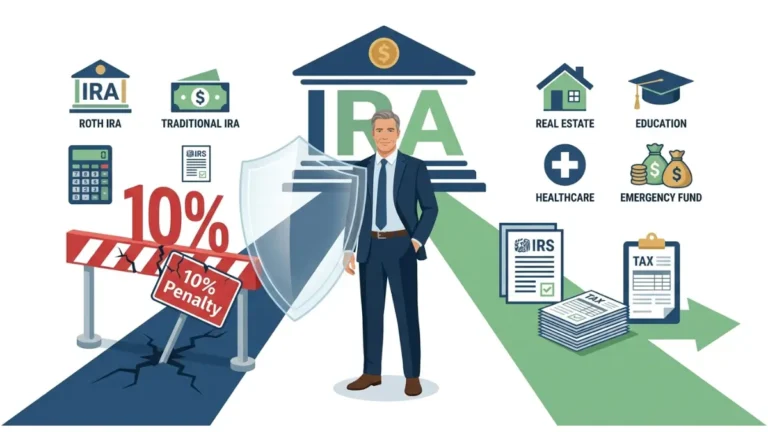
Before you open anything, you need to choose between a Traditional IRA and a Roth IRA — it’s the one decision that shapes everything else.
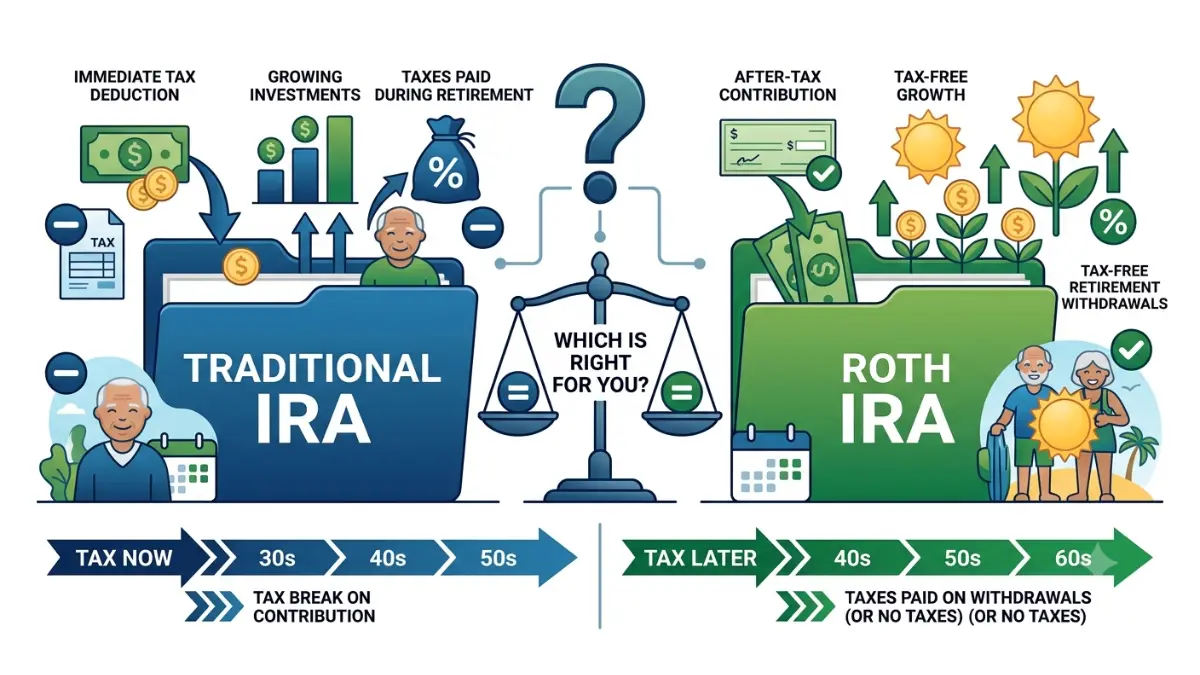
🔍 How It Works: Tax-deferred growth is the engine of both account types. Inside an IRA, your investments grow without yearly taxes on gains or dividends; the difference is only when the tax applies — a Roth taxes the money going in, a Traditional taxes it coming out.
The quick way to choose
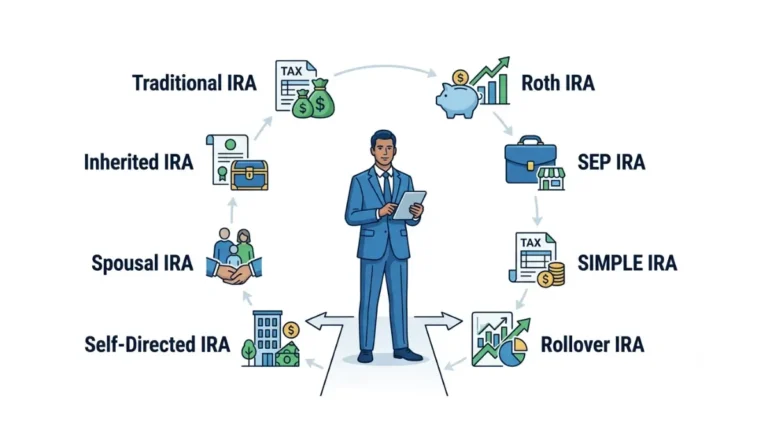
A Roth IRA takes after-tax money now and gives you tax-free withdrawals in retirement. A Traditional IRA may give you a tax deduction now, with withdrawals taxed later as ordinary income. If you expect to be in a higher bracket later — or you simply value tax-free income in retirement — a Roth often makes sense; if you want a deduction today and expect a lower bracket after you stop working, a Traditional may fit better. For the full picture across every account type, see which type of IRA fits your income and this full Roth vs Traditional comparison.
Can your income even use a Roth in 2026?
Roth IRAs have income limits; Traditional IRAs don’t cap contributions, only whether they’re deductible.
📊 Data Point: For 2026, Roth IRA eligibility phases out between $153,000 and $168,000 for single filers and heads of household, and between $242,000 and $252,000 for married couples filing jointly — Source: IRS, 2026 (Notice 2025-67).
If you earn above the top of your range, direct Roth contributions aren’t allowed — the term to research with a professional is the “backdoor Roth.” Whether a Traditional contribution is deductible depends on your income and workplace-plan coverage, laid out in the detailed 2026 Roth IRA income limits and the IRS’s rules on IRA contributions and deductibility. Not sure how a Roth could grow for you? You can estimate your Roth IRA’s tax-free growth before you decide.
✅ Action Step: Before you pick, ask a CPA directly: “Given my expected retirement income, is a Roth or Traditional contribution better for me this year?”
Where to open an IRA: what actually matters
Once you’ve picked a type, the provider you choose mostly comes down to three things — and a splashy sign-up bonus isn’t one of them.
The three things to compare
Look at fees, minimums, and investment options. Ongoing costs matter far more than a one-time promo, because a recurring advisory fee compounds against you for decades. The right choice depends on how hands-on you want to be.
| Provider type | Best for | Key detail |
|---|---|---|
| Full-service brokerage | DIY investors who want the widest choice | Buy individual stocks, ETFs, and index or mutual funds; often $0 account minimums and $0 stock/ETF commissions |
| Robo-advisor | Hands-off beginners | Builds and manages a portfolio for you for a small recurring advisory fee |
| Bank IRA | Ultra-conservative savers | Usually limited to CDs and savings; lower growth potential over time |
Table reflects common industry practice; confirm each provider’s specific terms before opening.
Brokerage vs robo-advisor vs bank
If you’re a beginner who wants low-cost, well-known platforms to compare, our roundup of beginner-friendly investing apps is a useful starting point. Whichever you lean toward, do one safety check first.
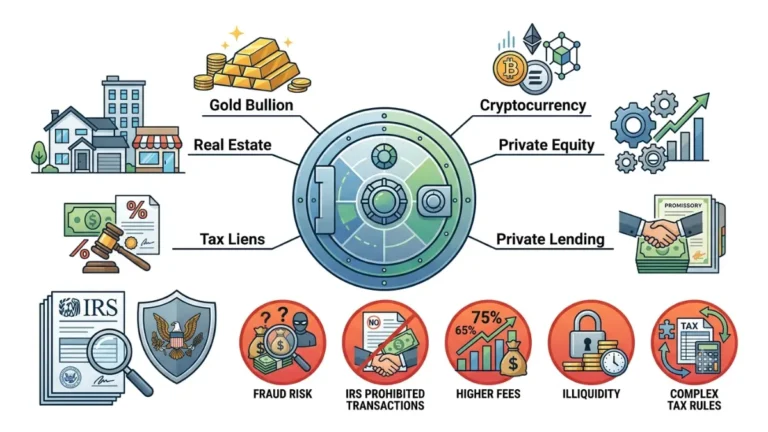
⚠️ Costly Mistake: Skipping due diligence on the firm. Before you move money, confirm a brokerage is registered and review its record — a two-minute step that can save you from a bad actor.
✅ Action Step: Look up any brokerage or advisor on FINRA BrokerCheck to confirm it’s registered and check for disclosures before you fund an account.
How to open an IRA in 6 steps
With a type and a provider chosen, the application itself is short and mostly a matter of having your details ready.
What to have ready
- Your Social Security number (or ITIN) and a government-issued ID
- Your employer’s name and address, or your self-employment details
- Your bank’s routing and account numbers to fund the account
- A beneficiary’s name and information
The 6 steps
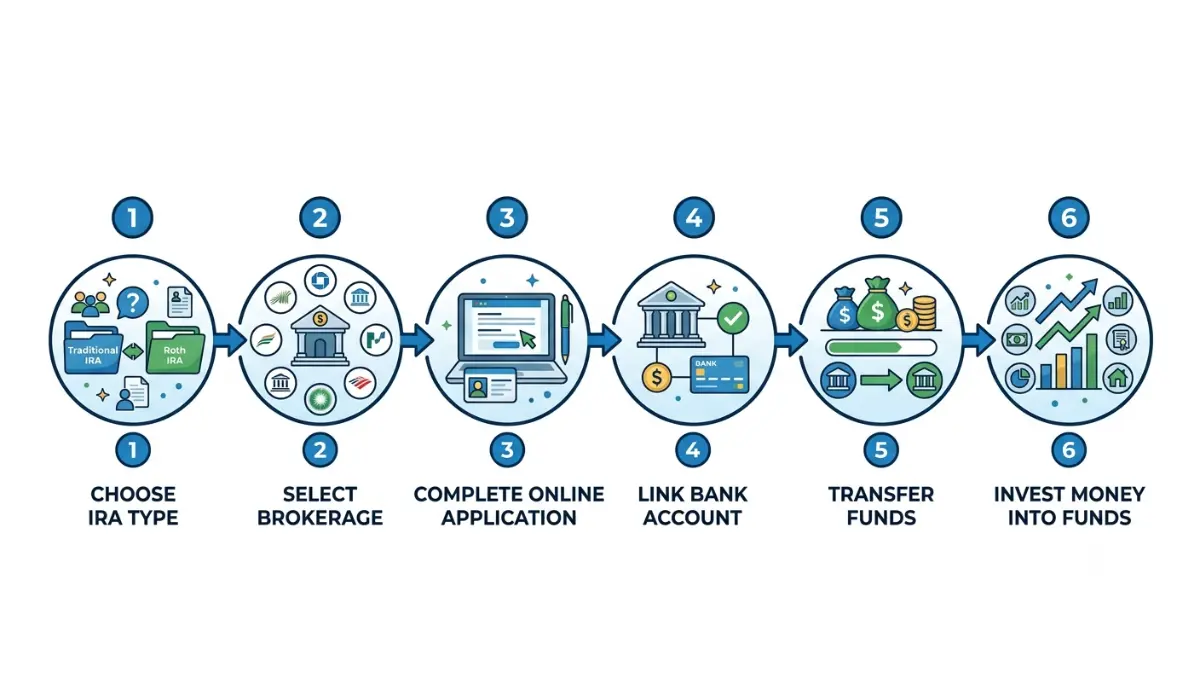
To open an IRA online in about 15 to 20 minutes:
- Choose your account type — Traditional or Roth, decided above.
- Pick a provider and start the application on their website.
- Complete the application — personal details, employment, and beneficiary designation.
- Link your bank and make your first contribution, or schedule a recurring one.
- Confirm the money arrived — bank transfers often take one to three business days to clear.
- Choose your investments so the cash doesn’t sit idle — the step that turns a funded account into a growing one.
⚠️ Costly Mistake: The most common IRA error isn’t picking the wrong fund — it’s never picking one. Money you contribute usually lands in a cash “settlement” position and stays uninvested until you actually buy something, quietly missing years of potential growth.
How long each step really takes
The application runs 15 to 20 minutes. Linking a bank is often instant, but the first transfer can take one to three business days to settle. Choosing investments takes another 10 to 30 minutes depending on how much you want to research — and it’s worth doing the same day so nothing stalls.
✅ Action Step: Right after step 4, set an automatic monthly contribution. Even a small recurring amount removes the willpower problem and keeps you funding the account all year.
How much you can contribute in 2026 (and by when)
For 2026, you can contribute up to $7,500 across all your Traditional and Roth IRAs combined — or $8,600 if you’re 50 or older.
📊 Data Point: The 2026 IRA contribution limit is $7,500, rising to $8,600 at age 50 or older thanks to a $1,100 catch-up (up from $1,000 in 2025) — Source: IRS, 2026 (Notice 2025-67 / IR-2025-111).
2026 contribution limits
| Who you are | 2026 contribution limit | Key detail |
|---|---|---|
| Under 50 | $7,500 | Applies across all Traditional + Roth IRAs combined |
| 50 or older | $8,600 | Includes a $1,100 catch-up contribution |
Source: IRS, Notice 2025-67 (2026 tax year).
You can see the IRS’s official 2026 contribution limits directly, and the full 2026 IRA contribution rules if you want the deeper version. You also need earned income to contribute, and you can’t put in more than you earned for the year. Curious what consistent contributions become over time? You can project your retirement savings with a few inputs.
🔍 How It Works: The limit is a household-account cap, not a per-account one. You could split $7,500 between a Roth and a Traditional IRA, or put it all in one — but the combined total across every IRA you own can’t exceed the limit.
The deadline (more generous than a 401(k))
IRA contributions are more forgiving than a 401(k). You have until the federal tax-filing deadline for that year — for 2026 contributions, the April 2027 deadline, typically April 15 — and you can even make a prior-year contribution in early 2027 if you tell your custodian to apply it to 2026.
✅ Action Step: If you’re unsure whether your Traditional contribution is deductible, check whether your Traditional contribution is deductible, then ask a CPA: “Given my income and workplace plan, is my Traditional IRA contribution deductible this year, and do I need Form 8606 for any nondeductible amount?”
Choosing what to invest in (so it doesn’t sit in cash)
An IRA is a container, not an investment — opening and funding one doesn’t put your money to work until you choose what to hold inside it.
💡 Expert Note: A common point of confusion is thinking that opening and funding an IRA means you’ve “invested.” Until you buy something inside it, the money typically sits in cash. Investing is the deliberate final step, not an automatic result of contributing.

Common building blocks (in plain terms)
A few categories come up again and again. Index funds track a market benchmark at low cost. Exchange-traded funds (ETFs) are baskets of investments that trade like a stock, and target-date funds bundle everything into one fund that shifts over time. To understand the trade-offs between two of the most common options, see how index funds compare to mutual funds.
🔍 How It Works: A target-date fund is a “set it and mostly forget it” option. You pick the fund with the year closest to your planned retirement, and it automatically shifts from more aggressive to more conservative as that date approaches.
Why an advisor, not a stranger online, picks your specific mix
Which specific investments belong in your account depends on your age, timeline, risk tolerance, and everything else you own — variables no article can see. This guide won’t tell you what to buy, and you should be skeptical of anyone online who does without knowing your situation. To picture how time affects growth, you can see how compounding builds over time.
✅ Action Step: For a specific allocation, talk to a fee-only fiduciary advisor and ask: “Given my age, timeline, and risk tolerance, what specific mix should I hold inside my IRA?”
5 mistakes that cost new IRA owners
Most IRA regret comes from a short list of avoidable errors — here’s how to land clean.
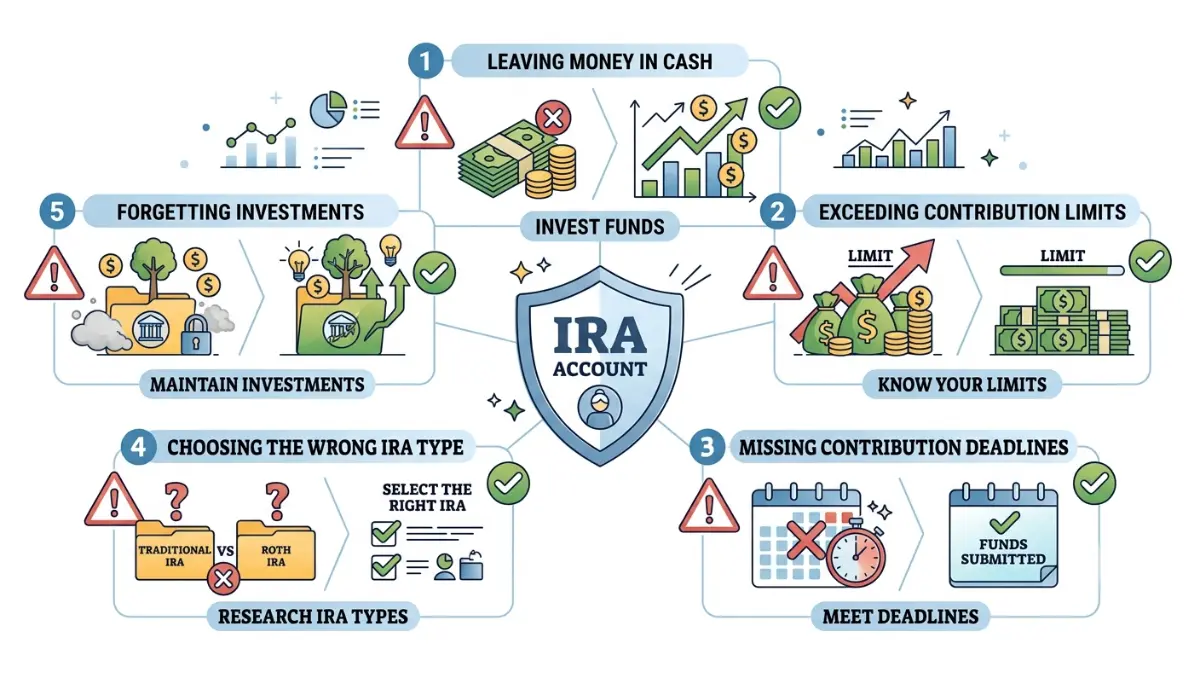
Money mistakes
The first two are about the money itself. Leaving contributions in cash means the account is funded but never invested, so it barely grows. Over-contributing carries a real, repeating cost.
📊 Data Point: Excess IRA contributions are taxed at 6% per year for every year the extra money stays in the account — Source: IRS, 2026 (Publication 590-A / retirement-topics).
⚠️ Costly Mistake: If you accidentally contribute more than the limit, the fix is to withdraw the excess — plus any earnings it generated — before your tax-filing deadline. Leave it in, and the 6% penalty repeats every year until you remove it.
Timing and eligibility mistakes
The other three are about timing and fit. Missing the contribution deadline means losing that year’s tax-advantaged space for good. Contributing to a Roth when your income is over the 2026 limit creates an excess contribution, and picking the wrong type for your bracket can cost you flexibility later.
✅ Action Step: If you over-contributed, ask a CPA how to remove the excess and any earnings correctly before the deadline — the timing and paperwork matter.
IRA opening FAQ
1. How long does it take to open an IRA?
Opening an IRA online usually takes about 15 to 20 minutes if you have your details ready — Social Security number, bank information, and a beneficiary in mind. The account opens quickly, but funding it can take one to three business days to clear, and choosing your investments is a separate step you shouldn’t skip.
2. How much money do I need to open an IRA?
Many major brokerages and robo-advisors let you open an IRA with no minimum deposit, so you can start with whatever you have. What matters more is contributing consistently over time. Some bank IRAs or specific funds may require a small minimum, so check the provider’s terms first.
3. Is a Traditional or Roth IRA better?
Neither is universally better — it depends on your tax bracket now versus in retirement. A Roth IRA uses after-tax money for tax-free withdrawals later; a Traditional IRA may be deductible now and is taxed on withdrawal. If you expect a higher bracket later, a Roth often fits. Ask a CPA which suits your situation.
4. Can I open an IRA if I already have a 401(k)?
Yes — having a 401(k) doesn’t stop you from opening an IRA. Your income and workplace-plan coverage may limit whether a Traditional contribution is deductible, but you can still contribute, and many people use both. If you’re deciding what to fund first, see whether to max your 401(k) or IRA first. Consult a CPA on deductibility.
5. What’s the Roth IRA income limit for 2026?
For 2026, Roth IRA eligibility phases out between $153,000 and $168,000 for single filers and heads of household, and between $242,000 and $252,000 for married couples filing jointly. Above the top of your range, you can’t contribute directly to a Roth IRA. A financial professional can explain options if you’re over the limit.
6. Where’s the best place to open an IRA?
There’s no single best place — the right provider depends on how hands-on you want to be. Full-service brokerages offer the widest investment choice, robo-advisors manage a portfolio for you, and bank IRAs suit ultra-conservative savers. Compare fees, minimums, and investment options, and verify any firm before you open an IRA with it.
7. How much can I contribute to an IRA in 2026?
For 2026, you can contribute up to $7,500 across all your Traditional and Roth IRAs combined, or $8,600 if you’re 50 or older, thanks to a $1,100 catch-up. The limit applies to every IRA you own together, not per account, and you need earned income at least equal to your contribution. Confirm current figures at IRS.gov.
8. Do I have to choose investments after opening an IRA?
Yes, and it’s the step people most often miss. Money you contribute typically lands in a cash settlement position and stays uninvested until you buy something. An IRA is just a container — the investments inside it are what grow. For a specific mix suited to you, talk to a fee-only fiduciary advisor.
9. What’s the deadline to contribute to an IRA?
You have until the federal tax-filing deadline to make a contribution for that tax year — for 2026, that’s the April 2027 deadline, typically April 15. You can even make a prior-year contribution in early 2027 if you tell your custodian to apply it to 2026. That’s more generous than a 401(k)’s year-end deadline.
10. Can I open an IRA if I’m self-employed?
Yes, you can open an IRA if you’re self-employed. Beyond a regular Traditional or Roth IRA, self-employed earners can use accounts built for them — a SIMPLE IRA allows employee contributions of up to $17,000 in 2026, and a SEP IRA allows significantly higher limits. See retirement account options for the self-employed. A CPA can help you pick the most tax-efficient one.
11. What happens if I contribute too much to an IRA?
If you contribute more than the annual limit, the IRS charges a 6% excise tax on the excess for every year it stays in the account. The fix is to withdraw the excess amount, plus any earnings it generated, before your tax-filing deadline. A CPA can walk you through removing it correctly.
Ready to open your IRA?
You now have the whole path: pick Traditional or Roth based on your tax picture, choose a provider on fees and investment options, complete the 15-to-20-minute application, fund it, and — the step that matters most — actually invest so your money doesn’t sit in cash.
The best time to start is today, while it’s in front of you. Open the account, make a first contribution, and set a small automatic monthly amount so the habit runs itself. Then confirm the current 2026 figures at IRS.gov and, for a specific investment mix, talk to a fee-only fiduciary advisor about what fits your age and timeline.

Informational disclaimer
The content on Finance Authority Hub is provided for general informational and educational purposes only and should not be considered personalized financial, investment, tax, legal, or professional advice. Financial decisions depend on your individual goals, income, risk tolerance, location, and regulatory situation. Before acting on any information, strategy, estimate, or calculator result, consult a qualified licensed professional who can evaluate your specific circumstances.