How the 2026 Roth Catch-Up Rule Affects 401(k) High Earners
401(k) Roth catch-up rules changed in 2026: above $150,000 in 2025 wages, your catch-up must go Roth. Here’s how to tell if the line reaches you.
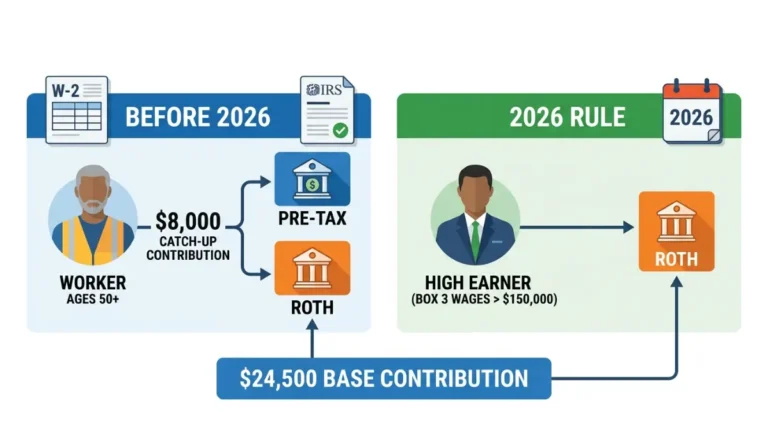
401(k) Roth catch-up rules changed in 2026: above $150,000 in 2025 wages, your catch-up must go Roth. Here’s how to tell if the line reaches you.
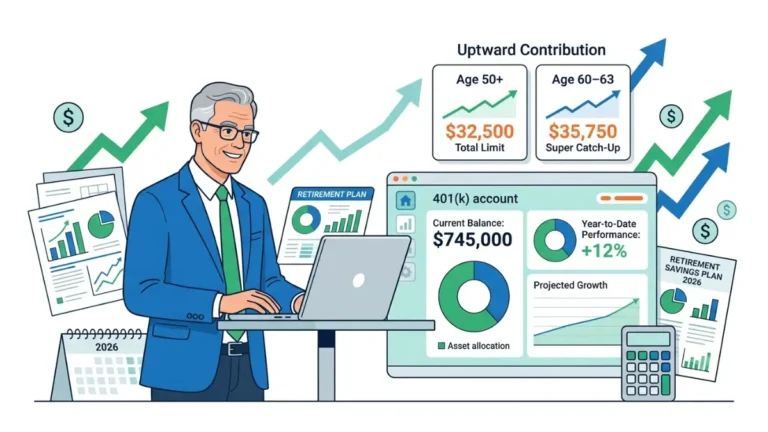
401(k) catch-up contributions rose for 2026 — but the super catch-up didn’t. See what each age can add and the Roth rule high earners can’t miss.
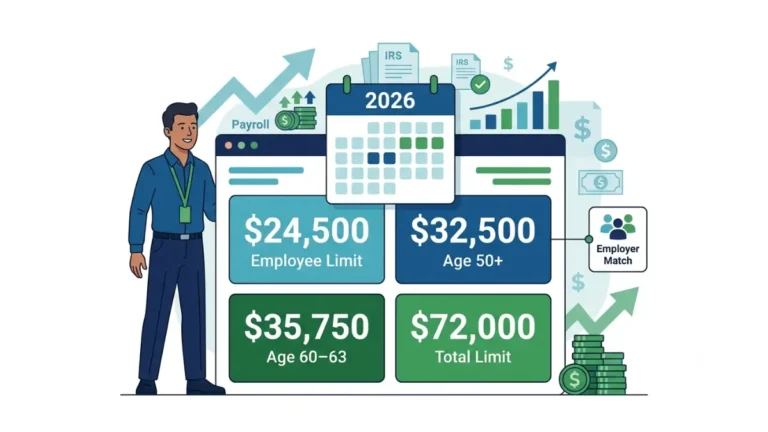
The 2026 401(k) contribution limits brought a $1,000 increase—but a quieter SECURE 2.0 change now requires high earners to make catch-ups Roth this year.
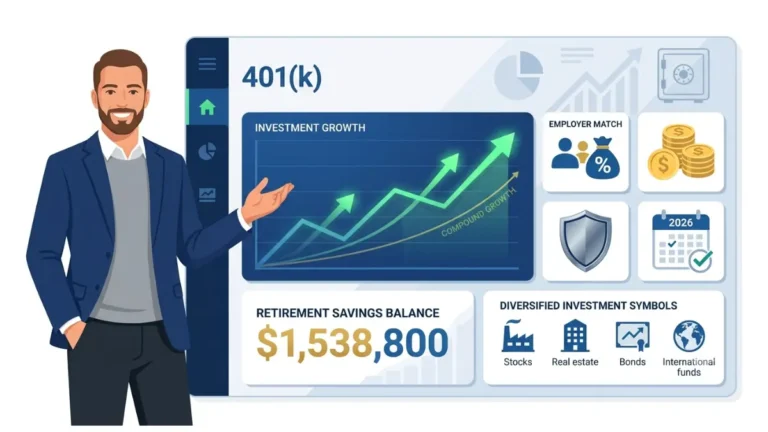
contribution limits rose to $24,500 for 2026—but the bigger story is the new $150,000 Roth catch-up rule that many high earners will miss.

A Health Savings Account gives you triple tax-free savings in 2026 — and new law makes millions more eligible. Here’s the strategy most Americans completely miss.
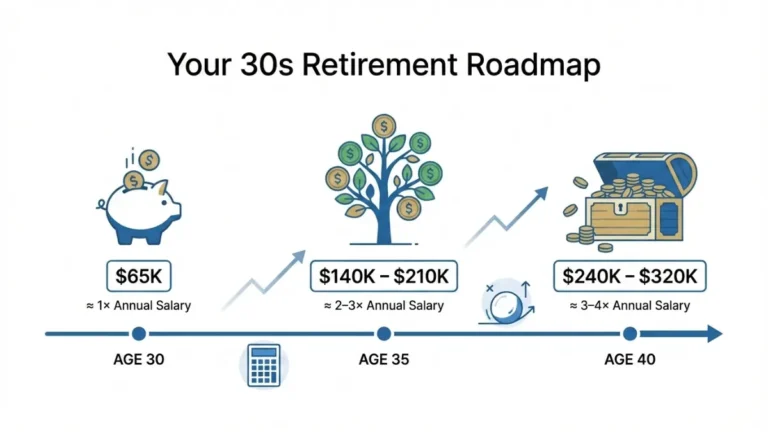
Your 30s are the most powerful decade for building retirement wealth. Get exact benchmarks, account strategies, and catch-up frameworks backed by Federal Reserve data and 21 CFPs.

Seventy percent of workers leave $1,300+ in annual employer match on the table. This complete 2026 guide explains how 401(k)s work, compares Traditional vs Roth, and walks you through 7-day setup.

Saving for retirement is overwhelming if you’re behind. This guide covers 2026 benchmarks, income-stratified targets, psychological barriers, and a 7-step catch-up playbook most savers miss.

Contribute $7,500 to a Roth IRA in 2026 and watch it grow to $1M+ completely tax-free by retirement. New income limits: $153K-$168K (single), $242K-$252K (married). Start today.

Discover the proven 4-step priority order for 401(k) and IRA contributions. Real scenarios, 2026 SECURE 2.0 changes, and automation framework included. Save up to $280K over 35 years.