Knowing if you can still withdraw a Social Security application

Withdrawing a Social Security application does not have to cost you Medicare — SSA’s own manual says Part A claims stay off the bill if you keep coverage.

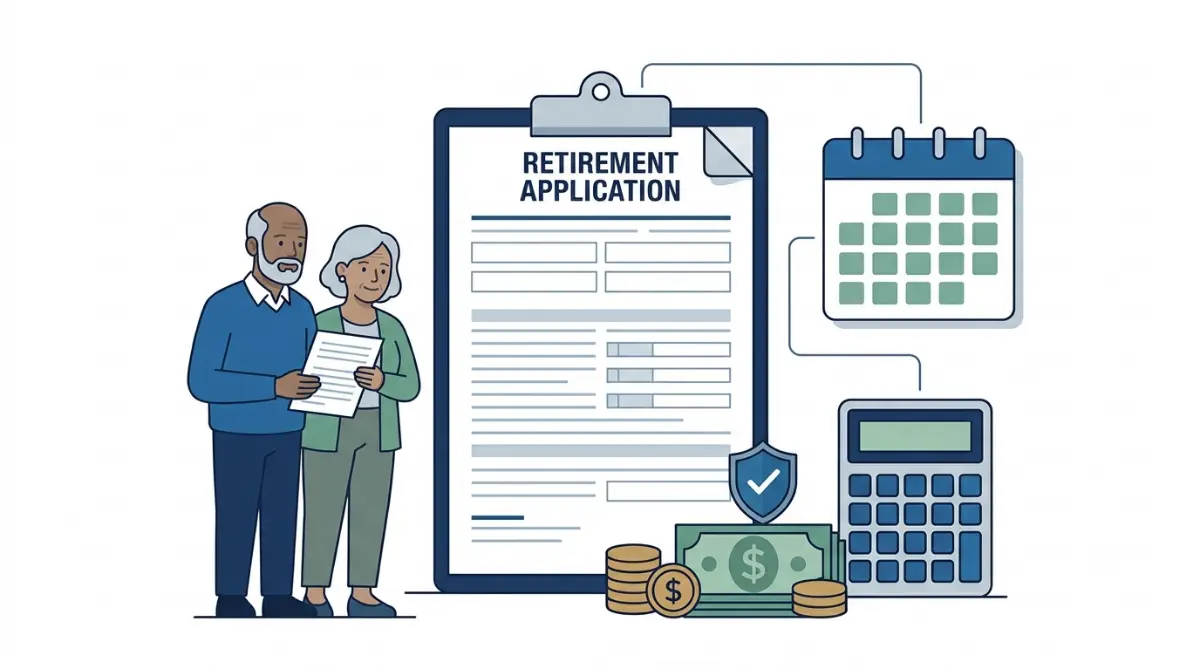
Social Security Application withdrawal decision illustrated with a retiree reviewing benefits, paperwork, and future retirement options on a white background

You claimed, and now you want to take it back

Social Security has a formal procedure for cancelling a claim you already filed. It is called a withdrawal, and it is narrower than most people expect.

Which part of this matters to you depends on where you are standing.

If your application is still processing and no money has arrived, you are in the lightest position of anyone reading this, and the last section explains why. If payments have started and it has been under a year, read the deadline section first — the clock almost certainly started earlier than you think. If more than a year has gone by, withdrawal is closed and your route is suspension instead.

Most people arrive here because something changed after they filed. A job offer landed, a spouse ran the numbers, or a first paycheque collided with the earnings limit.

None of that makes the original filing foolish. It makes it reversible, if the timing holds. If you are still weighing the decision rather than undoing it, claiming at 62 covers the decision itself.

ℹ️ Financial Disclaimer: This article is educational and is not personalized financial, tax, investment, insurance, or legal advice. Withdrawing a Social Security application carries permanent consequences for Medicare enrolment, creates a repayment obligation that lands in a single tax year, and interacts with retirement account withdrawals and household benefits in ways that depend entirely on your circumstances. Consult a fiduciary financial advisor, a CPA, or a qualified attorney before acting on anything here.


What a withdrawal actually does to your claim

A withdrawal does not pause your benefit or reduce it. It erases the application itself.

Social Security Application withdrawal resetting a retirement claim to an unclaimed status with future filing options illustrated on a white background
This illustration explains how an approved withdrawal treats the original application as though it was never filed.

What “as though it was never filed” means

Federal regulation is explicit: where the Social Security Administration approves a withdrawal request, the application “will be considered as though it was never filed.” That is the whole mechanism, and everything else follows from it.

You go back to being someone who has not yet claimed. You may file again later, at whatever age you reach, at whatever percentage that age pays.

🔍 How It Works: The same regulation runs in both directions. If SSA disapproves your request, the application is treated as though the request was never filed — so a refused withdrawal leaves you exactly where you started, still being paid, with nothing lost but time.

What a withdrawal does not touch

Three things survive intact, and Form SSA-521 states all three on its first page.

  • Your earnings record is untouched — withdrawal “will not affect the proper crediting of wages or self-employment income.” If you suspect a gap, an error in your recorded earnings is a separate problem with a separate fix.
  • Your future entitlement is untouched. The benefit you eventually claim still comes out of the formula built on your highest 35 years.
  • Your right to file again is untouched, though the form warns that a later application “may not involve the same retroactive period.”

The one thing you do give up is the right of appeal on the claim you are erasing.

Withdrawal or suspension — which one is even available

These are different procedures with different eligibility, and almost nobody qualifies for both at once.

Withdrawal is for the first twelve months and requires repaying everything. Suspension is only available from full retirement age, requires no repayment, and restarts automatically at 70 — the rules on delaying to 70 cover it properly.


The twelve months start earlier than you think

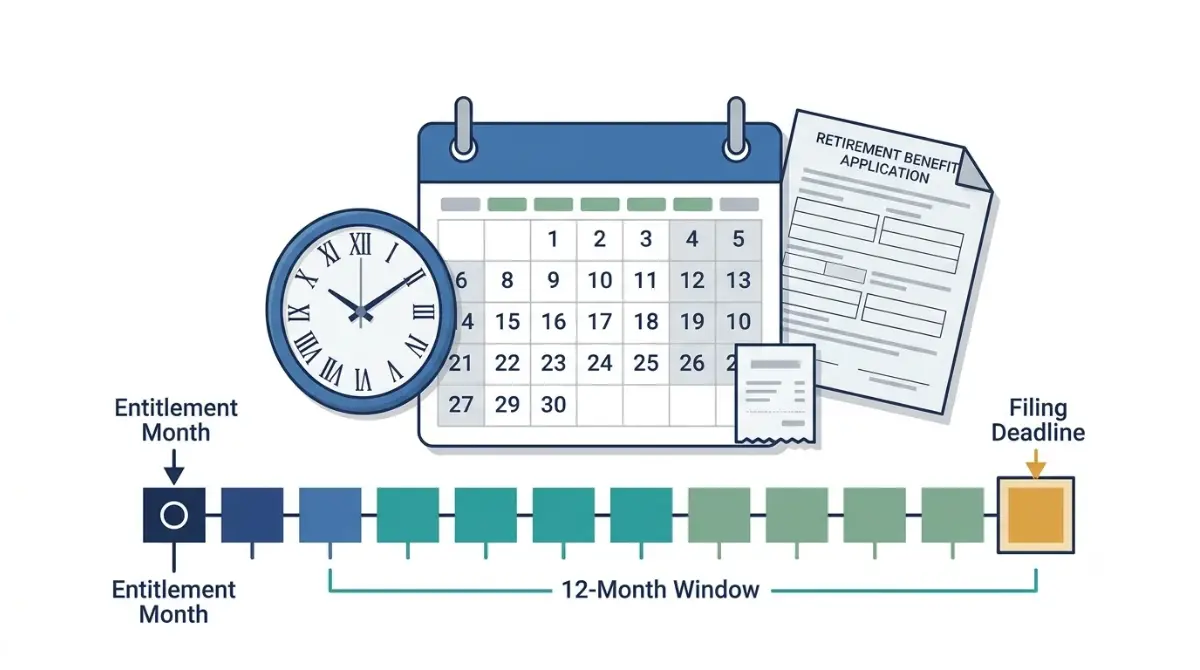
The twelve-month window runs from your first month of entitlement — not from the date you applied, not from the date you were approved, and not from your first payment.

Those four dates are frequently different, and only one of them counts.

Social Security Application twelve-month withdrawal timeline showing entitlement date, approval, first payment, and filing deadline on a white background
A visual timeline explaining when the twelve-month withdrawal period begins based on the entitlement date.

Entitlement, not approval, not your first cheque

The rule sits in federal regulation at 20 CFR 404.640, which requires that the request “is filed within 12 months of the first month of entitlement.” SSA’s own operating instructions for withdrawal requests repeat the same anchor.

This matters because the published guidance is inconsistent — including SSA’s own. Its retirement planner and its FAQ both state the rule correctly. Its newer manage-benefits page describes the window as running from “benefit approval,” which is a different and later date, and major consumer publishers have variously anchored it to the first payment or to the application date.

📊 Data Point: The twelve-month limit and the once-per-lifetime cap were both created on 8 December 2010; before that rulemaking, neither existed — Source: Social Security Administration, 75 FR 76256, Docket No. SSA 2009-0073.

How SSA counts the twelve months

SSA’s internal instructions publish a counting method that appears on no consumer page anywhere.

🔍 How It Works: Counting begins the first month after your date of entitlement and ends on the last day of the twelfth month. SSA’s own worked example uses an April entitlement date and expires it on the last day of the following April — so the usable span is slightly longer than “twelve months” sounds, but it hangs entirely on knowing your entitlement month.

Your entitlement month is not always the month you expected, particularly if you asked for benefits to begin retroactively. It appears on your award notice, and your Social Security statement is the place to start looking.

The one situation with no deadline at all

There is a single exception, and it applies after a death. Where someone claimed a reduced retirement benefit and died before SSA certified the first payment to the Treasury, a surviving spouse may withdraw the deceased person’s application, and no time limit applies to that request.

Action Step: Before you count anything, call SSA on 1-800-772-1213 and ask one specific question: “What is the date of entitlement recorded on my claim, and what is the last day I can file a withdrawal request?” If the answer closes the window, confirm which full retirement age applies to your birth year, because suspension starts there — and you can model what filing later would pay before you decide anything.


What goes into the repayment bill

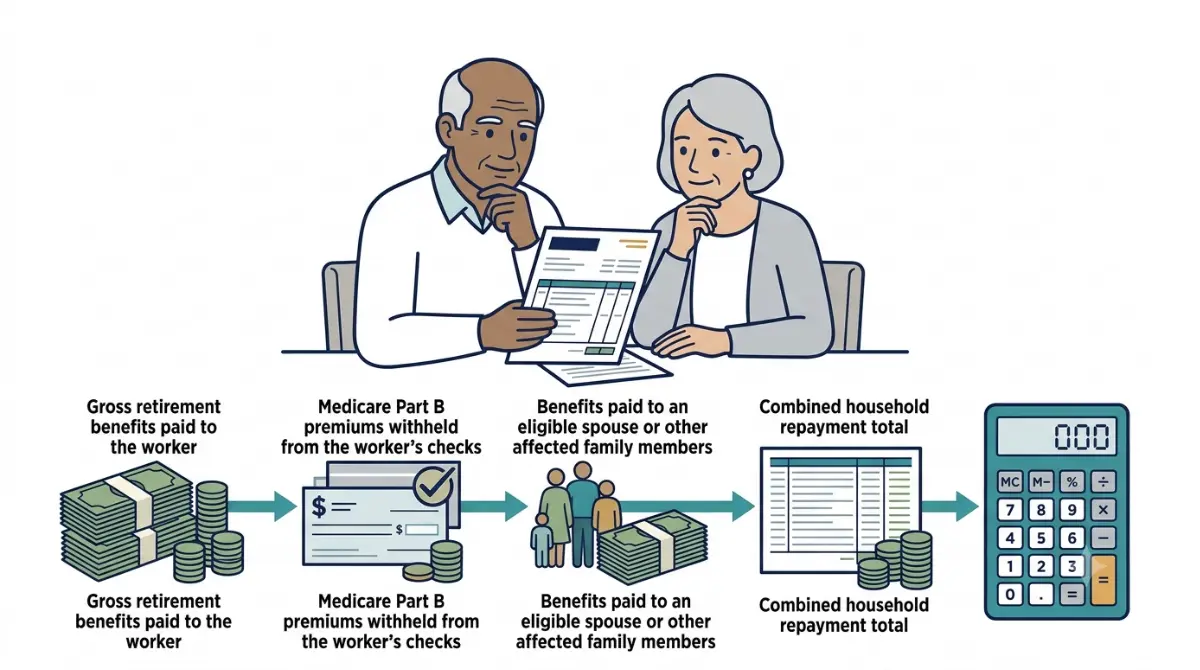
Approval depends on repaying what was paid out. The repayment covers more than your own cheques, and less than most people fear.

Everything that comes back

On the billNot on the billKey detail
Every payment made to youMedicare Part A claims, if you keep MedicareThe single largest variable — see the next section
Benefits paid to a spouse or child on your record, whether or not they live with youBenefits paid to an independently entitled divorced spouseA divorced spouse entitled in their own right is unaffected and does not repay
Medicare Part B, Part C and Part D premiums withheld from your chequesAnything at all, if the request is refusedA denied request costs nothing but time
Voluntary tax withholding for closed tax yearsMoney you never saw still counts as paid to you
Garnishments taken from your benefitSame principle — it was paid on your behalf

Source: Social Security Administration retirement planner guidance on withdrawing an application, and SSA Program Operations Manual System GN 00206.014 and GN 00206.020.

⚠️ Costly Mistake: The household total is what catches people out. If a spouse claimed on your record, or a minor child has been drawing on it, every dollar they received comes back too — and they must consent in writing before SSA will approve anything. Work out the household figure, not your own, before you decide this is affordable.

The tax side of paying it back

You will have paid income tax on some of these benefits already. That money is not simply lost, but the recovery route is narrower than it sounds.

💡 Expert Note: A common point of confusion is whether repaying means amending an old return. IRS Publication 915 sets it out differently: repayments are subtracted from the gross benefits for the year you repay, regardless of which year the benefit was for. Where repayments exceed that year’s gross benefits, none of that year’s benefits are taxable. Where the repaid benefit was taxed in an earlier year, the route is a deduction — or, above $3,000, a credit.

Which of those two routes produces a better result depends on your marginal rate in both years, and on nothing you can work out from a general article. SSA’s own instructions tell its staff to refer claimants to the IRS or a tax adviser on exactly this point.

The repayment lands in one tax year, which can move you up a bracket in the year you make it. It is worth modelling that year before committing.

Action Step: Ask a CPA or enrolled agent one specific question: “I am repaying Social Security benefits this year that were taxed in a prior year — should this run as a deduction or as a claim-of-right credit in my situation?” Bring both years’ returns.

Whether repaying is worth it at all is a separate calculation — the break-even arithmetic is the place for that question.


The Medicare checkbox that changes the bill

If you are 65 or over and already have Medicare, one question on the form decides whether Medicare enters the repayment calculation at all. Most people answer it without realising it is a choice.

Social Security Application Medicare decision illustrating the choice to keep or withdraw Medicare benefits during application withdrawal on a white background
This illustration explains how Medicare coverage can affect the repayment amount during a Social Security withdrawal.

The question on page one of the form

Form SSA-521 asks, in a small box near the top: “If Applicable, Do You Want to Keep Medicare Benefits? Yes / No.”

SSA’s guidance reinforces it — if you already have Medicare, your request must clearly state whether Medicare coverage should or should not be included in the withdrawal. Leave it ambiguous and you are relying on someone else to interpret your intent.

🔍 How It Works: The choice exists because of a statutory change effective 1 January 1981. Since then, someone aged 65 or over who files one application for retirement benefits and Hospital Insurance is deemed to have filed two separate claims. Withdrawing one does not automatically withdraw the other. The deeming rule does not extend to disability claimants, which is why a disability withdrawal takes Medicare with it and cannot be split.

Keep Medicare: what the bill looks like

SSA’s operating instructions on Hospital Insurance and withdrawal are unambiguous. Claimants aged 65 and over entitled to both cash benefits and Part A can withdraw the cash benefit and retain Part A.

And on the money: there is no need to repay Part A benefits already paid on the claimant’s behalf, because the claimant is not withdrawing the claim for that coverage.

This is worth sitting with. A hospital admission during the months you were entitled does not have to appear on your repayment bill — provided you keep Medicare. SSA’s shorter manage-benefits page states the Part A repayment as though it always applies, which is the version most readers encounter first.

Hand it back too: what it costs, permanently

Choosing to withdraw Medicare as well is a materially different transaction.

  • All Part A benefits paid on your behalf must be repaid, and SSA must verify the total with the Centers for Medicare & Medicaid Services before approving anything.
  • Part B is treated as a voluntary termination, covering the month you requested the withdrawal and the following month only.
  • Re-enrolling later can carry a late enrolment penalty on your Part B premium — permanently.
  • Medicare Advantage enrolment ends automatically. Part D eligibility is lost if you withdraw both Part A and Part B, with its own penalty on later enrolment. Keeping either Part A or Part B preserves Part D eligibility.
  • If you have TRICARE, withdrawing Part A may cost you that coverage too.

⚠️ Costly Mistake: Withdrawing Medicare alongside the cash benefit is almost never necessary to achieve what you actually want, which is to stop the retirement claim. It is the one part of this decision that cannot be undone by re-filing later, because the late enrolment penalties attach to the gap you create.

Action Step: Before you tick either box, call your State Health Insurance Assistance Program — free, and not selling anything — and ask: “If I withdraw my retirement application but keep Part A and Part B, does anything change about my current coverage or my premiums?”


What happens after you send the form

The process after filing is not what the deadline pressure suggests. You do not arrive at the office with a cheque.

You don’t pay when you file

Submit Form SSA-521 in writing, stating which class of benefits you want withdrawn and why. An oral request is not accepted, and a faxed one does not meet the signature requirement.

SSA then suspends your payments as of the month it receives the request, and forwards the file to a processing centre. Staff are instructed to tell you that a repayment notice will follow — and to discourage payment at the counter.

The 45 days, and the 30 after that

The processing centre calculates the total, then mails you a notice stating the amount, how it was calculated, and how you can pay. A refund envelope comes with it.

📊 Data Point: SSA diaries the case for 45 days from that notice; if no repayment arrives, it sends a 30-day final request, and only after that does it resume your payments and deny the withdrawal — Source: Social Security Administration, Program Operations Manual System GN 00206.014.

A partial payment is accepted, with an acknowledgment notice showing the balance and a further 15 days. If the balance is not cleared, the withdrawal is denied and the partial payment refunded.

💡 Expert Note: There is a genuine gap between the regulation and the operating policy here, and it matters. The regulation permits approval where benefits “are repaid or we are satisfied that they will be repaid.” SSA’s own manual narrows that to repayment before approval, except where it can fully offset against another benefit. Plan on paying in full — the broader regulatory language is not an instalment plan you can request.

If you change your mind again

An approved withdrawal can be cancelled, but only briefly. Regulation gives you 60 days from the date of the notice of approval; the form describes the same window as running from the mailing of that notice.

Treat the earlier of the two as your deadline. After it passes, you lose any entitlement for the period the original application covered.


Where withdrawals get refused

SSA’s own form names exactly two grounds for refusing a withdrawal, printed in the box its staff complete: benefits not repaid, and consent not obtained.

The consent you need from everyone else on your record

Anyone whose entitlement would be cancelled by your withdrawal has to agree to it in writing. If a beneficiary refuses, the request is denied — there is no override.

Their payments also continue until they consent, so your cheques stop while theirs do not. Where someone on the record has died, consent has to come from a representative of their estate.

The exception is a divorced spouse entitled independently. They neither consent nor lose anything.

Your one lifetime withdrawal — and the request that doesn’t use it up

You get one approved retirement withdrawal in your lifetime. But SSA’s instructions carve out the case that worries people most: a withdrawal request made before adjudication is not counted as your one allowed request, because no entitlement date existed and no payment was made.

If your claim is still processing, withdrawing it does not spend anything.

Small things that get a request bounced

⚠️ Costly Mistake: If deemed filing applied to your claim — common where you were eligible for both a retirement and a spousal benefit — you must withdraw both applications, not one. And do not file a fresh claim before your withdrawal determination arrives; SSA will process it as a duplicate application, which creates its own delay.


Common questions about withdrawing a Social Security application

1. Does it count against me if my application hasn’t been approved yet?

No. SSA’s operating instructions state that a withdrawal request made before adjudication is not counted as your one allowed request, because no entitlement date existed and no payment was made. If your claim is still processing, you can withdraw it without spending your once-in-a-lifetime allowance, and without any repayment obligation.

2. How many times can I withdraw a Social Security application?

Once, for retirement benefits, across your whole lifetime. Federal regulation limits approval to claimants who have not previously withdrawn a retirement application. That cap was created in December 2010 and did not exist before. A request made before your claim was adjudicated does not count toward it.

3. Do I have to repay my spouse’s and children’s benefits too?

Yes. Everything paid on your record comes back, including benefits paid to a spouse or child whether or not they live with you. The one exception is a divorced spouse entitled independently on your record, who is unaffected. Calculate the household total before deciding whether this is affordable for you.

4. Can my spouse refuse and stop my withdrawal?

Yes. Anyone whose entitlement would be cancelled must consent in writing, and if they refuse, SSA denies the request outright. There is no override. Their payments also continue until they consent. Have that conversation before you file rather than after, because their agreement is a condition of approval.

5. Do I have to pay it all back before SSA approves the withdrawal?

In practice, yes. The regulation allows approval where SSA is satisfied benefits will be repaid, but its operating manual narrows this to repayment before approval, except where it can offset against another benefit. You are not asked to pay when you file — a notice with the calculated amount follows.

6. What happens if I can’t repay the full amount?

SSA allows 45 days from its repayment notice, then sends a 30-day final request. If nothing arrives, it resumes your payments under the original award and denies the withdrawal. A partial payment buys a further 15 days; if the balance is not cleared, the withdrawal is denied and your partial payment refunded.

7. Will I get back the tax I already paid on those benefits?

Not as a refund of the old year. Repayments are subtracted from your gross benefits for the year you repay, and where they exceed that year’s benefits, none of that year’s benefits are taxable. Benefits taxed in an earlier year take a deduction, or a credit above $3,000. Ask a CPA which applies.

8. Do I lose Medicare if I withdraw my application?

Only if you ask to. Form SSA-521 asks separately whether you want to keep Medicare, and someone 65 or over can withdraw the cash benefit and retain Part A. Keep it and Part A claims stay off your repayment bill entirely. Discuss the consequences with a Medicare counsellor before choosing.

9. Can I cancel the withdrawal after it’s approved?

Yes, within 60 days. The regulation measures that from the date of the notice of approval, and the form measures it from the mailing of that notice — treat the earlier as your deadline. After it passes, you lose any entitlement for the period the original application covered, permanently.

10. Is suspending better than withdrawing?

They serve different situations and rarely overlap. Withdrawal works only in the first twelve months and requires repaying everything. Suspension requires no repayment but is unavailable until full retirement age. If you are under full retirement age and inside your window, withdrawal is your only route; past it, suspension is.

11. What happens if SSA denies my withdrawal request?

You go back to where you started. Regulation provides that a disapproved request is treated as though it was never filed, and SSA resumes any payments it suspended. Denial notices carry appeal rights. A refused request costs you time rather than money — including the partial repayment, which is returned.


Social Security Application withdrawal checklist showing entitlement date, spouse consent, repayment review, Medicare decision, and tax planning on a white background
A step-by-step visual checklist highlighting the important tasks to complete before submitting a withdrawal request.

Before you file

Four things, in this order.

Find your date of entitlement — from your award notice or from SSA directly, not from memory. Count SSA’s way, from the month after that date to the last day of the twelfth month. Ask who else is drawing on your record, because their written consent is a condition of approval, not a formality. Then decide the Medicare question deliberately rather than by default.

If the window has closed, you have not run out of options — you have run out of this option. Suspension at full retirement age achieves much of the same thing without any repayment at all, and a retirement calculator will show what the gap looks like in the meantime.

The people who regret this process are rarely the ones who filed the form. They are the ones who assumed the deadline ran from a date that was never the deadline.

Editorial process

About this content

This content is prepared through a structured publishing workflow with dedicated writing, financial review and editorial checks.

1 contributor
Important notice

Informational disclaimer

The content on Finance Authority Hub is provided for general informational and educational purposes only and should not be considered personalized financial, investment, tax, legal, or professional advice. Financial decisions depend on your individual goals, income, risk tolerance, location, and regulatory situation. Before acting on any information, strategy, estimate, or calculator result, consult a qualified licensed professional who can evaluate your specific circumstances.