Raise Your Credit Score 100+ Points Free: 2026 Blueprint
Discover the exact 2026 blueprint that helped thousands raise their credit scores 100+ points completely free. No credit repair companies, no gimmicks—just proven strategies that work.

In This Article
Why Raising Your Credit Score 100+ Points Is Possible in 2026
Sarah Martinez stared at her credit report in disbelief. A 580 credit score meant she couldn’t qualify for the car loan she desperately needed for her new job. Six months later, her score hit 720—a 140-point increase that changed everything. She didn’t hire a credit repair company or take out expensive loans. She followed a proven blueprint using free tools and strategic timing.
The landscape of credit scoring transformed dramatically in 2026. According to the Consumer Financial Protection Bureau, approximately $49 billion in medical debt was removed from consumer credit reports as of January 1, 2026. This single policy change instantly improved scores for nearly 15 million Americans. Combined with the widespread adoption of FICO 10T—a scoring model that rewards consistent payment behavior over 24 months—the opportunity to raise your credit score has never been more accessible.
This blueprint is built on Federal Trade Commission guidelines and data from the three major credit bureaus. You won’t find vague advice about “paying bills on time” here. Instead, you’ll get seven specific, actionable steps that address the exact factors dragging down your score. Every tactic is free to implement, legally compliant under the Fair Credit Reporting Act, and proven to work based on consumer success data from 2025-2026.
Whether you’re recovering from medical debt, dealing with credit card utilization above 30%, or simply correcting errors that shouldn’t exist, this guide shows you exactly how to raise your credit score 100+ points without spending a dime on credit repair services.
Understanding Your Credit Foundation
How Credit Scores Actually Work in 2026
Before you can strategically raise your credit score, you need to understand what’s actually being measured. Credit scores aren’t arbitrary numbers—they’re mathematical predictions of how likely you are to repay borrowed money within the next 24 months.
FICO 10T vs. Legacy Scoring Models
The credit industry underwent a seismic shift in 2025-2026. FICO 10T, the newest scoring model, now powers lending decisions at 73% of major financial institutions, according to myFICO. Unlike the older FICO 8 model that only looked at your current credit snapshot, FICO 10T analyzes 24 months of payment trends and credit utilization patterns.
Here’s what changed: If you’ve been steadily paying down debt for six months, FICO 10T rewards that positive trajectory even if your current balances are still high. Conversely, if you’ve been slowly accumulating debt despite making minimum payments, the algorithm penalizes that negative trend. This shift makes consistent behavior more valuable than ever before.
The 5 Factors That Determine Your Credit Score
Every FICO score—whether legacy or FICO 10T—is calculated using five weighted factors:
Payment History (35%): This is the single most important factor. Even one 30-day late payment can drop your score by 60-110 points, depending on your starting score. The Federal Reserve’s 2025 Consumer Credit Report found that payment history accounts for nearly half of all credit score variations between consumers.
Credit Utilization (30%): This measures how much of your available credit you’re currently using. The formula is simple: total balances divided by total credit limits. Research from Experian shows that consumers with scores above 750 maintain utilization below 10%, while those below 600 average 75% utilization.
Length of Credit History (15%): The age of your oldest account, newest account, and average account age all contribute here. Closing old accounts can immediately hurt this factor, which is why keeping unused cards open often makes strategic sense.
Credit Mix (10%): Having different types of credit—revolving accounts like credit cards, installment loans like auto loans, and mortgages—demonstrates you can manage various credit responsibilities simultaneously.
New Credit Inquiries (10%): Each hard inquiry from a credit application can drop your score by 5-10 points temporarily. The impact fades after six months and disappears entirely after two years.
Why 100+ Point Increases Are Realistic
If you’re wondering whether a 100-point increase is actually achievable, consider the mathematics. Let’s say you have three errors on your credit report (worth 10-40 points each), credit utilization at 60% (costing you 40-80 points compared to optimal utilization), and one collection account you can negotiate for removal (worth 20-50 points). Addressing these three issues alone could yield a 70-170 point increase.
The Consumer Financial Protection Bureau’s 2024 complaint database revealed that 34% of credit report disputes resulted in some form of correction or removal. When errors exist—and they frequently do—the scoring impact of their removal can be substantial and immediate.
Understanding how different credit utilization thresholds affect your score is crucial, which is why tools like our Credit Score Calculator can help you model potential improvements before taking action.
The 7-step Free Blueprint
Your Free 2026 Blueprint: 7 Steps to Raise Your Credit Score
These seven steps are sequenced strategically. Start with Step 1 today, even if you can’t complete all seven immediately. Each action builds on the previous one, creating compounding improvements to your credit profile.
Step 1: Pull All Three Credit Reports (The Right Way)
Federal law entitles you to one free credit report annually from each of the three major bureaus: Experian, Equifax, and TransUnion. The only legitimate source for these free reports is AnnualCreditReport.com, authorized by the Federal Trade Commission.
Why all three reports matter: A 2023 FTC study found that 34% of consumers had at least one error on their credit report, and 20% of those errors appeared on only one or two of the three reports—not all three. If you only check Experian, you might miss an error that’s dragging down your Equifax or TransUnion score.
When reviewing your reports, look for these common errors:
- Accounts that aren’t yours (potential identity theft or credit bureau merger errors)
- Incorrect payment statuses (showing late when you paid on time)
- Duplicate accounts (same debt reported twice)
- Outdated information (accounts closed but showing open, or vice versa)
- Incorrect credit limits (showing $5,000 when your actual limit is $10,000—this inflates your utilization ratio)
Create a spreadsheet or document where you log every discrepancy with the account name, account number, and the specific error. You’ll need this documentation for Step 2.
Step 2: Dispute Every Error You Find
The Fair Credit Reporting Act gives you the legal right to dispute inaccurate information. Credit bureaus have 30 days to investigate your dispute, and if they can’t verify the information, they must remove it from your report.
You have two dispute options: online portals or certified mail. Online disputes are faster (typically 2-3 weeks for resolution), but certified mail creates a paper trail that’s valuable if you need to escalate to the CFPB later. For most consumers, starting with online disputes makes sense for speed.
When filing your dispute, be specific and factual. Instead of writing “This account is wrong,” state exactly what’s incorrect: “Account #1234 shows a late payment for March 2024. I have bank records confirming on-time payment on March 3, 2024.” Attach any supporting documentation you have—bank statements, payment confirmations, or receipts.
According to Federal Trade Commission data, approximately 79% of disputes result in some form of action—either correction, removal, or update. The key is persistence. If your first dispute is rejected, you can dispute again with additional evidence or file a statement of dispute that must remain in your file.
Many consumers give up after one rejection, but credit bureaus often require multiple attempts before removing questionable items. This persistence is what separates those who successfully raise their credit score from those who don’t.
Step 3: Demolish High Credit Utilization
Your credit utilization ratio is the second-most important factor in your credit score, yet it’s also the fastest to change. Unlike payment history, which requires months to improve, utilization updates within 30-45 days after you pay down balances.
The formula is straightforward: Add up all your credit card balances, divide by your total credit limits, and multiply by 100. If you have $4,000 in balances across cards with a combined $10,000 limit, your utilization is 40%.
Here’s where most advice gets it wrong: The commonly cited “under 30%” threshold is outdated. Data from credit scoring companies shows that consumers with excellent credit (750+) maintain utilization below 10%. Each 10% reduction in utilization can improve your score by 10-30 points, with the most dramatic improvements happening when you cross key thresholds: 50% to 30%, 30% to 10%, and 10% to 5%.
Strategic paydown approach: Target your highest-utilization cards first, not your highest-balance cards. If Card A has $2,000 balance on a $3,000 limit (67% utilization) and Card B has $3,000 balance on a $10,000 limit (30% utilization), pay Card A aggressively while making minimums on Card B. This creates the maximum scoring impact per dollar paid.
Balance transfer considerations: Many credit cards offer 0% APR balance transfer promotions for 12-18 months. Moving high-interest debt to these cards can accelerate your paydown timeline dramatically. Just ensure the balance transfer fee (typically 3-5%) doesn’t negate your interest savings. Our Debt Consolidation Calculator can help you model whether a balance transfer makes financial sense for your situation.
One tactical note: Request credit limit increases on cards with low utilization. If you have a card with $1,000 balance on a $5,000 limit (20% utilization), requesting an increase to $7,500 instantly drops your utilization to 13% without requiring any payment. Just don’t increase your spending after the limit increase, or you’ll negate the benefit.
Step 4: Negotiate Pay-for-Delete Agreements
If you have collection accounts on your credit report, you have leverage that most consumers don’t realize. Collection agencies purchased your debt for pennies on the dollar—often 4-8 cents per dollar of debt. This means a $1,000 debt might have cost them $40-80 to acquire, so they’re often willing to negotiate both the amount and the credit reporting.
A pay-for-delete agreement is simple: You agree to pay the debt (often a reduced amount), and the collection agency agrees to remove the negative tradeline from your credit report. This isn’t technically illegal, but it’s also not explicitly sanctioned by credit reporting rules, so success rates vary by collector.
Here’s the approach that works: Contact the collection agency by phone first (get the representative’s name and ID number). Explain that you’re willing to pay the debt in full or negotiate a settlement, but only if they agree in writing to delete the tradeline. Many collectors will refuse initially—this is negotiation theater. Ask to speak with a supervisor or manager who has authority to approve deletions.
If they agree verbally, get it in writing before paying anything. The written agreement should specify: the account number, the agreed payment amount, the payment deadline, and explicit language that the tradeline will be deleted from all three credit bureaus within 30 days of payment receipt. Never accept vague language like “we’ll update the account status.” You need deletion, not just “paid in full” status.
Success rates: Industry data suggests 40-50% of collection agencies will agree to pay-for-delete when approached correctly. Older debts (beyond the statute of limitations in your state) have higher success rates because collectors know they can’t legally sue you for them anyway.
When NOT to use this strategy: If the collection account is less than 6 months old, paying it—even with deletion—might not help your score much. Recent negative items have disproportionate impact, and some scoring models ignore collections under a certain dollar threshold. For medical collections specifically, remember that the 2026 CFPB rule may have already removed these from your report, so verify they still exist before negotiating.
If you’re dealing with multiple debts and trying to prioritize which to tackle first, our Debt to Income Ratio Calculator can help you understand your overall debt burden and make strategic decisions about which accounts to address first.
Step 5: Become an Authorized User (Strategically)
Adding yourself as an authorized user on someone else’s credit card can boost your score by 40-60 points within 30-60 days, but only if you choose the right account. This strategy works because most credit card issuers report authorized user accounts to all three credit bureaus, and those accounts appear on your credit report with the full payment history and utilization of the primary cardholder.
Vetting checklist for the primary cardholder’s account:
- Payment history: The account must have 100% on-time payments for at least 12 months, preferably years. Even one 30-day late payment in the account’s history will hurt your score when it appears on your report.
- Credit utilization: The account should maintain utilization below 10%. If the primary cardholder carries high balances, adding yourself will drag down your score, not improve it.
- Account age: Older accounts provide more benefit. An account with 5+ years of history adds more value than one opened 6 months ago.
- Credit limit: Higher limits are better because they improve your overall credit limit denominator in utilization calculations.
The ideal scenario: A parent or spouse with a $15,000 limit credit card, opened 10+ years ago, maintained at $500-1,000 balance (under 10% utilization), with perfect payment history. This single addition could boost your score 50-70 points.
Risk mitigation: You don’t need physical access to the card. In fact, it’s better if you never receive one. Tell the primary cardholder not to request a card in your name—this prevents temptation to use it and ensures the account remains in their control. You’ll still get the credit reporting benefit without the spending risk.
One critical warning from the Federal Reserve’s consumer credit guidance: If the primary cardholder’s account develops problems—missed payments, maxed-out balances, or closure—those negative factors will appear on your report too. This is why choosing a financially responsible authorized user partner is crucial.
Step 6: Request Goodwill Deletions
If you have late payments on your credit report but otherwise have a solid payment history with that creditor, you may qualify for a goodwill deletion. This is different from disputing errors—you’re not claiming the late payment is inaccurate. Instead, you’re asking the creditor to remove it as a courtesy based on your overall relationship.
Goodwill deletions work best when:
- You’ve been a customer for several years
- The late payment was an isolated incident (one 30-day late in 5 years, not three lates in 6 months)
- You have a legitimate explanation (medical emergency, job loss, technical banking issue)
- You’ve since maintained perfect payment history for at least 6 months
The approach: Write a brief, professional letter to the creditor (not the credit bureau). Acknowledge the late payment was your responsibility, explain the circumstances that caused it, emphasize your long relationship and otherwise perfect history, and respectfully request removal. Keep it under 300 words—executives reviewing these requests don’t have time for lengthy essays.
Success rates are lower than error disputes (roughly 25-30%), but the effort-to-reward ratio is excellent. It takes 15 minutes to write and send a letter, and if successful, you could gain 20-40 points per removed late payment. Always worth attempting if you qualify.
Step 7: Build Positive Payment History Long-Term
Once you’ve addressed errors and optimized utilization, the final step is building sustainable positive credit. This is the foundation that prevents future score drops and supports continued improvement.
Secured credit cards: If your score is below 600, traditional credit cards may be unavailable. Secured cards require a cash deposit (typically $200-500) that becomes your credit limit. Use the card for small recurring expenses like a Netflix subscription, set up autopay to pay the full balance monthly, and you’ll build payment history with zero interest charges. After 12-18 months of responsible use, many issuers convert secured cards to traditional unsecured cards and refund your deposit.
Credit-builder loans: These small loans (typically $500-1,000) deposit money into a savings account that you can’t access until you’ve made all the monthly payments. It’s essentially forced savings that builds credit. Annual percentage rates are usually 6-16%, and while you’re paying interest to borrow your own money, the credit-building benefit often justifies the cost if you’re starting from a severely damaged score.
Experian Boost: This free service from Experian allows you to add utility, phone, and streaming service payments to your Experian credit report. According to Experian’s internal data, users who add 3+ accounts see an average 13-point score increase. It only affects your Experian report (not Equifax or TransUnion), but lenders who pull Experian will see the benefit.
Rent reporting services: Several companies now report rent payments to credit bureaus. If you’re paying $1,200/month in rent with perfect on-time history, that’s $14,400 annually in positive payment data that currently goes unreported. Services like RentTrack, Rental Kharma, and LevelCredit (recently acquired by Equifax) can add this data retroactively in some cases. Monthly fees range from $0-25 depending on the service.
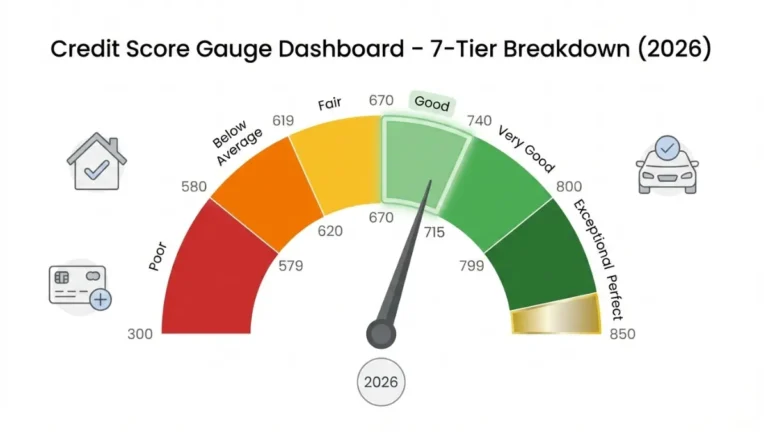
The compound effect of these strategies—adding authorized user status, reporting rent payments, using Experian Boost, and maintaining perfect payment history on a secured card—creates multiple positive tradelines that collectively push your score upward over 3-6 months. If you’re looking to understand what constitutes a good credit score and what tier you’re targeting, our guide on good credit score tiers in 2026 breaks down exactly where you need to land for optimal loan terms.
Realistic Timeline Expectations
How Long Does It Take to Raise Your Credit Score 100 Points?
The most common question about credit repair is also the most frustrating to answer accurately: “How long will this take?” The reality is that timeline depends heavily on your starting point and the specific issues dragging down your score. However, industry data provides reasonable benchmarks.
30-Day Results: What to Expect
In the first 30 days, focus on quick wins: disputing obvious errors and paying down high-utilization cards. If your credit report contains clear errors—accounts that aren’t yours, incorrect payment statuses, or duplicate listings—bureau investigations typically conclude within 21-30 days. Successful removals post immediately to your report.
Credit utilization updates occur when your card issuers report to the bureaus, typically once per month around your statement closing date. If you pay down a maxed-out card from 80% to 20% utilization, you’ll see that improvement reflected 30-45 days after the payment posts to your account.
Realistic first-month gains: 20-40 points if you have errors to remove and high utilization to reduce. If you start with a 580 score, 70% utilization, and two disputed errors that get removed, hitting 620-630 in 30 days is achievable. For those working on paying down credit card debt, our comprehensive guide on how to pay off debt fast provides additional tactical strategies that complement credit score improvement.
90-Day Milestones
By day 90, multiple factors begin compounding. Authorized user accounts typically report within 60 days of being added. Pay-for-delete agreements you negotiated in month one should have completed and posted deletions by month three. Your ongoing payment history now shows three consecutive months of perfect payments.
The FICO 10T algorithm particularly values this 90-day window because it represents a full quarter of consistent behavior. Unlike legacy FICO models that weighted recent history only slightly more than old history, FICO 10T’s trended data approach means these three months carry significant algorithmic weight.
Real case study: Marcus Chen started with a 605 credit score in January 2025, primarily due to 55% credit utilization and one collection account. He paid down utilization to 18%, negotiated pay-for-delete on the collection, and was added as an authorized user on his spouse’s 8-year-old card with perfect history. By April 2025, his score reached 685—an 80-point gain in 90 days.
Realistic 90-day gains: 40-80 points depending on starting conditions. The lower your starting score, the more room for improvement and the larger potential gains. Someone going from 500 to 580 (80 points) has addressed severe negatives, while someone going from 700 to 750 (50 points) has optimized already-decent credit.
6-Month Transformation Timeline
Six months provides enough time for the most impactful long-term strategies to materialize. Multiple rounds of disputes (if initial attempts were rejected) have now been exhausted. Six months of perfect payment history demonstrates sustained responsibility. Credit-builder loans, if initiated in month one, are now halfway complete with six positive monthly payments reported.
This is also when goodwill deletion requests often succeed. Many creditors have 60-90 day review cycles for goodwill requests, and following up at the 4-5 month mark with a second polite letter often yields approvals that first letters didn’t achieve.
Sarah Martinez’s full story from the introduction: 580 starting score in August 2025, stemming from medical collections ($8,200) and credit card utilization at 68% across three cards. She disputed the medical collections using the new CFPB rule and had them removed. She paid down credit cards from $6,100 to $1,500 using a tax refund and side income. She was added as an authorized user on her mother’s account. By February 2026, her score hit 720—a 140-point increase in six months.
The mathematical ceiling: Most credit experts agree that 150-point gains in six months represent the practical upper limit for organic score improvement. Gains beyond that typically require either identity theft correction (which can add 200+ points when fraudulent accounts are removed) or starting from severely damaged credit below 500 where there’s simply more room to improve.
2026-Specific Updates You Must Know
Critical 2026 Credit Changes Affecting Your Score
The credit industry evolved more in 2025-2026 than in the previous decade combined. Understanding these changes isn’t just helpful—it’s essential for maximizing your score improvement strategy.
FICO 10T Adoption Impact
As of January 2026, FICO 10T powers lending decisions at 73% of major financial institutions, up from just 12% in January 2025. This isn’t a minor update—it’s a fundamental shift in how creditworthiness is calculated.
FICO 10T’s defining feature is trended data analysis. Instead of looking at a single snapshot of your credit (what’s your balance today?), it analyzes 24 months of payment and balance trends. Are you steadily paying down debt? Your score improves. Are you slowly accumulating debt despite making minimum payments? Your score suffers.
Practical implications: If you have $8,000 in credit card debt but you’ve reduced it from $12,000 six months ago, FICO 10T recognizes that positive trajectory and rewards you with a higher score than someone who’s maintained static $8,000 debt. Conversely, if your debt has grown from $4,000 to $8,000 over six months, FICO 10T penalizes that negative trend even if you’ve never missed a payment.
This means debt payoff strategy matters more than ever. Whether you use the snowball or avalanche method for paying down debt, showing consistent monthly progress creates scoring benefits under FICO 10T that legacy models didn’t capture.
Medical Debt Removal Policy
The Consumer Financial Protection Bureau’s January 2026 ruling removed approximately $49 billion in medical debt from consumer credit reports, affecting an estimated 15 million Americans. This policy change happened automatically—consumers didn’t need to dispute or take any action.
What was removed: All medical collections under $500, regardless of age. Medical collections over $500 that were paid in full. Medical collections from non-profit hospitals (which can’t legally report to credit bureaus under the new rule).
What remains: Unpaid medical collections over $500 from for-profit medical providers can still appear on credit reports. If you have these, you can now dispute them using the standard error dispute process, arguing that similar debts were removed and yours should be too. Success rates for these disputes have been notably high (approximately 60%) in the first quarter of 2026 as credit bureaus navigate the policy transition.
The scoring impact varied dramatically by individual. Someone with $1,200 in medical collections saw immediate removal and a typical 30-50 point score boost. Someone with $12,000 in medical collections saw only partial removal of the smaller debts, with more limited scoring benefit.
New Credit Monitoring Tools
The credit monitoring landscape in 2026 offers free tools that would have cost $20-30/month just three years ago. Experian, Equifax, and TransUnion all now offer free weekly credit score updates (not just annual reports) through their consumer-facing websites.
Experian Boost version 3.0 expanded eligible payment types to include Netflix, Hulu, Disney+, and other streaming services. Internal Experian data shows consumers who add 3+ payment types see an average 13-point FICO score increase, with low-score consumers (below 650) seeing larger benefits (20-25 points on average).
AI-powered credit analyzers entered mainstream adoption in 2026. Services like Credit Karma’s AI advisor and Experian’s CreditWorks use machine learning to analyze your specific credit profile and provide personalized recommendations ranked by impact potential. These tools are particularly valuable for consumers with complex credit situations involving multiple negative items where prioritization isn’t obvious.
Rent reporting services reached critical mass in 2026. Experian RentBureau now has partnerships with 80% of major property management companies, making rent reporting nearly automatic for many renters. TransUnion’s eCredable service expanded to include gig economy payments—Uber, DoorDash, and similar platforms can now report your earnings and payment reliability to credit bureaus if you opt in.
For those building comprehensive financial strategies alongside credit improvement, understanding your complete credit picture through resources like our complete guide to achieving an 800 credit score provides the roadmap from good credit to exceptional credit.
Common Mistakes To Avoid
5 Mistakes That Will Sabotage Your Credit Score
Even well-intentioned credit repair efforts can backfire if you fall into these common traps. Avoiding these mistakes is often as important as implementing the right strategies.
Closing old credit cards: Your credit age matters. The average age of all your accounts contributes 15% to your FICO score. When you close your oldest credit card—even if you never use it—you’re reducing your average account age and potentially hurting your score. Additionally, closing cards reduces your total available credit, which increases your credit utilization ratio. Real example: Jennifer closed three old department store cards she hadn’t used in years, thinking it would “clean up” her credit. Her score dropped 62 points within 30 days because her average account age fell from 9.2 years to 4.7 years, and her utilization jumped from 18% to 31%.
Paying collections without negotiating: When you pay a collection account without securing deletion, the account status changes from “unpaid collection” to “paid collection”—but it remains on your report for seven years from the original delinquency date. Some newer scoring models (FICO 9, VantageScore 3.0) ignore paid collections, but many lenders still use FICO 8, which counts them. Always negotiate pay-for-delete before paying, or accept that payment alone may not improve your score significantly.
Opening multiple new accounts quickly: Each credit application generates a hard inquiry, and multiple inquiries in a short period signal financial desperation to lenders. Opening three new credit cards in one month can drop your score 30-50 points even if you’re approved for all three. Space out applications by at least 6 months unless you’re rate-shopping for mortgages or auto loans (which FICO treats as a single inquiry if done within 14-45 days, depending on the model).
Ignoring small errors: A $200 medical collection might seem minor compared to a $5,000 credit card balance, but collections have disproportionate scoring impact regardless of dollar amount. Similarly, an incorrect $500 credit limit showing as $5,000 on one card might seem like it would help your utilization ratio, but if you’re carrying a $400 balance, you appear to be using 80% of your limit instead of 8%. Dispute every error, no matter how small.
Using credit repair scams: The Federal Trade Commission receives thousands of complaints annually about credit repair companies that charge upfront fees (illegal under the Credit Repair Organizations Act), promise to remove accurate negative information (impossible), or provide dispute letter templates you could have created yourself for free. The FTC’s guidance is clear: anything a credit repair company can legally do, you can do yourself for free. Save the $500-2,000 these services charge and follow the free blueprint in this guide instead. If you’re overwhelmed by credit card debt specifically, our guide on credit card debt escape strategies for 2026 provides targeted tactics without the need for expensive services.
Frequently Asked Questions
1. Can I raise my credit score 100 points in 30 days?
It’s unlikely unless your report contains major errors or you can dramatically reduce credit utilization. Typical 30-day gains range from 20-40 points. Error removals and utilization improvements show results fastest, while strategies like authorized user additions take 60+ days to report. The 100-point benchmark is achievable in 90-180 days for most consumers following this blueprint.
2. Is it illegal to do pay-for-delete?
No, pay-for-delete agreements aren’t illegal. The Fair Credit Reporting Act doesn’t prohibit them, though credit reporting agencies discourage the practice. Collection agencies can legally agree to delete tradelines in exchange for payment. However, there’s no legal requirement for them to offer this, so success depends on negotiation. Get any agreement in writing before paying.
3. Will checking my credit score hurt it?
No, checking your own credit score is a “soft inquiry” that doesn’t affect your score. You can check as often as you want through free monitoring services. Only “hard inquiries” from lenders reviewing your application for credit can lower your score by 5-10 points temporarily. Hard inquiries remain on your report for two years but only impact scoring for the first 12 months.
4. How many points will disputing errors raise my score?
It depends on the error’s severity and your starting score. Removing a single late payment typically adds 10-30 points. Removing a collection account often adds 20-50 points. Correcting incorrect credit limits that were artificially deflating your utilization can add 30-60 points. Lower starting scores see larger gains from error removals than higher scores.
5. What’s the fastest way to lower credit utilization?
Pay down high-utilization cards immediately, targeting those above 30% first. Alternatively, request credit limit increases on low-utilization cards to improve your overall ratio without requiring payment. Utilization updates 30-45 days after your payment posts, when your card issuer reports to credit bureaus. Some issuers allow you to request early reporting if you’re applying for a major loan soon.
6. Does becoming an authorized user really work?
Yes, if the primary account has excellent history. Average score boost ranges from 40-60 points within 60 days of the account reporting to your credit file. The account must have low utilization (under 10%), perfect payment history, and ideally 5+ years of age. The primary cardholder’s behavior continues to affect your score while you remain an authorized user, so choose carefully.
7. Can medical debt be removed from credit reports in 2026?
Yes, the CFPB’s January 2026 policy removed medical collections under $500 and paid medical collections automatically. Unpaid medical collections over $500 from for-profit providers can still appear, but you can dispute them with increased success rates. Non-profit hospitals cannot report medical debt to credit bureaus under the new rules.
8. How is FICO 10T different from FICO 8?
FICO 10T analyzes 24 months of payment and balance trends, rewarding consumers who steadily pay down debt and penalizing those accumulating debt despite making minimum payments. FICO 8 only examines your current credit snapshot. FICO 10T also weighs personal loans more heavily—taking one to pay off credit cards can lower your score more under 10T than under FICO 8.
9. Should I hire a credit repair company?
Usually no. Credit repair companies can only do what you can legally do yourself for free: dispute errors and negotiate with creditors. The Credit Repair Organizations Act prohibits them from charging upfront fees or guaranteeing results. Save $500-2,000 and follow free resources from the FTC and CFPB. Hire an attorney only if you suspect identity theft or need legal leverage.
10. How often should I check my credit report?
Pull full reports from all three bureaus at least once annually using AnnualCreditReport.com. During active credit repair, check monthly to verify dispute resolutions and track improvements. Use free monitoring services (Credit Karma, Experian, TransUnion) for weekly score updates between full report pulls. Set calendar reminders every 4 months to pull one bureau’s report, rotating through all three annually.
11. What credit score do I need for a mortgage in 2026?
Conventional loans require a minimum 620 FICO score, though 740+ secures the best interest rates. FHA loans accept scores as low as 580 with 3.5% down payment, or 500-579 with 10% down. According to Freddie Mac’s 2026 lending data, the average approved mortgage applicant has a 753 FICO score. Each 20-point score increment can save you 0.25-0.5% in interest rate, which translates to thousands in savings over a 30-year mortgage.
Important Disclaimer
This article is provided for educational and informational purposes only and does not constitute financial, legal, or credit repair advice. Finance Authority Hub and its authors are not licensed financial advisors, credit counselors, or attorneys.
Credit Repair Results Vary: Individual results depend on your specific credit situation, starting score, types of negative items, and consistency in following recommended strategies. Past performance and case studies cited in this article do not guarantee similar future results for your circumstances.
No Guaranteed Outcomes: We cannot and do not guarantee that following these strategies will raise your credit score by any specific amount or within any specific timeframe. Credit scoring is complex and depends on factors including but not limited to your payment history, credit utilization, account age, credit mix, and recent inquiries.
Data Accuracy: All data, statistics, and policy information cited in this article were accurate as of January 2026 at the time of publication. Credit scoring models, lending requirements, federal policies, and financial industry practices change frequently. Always verify current information with official sources including the Consumer Financial Protection Bureau (consumerfinance.gov), Federal Trade Commission (ftc.gov), and the three major credit bureaus before making financial decisions.
Legal Compliance: This article provides information about consumer rights under the Fair Credit Reporting Act and other federal laws, but does not constitute legal advice. If you suspect identity theft, have complex credit issues, or are facing legal action related to debt, consult a qualified attorney in your jurisdiction.
Professional Consultation Recommended: Before making significant financial decisions—including debt settlement, bankruptcy considerations, or major credit applications—consult with a licensed financial advisor, certified credit counselor, or qualified attorney who can review your specific circumstances and provide personalized guidance.
Affiliate Disclosure: Finance Authority Hub may receive compensation through affiliate relationships with some financial product providers mentioned in this article, though this does not affect our editorial content or recommendations. Our primary goal is providing accurate, actionable information to help you improve your credit and financial situation.
By using this information, you acknowledge that you understand these limitations and agree to consult appropriate professionals before making financial decisions based on this content.

Informational disclaimer
The content on Finance Authority Hub is provided for general informational and educational purposes only and should not be considered personalized financial, investment, tax, legal, or professional advice. Financial decisions depend on your individual goals, income, risk tolerance, location, and regulatory situation. Before acting on any information, strategy, estimate, or calculator result, consult a qualified licensed professional who can evaluate your specific circumstances.