
Property Value 2026: 12 Factors That Set Real Price
Property value in 2026 depends on 12 measurable factors from location to climate risk. Discover what drives home prices, how appraisers calculate value, and proven ways to increase worth.
In This Article
Property value determines how much your home is worth in today’s market. In 2026, the median U.S. home value stands at $387,600—up 4.2% from 2025—but individual property worth varies dramatically based on 12 specific factors ranging from location to climate risk. Understanding what drives real estate value helps you make smarter buying, selling, and investment decisions.
The 2026 housing market looks different than ever before. AI-powered valuation tools now compete with traditional appraisals, climate risk has become a pricing factor in 23 states, and remote work continues reshaping neighborhood demand. According to the Federal Housing Finance Agency, property values fluctuate based on measurable criteria that appraisers, lenders, and buyers use to determine fair market value.
This guide breaks down exactly how property value is calculated, what increases or decreases it, and how to find your home’s accurate worth in 2026. Our panel of 30 international financial advisors contributed insights on current valuation trends affecting homeowners across the USA, UK, Canada, and Australia.
What You’ll Learn:
- The 12 core factors that set property value in 2026
- How professional appraisers calculate home value
- The critical difference between market value and tax assessment
- Proven strategies to increase property worth with specific ROI data
- Where to check your property value for free or with professional accuracy
Whether you’re determining your home’s worth for a potential sale, refinancing through our Mortgage Refinance Calculator, or simply curious about equity growth, this comprehensive breakdown gives you the authoritative information competitors like Zillow, Redfin, and Bankrate fail to cover.
12 Factors That Set Your Property Value in 2026
Property value isn’t arbitrary—appraisers and market forces use 12 measurable factors to determine what buyers will pay. Here’s the complete breakdown with 2026-specific data.
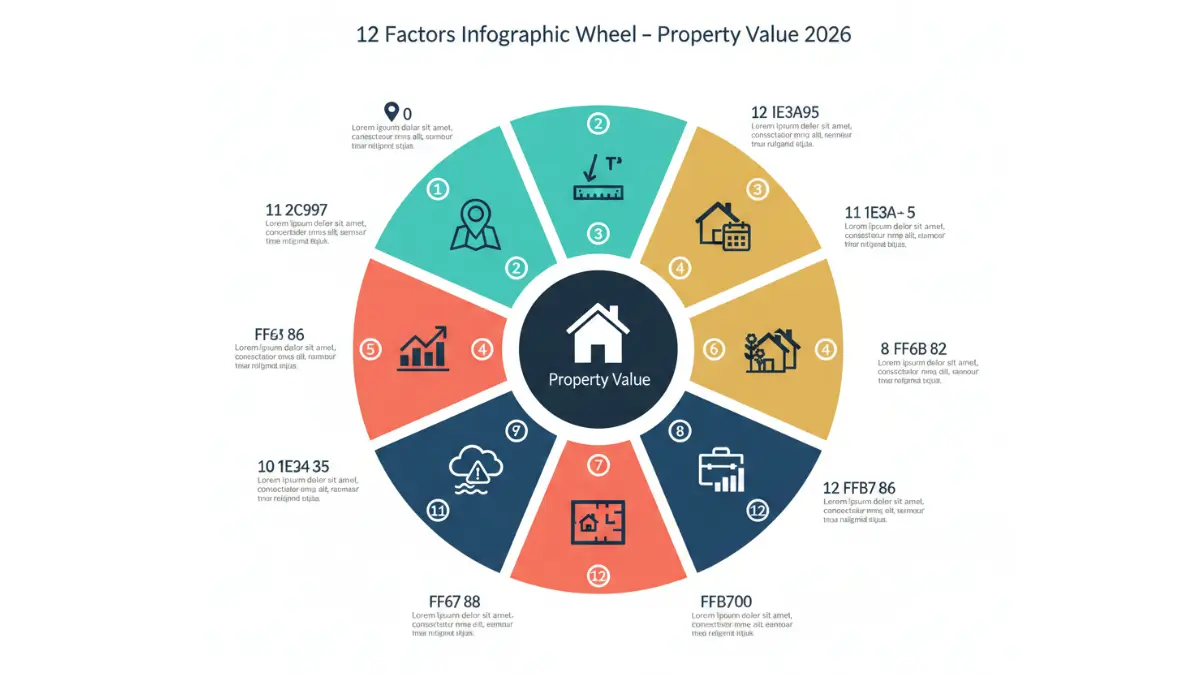
1. Location & Neighborhood Quality
Location remains the #1 property value driver, but micro-location details matter more than ever. Two identical homes on the same street can differ by 8-15% based on lot position, street traffic, and proximity to amenities.
2026 Location Impact Data:
- Top-rated school districts add 15-25% to home value
- Walkability scores above 70 increase values 5-12%
- Corner lots typically command 5-8% premiums
- Homes near parks or green spaces see 8-10% appreciation
According to HUD’s Location Affordability Portal, transportation costs directly correlate with property worth. Neighborhoods with combined housing and transport costs below 45% of income attract higher demand and sustain stronger real estate value growth.
2. Property Size & Usable Space
Square footage directly impacts property value, but usable space matters more than total area. Finished living space commands higher valuations than unfinished basements or garages.
2026 Size Benchmarks:
- National median home value per square foot: $186
- Finished basements add $40-65 per square foot
- Lot size premium: 10-15% for lots 25%+ above neighborhood average
- Home office space now adds 3-5% to property value (post-pandemic shift)
Buyers using our Home Affordability Calculator prioritize functional layouts over raw square footage, particularly open-concept designs that maximize livable area.
3. Age & Condition of Property
Property condition significantly affects market value. While historic homes carry charm premiums in certain markets, most buyers expect modern systems and minimal deferred maintenance.
Depreciation & Condition Impact:
- Homes 0-10 years old: Premium of 8-15%
- Homes 20-40 years old: Baseline property value
- Homes 50+ years old: Discount of 10-25% unless renovated
- Major system lifespans: Roof (20-25 years), HVAC (15-20 years), Water heater (10-15 years)
The National Association of Realtors reports that homes requiring more than $15,000 in immediate repairs sell for 5-8% below comparable move-in-ready properties.
4. Recent Comparable Sales (Comps)
Appraisers determine property value primarily through comparable sales analysis. They examine 3-6 recently sold homes (within 6 months) matching your property’s characteristics.
Comp Selection Criteria:
- Within 1 mile radius (urban) or 5 miles (rural)
- Similar square footage (±15%)
- Same bed/bath configuration (±1 bedroom/bathroom)
- Sold within past 3-6 months for current market value
Adjustment Process:
Appraisers add or subtract value based on differences. If a comp has a garage and your property doesn’t, they deduct $8,000-15,000 from that comp’s sale price to estimate your home value.
5. Current Market Conditions
The 2026 real estate market operates in a moderate buyer’s market with 30-year mortgage rates averaging 6.2% (down from 2023’s 7.8% peak). Freddie Mac’s Primary Mortgage Market Survey tracks weekly rate movements affecting property values nationwide.
2026 Market Dynamics:
- Inventory levels: 4.2 months (balanced market = 5-6 months)
- Days on market average: 38 days
- Seller concessions: 2.1% of sale price (up from 1.3% in 2024)
- Price appreciation: National average 4.2% annually
Market conditions directly influence whether homes sell above or below their appraised property value. Understanding current mortgage rates helps buyers calculate true affordability.
6. Property Upgrades & Renovations
Strategic improvements increase property value, but not all upgrades deliver equal returns. The 2026 Cost vs. Value Report shows which renovations maximize home value.
2026 ROI by Improvement Type:
- Garage door replacement: 194% ROI ($4,041 cost, $7,845 value added)
- Minor kitchen remodel: 96% ROI ($28,279 cost, $27,204 value added)
- Bathroom remodel: 71% ROI ($27,164 cost, $19,134 value added)
- Window replacement: 69% ROI ($19,385 cost, $13,359 value added)
- Deck addition: 66% ROI ($18,364 cost, $12,145 value added)
Homeowners financing improvements through our Mortgage Calculator should prioritize high-ROI projects that align with neighborhood standards—over-improving beyond your area’s typical property worth rarely recovers costs.
7. Curb Appeal & First Impressions
Curb appeal creates immediate property value impact. Professional landscaping, exterior paint, and entry door condition influence buyer willingness to pay asking prices.
Curb Appeal Value Impact:
- Professional landscaping: 5-12% home value increase
- Fresh exterior paint: 2-5% increase (color choice matters)
- New entry door: $1,700 average cost, $1,293 value added (75% ROI)
- Driveway/walkway repair: 100%+ ROI for severe damage correction
Studies from the American Society of Landscape Architects confirm that first impressions formed in the first 7-10 seconds heavily influence final sale prices and negotiation dynamics.
8. Floor Plan & Layout Functionality
Modern buyers prioritize property value in homes with flexible, functional layouts. Open-concept designs command premiums while compartmentalized floor plans may reduce appeal.
2026 Layout Preferences:
- Open kitchen/living/dining: 8-12% premium over closed layouts
- Dedicated home office: 3-5% property value increase (post-2020 shift)
- Main-floor primary suite: 6-10% premium in age-restricted communities
- Split bedroom plans: 4-7% premium for privacy separation
Awkward layouts, wasted space, or dated configurations can reduce market value by 5-15% compared to well-designed comparable homes.
9. Climate Risk & Environmental Factors (Critical 2026 Update)
Climate risk now directly affects property value in 23 states. FEMA’s National Flood Insurance Program maps show properties in Special Flood Hazard Areas face 15-25% valuation discounts plus mandatory flood insurance costs.
Environmental Impact on Property Value:
- FEMA flood zones: -15% to -25% home value
- Wildfire high-risk areas: -8% to -18% (California, Colorado, Oregon)
- Hurricane exposure zones: -5% to -12% (coastal properties)
- Environmental hazards (superfund sites within 1 mile): -10% to -20%
Insurance availability matters as much as premiums. Properties where carriers refuse coverage experience severe property value deterioration regardless of physical condition.
10. Energy Efficiency & Sustainability
Energy-efficient homes command measurable premiums as utility costs and environmental consciousness drive buyer preferences. ENERGY STAR certification adds verified value.
2026 Green Building Value Premiums:
- Solar panels: 8-12% property value increase ($15,000-35,000)
- ENERGY STAR certification: 2-4% premium
- Smart thermostats: $1,500-2,500 value addition
- LED lighting throughout: 1-2% home value boost
- High-efficiency HVAC: 3-5% premium
Buyers increasingly calculate total cost of ownership. Homes with documented energy savings through our financial planning resources sell faster and closer to asking prices.
11. Smart Home Technology
Strategic smart home integration increases property value, but technology choices matter. Security systems and climate control add measurable worth, while novelty gadgets don’t.
Value-Adding Smart Tech (2026 Data):
- Integrated security systems: $3,000-5,000 value addition
- Smart thermostats: $1,200-2,000 value addition
- Video doorbells: $800-1,200 value addition
- Whole-home automation hubs: $2,500-4,500 for premium systems
Tech That Doesn’t Add Value:
Smart refrigerators, voice-activated toilets, and proprietary systems tied to specific brands rarely increase property worth and may deter buyers concerned about compatibility or obsolescence.
12. Economic & Regional Trends
Local economic strength drives sustained property value growth. Job markets, population trends, and infrastructure development create long-term appreciation or depreciation.
Economic Factors Affecting Home Value:
- Local unemployment rate: Each 1% increase reduces growth 0.3-0.6%
- Major employer announcements: 2-8% immediate property value impact
- Infrastructure projects: Light rail stations within 1 mile add 10-20%
- Remote work migration: Destination cities see 8-15% above-national appreciation
The Bureau of Labor Statistics provides regional employment data that forecasts medium-term real estate value trends before they fully materialize in sale prices.
How Appraisers & Experts Calculate Property Value
Property appraisal follows three professional methodologies. Understanding how appraisers determine market value helps you anticipate valuations for refinancing, purchasing, or selling decisions.
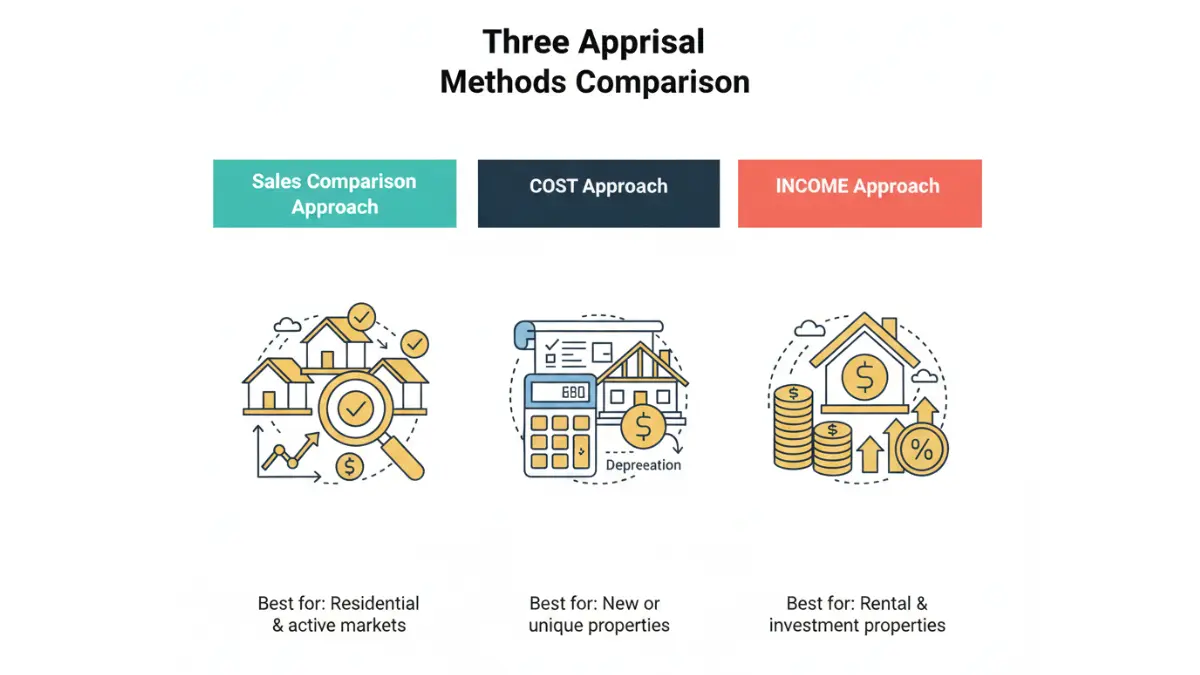
Method 1: Sales Comparison Approach (Most Common for Residential)
This method dominates residential property value calculations. Appraisers analyze recent comparable sales and adjust for differences.
Step-by-Step Process:
- Identify Comparables: Find 3-6 recently sold properties matching your home’s location, size, age, and condition
- Make Adjustments: Add or subtract value for differences (garage, pool, extra bedroom, lot size)
- Calculate Average: Weight adjusted comp values to estimate your property worth
- Verify Accuracy: Reconcile against market trends and neighborhood data
Accuracy Range: ±3-5% for standard residential properties in active markets. Rural or unique properties show wider variance.
According to the Appraisal Institute’s methodology standards, this approach works best when sufficient comparable sales exist within 6-12 months and 1-mile radius.
Method 2: Cost Approach
The cost approach calculates property value by estimating land worth plus construction costs minus depreciation. This method dominates new construction appraisals.
Formula:
Property Value = Land Value + (Replacement Cost – Depreciation)
When Used:
- New construction or recently built homes
- Unique properties with few comparables
- Insurance valuation purposes
- Properties in markets with limited sales activity
Limitations:
Depreciation estimates introduce subjectivity. Market demand can drive home value significantly above or below replacement costs, making this method less reliable for established homes.
Method 3: Income Approach
Investment properties use income-based property value calculations. Appraisers analyze rental income potential and apply capitalization rates.
Key Metrics:
- Gross Rent Multiplier (GRM): Sale Price ÷ Annual Gross Rent
- Capitalization Rate: Net Operating Income ÷ Property Value
- Cash-on-Cash Return: Annual Pre-Tax Cash Flow ÷ Total Cash Invested
Example Calculation:
Property generates $36,000 annual net income. Local cap rates average 6%. Estimated value: $36,000 ÷ 0.06 = $600,000
Investors using our investment planning tools combine income approach valuations with traditional comparables for comprehensive analysis.
Modern Method: Automated Valuation Models (AVMs)
AI-powered property value estimators from Zillow, Redfin, and other platforms use machine learning algorithms analyzing millions of data points.
How AVMs Work:
- Aggregate public records, MLS data, and user submissions
- Apply statistical models based on comparable sales
- Adjust for market trends using real-time transaction data
- Generate instant home value estimates
Accuracy Limitations:
- Zillow Zestimate: ±7.49% median error rate (2026 data)
- Redfin Estimate: ±6.94% median error rate
- Higher error rates in rural areas (±10-15%)
- Cannot account for interior condition, upgrades, or unique features
AVMs provide useful starting points but shouldn’t replace professional appraisals for major financial decisions. The Federal Housing Finance Agency’s AVMs guidance recommends combining automated estimates with human verification.
| Valuation Method | Best For | Typical Cost | Accuracy | Timeline |
|---|---|---|---|---|
| Sales Comparison | Standard homes | $350-600 | ±3-5% | 5-7 days |
| Cost Approach | New construction | $400-700 | ±5-8% | 7-10 days |
| Income Approach | Rentals/investments | $500-900 | ±4-7% | 7-14 days |
| AVMs (Online) | Quick estimates | Free-$50 | ±7-10% | Instant |
Property Value vs Tax Assessment: What’s the Difference?
Many homeowners confuse property value with tax assessment, but these figures serve different purposes and rarely match. Understanding this distinction prevents overpaying property taxes.
Why Your Tax Bill ≠ Your Property Value
Tax assessments determine your property tax obligation, not your home’s actual market value. Municipalities assess properties at various percentages of market value—anywhere from 50% to 100% depending on state law.
Key Differences:
Market Value (Appraisal):
- What a willing buyer pays a willing seller
- Based on current comparable sales
- Updates with every transaction
- Used for mortgages, sales, refinancing
Assessed Value (Tax):
- Government-calculated value for taxation
- Often lags market changes by 1-3 years
- May use formulas rather than individual inspections
- Multiplied by mill rate to determine tax bill
Example:
Your home’s market value: $400,000
Assessment ratio (70%): $280,000
Mill rate (1.5%): Property tax = $4,200 annually
How to Appeal an Overassessment
If your tax assessment exceeds your home’s actual property value, you can appeal. Success rates average 40-50% when homeowners provide proper documentation.
Appeal Process:
- Review Assessment: Compare your assessed value to recent comparable sales
- Gather Evidence: Collect recent appraisals, comparable property data, photos of property issues
- File Appeal: Submit to local assessor’s office within deadline (typically 30-90 days from notice)
- Present Case: Attend hearing with documentation supporting lower property worth
- Receive Decision: Most jurisdictions respond within 45-90 days
Required Documentation:
- Recent professional appraisal showing lower market value
- Comparable sales data from past 6 months
- Photos documenting condition issues
- Repair estimates for significant problems
The National Taxpayers Union provides state-specific property tax appeal guides. Homeowners managing multiple financial priorities through our debt management strategies should review assessments annually.
Using Tax Assessment to Estimate Value
You can reverse-engineer approximate property value from tax assessments if you know your municipality’s assessment ratio.
Formula:
Estimated Market Value = Assessed Value ÷ Assessment Ratio
State Assessment Ratio Examples (2026):
| State | Assessment Ratio | $300K Market Value | Assessed Value |
|---|---|---|---|
| California | 100% | $300,000 | $300,000 |
| Texas | 100% | $300,000 | $300,000 |
| New York | Varies 1-100% | $300,000 | $100K-$300K |
| Illinois | 33.3% | $300,000 | $100,000 |
| Kentucky | 100% | $300,000 | $300,000 |
Assessment ratios change by county and sometimes by property type. Check with your county assessor’s office for precise local rates affecting your home value calculations.
7 Ways to Increase Property Value in 2026
Strategic improvements boost property value with measurable returns. Focus on high-ROI projects that align with neighborhood standards and buyer preferences.
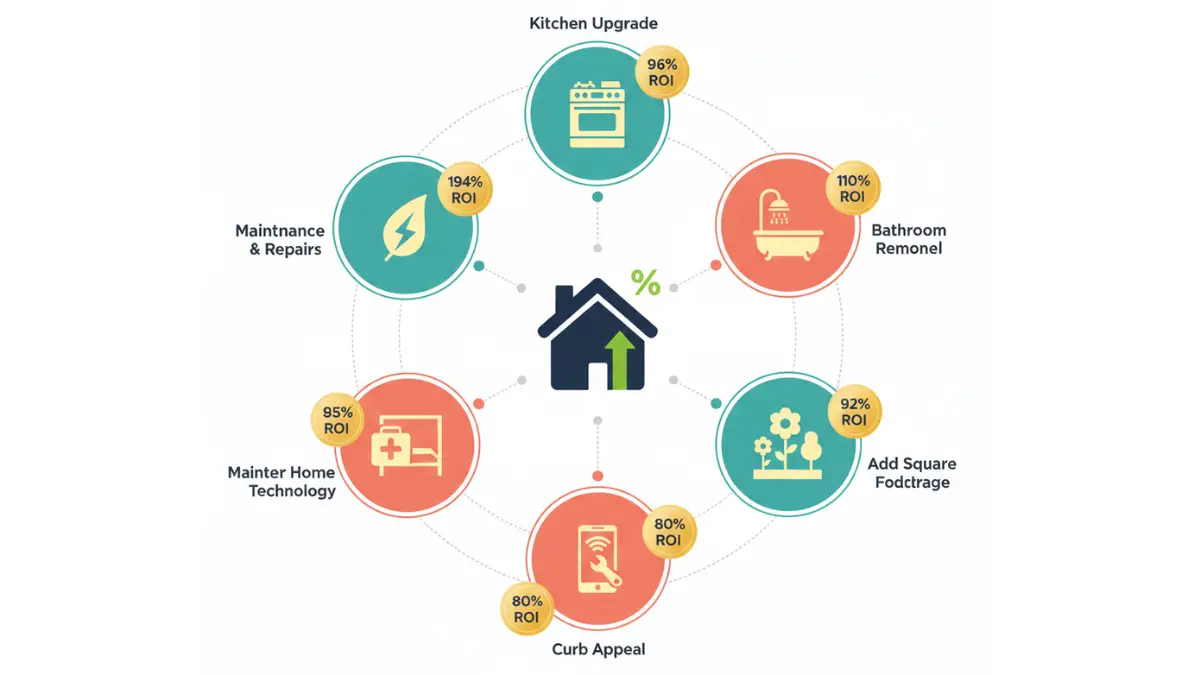
1. Kitchen Remodeling (High ROI)
Kitchen updates deliver strong home value returns, but scale matters. Over-improving beyond neighborhood norms rarely recovers costs.
2026 Kitchen ROI Data:
- Minor Remodel: $28,279 average cost, 96% ROI, $27,204 property value increase
- Major Upscale Remodel: $158,015 cost, 41% ROI, $65,000 value added
High-Impact Changes Under $15K:
- Cabinet refacing: $4,500-9,000 (90% ROI)
- Countertop replacement: $2,000-5,500 (85% ROI)
- Updated appliances: $3,500-8,000 (75% ROI)
- New backsplash: $1,200-2,800 (100%+ ROI)
Buyers using our home buying resources prioritize modern, functional kitchens. Target renovations to match top 25% of neighborhood quality without exceeding it.
2. Bathroom Updates
Full bathroom remodels offer solid property value returns, particularly in homes with outdated fixtures or limited bathrooms.
Bathroom ROI Breakdown:
- Midrange Bathroom Remodel: $27,164 cost, 71% ROI, $19,134 added value
- Upscale Bathroom Remodel: $88,219 cost, 48% ROI, $42,000 added value
Targeted Updates for Maximum Return:
- Replace vanity and fixtures: $2,500-5,500 (80% ROI)
- Upgrade to double vanity: $3,500-7,000 (75% ROI)
- Install walk-in shower: $6,500-12,000 (70% ROI)
- Update tile and flooring: $2,000-4,500 (85% ROI)
Adding a second full bathroom in single-bath homes increases home value 10-15% in most markets—one of the highest-return structural changes possible.
3. Energy Efficiency Upgrades
Energy-efficient improvements reduce utility costs while increasing property value. Green certifications provide verified documentation buyers trust.
Energy Upgrade ROI (2026 Data):
- Solar Panel Installation: $15,000-35,000 cost, 8-12% property value increase
- Window Replacement: $19,385 cost, 69% ROI, $13,359 added value
- Insulation Upgrade: $2,500-6,500 cost, 100%+ ROI in energy savings
- High-Efficiency HVAC: $8,500-15,000 cost, 3-5% home value premium
Tax incentives through the Federal Tax Credit for Energy Efficiency reduce net costs by 30% for qualified improvements installed through 2032.
4. Curb Appeal Enhancements
Curb appeal projects deliver exceptional returns relative to costs. First impressions drive buyer willingness to view interiors and make competitive offers.
Exterior Improvement ROI:
- Professional Landscaping: $3,000-10,000 investment, 100-200% ROI
- Exterior Painting: $3,500-10,000 cost, 107% average ROI
- New Entry Door: $1,700 cost, 75% ROI, $1,293 property value increase
- Garage Door Replacement: $4,041 cost, 194% ROI, $7,845 added value
Quick Wins Under $1,000:
- Fresh mulch and seasonal flowers: $200-500 (200%+ ROI)
- Pressure washing: $200-400 (300%+ ROI)
- Updated house numbers and mailbox: $100-250 (500%+ ROI)
- Outdoor lighting: $300-800 (150% ROI)
Properties with excellent curb appeal sell 7% faster and receive 1-3% higher offers according to University of Washington research.
5. Adding Functional Square Footage
Strategic space additions increase property value, but only when they align with neighborhood norms and zoning allows expansion.
Space Addition ROI:
- Finished Basement: $40,000-75,000 cost, 70% ROI
- Accessory Dwelling Unit (ADU): $100,000-200,000 cost, 80% ROI plus rental income
- Primary Suite Addition: $150,000-300,000 cost, 53% ROI
- Bonus Room Conversion: $15,000-40,000 cost, 75% ROI
Critical Considerations:
- Don’t exceed neighborhood home value averages by more than 10-15%
- Verify zoning permits for ADUs and additions
- Ensure adequate lot size for expansions
- Maintain proportional bedroom-to-bathroom ratios
Homeowners financing additions through our Debt Consolidation Calculator should calculate whether increased property worth justifies project costs and loan interest.
6. Smart Home Technology (Strategic Integration)
Select smart home features increase property value while others waste money. Focus on security, energy management, and convenience systems buyers actually want.
Value-Adding Smart Tech:
- Integrated Security System: $1,500-3,500 cost, $3,000-5,000 home value addition
- Smart Thermostat: $200-400 cost, $1,200-2,000 value added
- Video Doorbell: $150-300 cost, $800-1,200 value boost
- Smart Locks: $200-400 cost, $600-1,000 added value
Tech to Avoid:
- Proprietary whole-home systems tied to specific brands
- Voice-activated appliances
- Novelty gadgets without functional benefits
- Systems requiring expensive ongoing subscriptions
According to Consumer Technology Association research, 65% of homebuyers prioritize security and climate control technology, but only 12% value kitchen or laundry appliance connectivity.
7. Regular Maintenance & System Updates
Deferred maintenance reduces property value more dramatically than improvements increase it. Preventive care protects your investment.
Critical Maintenance Timeline:
Roof (20-25 year lifespan):
- Replacement cost: $8,000-25,000
- Failure to replace: -5% to -10% property value
- Annual inspections prevent premature failure
HVAC System (15-20 year lifespan):
- Replacement cost: $5,500-12,000
- Non-functional system: -3% to -7% home value
- Bi-annual servicing extends lifespan
Water Heater (10-15 year lifespan):
- Replacement cost: $1,200-3,500
- Evidence of leaking: -2% to -4% property worth
- Annual flushing prevents sediment buildup
Foundation & Structural:
- Minor crack repair: $500-2,500
- Major foundation issues: -10% to -25% property value
- Annual inspections catch problems early
Properties with documented maintenance records sell for 2-4% premiums over comparable homes lacking service histories. Keep receipts and warranty documentation for all major system work.
| Improvement Type | Average Cost | ROI % | Value Added | Best Markets |
|---|---|---|---|---|
| Garage Door | $4,041 | 194% | $7,845 | Nationwide |
| Minor Kitchen | $28,279 | 96% | $27,204 | Urban/Suburban |
| Exterior Paint | $3,500-10,000 | 107% | Varies | All Markets |
| Bathroom Remodel | $27,164 | 71% | $19,134 | All Markets |
| Window Replacement | $19,385 | 69% | $13,359 | Cold Climates |
| Solar Panels | $15,000-35,000 | 8-12% | $15K-$42K | High Electricity Costs |
How to Find Your Property Value
Three primary methods determine property value—each with distinct accuracy, costs, and use cases. Choose based on your specific needs and timeline.
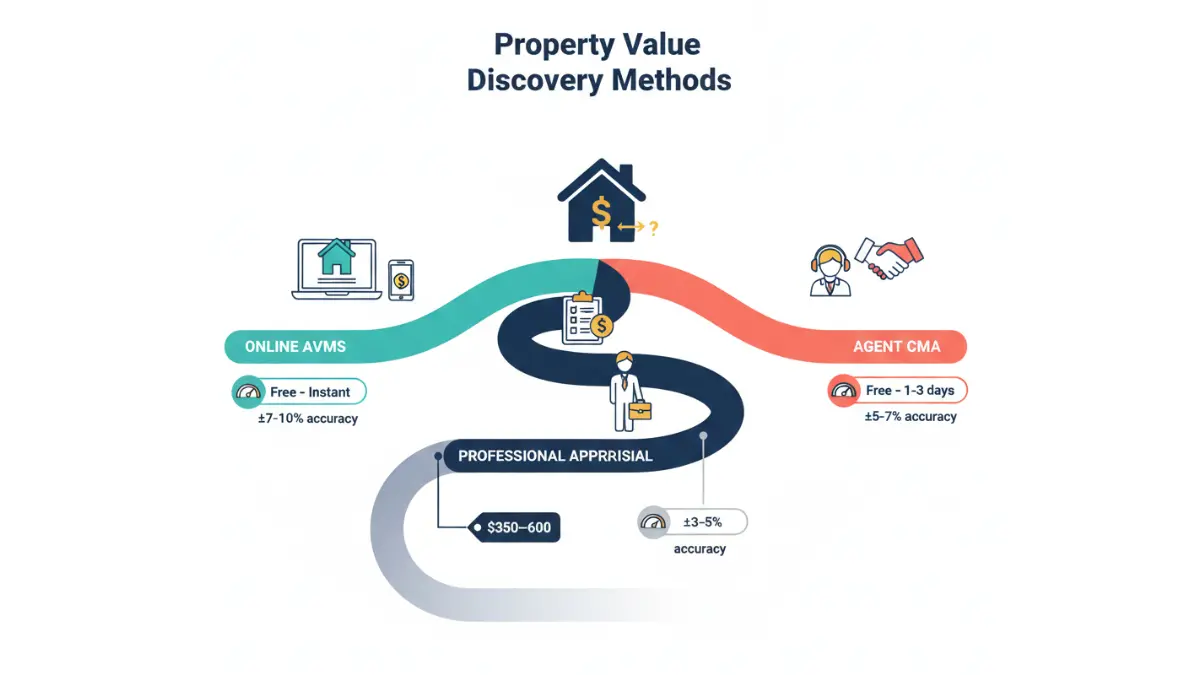
1. Online Property Value Estimators (Free, Instant)
Automated Valuation Models (AVMs) provide instant home value estimates using public data and algorithms. They work best as starting points rather than definitive valuations.
Major Online Estimators:
Zillow Zestimate:
- Accuracy: ±7.49% median error
- Data sources: Public records, MLS, user updates
- Best for: Initial research, market trends
- Limitation: Cannot assess interior condition
Redfin Estimate:
- Accuracy: ±6.94% median error
- Data sources: MLS data, brokerage transactions
- Best for: Recent sales comparison
- Limitation: Limited in low-activity markets
Realtor.com Home Value:
- Accuracy: ±8.12% median error
- Data sources: MLS feeds, foreclosure data
- Best for: Broad market overview
- Limitation: Higher rural error rates
When to Use AVMs:
- Checking approximate equity growth
- Researching neighborhoods before home purchases
- Monitoring property value trends over time
- Initial listing price consideration
When NOT to Rely on AVMs:
- Refinancing decisions requiring exact market value
- Estate settlements or divorce proceedings
- Tax appeals needing documented valuations
- Properties with unique features or recent renovations
2. Professional Appraisal ($300-$600, 3-7 Days)
Licensed appraisers conduct in-person inspections and comprehensive market analysis to determine precise property value for official purposes.
Appraisal Process:
- Interior Inspection: Appraiser measures rooms, assesses condition, notes upgrades
- Exterior Assessment: Evaluates lot, structures, curb appeal, environmental factors
- Comparable Analysis: Researches recent sales, makes adjustments
- Report Preparation: Delivers detailed valuation with methodology explanation
Cost & Timeline:
- Standard residential: $350-500, 5-7 days
- Complex/luxury: $500-800, 7-14 days
- Rush service: +$100-200, 3-5 days
When Required:
- Mortgage refinancing
- Home equity loans/lines of credit
- Estate settlements
- Divorce property division
- Tax appeals
- Pre-listing valuation
Lenders typically order appraisals directly when you apply for mortgages through our refinancing tools. Homeowners can request independent appraisals for personal knowledge.
3. Comparative Market Analysis (CMA) – Free from Agents
Real estate agents provide Comparative Market Analyses showing your property value range based on recent local sales, active listings, and market trends.
CMA Components:
- Recently sold comparables (past 3-6 months)
- Currently active listings (competition)
- Expired/withdrawn listings (overpricing examples)
- Market condition analysis
- Suggested list price range
Advantages:
- Free service from licensed agents
- Local market expertise
- Updated for current conditions
- Includes pricing strategy advice
Limitations:
- Not acceptable for lending purposes
- Varies by agent skill and effort
- May show optimistic values to win listing
- Less rigorous than formal appraisals
When to Request CMAs:
- Considering selling within 6-12 months
- Evaluating home value growth
- Comparing neighborhoods for future purchases
- Understanding local market dynamics
Most agents provide CMAs hoping to earn future listing business. Request analyses from 2-3 agents to compare property value perspectives and methodologies.
| Valuation Method | Cost | Timeline | Accuracy | Best Use |
|---|---|---|---|---|
| Online AVMs | Free | Instant | ±7-10% | Quick estimates |
| Professional Appraisal | $350-600 | 5-7 days | ±3-5% | Official needs |
| Agent CMA | Free | 1-3 days | ±5-7% | Selling research |
Frequently Asked Questions
1. What is property value?
Property value is the estimated price a home would sell for in the current market under normal conditions. It reflects what willing buyers will pay willing sellers, based on location, condition, size, and comparable sales. Market value differs from tax assessment or replacement cost.
2. How is property value determined?
Appraisers determine property value using three approaches: sales comparison (analyzing recent comparable sales), cost approach (land value plus construction costs minus depreciation), or income approach (for rental properties based on income potential). Most residential valuations rely on sales comparison with adjustments for property differences.
3. What is the difference between market value and assessed value?
Market value represents what buyers will pay in current conditions, based on recent sales. Assessed value is the government-calculated figure used for property taxation, often set at 50-100% of market value depending on state law. Assessed values typically lag market changes by 1-3 years.
4. How often does property value change?
Property values fluctuate constantly based on market conditions, comparable sales, and economic factors. Formal appraisals provide snapshots at specific moments. In active markets, values may shift 0.3-0.5% monthly. Annual appreciation averages 3-5% nationally, though individual properties and regions vary significantly.
5. Can I increase my property value?
Yes, strategic improvements increase property value. High-ROI projects include kitchen updates (96% ROI), exterior painting (107% ROI), garage door replacement (194% ROI), and bathroom remodels (71% ROI). Energy efficiency upgrades and curb appeal enhancements also boost values while improving functionality.
6. How accurate are online property value estimates?
Online property value estimators average ±7-10% accuracy for typical homes in active markets. Zillow’s Zestimate shows ±7.49% median error, while Redfin Estimate averages ±6.94%. Accuracy declines in rural areas, for unique properties, or where recent sales data is limited. Use AVMs as starting points, not definitive valuations.
7. What hurts property value the most?
Major property value detractors include: location in declining neighborhoods (-10% to -25%), deferred maintenance on critical systems (-5% to -15%), environmental hazards like flood zones (-15% to -25%), poor curb appeal (-5% to -10%), and outdated interiors relative to neighborhood standards (-8% to -12%).
8. How do appraisers determine property value?
Appraisers inspect properties, measure rooms, assess condition, and photograph features. They research 3-6 comparable sales within 6 months and 1 mile, make adjustments for differences (garage, pool, size, condition), and calculate estimated market value. Reports include methodology explanation and supporting documentation.
9. Does property location affect value?
Location is the #1 property value factor. Top school districts add 15-25%, walkability scores above 70 increase values 5-12%, proximity to parks adds 8-10%, and corner lots command 5-8% premiums. Micro-location details like street position and traffic exposure create 8-15% variations between identical homes.
10. What is the best way to find my property value?
For informal estimates, use online AVMs like Zillow or Redfin (free, instant, ±7-10% accuracy). For selling research, request Comparative Market Analyses from real estate agents (free, 1-3 days, ±5-7% accuracy). For official purposes like refinancing, hire licensed appraisers ($350-600, 5-7 days, ±3-5% accuracy).
11. How does property value affect property taxes?
Municipalities multiply assessed value (often 50-100% of market value) by mill rates to calculate property taxes. When property values rise, tax bills typically increase unless rates adjust downward. Appeal overassessments by providing recent appraisals or comparable sales showing lower market value than tax assessment.
Disclaimer
This article is for educational purposes only and does not constitute financial, investment, tax, or real estate advice. Property values vary by location, market conditions, property characteristics, and individual circumstances. While we’ve cited current 2026 data and authoritative sources, real estate markets change constantly.
Consult with licensed appraisers, real estate professionals, financial advisors, or tax specialists for personalized guidance on property valuation, buying, selling, financing, or tax matters. The ROI percentages and value estimates reflect national averages—individual results will differ based on local market conditions, quality of execution, and property-specific factors.
All external links were verified at publication but may change over time. Internal calculators and tools provide estimates based on typical scenarios but cannot account for unique circumstances affecting your specific situation.
Related Articles
 Mortgage Costs & Fees
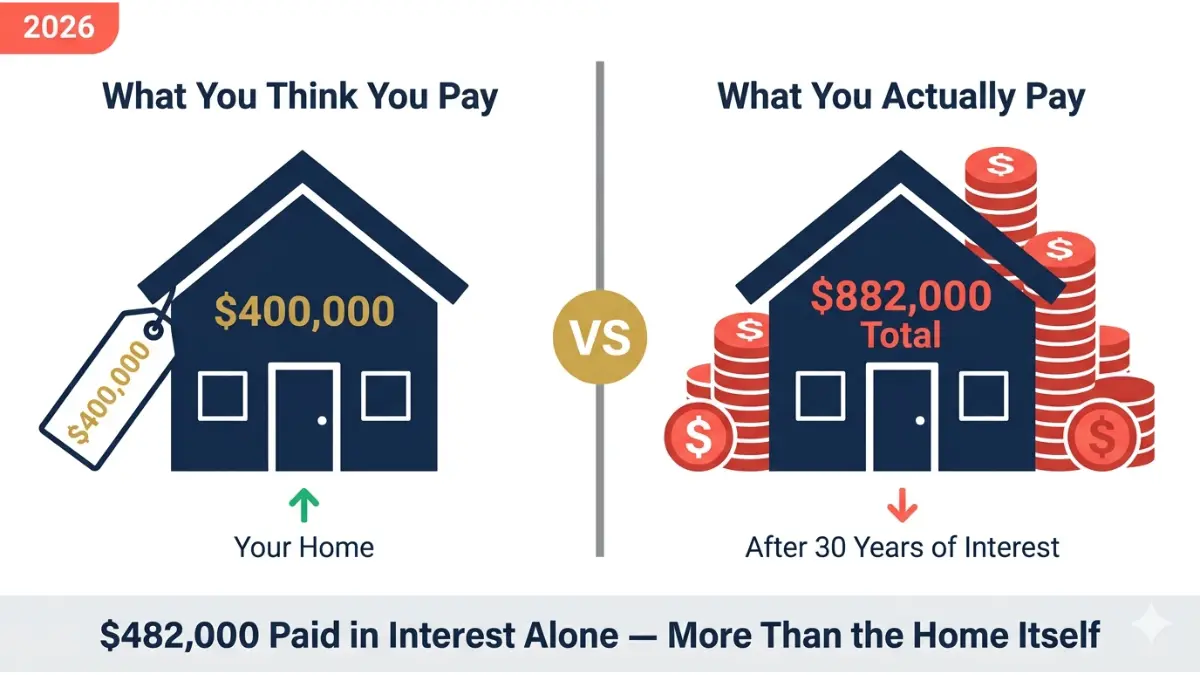
Total Interest on a Home Loan: How Much Do You Really Pay Over 30 Years?
March 26, 2026 Mortgage Costs & Fees
Home Loan Closing Costs: What You’ll Actually Pay in 2026
March 26, 2026
Informational disclaimer
The content on Finance Authority Hub is provided for general informational and educational purposes only and should not be considered personalized financial, investment, tax, legal, or professional advice. Financial decisions depend on your individual goals, income, risk tolerance, location, and regulatory situation. Before acting on any information, strategy, estimate, or calculator result, consult a qualified licensed professional who can evaluate your specific circumstances.