30-Year vs 15-Year Mortgage: Which Saves You More Money in 2026?
A 15-year mortgage saves $293K in interest — but a 30-year could make you richer. See 2026 real rate data, expert panel verdict, and the hybrid strategy most lenders hide.

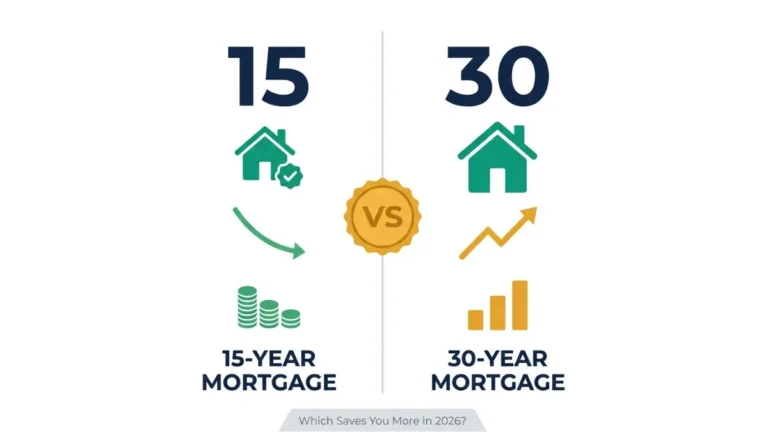
A 15-year mortgage saves $293K in interest — but a 30-year could make you richer. See 2026 real rate data, expert panel verdict, and the hybrid strategy most lenders hide.

Want a $25K car with only $500 down? Hire purchase agreements let you own it in 36 months for $717/month. We compare HP vs personal loans, reveal 2026 rates, and expose hidden fees.

Seventy percent of workers leave $1,300+ in annual employer match on the table. This complete 2026 guide explains how 401(k)s work, compares Traditional vs Roth, and walks you through 7-day setup.

Compound interest is free money—but 70% of Americans don’t use it. Discover how to earn $5,530+ on $10K in 10 years with 2026 rates. Simple guide for beginners with step-by-step implementation.

Saving for retirement is overwhelming if you’re behind. This guide covers 2026 benchmarks, income-stratified targets, psychological barriers, and a 7-step catch-up playbook most savers miss.

YNAB users save an average of $6,000 in their first year. But it’s not right for everyone. We ranked 9 budgeting apps by actual money saved — including 3 completely free options — so you can find your match in under 60 seconds.

Discover the systematic 30-day plan that breaks the paycheck-to-paycheck cycle. Includes budget optimization, emergency fund strategies, and income acceleration tactics for 2026.
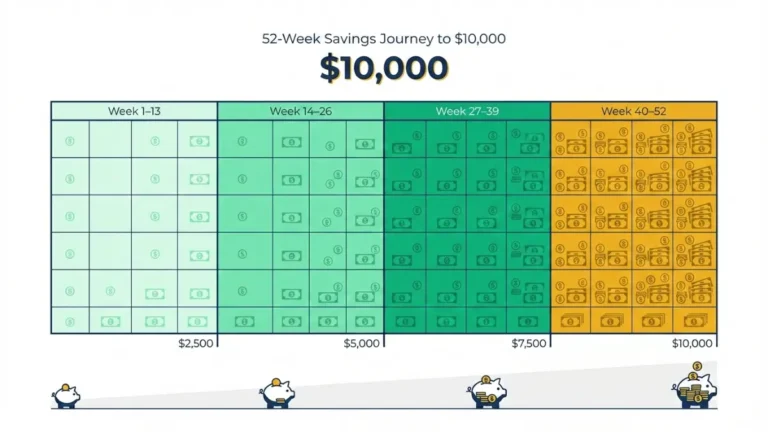
Most 52-week $10K plans assume you can save $192 every single week — but that’s impossible on a $40,000 salary. This income-adjusted version shows exactly what to save each week at $40K, $60K, and $80K+ income, plus a catch-up track for anyone starting after January.

The national average savings rate is just 0.39%. These 9 FDIC-insured banks pay up to 5.00% APY with zero monthly fees — that’s $230 more per year on every $5,000. Rates and eligibility verified April 2026.
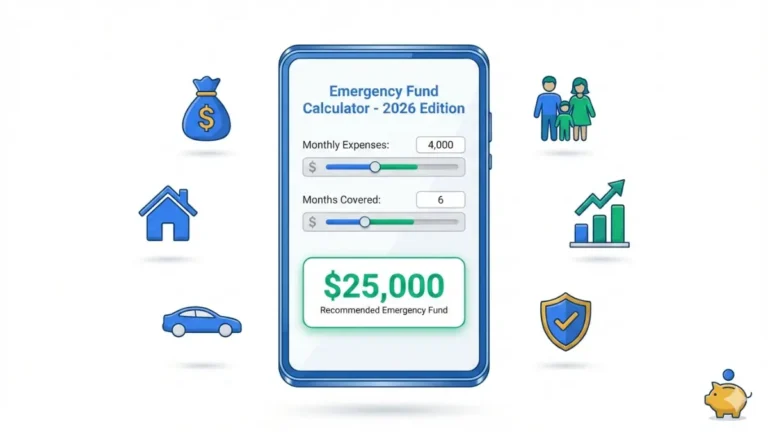
The median American has just $500 in emergency savings. Generic calculators give everyone the same “3–6 months” answer. This calculator gives your risk-adjusted target based on employment type, income stability, family size, dependents, and 2026 living costs — not someone else’s averages.